
Deciding whether to invest your time and money into a multi-volume light novel series can be a daunting task, especially when a title carries as much critical acclaim as 86 -Eighty Six-. Written by Asato Asato, this series has carved out a unique space in the light novel landscape by eschewing common tropes in favor of a gritty, politically charged narrative. If you are looking for a lighthearted power fantasy or a standard romantic comedy, this series may not align with your tastes. However, if you appreciate deeply emotional character studies, complex military strategy, and uncompromising explorations of societal injustice, 86 -Eighty Six- stands as one of the most rewarding reads in modern Japanese fiction.
The story is set in a war-torn world where the Republic of San Magnolia claims to fight a bloodless war against unmanned drone invaders. In reality, these machines are piloted by the Eighty-Six, a marginalized minority stripped of their citizenship and forced to fight on the front lines. By examining the narrative’s thematic depth, pacing, emotional weight, and genre positioning, you can make an informed decision on whether to add this series to your personal library.
Core Themes and Tone: Is the Story's Focus Right for You?
At the heart of 86 -Eighty Six- is a stark, unflinching examination of institutional racism, state-sanctioned propaganda, and the psychological dehumanization of soldiers. Unlike many light novels that treat war as a colorful backdrop for heroic exploits, this series treats military conflict with a sobering sense of realism. The Republic of San Magnolia presents a chilling depiction of a society that has normalized systemic discrimination, where the dominant silver-haired Alba population lives in blissful ignorance while sending minority citizens to die in a meat grinder.
Products mentioned in this guide
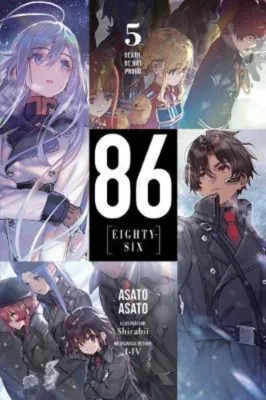

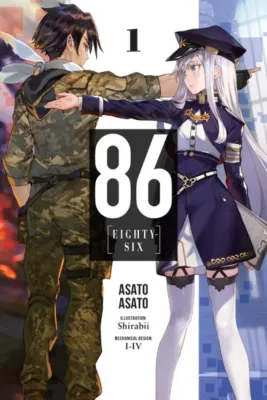
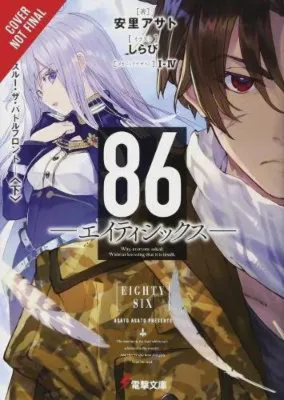
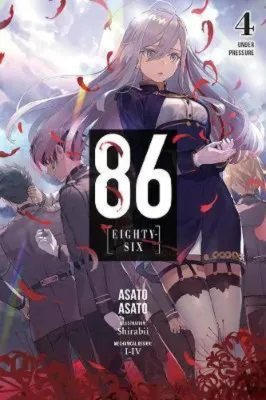
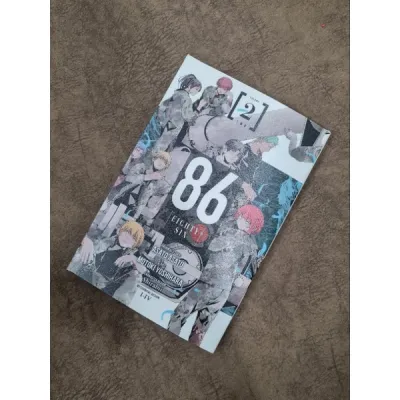
Prices are valid at publication and may change. Please refer to the product page for the latest price.
This heavy thematic focus establishes a tone that is consistently serious, melancholic, and intellectually demanding. If you are accustomed to escapist power fantasies or lighthearted comedic detours, the atmosphere here may feel remarkably heavy. The narrative rarely offers easy victories; instead, it forces readers to confront the moral compromises and psychological scars of its characters.
Furthermore, the relationships in the series are forged in the crucible of survival rather than typical high school drama. The bonds between the characters are built on shared trauma, mutual respect, and the quiet understanding of those who do not expect to survive the next battle. While there is profound emotional intimacy, it is a slow-burning element that prioritizes character development and thematic consistency over quick romantic payoffs.
Pacing and Narrative Style: Matching Your Reading Habits
The narrative structure of 86 -Eighty Six- relies heavily on a dual-perspective storytelling device, particularly in the opening volumes. On one side, you follow Vladilena “Lena” Milizé, an idealistic Republic military officer commanding from the safety of the capital. On the other side, you follow Shinei “Shin” Nouzen, the battle-hardened leader of the Spearhead Squadron on the deadly front lines. This split perspective highlights the vast physical and ideological distance between the comfortable oppressors and the desperate oppressed.

This structural choice means the pacing is often deliberate and introspective. While the series features intense, high-stakes combat, a significant portion of each volume is dedicated to internal monologues, tactical planning, and emotional processing between battles. The author spends considerable time detailing the mechanics of the military technology, the geography of the battlefields, and the historical context of the conflict.
If you prefer fast-paced, action-heavy narratives, the slow-burn nature of 86 -Eighty Six- might require some adjustment. The first volume was originally written as a self-contained story, meaning it has a distinct narrative arc that establishes the world and characters with meticulous care. Subsequent volumes expand the scope of the world significantly, introducing complex political intrigue and broader military campaigns that reward patient readers who enjoy deep world-building.
Emotional Weight and Content Warnings: Knowing Your Threshold
Prospective readers must be prepared for the significant emotional weight that 86 -Eighty Six- carries throughout its run. The series does not shy away from the grim realities of war, meaning character mortality is a constant and unpredictable threat. The soldiers of the Spearhead Squadron are child soldiers who have spent their formative years in a relentless struggle for survival, and the narrative treats their grief, trauma, and fatalistic outlook with the gravity it deserves.
Tragedy is not used merely for shock value; rather, it is an integral part of the story’s exploration of legacy and memory. The characters must constantly process the loss of their comrades while knowing that their own deaths may go unrecorded and unmourned by the nation they protect. This psychological burden is a central focus of the writing, making some chapters emotionally intense to read.
If you are currently seeking a purely escapist or comforting read to unwind, this series may not be the right choice at this moment. However, if you find value in stories that explore the resilience of the human spirit in the face of overwhelming despair, the emotional payoffs in 86 -Eighty Six- are exceptionally powerful and earned.
Genre Comparisons: Contextualizing the Sci-Fi and Mecha Elements
To understand where 86 -Eighty Six- fits in your reading repertoire, it is helpful to compare its sci-fi and mecha elements to other familiar works. The mecha combat in this series is distinctly tactical, gritty, and grounded. Instead of the humanoid, god-like super-robots found in mainstream action anime, the pilots here operate multi-legged armored vehicles called Juggernauts. These machines are fragile, prone to mechanical failure, and ill-suited for the terrain, turning battles into desperate tactical puzzles where survival depends on positioning, terrain exploitation, and sheer grit.
In terms of world-building and political intrigue, the series shares more common ground with classic young adult dystopian fiction and military history than with typical light novels. The depiction of a segregated society and the slow unraveling of state propaganda will feel familiar to fans of classic dystopian literature, though 86 approaches these themes with a level of military detail and psychological depth that is often more mature.
When compared to traditional Western military science fiction, 86 -Eighty Six- maintains a distinct focus on character archetypes and emotional vulnerability. While Western military sci-fi often emphasizes chain of command and grand strategy, this series balances those elements with the deeply personal, expressive emotional landscapes characteristic of Japanese light novels. This fusion creates a unique reading experience that appeals to both hardcore sci-fi enthusiasts and character-driven fiction readers.
Final Decision Checklist: Should You Commit to the First Volume?
To help you decide whether to purchase the first volume, consider how your preferences align with the following characteristics.
Read it if you enjoy:
- Deep, politically charged world-building and serious military science fiction.
- Complex, flawed characters dealing with realistic psychological trauma and grief.
- Tactical, grounded mecha combat where strategy matters more than raw power.
- A slow-burn narrative that prioritizes thematic depth and emotional resonance over quick resolution.
Skip it if you prefer:
- Lighthearted, comedic, or highly escapist fantasy stories.
- Overpowered protagonists who easily overcome obstacles without significant loss.
- Fast-paced, action-first plots with minimal technical or political exposition.
- Stories guaranteed to have lighthearted, conflict-free resolutions.
If you remain undecided, it is highly recommended to read the first chapter or access official preview excerpts online through authorized digital book platforms. When you are ready to purchase, ensure you verify the edition, language, medium or file format, regional restrictions, and device compatibility to guarantee a seamless reading experience. Physical copies can often be sourced from local bookstores in Singapore, while digital editions are widely available on major global e-book platforms.
Frequently Asked Questions (FAQ)
Do I need to watch the anime before reading the light novel?
No, you do not need to watch the anime adaptation before diving into the light novels. The light novel series is the original source material and stands completely on its own. Reading the books first allows you to experience the story’s intricate world-building, detailed military tactics, and deep internal monologues at your own pace—details that are often condensed or omitted in visual adaptations. Conversely, if you have already watched the anime, starting the light novels from volume one offers a richer, more detailed perspective on the characters’ inner thoughts and the political landscape of the Republic.
Is the official English translation easy to follow?
The official English translation of 86 -Eighty Six- is generally well-regarded for its ability to capture the story’s serious tone, complex military terminology, and emotional nuances. The translator successfully balances the technical jargon of the mecha combat with the poetic, melancholic prose of the character interactions. However, because the series utilizes specific military ranks, tactical terms, and fictional historical references, some readers may find the initial chapters require a bit more concentration than standard light novels. Before purchasing, it is always a good practice to check reader reviews on major book platforms or online marketplaces to assess feedback on specific volume translations and formatting.
Community discussion
Share your experience or ask a question. Comments are reviewed before publication.