
If you are looking for Singaporean science fiction that perfectly mirrors the deep-space physics and orbital mechanics of Andy Weir’s Project Hail Mary, you will find that a direct, one-to-one local equivalent is exceedingly rare. However, if you are drawn to the underlying spirit of Weir’s masterpiece—the thrill of systematic problem-solving, survival against overwhelming environmental odds, and highly structured, rule-based world-building—Singapore’s speculative fiction scene offers brilliant, intellectually stimulating alternatives. By shifting the lens from outer space to terrestrial survival and systemic complexity, you can discover local works that deliver the same cognitive satisfaction.
Evaluating these local works requires looking past the literal setting of a metal spaceship and focusing on thematic and structural DNA. The closest matches in Singaporean literature are those that feature intricate, rule-based world-building where the rules of the universe are treated with scientific seriousness. They are stories of survival against hostile, shifting environments where characters must rely on resourcefulness, engineering, and systemic thinking to preserve their societies.
What Makes Project Hail Mary a Benchmark for Sci-Fi?
To fully understand how to match Andy Weir’s novel within the landscape of Singaporean literature, we must first isolate the precise elements that made the book a global phenomenon. At its core, the book is a masterclass in “competence porn”—a subgenre of science fiction where the primary source of tension and satisfaction comes from characters using the scientific method, deductive reasoning, and engineering principles to systematically overcome life-or-death obstacles. Ryland Grace, an isolated schoolteacher-turned-astronaut, does not survive through luck or supernatural intervention; he survives because he measures, calculates, tests hypotheses, and applies fundamental physics and biology to his environment.
Products mentioned in this guide
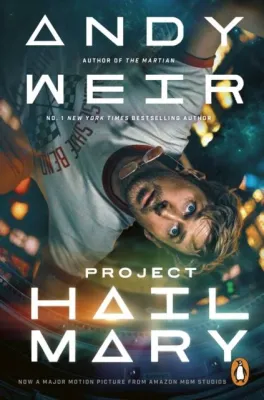

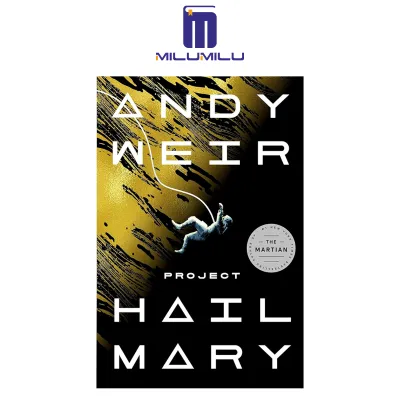




Prices are valid at publication and may change. Please refer to the product page for the latest price.
This rigorous commitment to hard science is paired with a high-stakes survival narrative. Stranded in an unfamiliar solar system with a failing memory and a dying star, Grace must navigate the mechanics of deep-space travel, orbital trajectories, and alien biology. The introduction of Rocky, an organic being from a completely different evolutionary path, adds the element of first contact. Yet, even this first contact is treated as a scientific puzzle: the two characters must build a shared language, decipher each other’s physical limitations, and collaborate using their respective understandings of chemistry and metallurgy.
For readers seeking a similar experience in local literature, these core pillars—systematic problem-solving, environmental survival under extreme constraints, logical world-building, and high-stakes cooperation—form the benchmark. While the setting of a story might shift from a cold, metallic spaceship to a flooded tropical metropolis or an alternate-history fantasy realm, the intellectual satisfaction of watching a protagonist think their way out of a crisis remains the primary point of comparison.
The Landscape of Singaporean Speculative Fiction
When exploring the literary output of Singapore, readers must adjust their expectations regarding traditional subgenres. The local publishing ecosystem, while incredibly vibrant, has historically produced very little traditional “hard” science fiction set in deep space. You will not easily find Singaporean novels dedicated to the mathematics of relativistic travel, orbital mechanics, or the terraforming of distant exoplanets. The reasons for this are both cultural and geographical; Singapore is a compact, hyper-urbanized island nation with a hyper-focus on immediate, terrestrial challenges such as land scarcity, climate change, technological surveillance, and multicultural identity.

Consequently, Singaporean speculative fiction (often grouped under the broader umbrella of “SingLit”) leans heavily toward near-future dystopias, cyberpunk, climate fiction (cli-fi), and “silkpunk”—a term popularized to describe technology-focused fantasy built on an East Asian aesthetic framework rather than a Western, steam-driven one. Local writers are deeply preoccupied with how societies adapt to systemic crises, how technology alters human relationships, and how marginalized communities survive within highly regulated environments.
Therefore, the search for a Singaporean equivalent to project hail mary requires looking past the literal setting of outer space and focusing instead on thematic and structural DNA. The closest matches in Singaporean literature are those that feature intricate, rule-based world-building where the rules of the universe are treated with scientific seriousness. They are stories of survival against hostile, shifting environments where characters must rely on resourcefulness, engineering, and systemic thinking to preserve their societies. By shifting the lens from “space exploration” to “systematic survival,” a rich array of local speculative fiction reveals itself to the analytical reader.
Top Singaporean Authors and Works for Sci-Fi Fans
J.Y. Yang and the Tensorate Series
To experience world-building that matches the logical rigor of hard science fiction, readers should turn to Neon Yang (who published their early work under the name J.Y. Yang) and their acclaimed Tensorate series, beginning with the novella The Black Tides of Heaven. While classified as silkpunk fantasy, the series operates with a level of internal consistency and mechanical logic that will instantly appeal to fans of project hail mary.
The cornerstone of Yang’s universe is “tensorcraft,” a system of manipulating the physical world through five elemental forces. Rather than treating this as a mystical, unexplained magic system, Yang presents tensorcraft as a highly structured discipline akin to thermodynamics or materials science. Practitioners, known as tensers, must undergo rigorous training to understand the mathematical and physical relationships between elements. They do not cast spells through sheer willpower; they calculate vectors, manipulate physical densities, and exploit the structural weaknesses of materials. This intellectual approach to a fantastical concept mirrors how Ryland Grace manipulates the physical properties of Astrophage to fuel his ship.
Furthermore, the narrative of The Black Tides of Heaven and its sequels deals extensively with the societal and industrial implications of this technology. We see how the ruling Protectorate uses tensorcraft to power machinery, construct massive infrastructure, and maintain political dominance, alongside the ethical dilemmas faced by those who seek to democratize or subvert this power. For a reader who appreciates the systematic exploration of a single scientific or technological premise, Yang’s work offers an extraordinarily satisfying intellectual journey, even if the backdrop is a world of flying stone machines and elemental beasts rather than titanium space capsules.
Epigram Books and the Lontar Anthologies
For readers who prefer a diverse array of speculative concepts focused on technological and environmental problem-solving, the publications of Epigram Books are indispensable. As one of Singapore’s premier independent publishers, Epigram has been instrumental in cultivating local speculative fiction. A prime example of this curation is Lontar: The Journal of Southeast Asian Speculative Fiction, a landmark anthology series edited by Jason Erik Lundberg.
Lontar serves as an exceptional gateway for fans of project hail mary because it collects short stories that grapple directly with the mechanics of survival in speculative futures. The writers featured in these volumes frequently explore how Southeast Asian societies might adapt to extreme technological shifts or ecological disasters. You will find stories about engineers designing localized flood-defense systems in a submerged Singapore, programmers debugging sentient urban operating systems, and communities adapting to radical genetic modifications.
The appeal here lies in the bite-sized exploration of speculative hypotheses. Much like the episodic nature of Andy Weir’s writing—where the protagonist faces a specific scientific hurdle, tests solutions, and moves to the next—the stories in Lontar present highly focused, intellectually sharp scenarios. They ask “what if” questions grounded in the geography and climate of Southeast Asia, requiring characters to use localized knowledge, engineering, and collective ingenuity to survive. It is a brilliant showcase of how the analytical, problem-solving tone of hard sci-fi can be applied to regional, earth-bound challenges.
Emerging Voices in Singaporean Climate and Social Sci-Fi
Beyond established anthologies, a growing cohort of Singaporean writers is expanding the boundaries of climate fiction and social science fiction. These works mirror the “survival against the elements” theme of project hail mary by shifting the hostile environment from the vacuum of space to a sweltering, resource-scarce near-future Earth. In these narratives, the enemy is not a solar-dimming microbe, but runaway global warming, rising sea levels, and the breakdown of global supply chains.
A notable entry in this space is Victor Fernando R. Ocampo’s collection, The Infinite Loop and Other Special Loves. Ocampo, a Singapore-based writer, crafts speculative fiction that is deeply infused with mathematical concepts, computer programming, and physics. His stories often feature characters who interact with alternative realities, algorithmic constructs, and complex data systems. The prose is intellectually demanding and highly conceptual, making it one of the closest local approximations to the analytical, science-driven narrative style that hard sci-fi enthusiasts crave.
In these stories, the protagonists are often researchers, mathematicians, or technicians who must navigate complex, abstract systems to resolve personal or societal crises. The focus on logical deduction, the integration of real-world scientific terminology, and the exploration of speculative technologies provide a familiar comfort to readers who enjoyed the technical depth of Andy Weir’s writing. It demonstrates that the intellectual thrill of scientific discovery and systemic troubleshooting is not confined to deep space; it can be found within the lines of code and mathematical equations of our near-future cities.
Regional Alternatives: Asian Hard Sci-Fi and Space Opera
If your reading preferences are strictly bound to the physical realities of space exploration, celestial mechanics, and interstellar travel, the limited scope of Singaporean hard sci-fi may leave you searching for more. To satisfy this specific craving, we must expand our view to the broader Asian region, where several highly acclaimed authors have written masterworks that align perfectly with the themes of project hail mary.
The most prominent recommendation is Cixin Liu, particularly his groundbreaking Remembrance of Earth’s Past trilogy, which begins with The Three-Body Problem. While Andy Weir’s writing is characterized by an optimistic, highly localized focus on individual survival, Liu’s work operates on a grand, cosmic scale. However, both authors share a deep reverence for hard science. Liu’s narrative is built entirely around real-world physics, astronomy, and sociology, presenting a series of monumental scientific puzzles that humanity must solve to survive an impending alien invasion. The characters in The Three-Body Problem must use orbital mechanics, particle physics, and advanced engineering to decipher the nature of a distant star system and develop defense mechanisms. For fans of project hail mary who loved the detailed explanations of solar radiation, fuel consumption, and biological adaptation, Liu’s trilogy offers an unparalleled level of technical detail and intellectual ambition.
For readers who are drawn to the interstellar setting and the complex relationship between human and non-human intelligences, Aliette de Bodard’s Xuya Universe is an exceptional alternative. This series of space operas and novellas—including The Tea Master and the Detective and On a Red Station, Drifting—is set in an alternate history where a technologically advanced Vietnamese empire has colonized deep space. A central element of this universe is the existence of “mindships”—massive spaceships that are piloted by biological, sentient minds born from human mothers.
The thematic overlap with Andy Weir’s work is striking. The Tea Master and the Detective, for instance, is a locked-room mystery set in deep space that focuses on the partnership between a traumatized mindship and an eccentric detective. The story deals extensively with the physical realities of navigating the “Deep” (the universe’s equivalent of hyperspace), the chemical properties of space-travel drugs, and the psychological toll of deep-space isolation. The deep, respectful, yet complex bond that forms between the human protagonist and the non-human mindship beautifully mirrors the heartwarming, collaborative relationship between Ryland Grace and Rocky. De Bodard’s work proves that space opera can be deeply cultural, intellectually rigorous, and emotionally resonant all at once.
Where to Find and Buy Singaporean Speculative Fiction
Acquiring physical or digital copies of Singaporean speculative fiction requires a targeted approach, as independent and regional titles often have smaller print runs and distinct distribution channels compared to major international bestsellers. To support the local literary ecosystem and secure the correct editions, readers should utilize specialized channels.
For physical browsing in Singapore, Books Kinokuniya (specifically the flagship store at Ngee Ann City on Orchard Road) offers the most comprehensive selection of Singaporean and Southeast Asian literature. Their dedicated “Singapore Collection” section is meticulously organized and frequently stocked with independent speculative titles, anthologies, and regional sci-fi. Another excellent physical destination is City Book Room, an independent bookstore known for championing local literature and hosting works from niche Singaporean presses.
For direct online purchases, visiting the official Epigram Books website is highly recommended. Buying directly from the publisher ensures that local authors receive maximum support, and it provides access to the most up-to-date inventory.
Before making a purchase, readers should keep several critical verification steps in mind:
- Verify the Edition and Format: Speculative fiction from independent presses is often released in multiple formats, including paperback, hardcover, and various digital e-book formats (such as EPUB or PDF). Ensure that the digital format you choose is fully compatible with your specific e-reader device (such as Kindle, Kobo, or mobile reading applications) before finalizing your order.
- Check for Completeness: When purchasing series like Neon Yang's Tensorate, verify that you are acquiring the correct volume sequence, as these novellas are designed to build upon the world-building and systemic rules established in the preceding books.
- Inquire About Stock Availability: Because local speculative titles and independent anthologies like Lontar may have limited print runs, physical stock can fluctuate. It is highly advisable to check online inventory or contact the bookstore directly to reserve a copy before making a physical trip.
- Confirm Regional Shipping and Restrictions: If you are ordering from outside Singapore, verify the publisher’s shipping policies, delivery times, and any potential regional digital rights management (DRM) restrictions that might affect your ability to download or read digital editions in your location.
Frequently Asked Questions (FAQ)
Are there any Singaporean authors writing traditional space opera?
Traditional space opera—characterized by sprawling interstellar empires, laser battles, and faster-than-light space travel—is currently very rare among Singaporean authors. The vast majority of Singaporean science fiction is earth-bound, focusing on near-future urban environments, cybernetics, climate adaptation, and localized societal shifts. For readers specifically seeking space opera, regional alternatives like Aliette de Bodard’s Xuya Universe or broader Asian sci-fi are the most suitable choices. However, readers interested in emerging local space-themed narratives should monitor local literary journals, such as Quarterly Literary Review Singapore (QLRS), which occasionally publish speculative short stories exploring outer space from a uniquely Singaporean perspective.
How can I submit my own sci-fi stories to Singaporean publishers?
Aspiring writers looking to publish speculative fiction in Singapore should target local independent publishers such as Epigram Books, Ethos Books, and Math Paper Press. These publishers occasionally host open submission calls, themed anthology projects, or major manuscript competitions like the annual Epigram Books Fiction Prize (EBFP). Before submitting, it is critical to visit the official website of the respective publisher to review their current submission guidelines, formatting preferences, word count limits, and eligibility requirements, as some calls may be restricted to Singapore citizens, permanent residents, or writers based in Southeast Asia.
Community discussion
Share your experience or ask a question. Comments are reviewed before publication.