
Choosing between a single guitar stand and a multi-guitar rack is a decision that directly impacts both the safety of your instruments and the flow of your living or studio space. A single stand provides immediate, flexible access to a single instrument, making it ideal for dedicated practice corners. Conversely, a multi-guitar rack acts as a centralized storage hub, consolidating several instruments into a unified footprint to save valuable floor space. The right choice depends on your current collection size, your future acquisition plans, and the physical constraints of your room.
Assessing Your Needs: Collection Size and Floor Space
Before purchasing any storage equipment, take an honest inventory of your current instruments and consider your realistic acquisition plans for the coming year. If you currently own one or two guitars and do not plan to expand your collection, individual stands are highly practical. However, if you already own three or more instruments, or if you actively collect and trade gear, planning for a multi-guitar rack from the outset prevents a cluttered room filled with mismatched single stands.
Floor space and room traffic are equally critical factors when planning your layout. A single stand can be tucked into a corner, but multiple single stands scattered across a room quickly create physical obstacles. In high-traffic areas, such as a shared living room or a busy home studio, scattered stands increase the risk of someone tripping over a base or catching a sleeve on a tuning peg. Measuring your available floor area and mapping out clear walking paths will help you determine where your instruments can safely sit.
Products mentioned in this guide

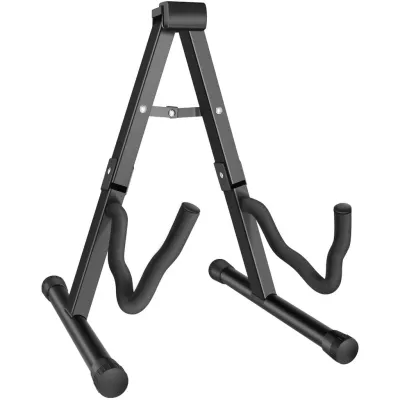
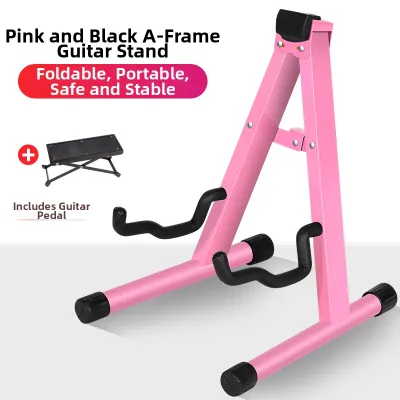

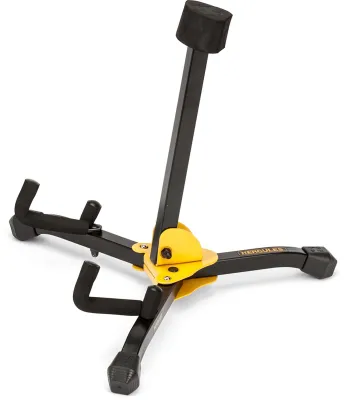

Prices are valid at publication and may change. Please refer to the product page for the latest price.
Your primary use case also dictates the best storage style. For daily practice, you want your primary instrument within arm’s reach of your chair or desk. For long-term storage or keeping a collection organized between recording sessions, a centralized rack keeps everything neat and out of the way. If you frequently perform live, you must also consider whether you need a highly portable single stand for the stage or a folding multi-rack to manage multiple instruments during a set.
Single Guitar Stands: Flexibility and Display
Single guitar stands offer unparalleled flexibility in placement, allowing you to position your instrument exactly where you need it. Whether you want your acoustic guitar next to the sofa for casual strumming or your electric guitar right beside your recording interface, a single stand can be moved in seconds. This mobility is particularly useful in dynamic home environments where furniture arrangements or practice locations change frequently.

Beyond physical convenience, single stands serve an aesthetic purpose by showcasing your instruments. A beautiful guitar is a piece of art, and an individual stand allows you to display it prominently without visual clutter. This individual presentation makes it easy to appreciate the wood grain, finish, and unique body shape of a prized instrument without other guitars blocking the view.
However, relying solely on single stands for a growing collection introduces distinct disadvantages. As you add more stands, the cumulative floor footprint expands significantly, often requiring more total area than a single consolidated rack. Furthermore, managing cables becomes increasingly difficult when instruments are spread out, leading to a messy look and potential tripping hazards from loose cords running across the floor.
Multi-Guitar Racks: Consolidation and Storage
Multi-guitar racks excel at space efficiency, offering a highly organized solution for players with three or more instruments. By aligning guitars side-by-side in a vertical or slightly angled orientation, a rack minimizes the total floor area required for storage. This consolidation is especially beneficial in smaller apartments or compact home studios where every square meter of floor space is at a premium.
While racks are highly efficient, they do introduce specific physical risks that require careful management. Because instruments are parked closely together, the risk of accidental contact increases during retrieval or storage. A careless movement can cause a headstock to bump against an adjacent guitar’s neck, or lead to finish transfer if the bodies rub against one another. Ensuring you have adequate spacing between slots is essential to prevent these minor cosmetic damages.
Portability and placement are also different with multi-guitar racks. Unlike a lightweight single stand that you can pick up with one hand, a fully loaded multi-rack is heavy and difficult to move. It requires a dedicated, stable floor area that is completely out of the way of foot traffic. Once positioned, a rack is best left in place, making it less suitable for players who prefer to constantly rearrange their creative spaces.
Feature Comparison: Stability, Protection, and Compatibility
When comparing these two storage options, base stability is the primary safety consideration. Single stands, particularly lightweight tripod models, have a higher center of gravity and a smaller physical footprint, making them more susceptible to tipping if bumped by pets or children. Multi-guitar racks feature a much wider, rectangular base that sits flat on the floor, distributing the weight of multiple instruments and offering superior resistance to tipping.
Instrument protection goes beyond physical stability; it also involves the chemical compatibility of the stand’s padding with your guitar’s finish. Many vintage and high-end modern guitars feature a delicate nitrocellulose lacquer finish, which can chemically react with standard rubber or cheap foam padding, leading to permanent discoloration or softening of the finish. When shopping for either a stand or a rack, always check the product specifications and labels to ensure the contact materials are explicitly rated as safe for nitrocellulose finishes.
Compatibility with different body shapes is another critical factor to evaluate before buying. Standard single stands often rely on a neck-cradle design that works well for symmetrical shapes but may struggle with offset electric guitars or deep-bodied acoustic dreadnoughts. Multi-guitar racks typically support the instruments by the base of the body and the neck, but you must verify that the slot widths and base rails can accommodate the extra depth of acoustic instruments alongside slim electric guitars.
Decision Matrix: When to Choose Which Setup
To make the right decision for your space, use a clear, condition-based framework. Opt for a single guitar stand if you own only one or two instruments, value the ability to move your gear around the room easily, or want to display a specific guitar as a visual centerpiece. Single stands are also the preferred choice for gigging musicians who only need to support one instrument on stage.
Choose a multi-guitar rack if your collection has grown to three or more instruments and you need to maximize your available floor space. A rack is the ideal choice for dedicated music rooms, home studios, or rehearsal spaces where keeping multiple guitars organized and centralized is more important than individual display.
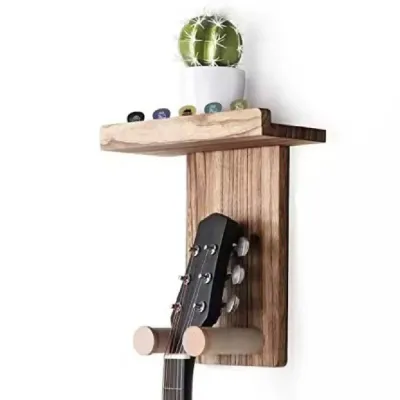
However, keep in mind that neither option may be suitable if your environment lacks climate control or has severe space limitations. If your home experiences extreme humidity fluctuations, keeping your instruments in their hard cases with dedicated humidification packs is much safer than leaving them exposed on any stand. Alternatively, if floor space is completely unavailable, wall-mounted hangers can keep your instruments safe and off the ground entirely, provided they are anchored securely to wall studs.
Before finalizing your purchase, always verify your guitar manufacturer’s care instructions regarding finishes and body dimensions. Check the stand or rack’s product specifications to confirm the padding materials, weight limits, and slot dimensions align perfectly with your specific instruments. Taking these precautions ensures your gear remains secure, undamaged, and ready to play.
Frequently Asked Questions (FAQ)
Is it safe to leave a guitar on a stand long-term?
Leaving a guitar on a stand long-term is generally safe, but it depends heavily on your room’s environmental conditions rather than the stand itself. Wood is highly sensitive to changes in temperature and relative humidity, which can cause warping, cracking, or fret sprout if left uncontrolled. To protect your instrument, maintain a stable indoor environment with a relative humidity level between 45% and 55%. Additionally, you must verify that the stand’s padding material is compatible with your guitar’s finish, as prolonged contact with low-grade rubber can cause chemical reactions that ruin nitrocellulose lacquers. Regularly inspect the stand’s structural joints and the guitar’s neck alignment to ensure everything remains secure over time.
Can I mix acoustic and electric guitars on the same multi-rack?
Yes, you can mix acoustic and electric guitars on the same multi-guitar rack, but you must plan the arrangement carefully due to differences in body depth and weight. Acoustic guitars are significantly deeper than solid-body electrics, meaning they require wider slot spacing to prevent them from pressing against adjacent instruments. To maintain balance and prevent crowding, place larger acoustic guitars on the outer edges of the rack or in designated wider slots. Always check the rack’s total weight capacity and individual slot width specifications before loading it to ensure it can safely support the combined weight and physical dimensions of your mixed collection.
Community discussion
Share your experience or ask a question. Comments are reviewed before publication.