
Choosing the right case for a 1/4 size cello is a balancing act between protecting a delicate instrument and accommodating the physical limits of a young child. If your child primarily carries the instrument for short walks under direct adult supervision, or if transport is limited to a private car, a padded soft gig bag is often the most practical and comfortable choice. However, if the cello must be transported on public transit, stored in crowded school music rooms, or handled independently by a young student, a hard case is essential to prevent costly structural damage. The optimal choice ultimately depends on your daily commute logistics and how much assistance an adult can provide.
The Core Trade-Off: Portability vs. Impact Protection
A 1/4 size cello is designed for young students, typically between five and seven years old. At this developmental stage, even a small amount of extra weight can significantly affect a child’s posture, balance, and fatigue levels. A standard wooden 1/4 cello is relatively light, but adding a heavy case can double or triple the total load on a child’s shoulders.
While minimizing weight is crucial for comfort, it must be balanced against the fragile nature of the instrument. A cello is constructed from thin plates of spruce and maple, with a bridge held in place solely by string tension and an internal soundpost wedged inside. A sharp knock to a soft bag can easily displace these components or crack the wood, resulting in repairs that can easily exceed S$300.
Products mentioned in this guide
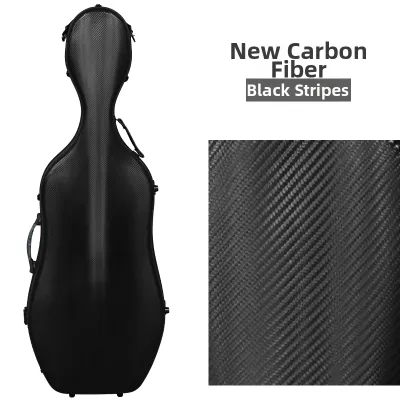
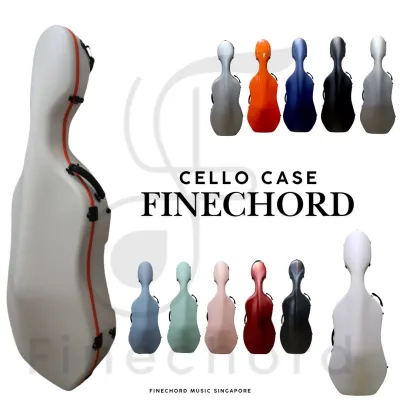
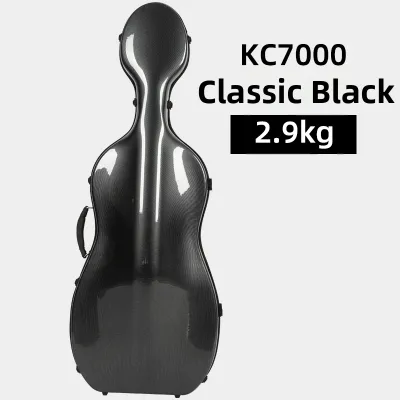
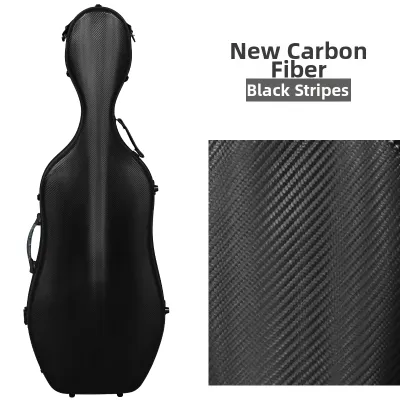
Prices are valid at publication and may change. Please refer to the product page for the latest price.
Parental supervision plays a major role in mitigating these risks. If an adult is always present to carry the instrument or supervise its placement in a vehicle, a lightweight soft bag is highly manageable. If the child must handle the instrument alone at school, the rigid protection of a hard case becomes a necessary safeguard against accidental drops and bumps from classmates.
Soft Gig Bags: When Lightweight Convenience Wins
Soft gig bags are constructed from woven synthetic fabrics, such as polyester or nylon, and lined with foam padding. For a young student, the primary advantage of a soft bag is its minimal weight. Keeping the carrying load as light as possible helps prevent physical strain and keeps the learning experience positive for a young child.

Most high-quality soft bags feature adjustable backpack straps, allowing the child to distribute the weight evenly across both shoulders. This hands-free design is incredibly helpful when the student is also managing a school backpack or a music stand. Additionally, soft bags are flexible and easy to store in tight spaces, such as under a bed or behind a car seat, and can be folded away when the cello is in use.
However, soft bags offer virtually no protection against crushing forces or sharp impacts. If another heavy instrument case falls onto a soft bag in a school storage room, the cello inside will bear the full force. Furthermore, soft fabrics provide very little insulation against rapid environmental changes, which can cause tuning instability when moving between air-conditioned rooms and humid outdoor environments.
Hard Cases: When Maximum Security is Non-Negotiable
Hard cases provide a rigid outer shell made of materials like fiberglass, ABS plastic, or compressed foam. This structural barrier is designed to absorb and deflect external forces, ensuring that any impact is distributed across the case rather than transmitted to the delicate wooden cello. For parents who have invested in a high-quality instrument, a hard case offers greater peace of mind.
The main benefit of a hard case is its structural integrity. If the case is dropped, knocked over, or bumped in a crowded school hallway, the rigid shell prevents the instrument from absorbing the shock. This level of protection is particularly valuable in high-risk environments, such as public buses, trains, or shared school lockers where instruments are often stacked together.
Despite these protective benefits, hard cases present clear practical challenges for young players. They are significantly heavier and bulkier than soft bags, making it difficult for a five-to-seven-year-old to carry them independently. Parents must often step in to carry the instrument, which is an important logistical factor to consider before purchasing.
Essential Features to Verify in Any 1/4 Cello Case
When shopping for a 1/4 cello case, regardless of whether you choose a soft bag or a hard shell, there are several critical specifications and build details you must inspect to ensure the safety of the instrument.
- Interior Fit: A 1/4 size cello is not standardized across all makers; slight variations in body length, bout width, and neck angle can affect how the instrument sits in a case. Always consult the manufacturer's sizing guides and measure your cello's upper bout, lower bout, and total length before making a purchase. The cello should fit snugly without shifting, but there should be no pressure exerted on the bridge or the top plate when the case is closed.
- Neck and Scroll Support: Look for a case that features a dedicated neck strap, hook-and-loop fastener, or a padded block that secures the neck firmly in place. This prevents the cello from sliding forward or backward, which could cause the scroll or tuning pegs to strike the interior walls of the case during transit. The scroll is one of the most fragile parts of the cello, and a sudden shift can easily snap the pegbox.
- Bow Storage: The case must have a secure compartment or holder for a 1/4 size bow. Ensure that the bow holders are positioned so that the bow hair and stick do not make contact with the cello's body when the case is closed. A loose bow sliding around inside the case can scratch the varnish or even damage the wood. Look for holders with secure turn-locks or padded pockets that keep the bow completely stationary.
- Exterior Durability: Evaluate the exterior durability and hardware quality. For soft gig bags, look for high-denier outer fabrics, such as 600D or 1200D nylon, which offer excellent tear resistance and water repellency. The zippers should be heavy-duty and run smoothly without catching. For hard cases, inspect the latches and hinges to ensure they align perfectly and close securely. Check the handle reinforcements; a broken handle can lead to a catastrophic drop. If the case has wheels, verify that they roll smoothly and are positioned to prevent the case from tipping over when pulled.
Final Decision Framework: Matching the Case to the Student
To make the right choice for your young cellist, you must weigh the daily routine of the student against the physical demands of the instrument.
Choose a soft gig bag if:
- The child is young and must carry the instrument themselves over short distances.
- Transport is highly controlled, such as private car rides or direct parental supervision.
- Budget is a primary constraint, and the instrument is a rental or lower-cost student model.
Choose a hard case if:
- The commute involves public transit, school buses, or walking through crowded areas.
- The cello is stored in shared school lockers or high-traffic areas at home.
- The instrument is a high-quality or family-heirloom model where repair costs would be prohibitive.
For many families, a hybrid approach or an upgrade path offers the best balance. You might choose to start with a high-quality, heavily padded soft bag while your child is very young and under constant supervision. As they grow older, take on more responsibility for carrying their instrument, and eventually transition to larger fractional sizes like 1/2 or 3/4, you can invest in a durable hard case. This allows you to match the level of protection to the child’s increasing independence and the value of their upgrading instrument.
Frequently Asked Questions (FAQ)
Can a 1/4 cello fit in a 1/2 size case if I add extra padding?
It is highly discouraged to place a 1/4 size cello inside a 1/2 size case, even with temporary padding like towels, bubble wrap, or foam blocks. A 1/2 size case is designed for a significantly larger instrument, meaning the internal support structures—such as the neck rest, accessory pockets, and body padding—will not align correctly with a 1/4 cello. This mismatch allows the smaller instrument to shift and slide during transport.
When a cello moves inside its case, the delicate bridge can easily catch on the padding or the case lining and collapse. A collapsed bridge can scratch the top plate, damage the varnish, or cause the soundpost inside to fall over. Furthermore, if the neck is not securely held by the neck strap, the scroll can strike the sides of the case, leading to structural fractures. While some manufacturers offer specialized, adjustable interior blocks or inserts designed to adapt larger cases for smaller instruments, these must be verified for compatibility. For daily transport, a properly fitted 1/4 size case remains the most secure default choice to protect your investment.
Do I need a humidifier inside a soft gig bag or a hard case?
Whether you need a humidifier or a dehumidifier inside your cello case depends heavily on your local climate, how the instrument is stored, and the material of the case itself. Celli are made of natural wood that is highly sensitive to changes in relative humidity. Ideally, a cello should be kept in an environment with a relative humidity of around 40% to 60%. In tropical regions like Singapore, high outdoor humidity is a constant factor, while air-conditioned indoor spaces can dry out the air significantly, causing rapid fluctuations.
Hard cases generally offer a much tighter seal than soft gig bags, which helps isolate the instrument from external humidity swings. If you use a hard case, it is easier to maintain a stable internal microclimate. Soft gig bags, being made of breathable fabric, offer virtually no barrier against humidity changes. To determine your specific needs, monitor the humidity levels in the rooms where the cello is stored and played. Consult your luthier or music teacher for localized advice. If a humidifier or dehumidifier pack is recommended, ensure it is placed securely in a designated pocket or compartment within the case, completely isolated from direct contact with the cello’s wood or varnish to prevent accidental moisture damage.
Community discussion
Share your experience or ask a question. Comments are reviewed before publication.