
Choosing between a soft violin bag and a hard case depends on how you travel, where you store your instrument, and the value of your violin. A hard case is the standard choice for maximum protection, making it essential for high-value instruments, frequent travel, or crowded commutes. Conversely, a soft violin bag (often called a gig bag) prioritizes lightweight portability, making it suitable for short walks, direct car travel, or student instruments that do not face heavy physical hazards. Ultimately, your daily routine, transit environment, and handling habits will dictate which option keeps your instrument safest.
Key Differences in Protection and Portability
The fundamental divide between these two storage options lies in their structural design. A hard case utilizes a rigid outer shell to shield the violin from external forces, while a soft bag relies on layers of padded fabric. This structural difference directly impacts how you handle your instrument daily, how much physical stress the package can withstand, and how easily you can carry it through various environments.
Impact Resistance and Structural Support
Rigid shells are engineered to absorb and disperse external impact, protecting the delicate wooden body of the violin from crushing forces. Common materials for hard cases include traditional wood, fiberglass, and modern carbon fiber composites. These materials create a protective vault that prevents the case from collapsing when stacked or subjected to accidental drops.
Products mentioned in this guide

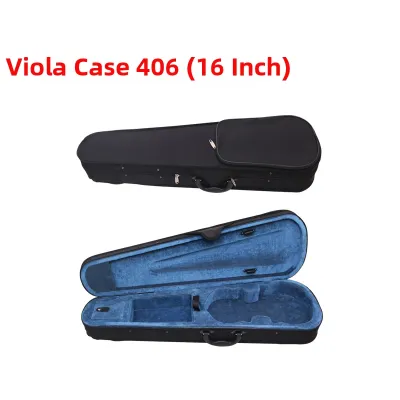
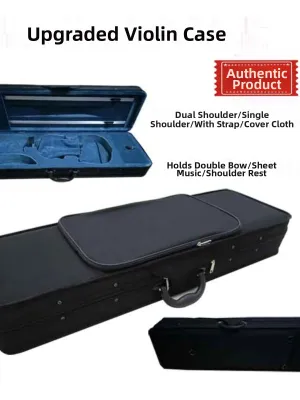
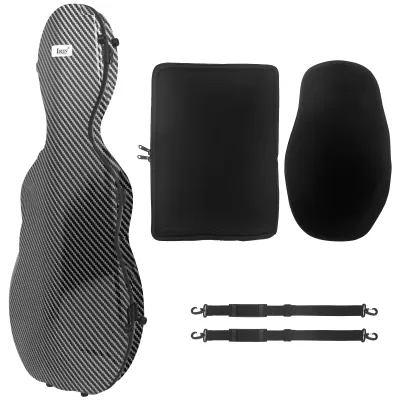

Prices are valid at publication and may change. Please refer to the product page for the latest price.
Soft violin bags, on the other hand, rely on high-density foam padding wrapped in durable fabrics like nylon or polyester. While this padding cushions the instrument against minor bumps and scratches, it offers minimal resistance to heavy compression or direct, sharp impacts. If a soft bag is dropped from a height or squeezed in a tight space, the force is easily transmitted directly to the violin’s bridge, soundpost, or neck.
When evaluating either option, it is crucial to inspect the interior support structures. High-quality cases often feature a suspension system that floats the violin inside the shell, preventing the back and scroll from touching the outer walls directly. Look for secure neck straps, cushioned blocks, and adequate clearance for the bridge to ensure the instrument remains immobile during transit.
Weight, Carrying Options, and Storage
The physical weight of your carrying setup plays a major role in your daily comfort, especially during long commutes or when navigating public transport systems. Hard cases, particularly those made of traditional wood or heavy fiberglass, can add significant weight to your load. While carbon fiber options are exceptionally light, they represent a substantial financial investment.
Soft gig bags excel in weight reduction, often weighing a fraction of a standard hard case. This makes them highly appealing for students or musicians who must walk long distances. Most soft bags feature ergonomic backpack straps and padded shoulder straps, allowing you to distribute the weight evenly across your shoulders and back.
Storage capacity is another key differentiator. Soft bags frequently feature large, flexible exterior pockets that can accommodate sheet music, music stands, rosin, mutes, and multiple bows. Hard cases often have more restricted interior compartments, sometimes requiring you to carry sheet music in a separate bag or choose a case with an attached exterior music pocket.
Temperature and Humidity Buffering
Violins are highly sensitive to environmental fluctuations, particularly rapid changes in temperature and humidity. Hard cases generally provide a more stable microclimate because their sealed, rigid shells act as an insulating barrier against external air. This insulation is particularly valuable when moving between air-conditioned indoor spaces and hot, humid outdoor environments.
Soft fabric bags offer very little thermal insulation and are highly permeable to moisture. In high-humidity regions, fabric can absorb moisture from the air, potentially exposing the violin to damp conditions that can soften hide glue or warp the wood.
To safeguard your instrument, verify whether your chosen case features a rubber gasket seal to block out moisture. Many hard cases also include built-in hygrometers to monitor internal humidity levels, though you should always verify their accuracy against a digital sensor.
Decision Framework: Match the Case to Your Routine
To determine which option fits your lifestyle, evaluate your typical transit habits and the environments where your violin will be stored.

Choose a hard case if:
- You travel on public transit: Crowded trains and buses expose your instrument to accidental bumps, crowding, and sudden stops where a soft bag could easily be crushed.
- You own a high-value or antique instrument: The financial and historical value of a professional violin demands the highest level of physical and environmental protection.
- You store your instrument in shared spaces: School music rooms, orchestral rehearsal halls, and shared car trunks present unpredictable hazards from other equipment.
- You travel by air: Even if you plan to carry your violin onboard, airline staff may require you to gate-check the instrument if overhead bins are full.
Choose a soft gig bag if:
- Your commute is highly controlled: If you primarily drive directly to your destination or walk short distances in quiet neighborhoods, the risk of physical impact is low.
- Weight is your primary concern: Musicians dealing with back pain or young students carrying multiple school bags may benefit from the reduced physical strain of a lightweight bag.
- You are transporting a secondary or student instrument: For lower-cost instruments where the replacement value is modest, the convenience of a soft bag may outweigh the need for extreme protection.
- You require extensive storage: If you need to carry large folders of sheet music, method books, and personal items in a single container, a soft bag's pockets offer unmatched convenience.
Verify first if:
- Your transport limits are strict: Check the exact dimensions allowed by your local transit authority or preferred airlines before committing to a bulky hard case.
- Your storage lockers have size constraints: School or conservatory lockers may not accommodate wide, rectangular hard cases, making a contoured case or soft bag necessary.
- Your physical strength matches the case weight: Lift the case empty and imagine carrying it for thirty minutes to ensure it is manageable for your daily routine.
Verifying Fit, Compatibility, and Build Quality
Before purchasing any violin bag or case, you must ensure it is compatible with your specific instrument. Violins are not perfectly uniform, and even standard full-size (4/4) models can vary slightly in body length, upper and lower bout widths, and overall depth.
Measure your violin carefully and compare these dimensions with the manufacturer’s interior specifications. The instrument should fit snugly inside the padding without sliding around, but it should not be so tight that the lid presses down on the bridge or strings.
Pay close attention to the bow holders. Ensure the case accommodates the length of your bows without bending the tips or putting pressure on the hair. The accessory compartment should be large enough to store your rosin, cleaning cloth, and shoulder rest securely so they do not loose-roll and scratch the violin’s varnish.
Finally, inspect the build quality of all hardware. Zippers should glide smoothly without catching, and latches on hard cases should close with a firm, positive click. Check that the hinges are robust and that the interior lining is made of a soft, non-abrasive material like velvet or plush microfiber to prevent scratches.
Maintaining Your Violin Case or Gig Bag
Proper maintenance ensures your case continues to protect your violin effectively over its lifespan. For hard cases, wipe down the exterior shell regularly with a damp microfiber cloth to remove dust and grime, avoiding harsh chemical cleaners that could degrade fiberglass or carbon fiber finishes.
For soft fabric bags, spot-clean dirt with a mild detergent and water, and ensure the fabric dries completely to prevent mold growth, especially in humid climates. Regularly vacuum the interior plush lining to remove rosin dust, which can act as an abrasive if left to accumulate.
Inspect all mechanical parts, including zippers, latches, and strap D-rings, at least once a month. Lubricate sticky zippers with a tiny amount of paraffin wax or zipper lubricant, and replace any worn straps or frayed stitching immediately to prevent accidental drops.
When not in use, store your empty case in a cool, dry place away from direct sunlight. Leaving a case in a hot car or a damp basement can degrade the structural glues, warp the shell, or cause the interior fabrics to develop musty odors that transfer to your violin.
Frequently Asked Questions (FAQ)
Can I take a soft violin bag as a carry-on on flights?
While many airlines allow small musical instruments in the cabin, taking a soft violin bag carries significant risk. If the flight is fully booked, cabin crew may require you to gate-check your bag into the cargo hold, where a soft bag offers virtually no protection against heavy luggage or rough handling. For air travel, a hard case with a compact, flight-friendly design is highly recommended to ensure your instrument survives unexpected handling.
Do I need a humidifier inside my violin case?
Whether you need active humidity control depends on your local climate and how well your case seals. Violins thrive in relative humidity levels between 40% and 60%. In extremely dry climates or heated indoor winter environments, wood can shrink and crack, making a case humidifier necessary. Conversely, in tropical climates like Singapore, high humidity is often the primary concern, requiring desiccant packs inside a well-sealed hard case to absorb excess moisture. Always use a reliable hygrometer to monitor the internal environment before adding moisture.
Community discussion
Share your experience or ask a question. Comments are reviewed before publication.