
Choosing the right sound foam for your musical instrument practice depends entirely on the frequencies your instrument produces. High-frequency instruments like violins and acoustic guitars require thin, textured foam to scatter flutter echoes, while low-frequency instruments like bass guitars or electronic drums require thick corner bass traps to control muddy resonances. Rather than treating every wall equally, a strategic combination of foam shapes, thicknesses, and densities will create a balanced acoustic environment that lets you hear your instrument clearly.
Quick Guide: Matching Foam Shapes to Your Instrument
Different instruments generate sound waves of vastly different lengths, meaning a one-size-fits-all acoustic treatment rarely works. For high-frequency instruments, such as the violin, acoustic guitar, flute, or classical vocals, the primary goal is to tame harsh, high-pitched reflections and flutter echoes. These instruments benefit most from surface-scattering shapes like pyramid or wedge foams, which break up direct reflections without completely deadening the room.
Mid-range instruments, including brass, woodwinds, and acoustic pianos, require a balanced absorption approach. Standard flat panels or medium-thickness wedge foams help maintain a natural tone across the middle registers without stripping away the room’s natural warmth.
Products mentioned in this guide
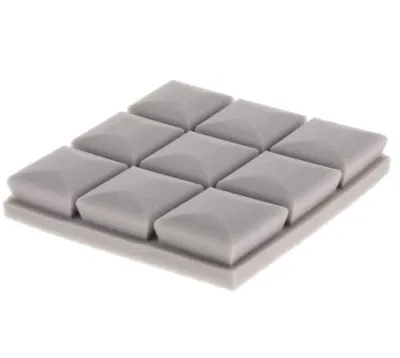
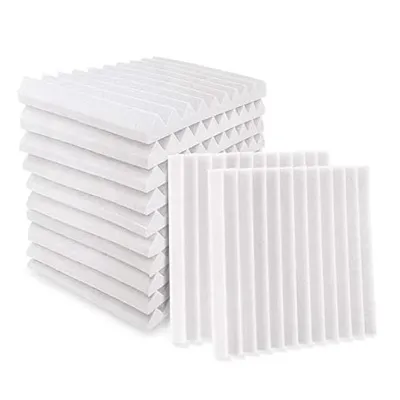
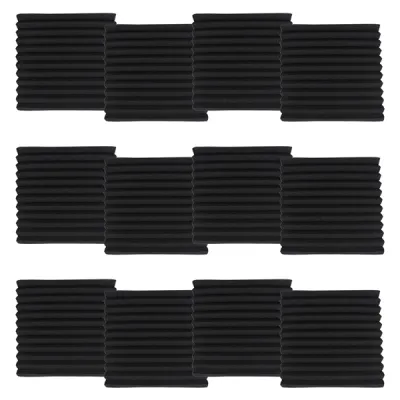
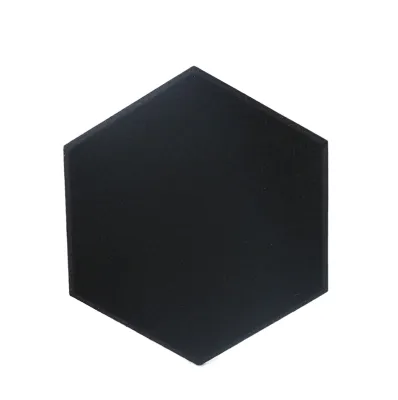
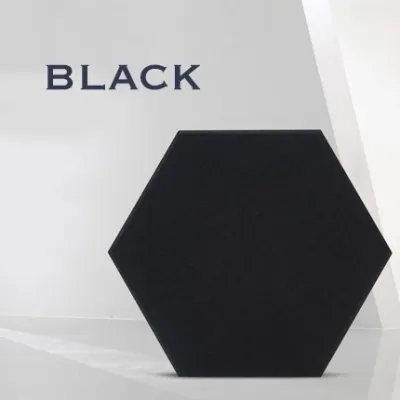
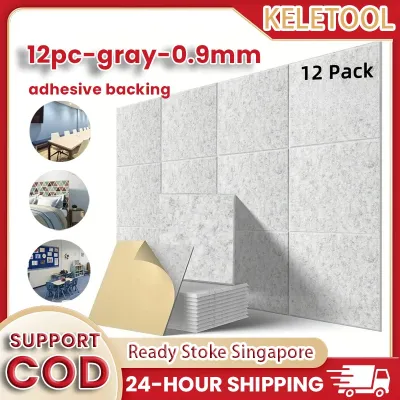
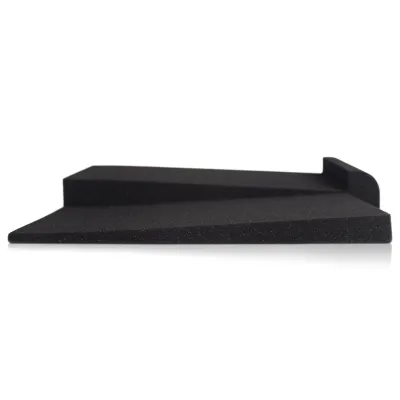
Prices are valid at publication and may change. Please refer to the product page for the latest price.
Conversely, low-frequency instruments like bass guitars, kick drums, and heavy synthesizers produce long sound waves that easily pass through thin surface foam. These instruments require thick, high-density corner units, commonly known as bass traps, to manage low-end resonance and prevent muddy acoustic buildup in the corners of your practice space.
Decoding Sound Foam Specs: Thickness, Density, and NRC
When browsing options on an online marketplace, technical specifications can quickly become overwhelming. Understanding three core metrics—thickness, density, and the Noise Reduction Coefficient (NRC)—will help you select the right material for your practice room.

Thickness and Wavelengths The physical thickness of acoustic foam directly dictates the lowest frequency it can effectively absorb. Thin foam, typically around 25 millimeters thick, only absorbs high-frequency sounds. To absorb mid-range frequencies, you generally need foam that is at least 50 millimeters thick. Low frequencies require even thicker materials, often exceeding 100 millimeters, which is why standard wall panels are rarely sufficient for bass instruments.
Density and Environmental Durability Density refers to the weight of the foam per unit volume, usually measured in kilograms per cubic meter. Higher-density foam contains more physical material to resist and absorb sound energy. In warm, highly humid environments like Singapore, density also plays a critical role in durability. Low-quality, low-density foams tend to crumble, discolor, or sag quickly when exposed to persistent humidity. Checking the manufacturer’s specifications for high-density polyurethane or melamine foam ensures the panels retain their shape and acoustic properties over time.
Understanding NRC Ratings The Noise Reduction Coefficient (NRC) is a standard rating from 0.0 (perfect reflection) to 1.0 (perfect absorption). While a higher NRC indicates greater overall absorption, it is an average across several frequencies. A panel might have a high NRC because it absorbs high frequencies exceptionally well, yet it may do almost nothing for low-end bass. Always check the manufacturer’s frequency-specific absorption chart rather than relying solely on a single, overall NRC number.
How Foam Shapes Alter Your Practice Room Acoustics
The physical profile carved into the face of acoustic foam changes how sound waves bounce off your walls. Selecting the right shape allows you to sculpt the acoustic response of your practice space to match your playing style.
Pyramid and Wedge Foams
Pyramid and wedge designs are the most recognizable acoustic treatments, featuring alternating ridges or peaks. These shapes are specifically engineered to scatter and diffuse mid-to-high frequency sound waves as they strike the wall.
- Flutter Echo Reduction: By angling the surface, these shapes prevent sound waves from bouncing directly back and forth between parallel walls, which eliminates the harsh, metallic ringing sound known as flutter echo.
- Clarity for Acoustic Instruments: This scattering effect is highly beneficial for string players, woodwind players, and vocalists who need to hear the subtle nuances of their performance without the distraction of immediate room reflections.
- Low-End Limitations: Because these shapes carve away a significant portion of the foam's overall mass to create the peaks, they have very little impact on low-frequency standing waves, leaving bass frequencies largely unaffected.
Flat Panels and Bass Traps
Flat panels and bass traps prioritize mass and volume over surface angles, making them essential for controlling powerful, low-frequency energy.
- Flat Panels for Direct Absorption: Unlike wedge designs, flat foam panels retain their full thickness across the entire surface. This makes them excellent for maximum direct absorption at primary reflection zones, helping to dry out a room's acoustics quickly.
- Bass Traps for Corner Accumulation: Low-frequency sound waves naturally accumulate in the corners of rectangular rooms, creating boomy, inaccurate bass. Bass traps are thick, solid triangular blocks designed to fit snugly into 90-degree corners, absorbing this low-end energy before it can bounce back into the room.
- Ideal Instrument Pairings: If your practice involves percussion, bass guitar, or electronic music played through monitors, prioritizing corner bass traps and thick flat panels is essential to prevent your room from sounding muddy and unbalanced.
Building Your Practice Space: Coverage, Placement, and Safety
Installing acoustic foam requires a strategic approach to avoid wasting money or ruining the natural character of your instrument.
The Danger of Over-Absorption A common mistake is covering 100% of the walls with foam. This completely deadens the room, making it sound unnatural and forcing you to play harder to hear your instrument’s natural resonance. For a standard practice room, a coverage ratio of 20% to 40% of the wall surface is usually sufficient to control reflections while keeping the space feeling alive.
Strategic Placement Methods Instead of scattering foam randomly, focus on primary reflection points. You can find these points using a simple mirror test: sit in your playing position and have a friend slide a mirror along the wall at head height. Wherever you see the reflection of your instrument or speakers in the mirror, that is a primary reflection point where a foam panel should be placed.
Safety and Compliance Checks Before purchasing any foam, always verify its safety credentials. Look for clear manufacturer documentation certifying a Class A or Class 1 fire retardancy rating, especially if you are setting up a practice space in a commercial building or a dedicated home studio. Additionally, check for indoor air quality certifications, such as GreenGuard or OEKO-TEX, to ensure the foam does not release harmful volatile organic compounds into your closed practice environment.
Frequently Asked Questions (FAQ)
Does sound foam block sound from leaving the room?
No, sound foam does not block sound from leaving the room. Acoustic foam is designed solely for absorption, meaning it improves the sound quality inside the room by reducing echoes and reflections. Because foam is lightweight and porous, sound waves pass right through it and travel through the walls to neighboring spaces. True soundproofing requires mass, density, and decoupling—such as adding heavy drywall, specialized acoustic sealants, or building a room-within-a-room structure—to physically block sound transmission.
How do I clean and maintain acoustic foam?
Acoustic foam has a highly porous surface that easily traps dust and pet hair over time. To clean it safely, gently dust the panels or use a vacuum cleaner with a soft brush attachment on a low suction setting to prevent tearing the delicate foam structure. Avoid using liquid cleaners, water, or harsh chemical sprays, as moisture can easily become trapped in the pores, leading to mold growth or premature degradation of the polyurethane material. Always consult the manufacturer’s specific care instructions before applying any cleaning agents.
Community discussion
Share your experience or ask a question. Comments are reviewed before publication.