
Practicing drums at home is one of the most rewarding ways to build your musical skills, but for musicians living in Singapore’s high-density residential areas, it presents a significant acoustic challenge. Whether you reside in a Housing & Development Board (HDB) flat or a private condominium, you share walls, ceilings, and floors with neighbors who live just meters away. The physical energy generated by a drum kit—even an electronic one—can easily disrupt the peace of those around you, leading to awkward conversations or formal noise complaints.
When looking for solutions, many drummers immediately search for a “soundproof” drum mat as a quick fix. While a high-quality, vibration-dampening mat is an essential foundation for any quiet home practice setup, it is crucial to understand its realistic capabilities. A single mat cannot completely soundproof a room; instead, it must be understood as the primary decoupling layer in a broader, multi-layered vibration isolation strategy designed to stop sound from entering the building’s structure.
To successfully manage drum noise in a typical apartment, you must look at how sound travels through concrete and identify the specific types of noise your kit produces. By combining a specialized mat with smart setup techniques and supplementary isolation tools, you can create a practice space that allows you to play comfortably without disturbing your neighbors.
Products mentioned in this guide
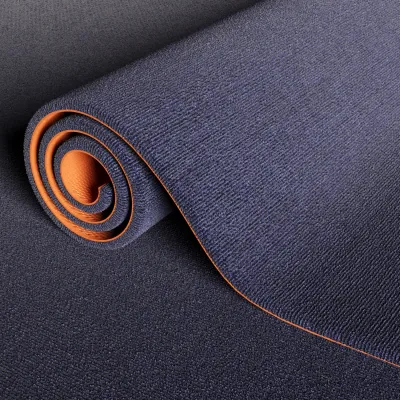
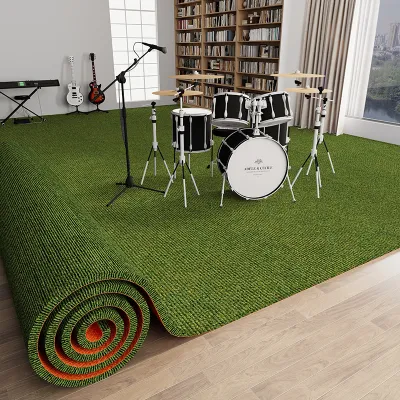
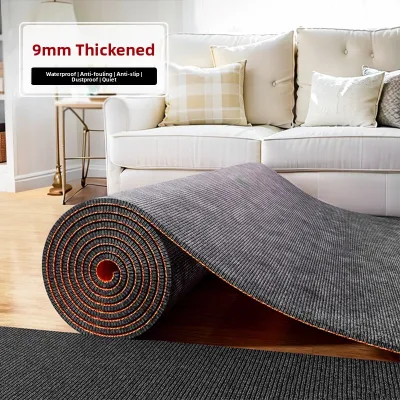
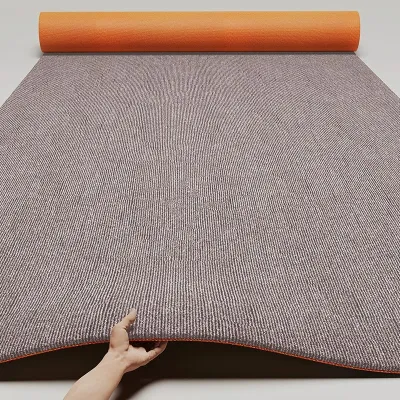
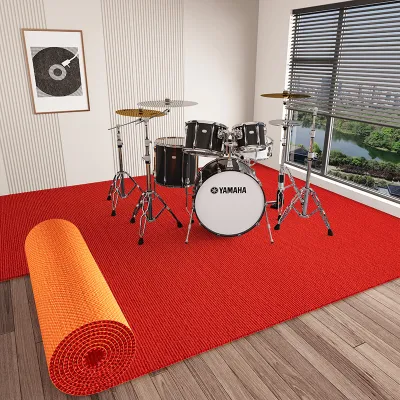
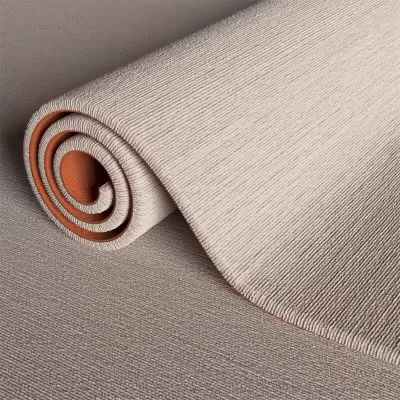
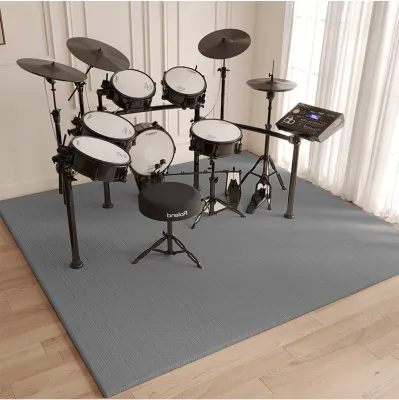
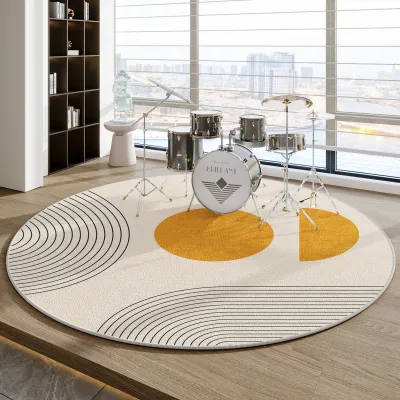
Prices are valid at publication and may change. Please refer to the product page for the latest price.
Understanding Drum Mat Soundproofing in High-Density Housing
To choose the right acoustic gear, you must first understand the difference between airborne noise and structure-borne vibration. Airborne noise refers to the sound waves that travel through the air, such as the high-frequency crack of a snare drum, the bright shimmer of cymbals, or even the plastic-on-rubber click of electronic drum pads. This type of noise can be softened by sealing gaps in doors, using heavy curtains, or adding acoustic foam to absorb mid-to-high frequency reflections within the room.
Structure-borne vibration, also known as impact noise, is a completely different challenge. When you strike a drum pad or step on a kick pedal, mechanical energy travels down the stands and pedals directly into the floor. In Singapore’s residential buildings, which are constructed primarily of reinforced concrete, these low-frequency vibrations travel with incredible efficiency. The concrete slab acts as a conductor, carrying the physical impact of your bass drum pedal down into the structural pillars and radiating it as a loud, low-frequency thud in the apartment below.
This is why standard thin rugs or decorative carpets fail to solve the problem. While a basic rug is excellent for protecting your vinyl or parquet flooring from scratches and preventing your bass drum from sliding forward, it lacks the mass and elastic properties required to absorb heavy impact energy. The thin fibers of a standard carpet compress instantly under the weight of your hardware, leaving no air pockets or flexible barriers to cushion the physical force of your playing.
A specialized soundproof drum mat serves as a decoupling layer. Decoupling is the acoustic practice of breaking the direct physical connection between two hard surfaces—in this case, your drum kit and the concrete floor. By placing a highly dense, elastic material between your hardware and the ground, you create a mechanical barrier that absorbs and dissipates the kinetic energy of your footwork before it can transform into structure-borne noise.
Essential Specifications for a Noise-Reducing Drum Mat
When evaluating drum mats on online marketplaces or at local music shops, you must look past aesthetic designs and focus on technical specifications. The most critical factor is material density and composition. Cheap mats made of standard open-cell foam, such as basic yoga mats or packaging materials, are entirely unsuitable for drumming. Under the heavy, concentrated weight of a drum throne, rack, and pedals, open-cell foam collapses completely, eliminating the air pockets needed to damp vibrations and leaving your kit effectively resting on the hard floor.

Instead, look for mats constructed from high-density closed-cell foam, heavy-duty recycled rubber, or specialized acoustic underlayments. Closed-cell rubber compounds, such as styrene-butadiene rubber (SBR) or neoprene, feature tiny, sealed gas pockets that resist compression under heavy loads. These materials maintain their elastic, spring-like properties even when supporting a full drum kit and a seated player, ensuring consistent vibration dampening over long practice sessions.
A highly effective noise-reducing mat typically features a multi-layer construction. The top layer is usually a dense, tightly woven carpet pile designed to provide maximum traction for your drum hardware and pedals. Beneath this textile layer lies a heavy barrier core, often made of mass-loaded vinyl (MLV) or dense rubber, which blocks airborne sound transmission. The bottom layer consists of a soft, decoupled material like felt or closed-cell foam, which acts as a shock absorber to cushion the physical impacts of your playing.
Surface texture is another vital consideration for both playability and noise control. Drumming involves significant lateral forces, particularly from your kick drum and hi-hat pedals. If the top surface of your mat is too slick, your pedals will slide forward, forcing you to engage the sharp metal spikes or spurs built into your pedal bases. If these spikes puncture completely through your mat, they create a direct physical bridge to the concrete floor, instantly bypassing your isolation layer and transmitting vibrations directly into the building. A high-friction, durable textile top layer keeps your pedals locked in place without requiring deep punctures.
Finally, pay close attention to the physical dimensions of the mat. The mat must be large enough to accommodate your entire setup, including the drum throne. If your throne sits off the mat on the bare floor, your body weight is not resting on the isolated surface. This not only causes the kit to feel unstable but also means the physical impact of your body shifting and your feet pressing the pedals will transfer directly through the uninsulated throne legs into the floor slab. Measure the maximum footprint of your kit while you are in a comfortable playing position before making a purchase.
Designing a Complete Vibration Isolation System
While a high-density drum mat is an excellent starting point, serious practice in an HDB flat or condominium often requires a complete vibration isolation system. For drummers who practice frequently or play with a heavy foot, a mat alone may not provide enough dampening to satisfy downstairs neighbors. In these scenarios, the mat should be integrated into a larger, multi-layered isolation setup.
The most effective DIY solution for apartment drumming is a floating floor or drum riser platform. This system works on the principle of a mass-spring-mass system, where your drum kit sits on a heavy platform (the mass) that is separated from the concrete floor by a series of flexible isolators (the spring). You can construct a simple, highly effective riser using two layers of medium-density fibreboard (MDF) or plywood screwed together, supported by specialized rubber isolation blocks, high-density foam blocks, or even tennis balls cut in half. Placing your soundproof drum mat on top of this wooden platform creates a double-decoupling system that dramatically reduces low-frequency impact noise.
To further enhance this setup, you can combine your foundational mat with individual isolation pads. Placing specialized vibration-absorbing feet under your drum rack legs, cymbal stands, and pedal plates adds another layer of resistance against structural transmission. These small, dense rubber or silicone pads help isolate individual components of your kit, preventing vibrations from traveling down the metal stands and accumulating in the floor.
For airborne noise, such as the acoustic sound of an electronic kit’s rubber pads or the acoustic volume of low-volume cymbals, supplementary acoustic treatments are necessary. Adding mass-loaded vinyl (MLV) to the walls or placing high-density acoustic panels around the practice corner can help absorb mid-to-high frequencies before they bounce off hard concrete walls and escape through windows or doors.
It is important to recognize the limits of DIY solutions. If you are practicing on a full acoustic drum kit at high volumes, a mat and riser will not prevent airborne sound from passing through thin walls or shared ventilation shafts. In cases where structural transmission remains a persistent issue despite a high-quality mat and riser setup, consulting with a professional acoustic engineer in Singapore is recommended to assess structural flanking paths and design a custom isolation room.
Evaluating Options and Verifying Manufacturer Claims
When shopping for a drum mat on online marketplaces or at local music stores, you will encounter many products labeled “100% soundproof” or “acoustic drum mats.” It is vital to evaluate these claims critically. No single mat can achieve 100% soundproofing. Look for manufacturers that provide clear technical specifications, such as the material’s density (measured in kilograms per cubic meter), thickness, or impact insulation class (IIC) ratings. A reputable manufacturer will explain how their mat reduces vibration rather than relying on vague marketing buzzwords.
Read user reviews carefully, focusing on those written by apartment dwellers. Look for feedback that specifically mentions low-frequency impact noise, kick drum thuds, and neighbor relations. Reviews from drummers living in landed properties or detached houses are less relevant, as their main concern is usually hardware stability rather than structural vibration transmission to a downstairs neighbor.
Verify the retailer’s return policies and warranties before purchasing. Because every apartment’s structural acoustics and every drummer’s playing style are unique, you may find that a specific mat does not provide sufficient isolation for your specific environment. Having the option to return or exchange the product ensures you do not waste your budget on an ineffective solution.
Budget realistically for your entire setup. When budgeting S$150 to S$300 for your acoustic setup, do not spend your entire budget on a single premium drum mat if it leaves you with no funds for pedal isolation pads, a DIY riser, or basic wall treatments. A balanced, multi-layered isolation ecosystem is far more effective than a single expensive mat paired with uninsulated stands and pedals.
Installation and Maintenance for Lasting Noise Control
Proper installation is key to maximizing your mat’s noise-reducing capabilities. When laying down the mat, ensure there is a clear gap of at least a few centimeters between the edges of the mat and any walls or baseboards. If the mat touches the wall, vibrations can bypass the floor decoupling and travel directly into the walls—a phenomenon known as flanking transmission.
Regularly inspect your setup to maintain its acoustic integrity. Check that heavy stands or hardware spikes have not permanently compressed or punctured the mat’s core material. If a spike penetrates completely through the mat to touch the concrete floor, it creates an acoustic bridge that instantly ruins the isolation effect. Adjust your hardware or use rubber feet on stands to protect the mat.
Clean your mat using safe methods that preserve its physical properties. Avoid using harsh chemical solvents, bleach, or excessive water on rubber or foam mats, as these can degrade the polymer structure, causing the material to harden, crack, or lose its elasticity over time. Instead, use a vacuum cleaner for dust and debris, and wipe down surfaces with a damp cloth and mild soapy water when necessary. Allow the mat to dry completely before placing your drum kit back on top.
Frequently Asked Questions (FAQ)
Do I need a standard drum rug or a specialized soundproof mat?
A standard drum rug is designed primarily to provide traction, preventing your bass drum and pedals from sliding forward during play. While it protects your floor from scratches, it is typically too thin and light to absorb low-frequency vibrations. A specialized soundproof mat, on the other hand, features high-density materials and multi-layer construction specifically engineered to decouple your kit from the floor and absorb impact energy, making it essential for apartment practice.
Will a drum mat stop my neighbors from hearing my cymbals?
No, a drum mat will not stop airborne cymbal noise. Drum mats are designed to target structure-borne impact noise, such as the physical vibrations from your pedals and stands traveling through the floor. High-frequency airborne sounds, like cymbal crashes or the acoustic click of sticks on pads, travel through the air and require room-based acoustic treatments, heavy curtains, double-glazed windows, or the use of low-volume cymbals and mesh heads.
How thick should a drum mat be for an HDB flat or condo?
There is no single perfect thickness, as material density and composition are far more important than raw height. A thin, high-density rubber mat (around 6mm to 10mm) can outperform a much thicker but soft foam mat that collapses under weight. For effective isolation in a typical Singapore apartment, look for a multi-layered mat that combines a dense rubber or vinyl core with a dampening foam or felt backing, typically totaling between 8mm and 15mm in thickness, while verifying that the material is rated for heavy impact absorption.
Community discussion
Share your experience or ask a question. Comments are reviewed before publication.