
Finding the right soundproof panels for a Housing & Development Board (HDB) flat in Singapore requires understanding the physical limits of high-density residential living. Because HDB flats feature shared concrete walls, hollow-core doors, and communal corridors, sound travels easily between units. To successfully practice an instrument without disturbing your neighbors, you must select high-mass, dense materials that block sound transmission, rather than relying on lightweight acoustic foams that only reduce echo. A successful setup combines heavy barriers to block sound with absorptive panels to control internal reflections, all while working within the strict space and structural constraints of a typical Singaporean home.
Clarifying Soundproofing Versus Acoustic Treatment
To build an effective practice space, you must first distinguish between sound isolation and acoustic treatment. Sound isolation, often referred to as soundproofing, is the process of preventing sound energy from entering or leaving a room. This requires heavy, dense materials that block airborne noise—such as singing or brass instruments—and structure-borne noise, such as the vibration of a drum kit. Acoustic treatment, on the other hand, focuses on sound absorption, which controls how sound behaves inside the room. Absorptive materials, like open-cell foam or fiberglass panels, reduce echo, flutter, and reverberation, making the room sound better to the performer but doing almost nothing to stop sound from leaking through the walls.
Standard lightweight foam acoustic panels, including the popular wedge or pyramid foams sold cheaply on online marketplaces, are designed solely for absorption. Because they lack physical mass, sound waves pass through them with virtually no resistance, striking the underlying wall and vibrating directly into your neighbor’s living room. If your primary goal is to prevent complaints from next-door neighbors in a high-density HDB block, relying on these thin foam panels will lead to disappointment. Your primary acoustic goal must be a dual-layered approach: first, establish a high-mass barrier to isolate the sound, and second, apply targeted absorption to keep the internal acoustics balanced and comfortable for practice.
Products mentioned in this guide

![[Slatwall]🌳 600x600mm - 1pc Sound Proof Acoustic Panel Self-Adhesive Studio Office Home Wall Karaoke Restaurant](https://img.lazcdn.com/g/p/b314f78fb4f8b4431272aadf02da4498.jpg_400x400q80.jpg_.webp)
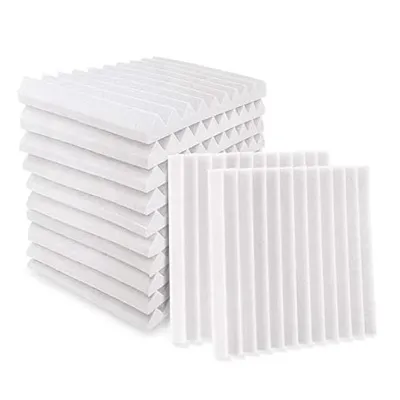
![[braved]-12 PACK Acoustic FoamSelf-Adhesive Sound Proof Panelsfor Sound Insulation &Acoustic Treatment](https://img.lazcdn.com/g/p/7151553891a83b64ea2a0df13d4dee17.jpg_400x400q80.jpg_.webp)
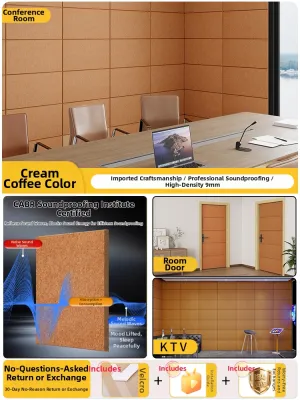
Prices are valid at publication and may change. Please refer to the product page for the latest price.
Key Material Standards for HDB Practice Rooms
When evaluating materials for an HDB practice room, physical mass is your most reliable defense against airborne noise. According to the acoustic mass law, the sound transmission loss of a single-layer wall is directly related to its weight per unit area. For a music practice room, this means you need dense materials such as mass-loaded vinyl, high-density plasterboard, or heavy composite panels. These materials are highly effective at blocking mid-to-high frequency sounds, which are common in vocals, violins, and woodwinds.

However, mass alone is often insufficient for low-frequency sounds or instruments that make physical contact with the building structure, such as digital pianos, drums, or amplifiers. To address these, you must introduce decoupling mechanisms and damping materials. Decoupling involves creating a physical break between two structural elements—such as building a secondary drywall partition that does not directly touch the existing concrete wall—to prevent sound vibrations from traveling through the framing. Damping materials, such as specialized acoustic glues applied between layers of drywall, convert acoustic energy into trace amounts of heat, significantly reducing the resonance of the wall assembly.
In Singapore, residential safety regulations dictate that any materials installed on your walls must meet strict fire safety and indoor air quality standards. When purchasing panels or insulation materials, verify that they carry recognized fire safety ratings, such as a Class 0 or Class 1 flame spread classification. Additionally, because practice rooms are often small, enclosed spaces with limited ventilation, ensure that the materials are certified for low volatile organic compound emissions and are free from formaldehyde. Look for certifications like the Singapore Green Label or international equivalents to ensure the air remains safe during long practice sessions.
Balancing Acoustic Performance and HDB Space Limits
One of the greatest challenges in retrofitting an HDB bedroom or study is the trade-off between acoustic performance and usable floor space. True sound isolation requires thick, multi-layered wall assemblies, which can easily reduce the usable width of a room by 10 to 20 centimeters on each side. For a typical HDB room measuring around 10 to 12 square meters, this loss of space can make the room feel cramped. To balance these needs, you must carefully select high-density, low-profile materials like mass-loaded vinyl, which provides significant mass in a thickness of just 2 to 5 millimeters, allowing you to preserve as much floor area as possible.
Another critical factor is the mounting method, especially if you are renting your flat or wish to avoid permanent structural damage that could complicate future resale. Permanent acoustic installations often involve heavy adhesives or extensive framing that ruins the underlying plaster. For a more reversible approach, consider building free-standing acoustic partitions, using heavy-duty hook-and-loop tape designed for high-weight capacities, or mounting panels onto temporary timber frames that are secured with minimal wall penetrations. These methods allow you to dismantle the treatment when moving out without violating HDB renovation guidelines.
Before spending money on expensive wall panels, you must address the weakest links in your room’s acoustic envelope. Sound behaves like water; it will escape through the smallest gap or crack. In a typical HDB room, significant sound leaks occur around the hollow-core bedroom door, through window panes, and via electrical outlets or air-conditioning conduits. Installing a heavy-duty drop seal or weatherstripping around the door frame, sealing gaps with acoustic caulk, and using dense window inserts will often yield a greater reduction in noise transmission than covering an entire wall with panels while leaving the door unsealed.
Verifying Product Specifications and Marketing Claims
Navigating the market for soundproofing products requires a critical eye, as many manufacturers use confusing terminology to exaggerate their products’ capabilities. The two most important metrics to understand are the Noise Reduction Coefficient and the Sound Transmission Class. The Noise Reduction Coefficient is a rating from 0 to 1 that measures how much sound a material absorbs; a rating of 0.8 means the panel absorbs 80% of the sound hitting it, which is excellent for reducing echo but tells you nothing about its ability to block sound. The Sound Transmission Class, conversely, is an integer rating that measures how many decibels of sound a material or wall assembly blocks. When looking to prevent sound from escaping your room, you must focus on the Sound Transmission Class rating of the assembly, not the absorption coefficient of individual decorative panels.
Be highly skeptical of product descriptions on online marketplaces that promise absolute soundproofing or claim that a thin, lightweight panel can block loud musical instruments. There is no single panel or paint that can completely block sound on its own. Misleading claims often highlight a high absorption rating to imply that the product will stop sound transmission, which is physically impossible for lightweight materials. If a product listing does not specify its density, weight per square meter, or Sound Transmission Class rating, it is highly unlikely to assist with sound isolation.
To protect your investment, always ask the supplier for independent laboratory test reports rather than relying on in-house marketing brochures. Legitimate manufacturers test their products according to standardized methods, such as ASTM E90 for sound transmission loss or ASTM C423 for sound absorption. These reports should detail the exact testing conditions and the performance of the material across various frequency bands. If a company cannot or will not provide these certified test results, you should look for alternative suppliers who prioritize transparency.
Integrating Panels Into a Complete Room Strategy
Achieving a quiet practice environment requires integrating various materials into a cohesive, room-wide strategy. A common mistake is covering every wall surface with absorptive panels, which results in an unnaturally dead acoustic environment that is unpleasant for playing acoustic instruments like violins or acoustic guitars. Instead, aim for a balanced approach: use heavy mass-loaded barriers behind your walls to block sound transmission, and place a moderate number of absorptive panels at key reflection points—such as directly opposite your instrument or at ear level—to control flutter echo while preserving some natural room resonance.
For musicians playing instruments that generate heavy physical vibrations, such as digital drums, upright pianos, or bass amplifiers, wall panels alone will not prevent sound from traveling through the floor to the unit below. You must implement structural checks and decoupling strategies. Building a floating platform or an isolated riser using high-density foam blocks topped with heavy plywood can decouple the instrument from the concrete floor slab. This simple addition prevents impact energy from turning your floor into a giant speaker diaphragm for the neighbors downstairs.
Finally, it is important to recognize the limits of do-it-yourself installations. While sealing gaps, hanging absorptive panels, and adding mass-loaded vinyl are manageable tasks, major structural isolation—such as building a true room-within-a-room or installing heavy double-glazed acoustic windows—requires professional expertise. If you practice high-volume instruments like acoustic drums or brass, or if your initial efforts do not satisfy your neighbors, you should consult a qualified acoustic professional in Singapore. They can perform precise frequency measurements and design a custom solution that complies with HDB structural load limits.
Frequently Asked Questions (FAQ)
Can I install heavy soundproof panels on HDB drywall partitions?
Yes, but you must exercise extreme caution regarding structural load limits. Unlike concrete walls, HDB drywall partitions have limited weight capacities and are supported by internal metal studs. Before mounting heavy panels, such as thick composite boards or dense mass-loaded vinyl, locate the internal studs using a stud finder and secure your mounting hardware directly into them. Use heavy-duty toggle bolts or hollow-wall anchors rather than standard plastic plugs, and consult HDB guidelines to ensure your installation does not exceed the safe load-bearing capacity of the partition wall.
Do soundproof panels stop impact noise from footsteps or dropped items?
No, wall-mounted soundproof panels are designed to address airborne noise and will not stop impact noise. Impact noise travels as structure-borne vibrations directly through the concrete floor slabs and structural columns of the HDB building. To mitigate impact noise, you must decouple the source of the vibration from the floor using thick carpets, high-density rubber underlayments, or dedicated floating risers. Wall panels cannot intercept these structural vibrations once they have entered the building’s concrete frame.
Are egg crate foam panels effective for blocking sound to neighboring units?
No, egg crate foam panels are entirely ineffective for blocking sound transmission to neighboring units. While their porous structure and shape can help reduce high-frequency flutter echo within your practice room, they lack the physical mass required to block sound waves from passing through walls. To actually block sound, you must replace or supplement these lightweight foams with high-mass materials like mass-loaded vinyl or dense acoustic plasterboard that physically obstruct the passage of sound energy.
Community discussion
Share your experience or ask a question. Comments are reviewed before publication.