
Choosing your first electric guitar is an exciting milestone, but the sheer variety of options can feel overwhelming. If you are exploring the fender squire affinity lineup—a popular search term for the officially branded Squier Affinity Series—you are looking at one of the most highly regarded entry points into the musical world. Produced under the direct supervision of Fender, the Squier Affinity Series offers budget-friendly, accessible versions of legendary guitar designs: the Stratocaster, the Telecaster, and the Jazzmaster.
Your choice among these three iconic models should depend on the specific music styles you want to play, your physical comfort when holding the instrument, and how much time you want to spend on basic maintenance. Each model has a distinct physical build, pickup configuration, and tonal character that makes it naturally suited to certain genres. By understanding these differences, you can select an instrument that keeps you motivated to practice every day.
Quick Guide: Matching Squier Affinity Models to Music Styles
To help you make a rapid decision, the table below maps each Squier Affinity model to its traditional musical genres, primary tonal characteristics, and bridge designs. While any guitar can technically play any style of music, these traditional associations represent where each instrument naturally excels due to its hardware and construction.
Products mentioned in this guide
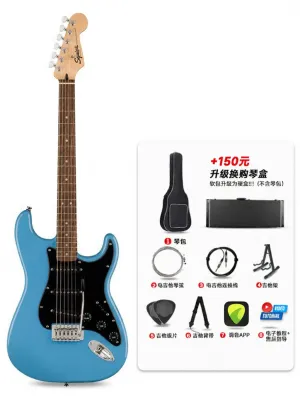
Prices are valid at publication and may change. Please refer to the product page for the latest price.
| Squier Affinity Model | Recommended Music Styles | Primary Tonal Character | Bridge Type & Maintenance Level |
|---|---|---|---|
| Stratocaster | Pop, Rock, Blues, Funk, Soul | Bright, glassy, highly versatile | Vintage-style synchronized tremolo (Moderate maintenance) |
| Telecaster | Country, Punk, Indie Rock, Rhythm | Punchy, clear, excellent midrange bite | Fixed bridge / Hardtail (Low maintenance) |
| Jazzmaster | Alternative, Shoegaze, Noise Rock | Warm, textural, mellow to aggressive | Vintage-style floating tremolo or Hardtail (High to Moderate maintenance) |
It is important to remember that these associations are not rigid rules. Many legendary guitarists have crossed genres using these exact shapes. A Telecaster can play smooth jazz, a Stratocaster can play heavy metal with the right amplifier settings, and a Jazzmaster can deliver clean pop tones. Use this matrix as a starting point, but let your personal aesthetic and physical comfort guide your final choice.
What to Expect from the Squier Affinity Series
Before diving into the specific models, it is helpful to understand what the Squier Affinity Series represents in the broader market. Positioned as a step up from the absolute entry-level Squier Sonic series, the Affinity tier is designed to offer reliable performance, classic aesthetics, and standard hardware at an accessible price point. It is widely considered a sweet spot for beginners who want a real instrument that can handle daily practice and light gigging without a massive financial commitment.

Across the entire Affinity lineup, Squier incorporates several beginner-friendly design choices. Most models feature a slim, comfortable “C”-shaped neck profile, which is easier for smaller or untrained hands to wrap around. The bodies are typically made from lightweight tonewoods like poplar, making them comfortable to hold for long practice sessions. This lightweight design is particularly beneficial if you practice standing up or live in a warm climate where heavy instruments can quickly cause physical fatigue.
Because manufacturing specifications can change over time, you should always verify the current hardware details on the official manufacturer website or through an authorized retailer before purchasing. Bridge designs, tuning machines, and pickup materials may vary slightly depending on the production year. Keeping an eye on these specifications ensures you know exactly what features your chosen instrument will have out of the box.
Squier Affinity Stratocaster: The Versatile All-Rounder
The Stratocaster is arguably the most recognizable electric guitar shape in the world. For beginners who are still exploring their musical identity and want an instrument that can do a little bit of everything, the Squier Affinity Stratocaster is a highly adaptable choice.
Ergonomics and Playing Comfort
One of the greatest advantages of the Stratocaster is its highly contoured body. Unlike blockier guitar shapes, the Stratocaster features a curved back (tummy cut) and a sloped upper edge where your right arm rests. These contours prevent the guitar from digging into your ribs or forearm, making it exceptionally comfortable for long practice sessions, whether you are sitting on a stool or standing with a strap. The double-cutaway design also allows easy access to the highest frets on the neck.
Pickup Configurations and Tonal Variety
The classic Affinity Stratocaster features three single-coil pickups (often abbreviated as SSS) and a 5-way selector switch. This setup allows you to combine the pickups in five distinct ways, yielding a massive range of tones—from bright and biting bridge tones for rock, to warm and mellow neck tones for blues, to the famous “quacky” in-between positions perfect for funk and pop.
When shopping, you should also check if the specific stock keeping unit (SKU) is an HSS configuration. An HSS Stratocaster replaces the single-coil pickup at the bridge with a humbucker. Humbuckers produce a thicker, heavier sound and are excellent if you plan to play hard rock, alternative metal, or any style requiring heavy distortion.
Limitations to Consider
While highly versatile, the Stratocaster does have a few trade-offs for beginners:
- Single-Coil Noise: Single-coil pickups are naturally susceptible to 60-cycle hum, a background buzz that becomes more noticeable when you use high-gain distortion or play near electronic devices.
- Tremolo Bridge Maintenance: The Stratocaster features a synchronized tremolo bridge (whammy bar). While fun for pitch-bending effects, a floating tremolo can make tuning slightly more sensitive for beginners, especially during string changes.
Squier Affinity Telecaster: The Punchy Rhythm and Twang Machine
If you appreciate simplicity, reliability, and a direct, punchy sound, the Squier Affinity Telecaster is an outstanding option. Known as the workhorse of the guitar world, the Telecaster design prioritizes straightforward functionality.
The Slab-Body Feel
Physically, the Telecaster is a traditional “slab” body, meaning it lacks the extensive body contours found on the Stratocaster. It has a flat front and back with sharper edges. Some beginners find this solid, blocky feel highly reassuring and classic, while others may find it less comfortable against their body during extended sitting sessions. Trying one in person can help you decide if this traditional shape suits your posture.
Simple Controls and Direct Tone
The Telecaster typically features two single-coil pickups controlled by a simple 3-way switch, a master volume knob, and a master tone knob. This simplicity is highly beneficial for beginners because it reduces distraction; you spend less time fiddling with knobs and more time focusing on your playing technique.
In terms of sound, the Telecaster is famous for its bridge pickup “twang”—a bright, cutting tone with excellent midrange punch that slices through a mix. This makes it a favorite for country, indie rock, punk, and driving rhythm styles. The neck pickup offers a surprisingly warm, dark tone that is highly suited to jazz and smooth blues.
The Advantage of a Fixed Bridge
For many beginners, the Telecaster’s biggest selling point is its fixed bridge (often called a hardtail bridge). Because there is no moving tremolo system, the strings are anchored directly to the body. This design offers two major practical benefits:
- Tuning Stability: The guitar stays in tune much better, even when subjected to temperature changes or aggressive playing.
- Easy Maintenance: Changing strings is straightforward and quick, making it the lowest-maintenance option among the three classic shapes.
Squier Affinity Jazzmaster: The Offset Alternative for Indie and Shoegaze
For players who want to stand out from the crowd and explore alternative, indie, shoegaze, or ambient music, the Squier Affinity Jazzmaster offers a distinct aesthetic and physical experience.
The Offset Body and Balance
The Jazzmaster is famous for its “offset” waist, meaning the narrowest part of the guitar body is asymmetrical. Originally designed in the late 1950s to be played comfortably while seated, the offset body shifts the weight of the guitar forward. Many players find that the Jazzmaster balances beautifully on the lap, reducing shoulder strain. It is a larger instrument overall than the Stratocaster or Telecaster, which provides a substantial, solid feel but may feel slightly bulky for very young or petite players.
Simplified Modern Controls
While vintage Jazzmasters are famous for their complex dual-circuit wiring (lead and rhythm circuits with multiple slide switches), the Squier Affinity Jazzmaster features a simplified modern control layout. It typically utilizes a standard 3-way toggle switch, a master volume, and a master tone. This modification makes the instrument far more approachable for beginners while retaining the unique physical vibe of the offset design. Depending on the specific production run, these models may feature dual humbucking pickups or voiced single-coils; always verify the exact pickup configuration of the SKU you are viewing to ensure it matches your tonal goals.
The Floating Bridge Learning Curve
Traditional Jazzmasters feature a floating tremolo tailpiece with a long whammy bar, allowing for smooth, subtle pitch bending and warble effects—a signature sound in shoegaze and surf rock. However, this bridge design has a steeper learning curve for beginners:
- String Tension: The shallow break angle of the strings over the bridge can sometimes lead to string slippage or buzzing if the guitar is not set up correctly.
- Setup Complexity: Adjusting the action and intonation on a floating offset bridge requires more patience and precision than a standard fixed bridge.
Final Checks Before You Buy Your First Guitar
Once you have narrowed down your choice based on music style and design, there are several practical steps you should take before finalizing your purchase to ensure you get the best possible start on your musical journey.
Test the Ergonomics in Person
If you live near a local music store, it is highly recommended to visit and hold the different models in your hands. You do not need to know how to play yet; simply sit down with the Stratocaster, Telecaster, and Jazzmaster. Pay attention to how the neck profile feels in your hand, how heavy the body feels on your lap, and whether the edges of the body feel comfortable against your forearm. Physical comfort is the single most important factor in determining how often you will pick up the guitar to practice.
Budget for Essential Accessories and a Setup
When planning your purchase, remember that the guitar itself is only part of the equation. To start playing, you will need to budget for several essential accessories:
- A small practice amplifier
- A high-quality instrument cable
- A guitar strap and a few picks
- A digital clip-on tuner
Additionally, you should strongly consider budgeting between S$60 and S$100 for a professional guitar setup. In Singapore’s tropical climate, high relative humidity can cause the wood of a guitar neck to shift over time, which can raise the string height (action) and make the guitar difficult to play. A professional technician at a local music shop can adjust the neck relief, string height, and intonation. A properly set-up entry-level guitar will play significantly better than an expensive guitar straight out of the factory box.
Verify Retailer Details and Warranty
Before completing your purchase, verify the exact model number and colorway with authorized local retailers or official online stores. Ensure that your purchase includes a valid manufacturer warranty to protect against any structural or electronic defects. Purchasing from authorized channels guarantees that you are receiving a genuine instrument with reliable customer support.
Frequently Asked Questions (FAQ)
Are Squier Affinity guitars good enough for gigging?
Yes, Squier Affinity guitars are absolutely capable of being used for live performances. While they are designed as entry-level instruments, their core construction is highly solid. Many gigging musicians use Affinity models as reliable backup instruments or gigging workhorses. To make an Affinity model gig-ready, many players choose to have a professional setup performed to maximize tuning stability, and some eventually upgrade the stock pickups or tuning machines over time as their budget allows.
Do these models come in left-handed versions?
Left-handed versions of Squier Affinity models are produced, but they are generally less common than right-handed models. Availability varies significantly by region and current production cycles. If you are a left-handed player, you may need to check specific stock with authorized local distributors or prepare for a waiting period. If the exact Affinity model you want is unavailable in a left-handed configuration, it is worth exploring other Squier lines, such as the Classic Vibe series, which also offers excellent left-handed options.
What type of amplifier pairs best with these beginner guitars?
For beginners, a digital modeling amplifier is highly recommended. Unlike traditional single-channel amplifiers, digital modeling amps use computer processing to emulate dozens of different classic amplifier sounds and built-in effects (like delay, reverb, and distortion). This versatility allows you to explore all the music styles discussed in this guide without needing to purchase expensive individual effects pedals. When choosing an amp, a low-wattage model (around 10 to 40 watts) with a headphone jack is ideal for bedroom practice in residential apartments.
Community discussion
Share your experience or ask a question. Comments are reviewed before publication.