
Selecting the right music sheet holder depends entirely on where you play. While a stage performer requires a highly portable, low-profile, and rapidly deployable stand that can survive transit, a home practitioner benefits from a heavier, more stable fixture designed to hold heavy anthologies and keep practice tools organized. Choosing the wrong type can lead to frustrating setups during gigs or a cluttered, unstable practice environment at home.
By evaluating your primary playing environment, you can identify whether a lightweight collapsible model, a heavy-duty orchestral stand, or a versatile hybrid option best serves your musical workflow.
Core Differences Between Stage and Home Music Sheet Holders
The primary environment dictates the fundamental design, material, and structural requirements of a music sheet holder. For gigging musicians, portability and weight are the most critical factors. A stage stand must be light enough to carry alongside an instrument, often while commuting on public transport like the MRT or buses, and compact enough to fit into a crowded car boot. Conversely, a home practice stand is largely stationary, allowing it to prioritize structural mass and a wider footprint over ease of transport.
Products mentioned in this guide
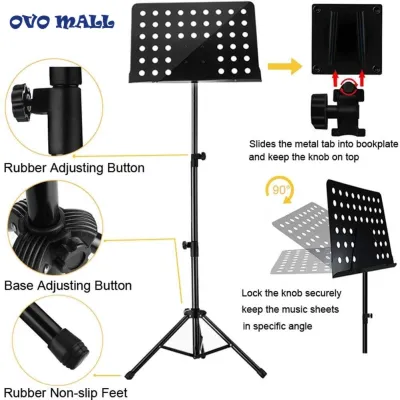
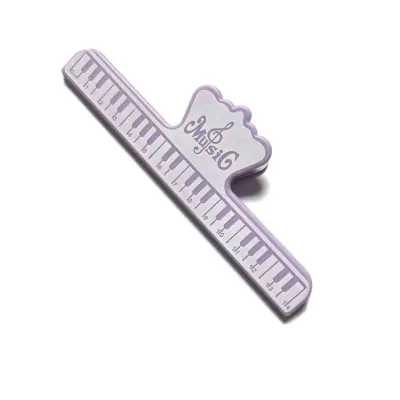
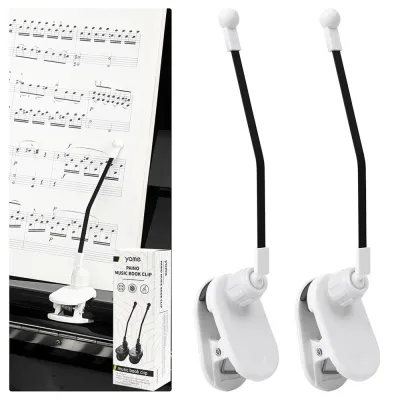
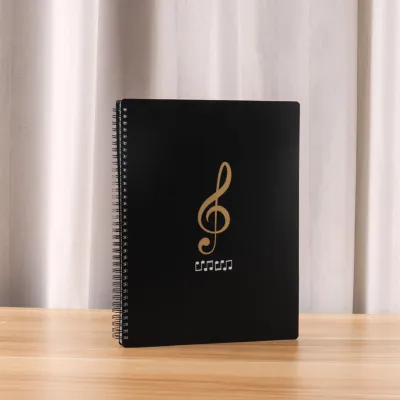
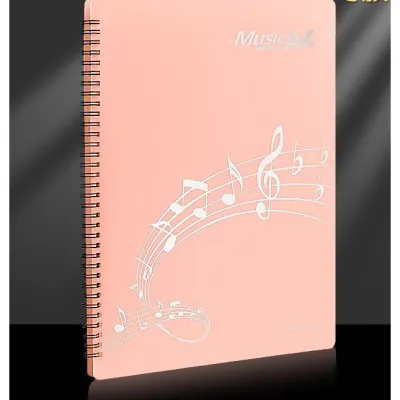
Prices are valid at publication and may change. Please refer to the product page for the latest price.
Visual profile and stage presence also separate these two categories. Stage stands typically feature low-profile designs with matte black, non-reflective finishes. This prevents the metal from catching bright stage lights and distracting the audience or the performer. Home stands, however, do not need to blend into the background. They can feature wider, solid wooden or metal desks, integrated accessory shelves, and utilitarian adjustment knobs that prioritize daily convenience over a sleek aesthetic.
These design priorities lead to distinct stability trade-offs. To achieve portability, travel-friendly stands often use thin-walled aluminum tubing and jointed, folding desks. While highly packable, these lightweight designs are more susceptible to tipping when loaded with heavy binders or when subjected to sudden drafts. Home stands utilize heavy-gauge steel, cast-iron bases, or solid desk-clamp mounts. This added weight ensures the stand remains rock-solid, even when supporting multi-page orchestral scores or heavy digital tablets.
Key Features to Evaluate for Stage Performances
When performing live, your gear must support a fast, stress-free setup. The folding mechanism and packed dimensions of a music sheet holder are paramount. Look for stands that collapse into a single, compact unit and include a dedicated, padded carry bag. A good carry bag not only makes transport easier but also protects your other performance gear from being scratched by the stand’s metal edges during transit.

Quick-release clamps and one-handed adjustment collars are invaluable in low-light backstage environments. Traditional thumbscrews can be tedious to turn and are easily lost if unscrewed too far. Modern stage stands often employ friction-lock systems or trigger-activated clutches that allow you to adjust the height instantly with one hand, ensuring seamless transitions between sitting and standing pieces during a set.
Outdoor performances and active stage environments introduce physical challenges like wind or accidental bumps. To secure your music, evaluate the desk lip depth and the presence of page retention clips. A lip depth of at least two centimeters is recommended to keep loose sheets or folders from sliding off. Built-in spring-loaded page arms or elastic bands are essential for holding pages flat, especially when performing near strong air-conditioning vents or outdoor breezes.
Essential Features for Home Practice Setups
For home practice, the priority shifts toward creating an ergonomic, organized, and permanent workspace. Because space in compact apartments can be limited, a stand with a heavy-duty tripod base that can tuck neatly into a corner, or a desk-mount option that clamps directly to a digital piano stand, is highly efficient. These solid bases ensure that even if you accidentally bump the stand in a tight room, your expensive sheet music or devices remain safe.
An organized practice space encourages longer, more productive sessions. Look for music sheet holders that feature accessory pegs, utility shelves, or magnetic surfaces. These additions allow you to keep essential tools—such as clip-on tuners, metronomes, pencils, and capos—within arm’s reach rather than scattered across your instrument or furniture. Keeping these items centralized helps maintain focus during technical drills.
Ergonomics play a vital role in preventing physical strain during extended practice sessions. A high-quality home stand should offer a wide range of height and tilt adjustments. This flexibility allows you to position your music at eye level, promoting proper neck and shoulder alignment whether you are standing to practice the violin or sitting at a low piano bench. Ensure the tilt mechanism locks securely so the desk does not slowly droop under the weight of heavy music books.
Can One Music Sheet Holder Work for Both Scenarios?
For many musicians, owning two separate stands is neither practical nor necessary. A hybrid music sheet holder can bridge the gap between stage and home use. These models typically feature a medium-weight steel construction, a perforated metal desk that reduces weight without sacrificing rigidity, and a collapsible tripod base. They offer a balanced compromise, providing sufficient stability for heavy books at home while remaining packable enough for occasional travel.
This dual-purpose approach is highly suitable for student musicians, music teachers who travel between schools, and casual gigging instrumentalists. If your performances are infrequent, a single hybrid stand eliminates the need to store multiple pieces of gear. It provides a reliable practice anchor at home and can be quickly packed into a car or carried on a short commute when a performance arises.
However, relying on a single hybrid stand does involve specific compromises. You will have to carry a slightly heavier load during transit compared to using an ultra-lightweight wire stand. Additionally, a hybrid model may not offer the absolute rock-solid stability of a professional, non-folding orchestral stand when loaded with massive, multi-volume anthologies. Understanding these limits helps you decide if a single versatile model fits your routine or if investing in specialized stands is necessary.
Frequently Asked Questions (FAQ)
How do I prevent my music sheet holder from tipping over on stage?
To maximize stability on stage, always fully extend the tripod base to its widest footprint before tightening the locking collar. Position one of the three tripod legs directly pointing toward you; this structural alignment helps prevent the stand from tipping forward under the weight of your music. Additionally, position the stand away from high-traffic pathways, stage monitors, and direct air-conditioning drafts, which can easily catch large music folders.
Are tablet-compatible music sheet holders necessary for home practice?
While not strictly necessary, a tablet-compatible holder is highly beneficial if you practice using digital sheet music or backing tracks. Standard wire folding stands are generally unsuitable for tablets, as the open frame offers no back support and can allow the device to fall through. If you use a tablet, select a stand with a solid tray desk, non-slip rubber padding, and a deep lip to ensure your digital device remains secure and scratch-free.
Community discussion
Share your experience or ask a question. Comments are reviewed before publication.