
The core difference between standard, speed, and torque drum keys lies in how they transfer physical effort to the tension rods. Standard keys offer direct tactile feedback for precise control, speed keys utilize ratchets or cranks to minimize repetitive wrist motion during head changes, and torque keys use clutches or dials to limit applied force for consistent tension. Choosing the right mechanism depends entirely on your tuning frequency, need for exact replication, and physical comfort, rather than one type being universally superior.
Every drummer eventually faces the challenge of maintaining consistent drumhead tension. In tropical climates like Singapore, where high humidity can cause wooden shells to expand slightly and drumheads to settle differently over time, regular tuning becomes an essential part of instrument maintenance. Whether you are preparing for a live performance at a local venue, tracking drums in a recording studio, or practicing in an HDB flat, the tool you use to adjust your tension rods directly impacts both your efficiency and the final sound of your kit. Understanding the mechanical differences between these three key types allows you to build a more effective maintenance workflow.
How Standard, Speed, and Torque Drum Keys Work
The standard drum key is the foundational tool of the percussion world, featuring a simple, solid-metal T-shape design. This classic configuration has a square socket that fits over the head of a standard tension rod, with two wings extending outward to form a handle. Operating it requires continuous manual rotation, meaning your wrist must perform a full twisting motion for every half-turn. Because there are no moving parts between your hand and the hardware, this design provides direct, unfiltered physical feedback, allowing you to feel the exact resistance of the threads.
Products mentioned in this guide
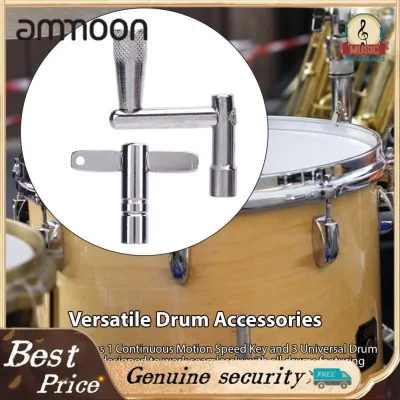
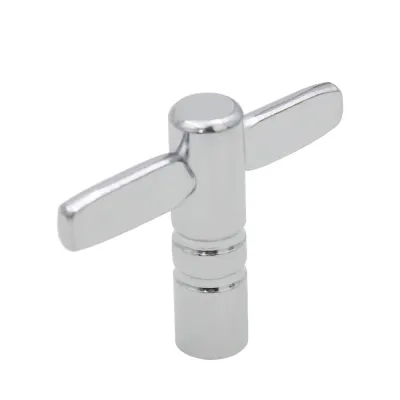
![[SG 🚚] Drum Key for Drummers Percussion Instruments Percussion Hardware Tool](https://img.lazcdn.com/g/p/4cd54191807cb280c6899ec847b2598c.jpg_400x400q80.jpg_.webp)
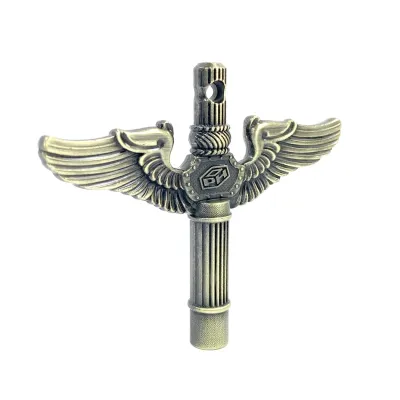
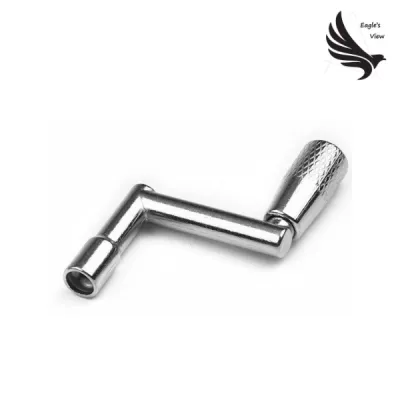
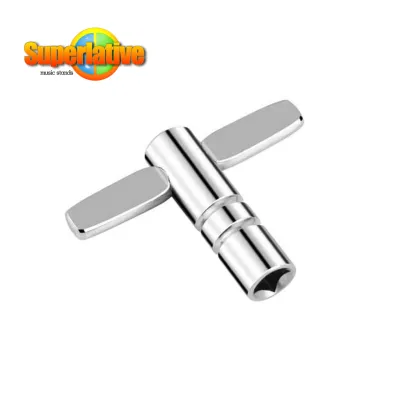
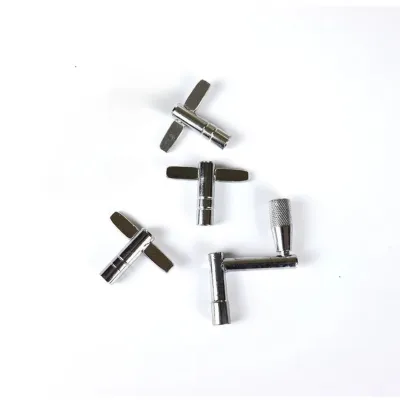
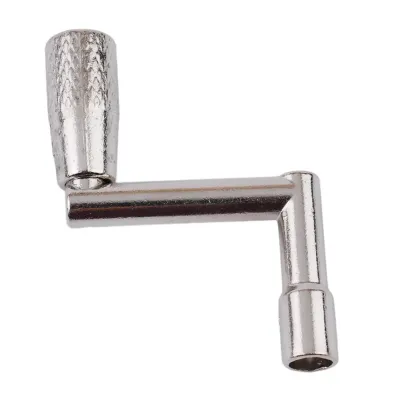
Prices are valid at publication and may change. Please refer to the product page for the latest price.
Speed keys are engineered to bypass the repetitive wrist motions of standard keys. These tools generally fall into three categories: ratcheting keys, rotary crank keys, and drill bit adapters. Ratcheting keys feature an internal gear mechanism that allows the handle to spin freely in one direction while engaging the socket in the other, enabling tightening or loosening with short, back-and-forth wrist movements. Rotary crank keys utilize a continuous loop or spinning handle to spin the shaft rapidly between your fingers. Drill bit adapters are simple metal sockets designed for cordless screwdrivers or drills, leveraging motorized power to spin tension rods in seconds.
Torque keys introduce a calibrated mechanical limit to the tuning process, focusing on tension consistency rather than speed. These keys incorporate an internal clutch, a spring-loaded dial, or a flexible tension bar that measures rotational resistance as you turn. When resistance reaches a user-defined threshold, the internal mechanism slips, disengages, or clicks, preventing you from applying additional force. This design aims to standardize the tightness of every tension rod across a drum hoop, helping to establish an even baseline tension across the entire drumhead.
Comparing Speed, Precision, and Hand Comfort
When evaluating these three mechanisms, the trade-offs between speed, precision, and physical comfort become highly apparent. Standard keys excel in fine-tuning precision because they allow you to make micro-adjustments based on the subtle physical resistance of each lug. However, they are the slowest option for complete head changes, requiring dozens of individual wrist rotations to remove and replace a single drumhead. This repetitive motion can lead to significant hand fatigue and wrist strain, particularly during long maintenance sessions involving an entire drum kit.

Speed keys dramatically reduce the time required to swap out old drumheads, making them highly efficient for rapid maintenance. A ratcheting or crank-style key can cut head-changing time in half, while a drill adapter can complete the process even faster. The primary trade-off with speed mechanisms is a reduction in tactile feedback; the gears of a ratchet or the momentum of a crank make it difficult to feel the subtle resistance of the tension rod threads. This lack of feedback increases the risk of cross-threading a lug or over-tightening a rod if you do not exercise caution during the initial stages of thread engagement.
Torque keys offer a unique approach to precision by focusing on mechanical consistency, but they do not necessarily guarantee a perfectly tuned drum on their own. While they are highly effective at ensuring every tension rod is tightened to the same physical resistance, they do not account for physical variables such as friction in dirty lug threads, warped hoops, or uneven drumhead seating. In terms of speed, torque keys are generally slower than speed keys and comparable to standard keys, as they require deliberate, controlled turns to allow the internal clutch to engage properly. They do, however, offer excellent hand comfort by eliminating the guesswork and physical strain associated with trying to gauge equal tension purely by feel.
| Key Mechanism Type | Primary Advantage | Precision Level | Physical Effort Required | Best Suited For |
|---|---|---|---|---|
| Standard Key | Direct tactile feedback, compact size, high durability | High (manual micro-adjustments) | Moderate to high (repetitive wrist motion) | Fine-tuning, emergency backup, infrequent head changes |
| Speed Key | Rapid head changes, reduced wrist rotation | Low to moderate (limited tactile feedback) | Low (ergonomic crank or ratchet action) | Frequent head changes, touring drummers, high-volume setups |
| Torque Key | Consistent mechanical tension, prevents over-tightening | High (consistent rotational resistance) | Low to moderate (controlled, deliberate turns) | Studio recording, rapid baseline tuning, hardware protection |
Which Drum Key Mechanism Fits Your Workflow?
Selecting the right drum key depends heavily on your specific playing environment, maintenance habits, and physical needs. If you are a hobbyist who tunes infrequently, plays primarily at home, or prefers to tune entirely by ear, a standard drum key is often the most reliable and cost-effective choice. Its compact size makes it easy to carry in a stick bag or pocket, and its lack of moving parts ensures it will not fail during a performance. For many drummers, the direct physical connection of a standard key remains irreplaceable for making final, minute adjustments to the pitch of each lug.
If you are a touring drummer, a drum tech, or someone who frequently changes drumheads to maintain a fresh, bright sound, a speed key is an invaluable addition to your toolkit. The time saved during a full head change on a multi-piece kit is substantial, allowing you to focus on performance preparation rather than tedious hardware rotation. Additionally, if you suffer from wrist discomfort, carpal tunnel syndrome, or general hand fatigue, the ergonomic design of a ratcheting or crank-style speed key can significantly reduce physical strain, making drum maintenance a much more comfortable experience.
A torque key is highly beneficial for studio recording environments, rental companies, or educational institutions where multiple kits must be maintained at consistent baselines. In a recording studio, where time is expensive, a torque key allows you to quickly bring a new drumhead up to a uniform tension before fine-tuning. It is also an excellent tool for beginners who have not yet developed an ear for pitch matching, and for protecting delicate vintage hardware from over-tightening.
In professional practice, drummers rarely rely on a single tool; instead, they combine mechanisms to create an optimized tuning workflow. A common and highly efficient approach is to use a speed key or a drill adapter to quickly spin the tension rods down until they make contact with the hoop. Once the rods are seated, a torque key can be used to bring all lugs to an even baseline tension. Finally, a standard key is employed to perform the delicate, auditory fine-tuning required to match the pitches at each lug and clear the drumhead. This hybrid workflow maximizes speed while preserving the ultimate precision of manual tuning.
What to Verify Before Buying a New Drum Key
Before purchasing a new drum key, it is essential to verify physical compatibility with your specific drum kit. The vast majority of modern acoustic drums utilize a standard square tension rod head, which measures approximately 1/4 inch (6.35 mm) on each side. However, some vintage drums, specialized marching percussion, or specific European brands use proprietary slotted or oversized tension rods. Always inspect your drum lugs to ensure the key’s drive socket matches the shape and size of your hardware, preventing the risk of slipping, stripping, or rounding off the metal edges of your tension rods.
The build quality and materials of the drum key are critical factors in its long-term durability. Look for keys constructed from hardened steel, chrome-plated alloys, or heavy-duty die-cast metals, particularly at the drive tip where the tool meets the tension rod. Speed and torque keys with plastic handles or internal plastic gears are more prone to wear and mechanical failure over time under high tension. If you choose a key with rubberized or ergonomic grips, ensure the underlying structure is solid metal to withstand the rotational force required for high-tension tuning, such as that needed for snare drums.
Finally, consider additional functional features that complement your setup. Some drum keys include built-in clips, magnetic sockets that prevent the key from falling off the lug, or integrated bottle openers. Others feature built-in drum peg winders, cymbal felt replacement tools, or reversible switches on ratcheting mechanisms. While these extra features add convenience, prioritize the core mechanical quality and fit of the key to ensure it remains a reliable tool.
Frequently Asked Questions (FAQ)
Can I use a speed drum key for fine-tuning?
While you can use a speed drum key for fine-tuning, it is generally less effective than a standard key for making micro-adjustments. The internal gears of a ratcheting key or the physical momentum of a rotary crank key can mask the subtle physical resistance of the tension rod, making it difficult to feel when a lug is slightly tighter or looser than its neighbors. For the final stages of tuning, where you are matching precise pitches at each lug, transitioning to a standard key provides the direct tactile feedback necessary for highly accurate adjustments.
Do torque drum keys guarantee perfect tuning across all lugs?
Torque drum keys do not guarantee a perfectly tuned drum because they measure rotational resistance rather than the actual pitch or physical tension of the drumhead. Physical variables such as dirt or rust in the lug threads, minor warping of the metal hoop, and uneven seating of the drumhead collar can all create artificial resistance. This resistance can cause a torque key to disengage prematurely, leaving that specific lug under-tensioned relative to the others. For the best results, use a torque key to establish an even baseline, and then perform a final auditory check to match the pitches at each lug.
Are drum keys universal for all acoustic drum kits?
Most modern acoustic drum kits use a standardized square tension rod head that fits a standard drum key socket. However, there are notable exceptions, particularly with vintage drum kits, certain European manufacturers, and specific marching band percussion instruments that utilize slotted, hexagonal, or proprietary oversized tension rods. Before purchasing a new key, especially a specialized speed or torque model, verify that your drum kit uses standard square lugs to ensure complete compatibility.
Community discussion
Share your experience or ask a question. Comments are reviewed before publication.