
Deciding which communication book to read first depends entirely on the specific interpersonal friction you are currently facing. While Thomas Erikson’s Surrounded by Idiots has become a global phenomenon, visible on the shelves of almost every major bookstore and online marketplace, it is not a universal remedy for every relationship issue. It excels at providing a rapid, highly memorable shorthand for understanding everyday behavioral differences, but other communication frameworks are far better suited for resolving deep-seated conflicts, managing intense emotional triggers, or navigating complex organizational power dynamics.
To make an informed purchase, you must first identify the nature of your communication struggles. Reading the wrong style of book can lead to frustration, as a simple behavioral guide cannot resolve a deep emotional boundary issue, just as a dense academic treatise on psychology might be too slow to help you handle tomorrow’s team meeting. Matching your immediate relational challenges to the correct methodology ensures you gain actionable tools you can put into practice immediately.
Understanding the Core Method of Surrounded by Idiots
At the heart of Surrounded by Idiots is a simplified adaptation of the classic DISC behavioral assessment framework. Erikson categorizes human behavior into four distinct color profiles, each representing a cluster of observable, everyday traits. Reds are dominant, driving, and direct; Yellows are social, creative, and enthusiastic; Greens are stable, patient, and change-resistant; and Blues are analytical, detail-oriented, and cautious. The book’s primary strength lies in its accessibility, translating complex psychological concepts into an intuitive, color-coded system that readers can easily memorize and apply on the fly.
Products mentioned in this guide


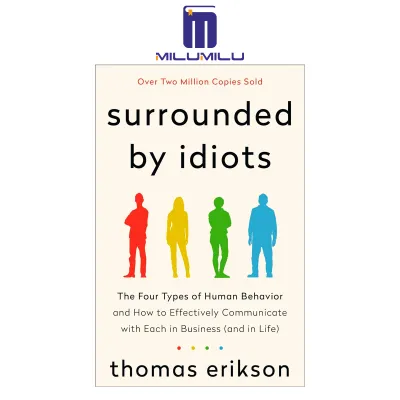

![Surrounded by Idiots/ bad bosses/Psychopaths/Energy Vampires/setbacks/Narcissists /how to deal with idiots [English original American version]](https://img.lazcdn.com/g/p/add31b354841dbd44850aac6201eb8f1.png_400x400q80.png_.webp)
Prices are valid at publication and may change. Please refer to the product page for the latest price.
This color-based system is ideal for individuals who experience frequent, minor misunderstandings in the workplace or within their families. If you often find yourself wondering why a colleague seems unnecessarily blunt, or why a family member requires endless details before making a simple decision, this book provides a quick heuristic to help you adapt your communication style. By recognizing these external behavioral cues, you can consciously adjust your tone, pacing, and delivery to match the preferences of the person you are speaking with, thereby reducing daily friction.
However, the simplicity that makes the book so popular also represents its greatest limitation. Surrounded by Idiots focuses almost exclusively on surface-level, observable behaviors rather than deep psychological motivations. It does not address complex emotional trauma, deep-seated psychological triggers, or advanced conflict de-escalation techniques. If you are dealing with deep relational wounds, manipulative behavior, or systemic workplace issues, relying solely on a four-color model may leave you feeling under-equipped.
How Other Personality Frameworks Compare
To understand where Surrounded by Idiots fits in the broader landscape of self-improvement literature, it is helpful to contrast its behavioral focus with other established methodologies. While the DISC-based approach of Erikson’s book looks at how people behave, cognitive models like the Myers-Briggs Type Indicator (MBTI) focus on how people process information and make decisions. Meanwhile, trait-based frameworks, such as the scientifically validated Big Five personality model, evaluate stable, lifelong personality dimensions like neuroticism and openness. These models offer deeper psychological insights but often require more study to apply practically in casual, daily conversations.

Beyond personality typing, a vast category of communication literature focuses on Emotional Intelligence (EQ) and empathy-driven frameworks, such as Nonviolent Communication (NVC). Rather than categorizing people into types or colors, these books prioritize active listening, emotional regulation, and the identification of universal human needs. Instead of teaching you how to adapt to a “Blue” or a “Red,” an EQ-focused book teaches you how to recognize your own emotional triggers, de-escalate high-stakes tension, and express your feelings without assigning blame.
There are also times when you must look entirely beyond personality typing to address the root cause of your interpersonal struggles. When communication breakdowns are driven by toxic environments, severe power imbalances, or manipulative behavior, categorizing someone’s personality is rarely helpful. In these scenarios, books dedicated to boundary setting, assertive communication, or structural organizational dynamics provide the necessary strategies to protect your well-being and navigate complex professional hierarchies.
Match Your Interpersonal Challenge to the Right Book
To determine which book deserves a spot on your reading list first, evaluate your current interpersonal challenges against the following decision framework:
- **Choose Surrounded by Idiots if:** Your primary goal is to reduce daily, low-stakes friction with colleagues, clients, or family members. If you need a practical, easy-to-remember system to quickly adapt your presentation style, email tone, or conversational pacing based on visible behavioral cues, this book offers an excellent, highly actionable starting point.
- Choose EQ or Empathy-Focused Books if: Your main struggle involves managing your own emotional reactions during difficult conversations, building deep personal rapport, or navigating highly sensitive relationships. If you find yourself reacting defensively or struggling to connect with others on an emotional level, frameworks like Nonviolent Communication or emotional intelligence guides will serve you better.
- Choose Conflict Resolution Books if: You are currently embroiled in active disputes, formal negotiations, or a highly political workplace environment. When the stakes are high and simple personality clashes have escalated into structural issues, you require specialized strategies for negotiation, boundary setting, and crucial conversations.
Before purchasing any self-help book, it is vital to verify whether your situation requires professional intervention rather than general reading. If the communication challenges you face stem from neurodivergence, clinical mental health conditions, or severe workplace harassment and abuse, general self-help literature is not a sufficient solution. In these instances, seeking specialized resources, consulting HR professionals, or working with a qualified therapist or counselor is the most appropriate and effective course of action.
Quick Comparison of Communication Approaches
| Approach | Core Focus | Best For | Limitations |
|---|---|---|---|
| DISC / Behavioral (e.g., Surrounded by Idiots) | Observable, everyday behavioral styles and communication preferences. | Quick adaptation in daily workplace and social interactions. | Simplifies complex human psychology; does not address deep emotional triggers. |
| Emotional Intelligence (EQ) & NVC | Empathy, active listening, emotional regulation, and identifying core needs. | Navigating sensitive personal relationships and managing internal emotional reactions. | Requires significant self-reflection and practice; less focused on quick behavioral shortcuts. |
| Conflict Resolution & Negotiation | Structural disputes, boundary setting, power dynamics, and strategic alignment. | Resolving active arguments, negotiating contracts, and managing toxic environments. | Can be overly formal for casual, day-to-day social interactions. |
Final Decision Rules for Your Purchase
When you are ready to make a purchase, take a moment to verify the specific edition, language, and format of the book. If you spend a significant portion of your day commuting or multitasking, an audiobook format might help you absorb the material more effectively. Conversely, if you prefer to take notes, highlight key passages, and refer back to visual diagrams—such as the color charts in Surrounded by Idiots—a physical paperback or hardcover edition will likely offer a better learning experience.
To avoid information overload, resist the temptation to purchase multiple communication books simultaneously. Select the single book that directly addresses your most urgent, daily friction point and commit to reading and applying its principles before moving on to another framework. Trying to integrate the DISC color system, MBTI types, and nonviolent communication techniques all at once can lead to analytical paralysis during real-time conversations.
Finally, remember that all personality models and communication frameworks are tools for self-awareness and personal adaptation, not rigid labels. Avoid using these systems to pigeonhole the people around you or to excuse your own poor behavior. Declaring “I am a Red, so I cannot help being impatient” defeats the purpose of these books. The ultimate goal of reading any communication guide is to expand your versatility, foster mutual understanding, and build healthier, more productive relationships.
Community discussion
Share your experience or ask a question. Comments are reviewed before publication.