
Choosing between Surrounded by Idiots and other popular personality books depends entirely on the specific interpersonal challenges you are facing. If you want to decode surface-level behaviors and resolve immediate professional friction, Surrounded by Idiots is an excellent starting point. However, if your goal is to heal personal relationships, understand cognitive processing, or explore deep-seated emotional patterns, other specialized books will serve you better.
Understanding how people communicate is key to navigating both professional and personal spaces. While some books offer quick, actionable frameworks for daily interactions, others require a deeper investment of time to understand the underlying psychology of human behavior. By comparing these frameworks, you can select the book that aligns with your immediate goals.
This guide compares the core frameworks of Surrounded by Idiots with other mainstream personality and communication books. We will look at their theoretical foundations, practical applications, and how to choose the right one for your current situation.
Products mentioned in this guide


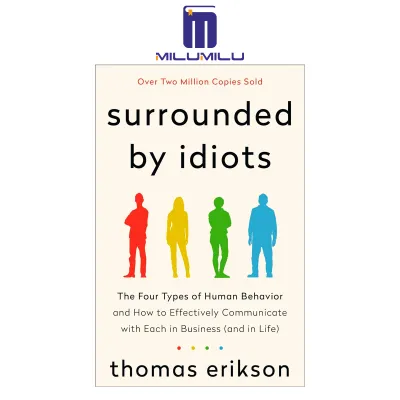

![Surrounded by Idiots/ bad bosses/Psychopaths/Energy Vampires/setbacks/Narcissists /how to deal with idiots [English original American version]](https://img.lazcdn.com/g/p/add31b354841dbd44850aac6201eb8f1.png_400x400q80.png_.webp)
Prices are valid at publication and may change. Please refer to the product page for the latest price.
Core Focus and Theoretical Frameworks
Surrounded by Idiots by Thomas Erikson relies on the DISC profile, which simplifies human behavior into four primary colors: Red (dominant), Yellow (inspiring), Green (stable), and Blue (analytical). This system focuses almost exclusively on observable, surface-level behavior. It does not attempt to diagnose deep psychological motives, but rather categorizes how people act, speak, and react in daily situations.
In contrast, other popular personality books focus on cognitive processing or internal motivation. Books based on the Myers-Briggs Type Indicator (MBTI), for example, explore how individuals perceive information and make decisions. These frameworks look inward at cognitive preferences, helping readers understand why they feel energized or drained by certain environments, rather than just how they behave outwardly.
Relational and emotional frameworks offer another distinct approach. Books that explore attachment styles or emotional needs, such as the concept of love languages, address the deep-seated emotional drivers behind human connection. These models are designed to foster vulnerability and empathy in close relationships, areas that color-coded behavioral systems are not built to address.
Classic communication books, such as those focusing on universal principles of influence and empathy, take yet another path. Instead of categorizing people into distinct types, they offer timeless strategies for active listening, persuasion, and building rapport. These principles assume that while behaviors change, certain fundamental human desires remain constant across all personality types.
No single model is universally superior; they simply serve different diagnostic purposes. A color-coded behavioral system is highly effective for quick team alignment and rapid communication adjustments. Meanwhile, cognitive or emotional frameworks are necessary when you need to cultivate deep self-awareness or navigate complex emotional bonds.
Matching the Book to Your Specific Interpersonal Challenge
If your primary struggle is navigating workplace and team dynamics, Surrounded by Idiots is highly relevant. In a professional setting, you rarely have the time or intimacy required to understand a colleague’s deep childhood patterns or cognitive nuances. You need to know how to pitch an idea to a manager who values speed (Red) or how to support a team member who prioritizes stability and collaboration (Green). Quick behavioral profiling helps reduce professional friction and streamline daily tasks.

For intimate relationships and family dynamics, behavioral categorization often falls short. When communication breaks down with a partner or family member, the issue is rarely just a difference in communication styles. These conflicts are usually rooted in emotional needs, attachment patterns, and shared history. In these scenarios, books focusing on emotional intelligence, active listening, or relational psychology offer more sustainable solutions than surface-level typing.
If you are seeking self-awareness and an understanding of deep psychological traits, cognitive-focused books are a better fit. Understanding your own introversion, extroversion, or high sensitivity requires looking beyond outward behavior. Books that explore these traits help you understand your internal processing, allowing you to design a life that aligns with your natural energy levels rather than simply adjusting your communication style for others.
When dealing with conflict resolution, the choice of book depends on the nature of the conflict. For minor misunderstandings and daily friction, a practical guide to behavioral styles can provide immediate relief. For deep-seated animosity or recurring behavioral patterns, you will need a book that addresses the psychological roots of conflict and the dynamics of human emotion.
Reading Experience and Practical Application
Surrounded by Idiots is known for its highly conversational, anecdote-heavy style. The author uses relatable, everyday scenarios to illustrate how different personality colors interact in the real world. This makes the book highly accessible and easy to read in short sessions, though readers looking for dense academic research or clinical data may find the narrative style overly simplified.
Other personality books often take a more structured, research-heavy approach. These texts may cite clinical studies, offer detailed case files, and explore the historical development of psychological theories. While these books require more focused reading time and mental effort, they provide a more robust theoretical foundation for readers who want to understand the “why” behind human behavior.
When evaluating these books, consider the practical tools they offer. Surrounded by Idiots provides quick-reference summaries and behavioral tips at the end of chapters, making it easy to apply the concepts immediately. Other books might include self-assessment questionnaires, journaling prompts, or structured exercises designed for long-term reflection and personal growth.
Before making a purchase, it is crucial to verify the specific edition, language, and format. Because behavioral concepts rely heavily on cultural context and idioms, translations can vary significantly in tone and clarity. If you prefer listening, check if the audiobook format includes PDF supplements for visual models. Always ensure you are purchasing from authorized sources to guarantee complete content and accurate translations.
How to Decide: A Conditional Selection Framework
To make your decision straightforward, consider your immediate interpersonal goals and the environment you are navigating. Your choice should align with the depth of understanding you require and the nature of the relationships you want to improve.
Choose Surrounded by Idiots if:
- Your primary goal is to reduce daily communication friction in a professional setting.
- You want a simple, memorable vocabulary to discuss behavioral differences with colleagues.
- You prefer a light, engaging read with practical, immediate takeaways for casual interactions.
Choose alternative personality or communication books if:
- You need to navigate complex emotional bonds or resolve deep-seated conflicts in a long-term relationship.
- You are interested in the cognitive science behind how people think, perceive, and process information.
- You are seeking to understand your own psychological traits, such as introversion or emotional sensitivity.
Neither option may fit if you are seeking clinical psychological diagnoses, trauma-informed therapy, or rigorous academic behavioral science. These popular non-fiction books are designed for general personal development and communication improvement, not clinical intervention. Always verify that the book’s core philosophy aligns with your personal values and professional environment before committing to its framework.
Frequently Asked Questions (FAQ)
Is the personality model in Surrounded by Idiots scientifically validated?
The book is based on the DISC model, which is a popular behavioral assessment tool widely used in corporate training and coaching. While it is highly practical for identifying communication preferences, it is not a clinically validated psychological instrument like the Big Five personality traits. It is best viewed as a practical framework for understanding behavior rather than a scientific measure of personality.
Should I read the original version or a translated edition?
The book was originally written in Swedish and has been translated into dozens of languages. When choosing an edition, verify the publisher and translator details. Localized editions often adapt cultural references and workplace scenarios to make them more relatable to local readers. If you are comfortable with English, the widely distributed English translation is highly polished, but always check reader reviews regarding translation flow if you plan to buy a version in another language.

Community discussion
Share your experience or ask a question. Comments are reviewed before publication.