
Choosing the right presentation skills book can transform your professional trajectory, but the ideal choice depends entirely on your daily communication challenges. While Talk Like TED focuses on high-impact, narrative-driven keynote speeches designed for large stages, other popular guides address different corporate realities, such as designing clean visual slides, managing stage fright, or leading informal team updates. To find the book that will deliver the highest return on your reading time, you must align the author’s methodology with your specific career goals, presentation environments, and immediate skill gaps.
Core Methodologies: Data-Driven Storytelling vs. Visual and Practical Approaches
The foundational teaching style of a presentation book dictates how easily you can absorb and apply its lessons. Talk Like TED uses an analytical, structure-heavy approach that dissects successful keynote patterns, focusing on emotional connection, novel information, and memorable moments. This methodology assumes your primary challenge is crafting a compelling narrative that inspires an audience. It relies heavily on storytelling frameworks, teaching you how to weave personal anecdotes, data points, and rhetorical devices into a cohesive, persuasive script.
In contrast, other popular frameworks in the public speaking genre prioritize different pillars of communication. Some books focus almost exclusively on visual design, teaching readers how to replace text-heavy bullet points with minimalist slides that support, rather than distract from, the spoken word. Others center on the physical mechanics of delivery, offering detailed instructions on vocal modulation, pacing, hand gestures, and eye contact. There are also guides dedicated entirely to the psychological aspects of speaking, providing cognitive behavioral techniques to manage stage anxiety and build quiet confidence before stepping up to the microphone.
Products mentioned in this guide
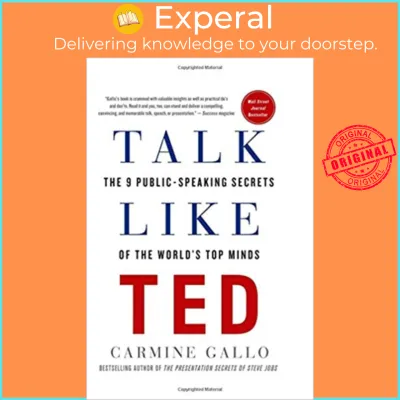
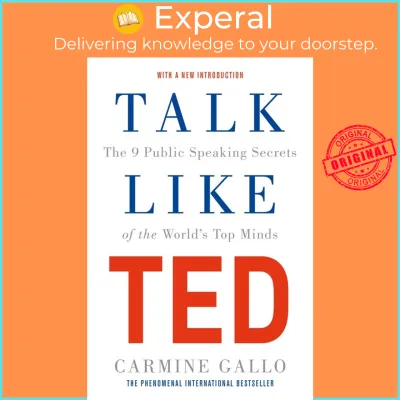
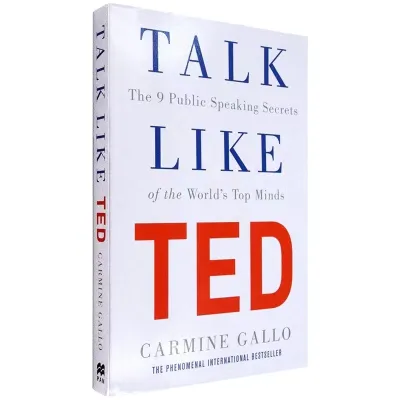
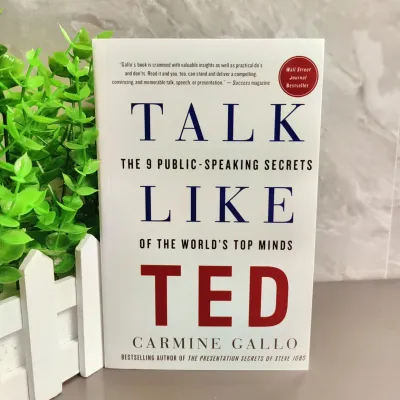
![EBOOK How to Deliver a Great TED Talk - Karia Akash [Full Version]](https://img.lazcdn.com/g/p/376edf13270c2ff6dc5937cb5ad184f6.jpg_400x400q80.jpg_.webp)
Prices are valid at publication and may change. Please refer to the product page for the latest price.
To determine which methodology matches your current learning needs, it is helpful to run through a quick self-assessment of your presentation bottlenecks:
- Is your content dry, overly technical, or failing to engage your audience emotionally? (Focus: Narrative building and storytelling)
- Do your slides look cluttered, outdated, or like a wall of text that readers struggle to digest? (Focus: Visual slide design and minimalism)
- Do you struggle with physical delivery, such as speaking too quickly, using filler words, or feeling paralyzed by stage fright? (Focus: Delivery mechanics and anxiety management)
- Are you presenting complex data that needs to be simplified for non-technical stakeholders? (Focus: Data visualization and structured communication)
By identifying your primary weakness, you can avoid books that spend hundreds of pages on skills you have already mastered, allowing you to focus on the specific areas that will elevate your professional presence.
Matching the Book to Your Actual Presentation Environment
A common pitfall when reading public speaking guides is trying to apply grand-stage techniques to intimate, everyday corporate settings. The theatrical, highly emotional storytelling style championed by Talk Like TED is highly effective for keynote addresses, product launches, and fundraising pitches where the goal is to inspire and motivate a large, passive audience. However, if you try to use these same high-drama tactics during a routine Monday morning status update or a highly technical budget review in a Singapore boardroom, you risk appearing performative or out of touch with the immediate business context.

For everyday corporate environments, communication often needs to be collaborative, concise, and highly interactive. In a small meeting room or a virtual call, your audience is not there to be entertained; they are there to make decisions, solve problems, or approve budgets. In these scenarios, books that focus on structured business communication, executive presence, and handling spontaneous Q&A sessions are far more practical. These guides teach you how to get straight to the point, structure your arguments logically, and handle tough questions from stakeholders without losing your composure.
Before purchasing a book, verify how well its advice scales down to your typical speaking environments. Look at the case studies and examples the author uses. If the book relies solely on examples of famous historical speeches, political rallies, or massive tech conferences, the techniques may require significant adaptation to work in a standard office setting. Conversely, if the author draws examples from corporate project updates, client pitches, and cross-functional team alignments, the advice is much more likely to translate directly to your daily work life.
Additionally, consider the rise of hybrid and virtual work environments. Many classic presentation books were written before online video conferencing became the default mode of business communication. If you spend most of your week presenting over digital platforms, look for books that offer specific advice on virtual engagement, camera framing, and maintaining audience attention through a screen, as these dynamics differ significantly from physical stage presence.
Evaluating Practical Applicability for Your Daily Career Needs
The true value of any professional development book lies in its implementation curve. Some books offer immediate, tactical tweaks that you can apply to a presentation you are delivering tomorrow morning. For example, a book focused on slide design might give you a simple “one idea per slide” rule or a specific color palette guide that instantly improves your deck. These highly actionable, low-friction tips are excellent for busy professionals who need quick wins and do not have hours to spend restructuring their entire communication philosophy.
Other guides require a much longer commitment, focusing on deep habit shifts, narrative restructuring, and mindset changes. Talk Like TED falls largely into this category, as mastering the art of storytelling, emotional connection, and humor takes consistent practice over months or even years. While these long-term skills are incredibly valuable for your overall career growth, they may not help you if you are facing a high-stakes client pitch in 48 hours and need immediate structural guidance.
To evaluate the practical applicability of a book before buying, take a close look at its structure, index, and supplementary materials. Look for the following features:
- Actionable templates: Does the book provide fill-in-the-blank frameworks for structuring a pitch or opening a speech?
- Checklists: Are there quick-reference checklists at the end of each chapter to help you audit your own work?
- Preparation timelines: Does the author outline a step-by-step preparation workflow that fits into a busy corporate schedule?
- Real-world exercises: Are there practical exercises you can perform alone or with a colleague to test your delivery and pacing?
For busy professionals in fast-paced markets like Singapore, where time is a premium commodity, choosing a book with clear, structured templates ensures you can prepare high-quality presentations efficiently, even under tight deadlines. This efficiency makes a well-chosen guide worth far more than its S$30 cover price.
Decision Framework: Which Presentation Guide Fits Your Goals?
To help you finalize your choice, use this conditional decision framework to match your career stage, presentation frequency, and primary pain points to the right resource:
- **Choose Talk Like TED if**: Your primary goal is to deliver high-impact, inspirational speeches, keynotes, or public pitches where emotional connection and memorable storytelling are paramount. This is the ideal choice if you are preparing for a major industry conference, a startup funding round, or a company-wide town hall where you need to rally teams around a shared vision.
- Choose a visual-design alternative if: Your main struggle is creating clean, professional slides that communicate complex data clearly. If you find yourself spending hours tweaking PowerPoint templates or receiving feedback that your decks are too cluttered, a book dedicated to visual storytelling and minimalist slide design will offer the most immediate return on investment.
- Choose a business-communication guide if: You primarily present in internal meetings, project updates, or collaborative boardrooms. If you need to deliver concise, data-driven updates to senior executives, manage cross-functional alignments, or handle high-pressure Q&A sessions, look for a guide that prioritizes structured, efficient corporate communication over theatrical stagecraft.
- Choose an anxiety-management book if: Physical symptoms of stage fright, such as a racing heart, shaking hands, or memory lapses, prevent you from delivering your message effectively. No amount of storytelling structure or slide design will help if you cannot manage the physiological response to public speaking, making a delivery- or confidence-focused guide your essential first step.
Regardless of which book you choose, always check the publication date and edition. Ensure the content has been updated to address modern presentation software, virtual meeting etiquette, and hybrid communication challenges, as older editions may rely on outdated technology or obsolete design standards.
Frequently Asked Questions (FAQ)
Do I need to read Talk Like TED if I only give internal team updates?
While Talk Like TED offers valuable insights into structuring engaging narratives, it is not the most efficient choice if your sole responsibility is delivering routine internal updates. The book’s core techniques are optimized for high-stakes, one-to-many keynote addresses that rely heavily on emotional storytelling and theatrical delivery. For weekly status reports or project updates, these techniques can feel overly dramatic and time-consuming to prepare.
Instead, you can extract the book’s basic structural principles—such as keeping your message focused on three key points—while ignoring the stage-specific advice. For purely internal communication, a dedicated business-communication book that teaches concise, structured, and action-oriented reporting will save you preparation time and align better with everyday corporate expectations.
Are audiobooks effective for learning presentation skills?
Audiobooks can be highly effective for learning certain aspects of public speaking, particularly delivery mechanics, vocal modulation, pacing, and tone. Hearing an author or professional narrator model these techniques provides an auditory blueprint that is difficult to capture on a printed page. If your primary goal is to improve your spoken delivery, manage your pacing, or learn how to project confidence through your voice, the audio format is an excellent choice.
However, audiobooks have significant limitations when it comes to visual design and structural frameworks. If you are reading a book that focuses on slide layouts, data visualization, or complex narrative mapping, you will miss out on crucial diagrams, visual examples, and side-by-side slide comparisons. For these topics, a physical book or a high-quality e-book format is superior, as it allows you to study visual aids, bookmark reference templates, and easily flip back and forth during your preparation process.
Community discussion
Share your experience or ask a question. Comments are reviewed before publication.