
Preparing for the O-Level examinations requires a strategic approach to selecting study materials. Choosing between the Ten-Year Series (TYS) and publisher-produced assessment books is not a matter of finding a single superior resource. Instead, the decision depends on your current revision stage, your familiarity with the syllabus, and your specific academic weaknesses.
Neither resource is universally better; the right choice depends entirely on your current revision stage and specific academic weaknesses. Use topical or yearly assessment books for targeted concept mastery and foundational practice, and reserve the Ten-Year Series (TYS) for full-paper exam technique, time management, and trend spotting in the final months before your O-Levels.
Ten-Year Series vs. Assessment Books: What Each Actually Offers
Understanding the structural differences between these two primary study aids is essential for planning an effective revision schedule. The Ten-Year Series consists of actual past-year O-Level papers compiled by approved publishers under license. These books are available in two formats: yearly, which presents the papers exactly as they were administered chronologically, and topical, which groups past exam questions by subject chapter. Because they contain real exam questions, they offer the most accurate representation of the difficulty level, formatting, and language used by examiners.
Products mentioned in this guide
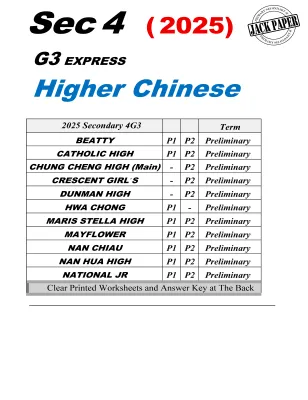
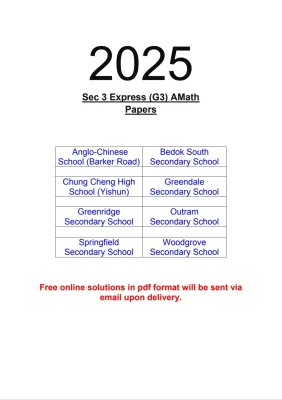
Prices are valid at publication and may change. Please refer to the product page for the latest price.
In contrast, assessment books are written by independent educators, tutors, or publishers. Rather than compiling past papers, these books feature original questions designed to test specific concepts or simulate exam conditions. They are highly diverse, ranging from basic topical worksheets to challenging mock papers that push students beyond standard exam difficulty.
Syllabus updates play a major role in how these books are structured. When the Singapore Examinations and Assessment Board (SEAB) updates a syllabus, older questions in the TYS may become obsolete. Approved publishers usually indicate which questions are no longer in the syllabus or modify them to fit current guidelines. Assessment books, however, can adapt more rapidly to syllabus changes by publishing entirely new editions with fresh questions tailored specifically to newly introduced topics, ensuring you do not waste time practicing outdated material.
Why and When to Choose the Ten-Year Series (TYS)
The primary value of the Ten-Year Series lies in its authenticity. Practicing with actual past-year papers is the most effective way to build exam stamina, refine pacing, and master time management. Sitting for a full two-hour paper under timed conditions helps you understand how long to spend on each section and teaches you when to move past a difficult question to secure marks elsewhere.

Using the TYS also allows you to spot recurring question patterns and understand the examiner’s expectations. Cambridge examiners often use specific phrasing or structure questions in predictable ways. By working through several years of papers, you become familiar with these patterns, which reduces anxiety on exam day. Furthermore, the official marking schemes included in approved TYS editions show exactly how marks are allocated for working steps, helping you write concise, high-scoring answers.
The ideal timing for intensive TYS practice is during the final months leading up to the O-Levels, typically from July onwards. At this stage, your teachers have covered the entire syllabus, and your primary goal is to integrate your knowledge. Attempting full past-year papers too early in the year can be discouraging and counterproductive if you have not yet learned all the topics or secured your foundational understanding.
Why and When to Choose Topical or Yearly Assessment Books
Publisher-created assessment books are highly effective tools when you need to address specific conceptual gaps or practice newly introduced topics. If you struggle with a particular chapter, such as organic chemistry or quadratic functions, attempting a full exam paper is an inefficient way to study. Topical assessment books allow you to isolate that specific area and work through dozens of targeted questions until the concept is fully understood.
These books excel at building foundational problem-solving skills without the pressure of a full, timed exam. Many assessment books structure their chapters progressively, starting with simple recall questions before moving on to intermediate application and advanced problem-solving. This step-by-step approach helps build confidence and ensures you master the basic mechanics of a topic before facing complex, multi-part exam questions.
Assessment books are also indispensable when dealing with brand-new syllabus topics. When a new topic is introduced to the O-Level curriculum, there are no past-year exam questions available in the TYS. Publishers fill this gap by creating original practice questions that align with the new learning outcomes. The ideal time to use assessment books is early to mid-year, or immediately after finishing a specific topic in school, to reinforce what was taught in class.
A Buyer’s Checklist for 2025 O-Level Exam Papers
When shopping for a 2025 exam paper or assessment book at local bookstores or online marketplaces, verifying the syllabus year is your first priority. Look at the cover or the introductory pages for the specific syllabus code issued by SEAB. Ensure the book explicitly states it is updated for the 2025 examinations, and check for any publisher notes, errata sheets, or update stickers that indicate adjustments for recently added or removed topics.
Next, evaluate the quality of the answer key before making a purchase. A high-quality prep book should offer more than just a list of final answers. Look for detailed, step-by-step worked solutions that explain the reasoning behind each step. For subjects like Mathematics and Science, the solutions should show alternative methods where applicable. For Humanities and English, look for sample essays or structured responses accompanied by examiner notes that explain why a particular answer deserves full marks.
Finally, examine the physical layout and formatting of the book. Ensure there is adequate space provided for working out steps, drawing graphs, or annotating diagrams directly on the page. Cramped layouts can make revision frustrating and lead to careless errors. Additionally, check that diagrams, maps, and graphs are printed clearly and legibly, as blurry illustrations can make data-interpretation questions unnecessarily difficult to solve.
Building a Phased Revision Plan Using Both Resources
An effective study plan integrates both assessment books and the Ten-Year Series in a structured, phased approach. During the first half of the academic year, your primary focus should be on topical assessment books. Use them to reinforce daily school lessons, complete homework, and prepare for topical class tests. This ensures your foundational knowledge is rock-solid before you attempt comprehensive exam papers.
As you enter the mid-year period, begin transitioning to the topical Ten-Year Series. This allows you to see how the specific topics you have mastered are tested in actual O-Level exams. By practicing past-year questions topic by topic, you bridge the gap between textbook learning and exam-level difficulty without the pressure of a full, mixed-topic paper.
In the final phase, which typically begins after the preliminary examinations, shift your focus entirely to the yearly Ten-Year Series. Treat these papers as mock exams: sit in a quiet room, set a timer, and complete the papers without referring to your notes. Use your performance on these papers to identify any remaining weak spots. If a particular topic consistently costs you marks during these timed trials, temporarily pivot back to your topical assessment books for targeted practice before returning to full-paper simulations.
Frequently Asked Questions (FAQ)
Do I need to buy both TYS and assessment books for every subject?
You do not necessarily need both resources for every subject. For highly structured, skill-based subjects like Mathematics and Sciences, having both a topical assessment book for early practice and a yearly TYS for exam simulation is highly beneficial. For content-heavy or language-based subjects like English or Humanities, a yearly TYS is often sufficient to understand exam formats and essay structures, provided you use your school notes and worksheets for topical content review.
How do I check if an assessment book follows the latest syllabus changes?
To verify if an assessment book aligns with the latest syllabus, cross-reference its table of contents with the official syllabus documents available on the Singapore Examinations and Assessment Board (SEAB) website. Check the subject code and the list of topics. Pay close attention to any topics that have been recently added or removed from the curriculum, and ensure the assessment book reflects these changes rather than relying on older, reprinted content.
Community discussion
Share your experience or ask a question. Comments are reviewed before publication.