
If your primary goal is to analyze individual companies, find undervalued stocks, and actively manage your portfolio, start with The Intelligent Investor. If you prefer a hands-off approach focused on broad market index funds, long-term asset allocation, and minimizing trading effort, begin with A Random Walk Down Wall Street. Both are foundational texts, but they serve entirely different investment philosophies, risk tolerances, and time commitments. Choosing the right one first depends on how much time you want to spend managing your money and how you view the stock market’s behavior.
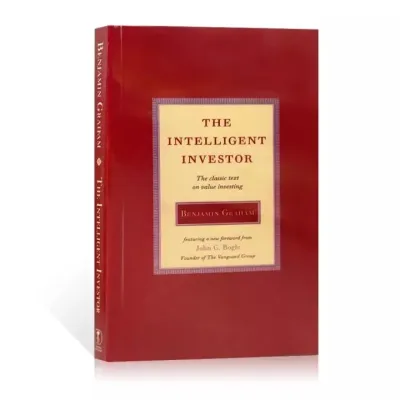
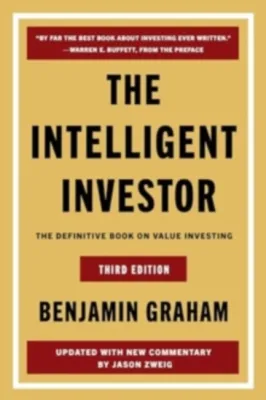
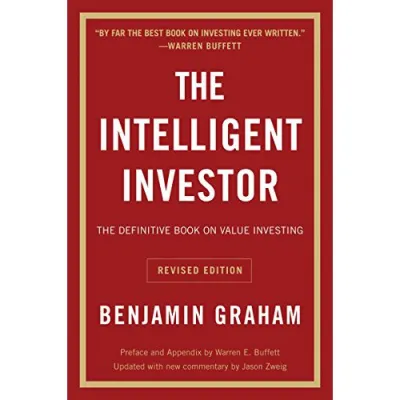
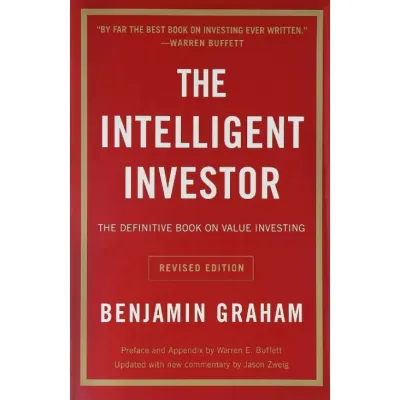
The Intelligent Investor, written by Benjamin Graham, is often called the bible of value investing. It teaches you how to look at a stock as a fractional share of a real business, emphasizing thorough research and emotional discipline. On the other hand, Burton Malkiel’s A Random Walk Down Wall Street argues that the market is highly efficient, making individual stock picking a losing game for most people over the long run. Instead, it advocates for a simple, low-cost, diversified portfolio that tracks the entire market.
By understanding the core differences in their approaches, you can save yourself hours of frustration and align your reading list with your actual financial goals. Whether you want to spend your weekends analyzing balance sheets or automate your investments so you can focus on your career, one of these books will provide the exact roadmap you need.
Products mentioned in this guide


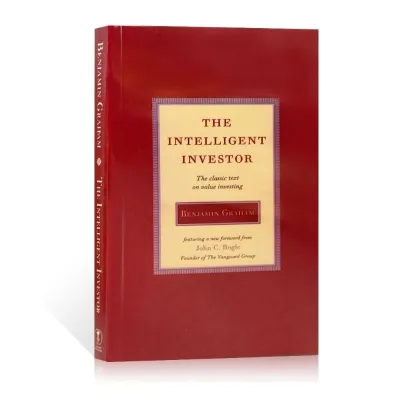
Prices are valid at publication and may change. Please refer to the product page for the latest price.
Core Investment Philosophies: Value vs. Market Efficiency
To understand which book to read first, you must first look at the opposing financial theories that drive them. Benjamin Graham’s philosophy in The Intelligent Investor is built on the concept of value investing. Graham introduces the “margin of safety,” which is the difference between a stock’s market price and its actual intrinsic value. He advises investors to buy stocks only when their price is significantly below this intrinsic value, providing a cushion against errors in judgment or market downturns.
Graham also popularized the metaphor of “Mr. Market,” an emotional business partner who offers to buy or sell shares every day at different prices. Sometimes Mr. Market is wildly optimistic and demands a high price; other times he is deeply depressed and offers shares at a bargain. Graham’s core message is that you should exploit Mr. Market’s emotional swings rather than be influenced by them, treating stocks as long-term ownership stakes in tangible businesses.
In stark contrast, Burton Malkiel’s A Random Walk Down Wall Street is built on the Efficient Market Hypothesis. Malkiel argues that stock prices reflect all publicly available information almost instantly. Because of this efficiency, future price movements are essentially random and unpredictable—hence the term “random walk.” He asserts that attempting to consistently beat the market through active stock picking or technical analysis is highly improbable for the average investor.
These opposing views fundamentally shape how you react to market volatility. A follower of Graham views a market crash as an excellent opportunity to buy undervalued businesses at a steep discount. A follower of Malkiel views market fluctuations as natural, random noise and believes the best course of action is to hold a diversified portfolio through all market cycles without trying to time the market. Understanding which philosophy resonates more with your personal outlook is the first step in deciding which book to open first.
Reading Difficulty and Prerequisite Knowledge
Before purchasing either book, it is helpful to assess the level of financial literacy required to fully appreciate their lessons. The Intelligent Investor is a dense, academic text originally written in 1949. To get the most out of it, you should have a basic understanding of accounting principles and financial ratios. Concepts like price-to-earnings (P/E) ratios, debt-to-equity ratios, and book value are referenced frequently as Graham explains how to screen for defensive and enterprising investments.

Without this foundational knowledge, Graham’s detailed analyses of corporate balance sheets from the mid-20th century can feel overwhelming and dry. While the core principles remain incredibly valuable, the historical case studies require a patient reader who is willing to look past outdated corporate structures to find the underlying logic.
A Random Walk Down Wall Street is generally considered more accessible to the layperson. Malkiel uses an engaging, conversational writing style to explain complex financial concepts. However, the book still requires a basic comfort with probability, historical market trends, and macroeconomic concepts. You will encounter discussions on modern portfolio theory, the history of speculative bubbles, and how interest rates affect asset prices.
If you lack a formal finance background, you can still successfully read both books by utilizing a few practical strategies. Look for editions that feature modern chapter summaries or expert commentary to help translate complex ideas. Keeping a reliable online financial glossary open while you read can also help you quickly look up unfamiliar terms without losing your momentum.
Actionable Strategies: Stock Picking vs. Indexing
The practical application of each book’s strategy represents the biggest divergence between the two authors. Graham divides investors into two distinct profiles: the defensive investor and the enterprising investor. The defensive investor seeks to avoid serious mistakes and losses, aiming for safety and freedom from effort by investing in a mix of high-grade bonds and established, dividend-paying stocks.
The enterprising investor, however, is willing to devote significant time and energy to researching individual companies in the hope of achieving better-than-average market returns. This path requires hours of analyzing financial statements, reading annual reports, and calculating intrinsic values. If you do not have the time or interest to treat investing as a demanding part-time job, Graham’s enterprising strategies are not suitable for your lifestyle.
Malkiel’s actionable strategy is almost entirely passive. He advocates for broad diversification across different asset classes, such as equities, bonds, and real estate, adjusted for your age and risk tolerance. Instead of picking individual stocks, Malkiel recommends buying low-cost index funds or exchange-traded funds (ETFs) that track broad market indices, such as the S&P 500 or global equity markets.
The difference in time commitment between these two strategies is massive. Successfully executing Graham’s enterprising stock-picking strategy requires ongoing weekly or even daily research to monitor individual companies and market conditions. Malkiel’s indexing strategy, by contrast, can be managed in just a few hours a year. Once you set up your automated monthly contributions and establish a simple rebalancing schedule, your portfolio requires virtually no daily maintenance.
Verifying Editions, Formats, and Regional Availability
Because both books are classic texts that have been in print for decades, verifying the specific edition you buy is crucial. For The Intelligent Investor, look for the revised edition that features modern commentary and footnotes by financial journalist Jason Zweig. Zweig’s commentary is invaluable because it applies Graham’s mid-20th-century principles to modern market events, such as the dot-com bubble, making the classic concepts much easier to understand in a contemporary context.
When purchasing A Random Walk Down Wall Street, ensure you are buying the latest revised edition. Malkiel regularly updates his book to address new financial instruments, such as robo-advisors, modern ETFs, and recent market bubbles. Reading an outdated edition might leave you unfamiliar with the current digital tools and investment vehicles available to retail investors today.
The format you choose also plays a major role in how well you absorb the material. While audiobooks are convenient for daily commutes, both of these titles contain complex charts, financial tables, and mathematical formulas that are difficult to follow by ear. Physical books or e-books are highly recommended for these specific texts, as they allow you to easily study the visual data, highlight key passages, and flip back to reference previous chapters.
If you are living in Singapore, check the regional availability and shipping times of physical copies before ordering. Many local bookstores carry these classic titles, but digital e-books or audiobooks offer instant access without shipping delays. You can also check local library platforms, such as the National Library Board’s digital catalog, to see if e-book copies are available for immediate loan on your e-reader.
Final Decision Framework: Match the Book to Your Goals
To make your final decision, consider your current financial goals, your available time, and the capabilities of your brokerage account. Use this simple checklist to determine which book should be your starting point:
Choose The Intelligent Investor if:
- You want to learn how to analyze individual corporate balance sheets and income statements.
- You are interested in active stock picking and want to find undervalued companies.
- You have several hours a week to dedicate to financial research and portfolio management.
- You want to build strong psychological discipline against short-term market volatility.
Choose A Random Walk Down Wall Street if:
- You prefer a hands-off, passive investment strategy that requires minimal ongoing effort.
- You want to build wealth using low-cost, diversified index funds or ETFs.
- You want to understand the history of financial bubbles and how to allocate assets based on your age.
- You want to minimize transaction fees and avoid the emotional stress of active trading.
Before buying either book, take a moment to verify the features of your current brokerage platform. If your broker charges high transaction fees for individual stock trades but offers low-cost, commission-free ETF investing, Malkiel’s passive indexing strategy will be much more cost-effective to implement, saving you a significant amount of money over time. Conversely, if your platform provides robust stock screening tools, detailed financial statements, and low fees for individual stock transactions, you will have the necessary tools to apply Graham’s value investing principles.
Frequently Asked Questions (FAQ)
Should I read both books, and in what order?
Yes, reading both books is highly recommended because they provide a comprehensive view of the two major schools of thought in investing. If you are a complete beginner, starting with A Random Walk Down Wall Street is often best, as it establishes a solid baseline for passive wealth accumulation and explains how the broader market functions. Once you understand the power of indexing, reading The Intelligent Investor will teach you how to safely allocate a small portion of your portfolio to active stock picking if you wish to try and beat the market.
Are the original editions still relevant for modern markets?
The core principles in both books—such as Graham’s margin of safety and Malkiel’s emphasis on diversification and low fees—remain entirely relevant today. However, the specific financial instruments, tax laws, and historical examples in the original editions are outdated. To ensure these classic concepts apply to modern digital trading environments, always verify that you are purchasing an updated or annotated edition that bridges the original theories with contemporary market structures.
Community discussion
Share your experience or ask a question. Comments are reviewed before publication.