
Quick Answer: Is The Let Them Theory Worth Your Time and Money?
The Let Them Theory centers on a simple yet challenging premise: letting go of the desire to control other people’s actions, choices, and opinions, and redirecting that energy toward your own emotional responses. For readers who constantly find themselves exhausted by the behavior of colleagues, friends, or family members, this philosophy offers a straightforward mental reset. However, whether the full book is worth your time and financial investment depends heavily on what you hope to gain from it.
If you are looking for a quick, highly motivational reminder to stop over-thinking social dynamics, this book provides an accessible framework. On the other hand, if you have already watched the author’s viral videos or listened to extensive podcast episodes on the topic, you might find that the core message is stretched thin across multiple chapters. The ultimate decision rests on your current struggle with people-pleasing and whether you require a structured, physical guide to help you implement these boundaries in your daily life.
Core Concepts: What the Book Actually Teaches
At its heart, the book teaches a psychological shift from external management to internal emotional regulation. Instead of wasting mental energy trying to force a friend to invite you out, or trying to change a difficult colleague’s work ethic, the theory advises you to step back and say, “Let them.” This shift does not mean you agree with their behavior, but rather that you choose to stop fighting reality.
Products mentioned in this guide
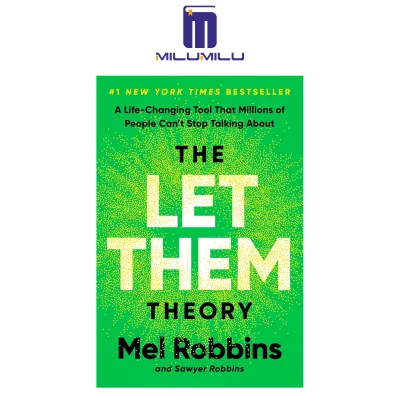

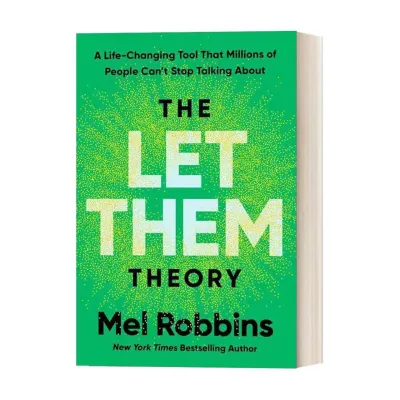
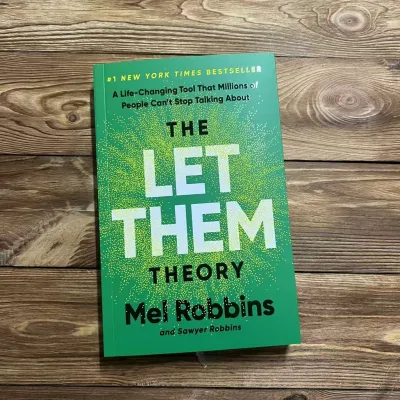


Prices are valid at publication and may change. Please refer to the product page for the latest price.

By adopting this mindset, you establish a clear boundary between other people’s actions and your own peace of mind. The text introduces mental models designed to help readers recognize when they are overstepping into other people’s business. It encourages an honest assessment of why we feel the need to control situations that are ultimately outside our influence.
While the initial concept gained massive popularity as a short social media catchphrase, the full publication attempts to build a deeper methodology around it. It explores the underlying anxiety that drives our need for control, offering personal anecdotes and observational insights to flesh out the concept. However, readers should note that the core philosophy remains highly conceptual, focusing more on shifting your perspective than on providing clinical psychological interventions.
Who Will Benefit Most from Reading It?
This book is particularly suited for individuals who struggle with chronic people-pleasing and find themselves constantly anxious about how others perceive them. If you frequently overextend yourself to keep the peace or feel personally responsible for the happiness of everyone around you, the “let them” approach can offer immediate cognitive relief.
In practical terms, the theory is highly applicable to common interpersonal friction points, such as navigating complex workplace dynamics or managing expectations within adult family relationships. For instance, when dealing with a relative who consistently makes unsolicited life choices, learning to mentally step back can prevent unnecessary arguments and emotional exhaustion.
To benefit fully from this material, readers must possess a genuine willingness to self-reflect and confront their own controlling tendencies. The book is not a tool to change others; rather, it is a mirror for your own behavior. If you are ready to acknowledge that your anxiety often manifests as a desire to manage external outcomes, this text can serve as a supportive starting point.
Limitations: When the Theory Falls Short
Despite its popularity, the theory has distinct limitations and is not a universal solution for all relationship challenges. It is critical to understand that this approach does not apply to situations involving abuse, safety risks, legal obligations, or the parenting of dependent minors. In these scenarios, passive acceptance or stepping back is inappropriate, and active intervention or professional support is necessary.
A common criticism of the philosophy is that it can promote emotional detachment or lead to the avoidance of healthy, necessary confrontations. Simply letting others do as they wish without expressing your own needs can sometimes result in passive-aggressive behavior or resentment. True boundary-setting often requires clear, assertive communication rather than silent withdrawal.
Additionally, readers who are already well-versed in basic cognitive behavioral concepts, boundary-setting literature, or classical stoic philosophy may find the content highly repetitive. The book packages these established ideas into a modern, conversational format, but it does not necessarily offer groundbreaking psychological discoveries.
Buyer’s Checklist: Verifying Editions and Formats
Before purchasing a copy, it is wise to verify the official publication status and ensure you are buying from authorized publishers. Because viral concepts often spark unauthorized summaries, workbook spin-offs, or low-quality self-published guides, double-checking the author’s name and official publisher details on your preferred digital storefront is essential.
Choosing the right format can also impact how effectively you absorb the material. A physical book or digital e-book is often better for those who prefer highlighting key passages, taking notes, and revisiting specific sections during moments of stress. Conversely, an audiobook format may appeal more to readers who enjoy a conversational, motivational tone during their daily commute.
For readers in Singapore, it is worth checking local library options, such as the National Library Board’s digital catalogue, to see if the e-book or audiobook is available for borrowing before spending money. If you decide to purchase, compare prices across reputable local bookstores and authorized online platforms, where prices typically range around S$20 to S$35 depending on the format and shipping options.
Alternative Approaches to Boundary Setting
If you decide that this specific book does not align with your needs, there are several alternative paths to developing healthy boundaries. You can explore established psychological frameworks that focus on codependency recovery and assertive communication skills. Authors who specialize in clinical therapy often provide highly structured, step-by-step guides that focus on the practical language of boundary-setting.
Before committing to a full book purchase, consider sampling free resources to gauge your interest. Listening to official podcast episodes or watching authorized video content by the author can give you a comprehensive understanding of the theory without any financial commitment. Often, a single deep-dive episode is sufficient to grasp the practical application of the concept.
When selecting alternative self-help literature, look for books that emphasize actionable communication skills rather than purely mindset-focused shifts. If your primary struggle is knowing exactly what to say during a difficult conversation, a workbook dedicated to assertive communication or conflict resolution may provide more immediate value than a general motivational text.
Frequently Asked Questions (FAQ)
Does the book include practical exercises or just theory?
To determine if the book offers actionable tools, readers should check the official publisher’s description or preview sample pages before buying. While the text focuses heavily on narrative examples and conceptual advice, some editions or companion journals may offer structured reflection prompts. If your chosen edition lacks formal worksheets, you can still apply the theory by keeping a personal journal to track situations where you successfully chose to let go of control.
Is the audiobook version narrated by the author?
Prospective buyers should verify the narrator credits on the official audiobook listing prior to purchase. Self-help books are frequently narrated by their authors, which can add a layer of personal connection and motivational energy to the listening experience. Hearing the author’s intended tone and emphasis can make the core concepts feel more engaging and easier to digest during daily routines.
Community discussion
Share your experience or ask a question. Comments are reviewed before publication.