
Deciding whether to invest your time and money into a self-improvement book requires looking past the social media hype to see if the content actually delivers practical value. The Mountain Is You by Brianna Wiest is highly worth reading if you are looking for a deeply reflective, philosophical guide to understanding why you subconsciously get in your own way. However, if you prefer highly structured, data-driven psychological strategies or immediate step-by-step productivity hacks, this book may feel too abstract for your needs.
In a fast-paced environment where balancing career aspirations, personal growth, and daily pressures can feel overwhelming, identifying the root causes of your internal resistance is crucial. This review evaluates the book’s core philosophy, the practicality of its exercises, its limitations, and the available formats to help you make an informed decision before purchasing.
Understanding the Core Premise of The Mountain Is You
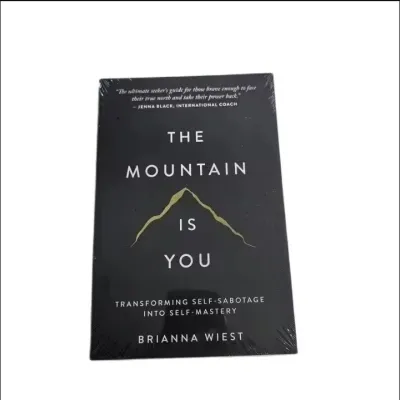
The central argument of The Mountain Is You is that self-sabotage is not a sign of weakness, nor is it a conscious desire to fail. Instead, the author posits that self-sabotage is a subconscious coping mechanism designed to meet a hidden need. The “mountain” represents the accumulated emotional blocks, fears, and unhealed traumas that stand between you and the life you want to live. To scale this mountain, you must stop trying to conquer external obstacles and instead turn your focus inward to master your own subconscious patterns.
Products mentioned in this guide
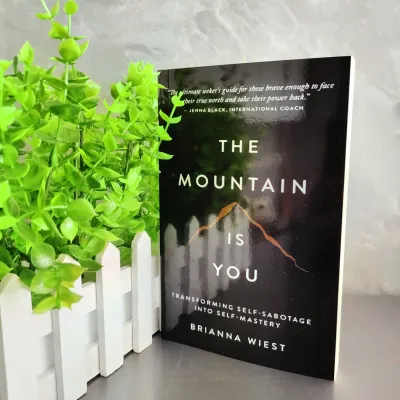
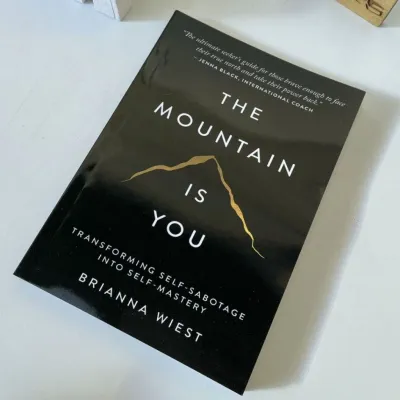

![[ebook]The mountain is you](https://img.lazcdn.com/g/p/4cb24f5bf4ab3257b4cccc88359511dd.jpg_400x400q80.jpg_.webp)
![[ebook] Brianna Wiest 5 IN 1 | 101 Essays That Will Change The Way You Think | The Mountain Is You | I Am The Hero | Salt Water](https://img.lazcdn.com/g/p/a5cb61e40e0bf66e28b46bad2fbe92bb.jpg_400x400q80.jpg_.webp)
Prices are valid at publication and may change. Please refer to the product page for the latest price.
Wiest draws a clear distinction between surface-level bad habits and the deep-rooted emotional blocks that drive them. For example, chronic procrastination is rarely just about poor time management; it is often a protective shield against the fear of failure, rejection, or even the vulnerability of success. By shifting the focus from merely correcting outward behaviors to uncovering the underlying emotional triggers, the book encourages readers to cultivate a deeper level of self-awareness.
The book is structured as a progressive journey across several chapters, moving from identification to resolution. It begins by helping you recognize the various ways self-sabotage manifests in daily life, such as perfectionism, worry, or staying in unfulfilling relationships. From there, it guides you through understanding the purpose of these behaviors, releasing emotional backlog, building emotional intelligence, and ultimately transitioning into a state of self-actualization. The chapters are relatively short and thematic, allowing readers to digest the concepts in manageable segments.
Evaluating the Practicality of Its Actionable Insights
When evaluating a self-help book, the practical application of its concepts is often the most critical factor. The Mountain Is You relies heavily on introspective reflection prompts and mental frameworks rather than rigid, step-by-step action plans. Wiest frequently asks readers to pause and ask themselves difficult, probing questions. For instance, identifying the “secondary gain” of your self-sabotaging behavior—what comfort or safety you receive by staying stuck—is a powerful mental framework that can spark genuine breakthroughs during journaling.

However, the balance between theoretical concepts and concrete, daily implementation leans heavily toward the philosophical side. You will not find daily habit trackers, structured schedules, or step-by-step behavioral exercises in these pages. Instead, the book focuses on reframing your internal dialogue and shifting your perspective on pain, fear, and growth. This means that the responsibility of translating these broad philosophical insights into daily routines falls largely on the reader.
The sections addressing emotional intelligence and the release of emotional backlog offer the most concrete guidance. Wiest discusses the physical sensations of stress and encourages readers to practice sitting with uncomfortable emotions rather than immediately trying to distract or numb themselves. Conversely, the chapters on self-actualization and future-self visualization can feel highly abstract and poetic. If you thrive on structured, actionable checklists, you may find yourself needing to supplement this book with more practical planning tools.
Who Should Read This Book (And Who Should Skip It)
This book is highly suited for individuals who feel stuck in repetitive life patterns, struggle with chronic procrastination, or experience a persistent sense of internal resistance despite having clear goals. If you enjoy journaling, deep self-reflection, and a compassionate, gentle tone that encourages emotional awareness, Wiest’s writing style will likely resonate with you. It is an excellent companion for those who are already on a personal growth journey and want to deepen their emotional intelligence.
On the other hand, certain readers may want to skip this book. If you are looking for a clinical therapy replacement, a highly data-driven scientific text, or quick-fix productivity hacks, The Mountain Is You is unlikely to meet your expectations. Readers who prefer books filled with case studies, statistical data, and peer-reviewed psychological experiments may find the author’s intuitive and philosophical approach to be lacking empirical support.
Engaging constructively with this material also requires a specific level of emotional readiness. The book asks you to take full responsibility for your life and to confront uncomfortable truths about how you might be contributing to your own unhappiness. If you are currently experiencing acute distress or are not yet ready to examine your own behavioral patterns with radical honesty, the reflective exercises may feel overwhelming rather than healing.
Honest Limitations and Critical Perspectives
A balanced review must address the limitations of the text. The most prominent critique of The Mountain Is You is its reliance on observational and philosophical frameworks rather than strict, peer-reviewed clinical studies. Brianna Wiest is an essayist and author, not a licensed clinical psychologist or researcher. While the insights are deeply resonant for many, they are presented as personal and philosophical truths rather than scientifically proven psychological interventions.
Additionally, some readers may experience pacing issues due to repetitive themes. Because the book is structured similarly to a collection of essays, certain core concepts—such as the idea that pain is a catalyst for growth or that we must release past emotional baggage—are repeated frequently across different chapters. While this repetition can help reinforce the message, it can also make the reading experience feel somewhat circular or slow-paced for those who prefer a linear progression of ideas.
Finally, it is essential to establish a clear boundary between self-help literature and professional mental health treatment. While The Mountain Is You offers valuable tools for self-reflection and overcoming everyday behavioral blocks, it is not a substitute for professional therapy, counseling, or medical intervention. For individuals dealing with deep-seated trauma, clinical depression, or diagnosed anxiety disorders, the guidance of a qualified mental health professional remains indispensable.
Making Your Purchase Decision: Formats and Alternatives
Choosing the right format for The Mountain Is You depends largely on how you prefer to engage with reflective material. A physical paperback or hardcover book is highly recommended for this specific title, as it allows you to easily highlight passages, write notes in the margins, and flip back and forth between reflection prompts during journaling sessions. Having a physical copy on your desk can also serve as a gentle visual reminder to prioritize your personal growth.
If you prefer reading on the go, such as during your daily commute on the MRT, the e-book format offers excellent convenience and portability. Before purchasing, verify the device compatibility and regional availability on your preferred e-reader platform. For auditory learners, the audiobook format is a great option for listening during walks or household chores. However, because the content is highly reflective, you may find yourself needing to pause the audio frequently to digest the concepts or write down your thoughts.
When looking to purchase the book in Singapore, you can check local physical bookstores like Kinokuniya or Times, as well as reputable online marketplaces. Prices typically range from S$20 to S$30 depending on the format and retailer. Always verify the edition, language, and publisher details to ensure you are purchasing an authorized, complete copy. If you decide this book’s philosophical style is not the right fit, consider alternative self-improvement books that focus on behavioral psychology, habit formation, or structured cognitive behavioral techniques.
Frequently Asked Questions (FAQ)
How long does it take to read The Mountain Is You?
At approximately 250 pages, the book can be read in a few hours of continuous reading. However, because of its reflective nature, a paced reading approach is highly recommended. Spending 15 to 30 minutes a day reading a single chapter, followed by journaling or quiet reflection, allows the concepts to settle and helps you apply them to your life.
Is The Mountain Is You based on scientific research?
No, the book is not a scientific or academic text. It is built on philosophical, observational, and general psychological frameworks. While it references common psychological concepts, it does not cite clinical trials, empirical studies, or peer-reviewed research. It should be read as a philosophical guide to self-reflection rather than a scientific study.
Can this book replace professional therapy for deep trauma?
No, this book cannot replace professional therapy. While it offers valuable self-reflection tools for identifying everyday self-sabotage and emotional blocks, it is not a medical or psychological treatment. Individuals dealing with deep-seated trauma, clinical depression, or diagnosed mental health conditions should consult a qualified healthcare professional or licensed therapist.
Community discussion
Share your experience or ask a question. Comments are reviewed before publication.