
If you are struggling with feeling stuck, constantly procrastinating, or finding yourself repeating the same self-defeating patterns, Brianna Wiest’s the mountain is you offers a comforting, introspective perspective on personal growth. Rather than viewing self-sabotage as a character flaw, the book frames it as a subconscious mechanism designed to protect you from perceived threats.
For readers who appreciate philosophical, essay-style self-help that focuses on emotional validation and mindset shifts, this book is highly worth your time. However, if you are looking for a highly structured, science-backed guide with step-by-step behavioral exercises, you may find its abstract tone somewhat lacking. It serves best as a reflective starting point for emotional healing rather than a clinical manual.
The Core Premise of The Mountain Is You: Reframing Self-Sabotage
At the heart of Brianna Wiest’s work is the idea that the “mountain” we must climb is not an external obstacle, but rather our own internal resistance. The book defines self-sabotage as the clash between two opposing forces: our conscious desires and our subconscious needs. When we set goals but fail to take action, it is often because our subconscious is trying to meet a hidden need, such as safety, comfort, or predictability.
Products mentioned in this guide
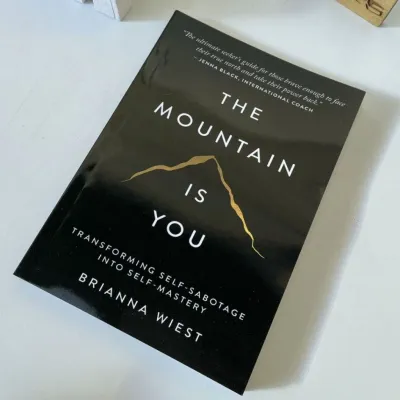
![EBOOK The Mountain is You [Full Version]](https://img.lazcdn.com/g/p/8e9d3b82647a8ed01d2072a62b009143.png_400x400q80.png_.webp)
![[ebook]The mountain is you](https://img.lazcdn.com/g/p/4cb24f5bf4ab3257b4cccc88359511dd.jpg_400x400q80.jpg_.webp)
Prices are valid at publication and may change. Please refer to the product page for the latest price.
To dismantle these internal mountains, the author guides readers through identifying their specific self-sabotaging behaviors. These can manifest as perfectionism, procrastination, emotional regression, or chronic worry. The book argues that true growth does not come from forcing yourself to change overnight, but from understanding why you built these defense mechanisms in the first place. By acknowledging the protective purpose behind your habits, you can begin to release them without self-judgment.
Wiest’s writing style is deeply reflective, empathetic, and essay-like. The chapters do not read like a traditional textbook; instead, they flow like a series of gentle, poetic reminders. This compassionate tone makes heavy psychological concepts feel accessible and comforting, allowing readers to explore their vulnerabilities without feeling overwhelmed by clinical jargon.
Separating Online Hype from Practical Value
With its massive popularity across social media platforms and online bookstores, it is easy to wonder if the book is simply a passing trend or a genuinely valuable resource. Evaluating its core content reveals both distinct strengths and notable limitations that every reader should consider before purchasing.

Where the Book Shines
The book excels at providing profound mindset shifts and deep emotional validation. For individuals living in high-pressure environments—where professional success and societal expectations often drive chronic stress—the author’s gentle reassurance acts as a much-needed emotional balm. It helps you recognize that feeling stuck is not a sign of failure, but a signal that your current lifestyle no longer serves your inner self.
Wiest provides highly relatable examples of subconscious behaviors that many readers will instantly recognize in their own lives. Whether it is the habit of creating unnecessary drama to avoid facing a deeper fear, or staying in unfulfilling situations out of a desire for familiarity, these insights hit home. The comforting, poetic tone makes the process of self-examination feel safe rather than punitive, which is incredibly valuable for anyone experiencing burnout.
Where It Falls Short
While the book is emotionally resonant, it lacks a rigorous clinical or scientific framework. Readers hoping for peer-reviewed psychological studies, cognitive behavioral therapy (CBT) diagrams, or data-driven methodologies will not find them here. The concepts are based primarily on philosophical observations, personal reflection, and general spiritual principles rather than empirical research.
Additionally, some readers may find that the book becomes repetitive in its later chapters. The same core message—that your resistance is a guide to your healing—is rephrased across various chapters using different metaphors, which can make the reading experience feel slightly circular. If you prefer a highly structured, step-by-step action plan with concrete daily habits, the abstract and philosophical nature of this book might feel too vague or difficult to apply directly to your routine.
Who Should Read It (And Who Should Skip It)
Understanding your personal learning style and current emotional needs is key to determining whether this book will be a valuable addition to your shelf.
The Ideal Reader Profile
This book is highly recommended for anyone currently experiencing burnout, navigating major life transitions, or feeling a sense of emptiness despite achieving external milestones. It is particularly suited for individuals who are ready to engage in deep introspection and emotional processing. If you prefer a self-help style that reads like a warm, supportive conversation and encourages journaling and self-reflection, this book will likely resonate deeply with you.
When to Look for Alternatives
On the other hand, you should skip this book if you are looking for a clinical psychology workbook, a guide to processing deep trauma, or a highly practical habit-building framework. It is not designed to address severe clinical conditions or provide structured therapeutic interventions.
If you require science-backed strategies, you would be better served by books that focus on cognitive behavioral therapy (CBT) or actionable habit formation. For instance, readers seeking structured habit-building might prefer guides written by behavioral scientists, while those needing trauma-informed recovery should look for workbooks authored by licensed clinical therapists.
Formats and Availability for Singapore Readers
For readers in Singapore, accessing the book is straightforward, but choosing the right format can significantly impact your reading experience.
- Physical Paperback: This is the ideal format if you enjoy active reading. The book contains numerous reflective prompts, making it highly suitable for margin notes, highlighting key passages, and pairing with a personal journal.
- E-book: If you have a busy daily commute on the MRT, the digital version (available on Kobo or Kindle platforms) offers ultimate portability. You can also check the National Library Board (NLB) Libby app for digital lending options.
- Audiobook: For those who prefer passive consumption, the audiobook format is excellent for listening during walks or household chores, allowing the author's soothing narration to set a calm tone for your day.
Before making a purchase, it is crucial to verify the edition details to ensure you receive the complete, authorized text. The original book is written in English, published by Thought Catalog Books, and was released in 2020. Be cautious when browsing online marketplaces, as there are many low-quality, unauthorized summaries or self-published study guides that mimic the cover art. Always check the publisher and ensure the page count is approximately 248 pages to guarantee you are purchasing the authentic work. You can find physical copies at major local brick-and-mortar bookstores like Kinokuniya or Popular, as well as reputable online book retailers.
Frequently Asked Questions (FAQ)
How long does it take to read 'The Mountain Is You'?
At approximately 248 pages, the average reader can finish the book in about 4 to 5 hours. However, because of its reflective, essay-like structure, it is highly recommended to read it slowly—perhaps one chapter per day—to allow the concepts to settle and to complete the internal reflection prompts.
Is this book a substitute for professional therapy?
No, this book is a reflective self-help tool and is not a substitute for professional mental healthcare, clinical diagnosis, or therapy. If you are dealing with severe mental health conditions, clinical depression, or deep-seated trauma, you should consult a licensed psychologist, counselor, or medical professional.
Should I read the physical book or listen to the audiobook?
The physical book is best if you want to actively study the material, highlight passages, and engage in journaling. The audiobook is better if you prefer passive listening during your daily commute or want to experience the comforting, slow-paced narration as a form of relaxation.
Community discussion
Share your experience or ask a question. Comments are reviewed before publication.