
Choosing between The Psychology of Money and Rich Dad Poor Dad depends entirely on your current financial mindset and immediate goals. If you struggle with emotional spending, saving consistently, or understanding your own behavioral biases, start with The Psychology of Money. If you are looking to shift from an employee mindset to an entrepreneurial one and want to understand the conceptual difference between assets and liabilities, Rich Dad Poor Dad is the better starting point. Both are foundational, but they solve different problems in your financial education journey.
Understanding your relationship with money is a lifelong process. Many readers dive into personal finance looking for immediate investment tips, only to realize that their underlying habits and beliefs are what truly dictate their long-term success. By comparing these two seminal works, you can identify which perspective aligns with your current needs, whether you require a behavioral reset or a conceptual wake-up call.
Core Philosophy and Financial Mindset
The core philosophy of The Psychology of Money is built on the premise that financial success is not a hard science but a soft skill where behavior is far more important than technical knowledge. Morgan Housel argues that wealth is often what you do not see—the cars not purchased and the savings accumulated for future flexibility. The book focuses heavily on risk management, the power of compounding, and the psychological peace that comes from having a financial cushion. It teaches readers to accept reasonable financial decisions over purely rational ones, acknowledging that human beings are not spreadsheets.
Products mentioned in this guide
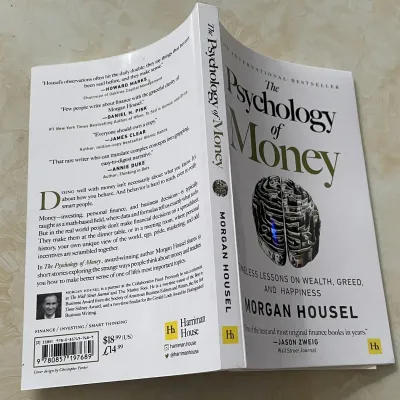

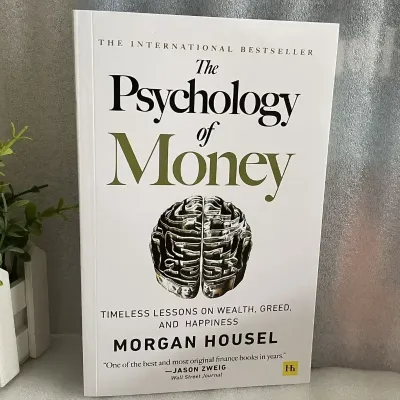
Prices are valid at publication and may change. Please refer to the product page for the latest price.
On the other hand, Rich Dad Poor Dad operates on a philosophy of financial disruption and cash-flow generation. Robert Kiyosaki challenges the traditional educational path, arguing that schools prepare individuals to be employees rather than employers or investors. The book’s central thesis is that the rich make money work for them by acquiring assets that generate passive income. Kiyosaki emphasizes financial literacy, basic accounting, and leveraging corporate structures to protect wealth, encouraging readers to break free from the “rat race” of relying solely on a monthly paycheck.
While both books aim to help you build wealth, they target entirely different areas of your financial psychology. The Psychology of Money encourages introspection, humility, and wealth preservation, helping you manage the emotional highs and lows of investing. Rich Dad Poor Dad focuses on outward ambition, financial education, and wealth creation, pushing you to rethink how you earn your income. Neither book serves as a technical manual; you will not find step-by-step stock-picking strategies or exact mathematical formulas in either text. Instead, they offer frameworks to help you interpret the financial world, leaving the specific execution to your own research and local market conditions.
Writing Style and Reading Experience
The reading experience of The Psychology of Money is highly structured, polished, and analytical. Written as a collection of 19 short, standalone essays, the book allows readers to digest complex psychological concepts in brief, highly focused sittings. Housel, a former financial columnist, writes with an elegant, understated prose style that relies on historical anecdotes, scientific studies, and real-world examples. This modular structure makes it incredibly easy to read a single chapter during a daily commute or before bed, reflecting on one specific behavioral trap at a time.

In contrast, Rich Dad Poor Dad is written as a narrative memoir, driven by dialogue and personal storytelling. Kiyosaki uses the contrasting advice of his biological father (the “poor dad,” a highly educated school superintendent) and his friend’s father (the “rich dad,” a self-made entrepreneur) to illustrate his points. The tone is conversational, repetitive, and highly motivational, designed to provoke strong reactions and challenge long-held beliefs. While some readers find the narrative style engaging and easy to follow, others may find the repetition and simplified financial advice less structured than Housel’s essay format.
These structural differences directly impact how you absorb the material. If you prefer a logical, evidence-based approach with concise chapters that get straight to the point, The Psychology of Money offers a highly satisfying reading experience. If you are motivated by storytelling, personal anecdotes, and a mentor-style narrative that repeatedly hammers home a few core concepts, Rich Dad Poor Dad provides an engaging, easy-to-read entry point into financial concepts.
Target Audience and Financial Stage
The ideal reader for The Psychology of Money is someone who already has some exposure to earning and saving money but struggles with the emotional discipline required to keep it. If you find yourself prone to panic-selling during market downturns, comparing your lifestyle to others on social media, or struggling to maintain a consistent savings rate despite a decent income, this book is tailored for you. It is also highly suited for mature investors who want to ground themselves in realistic expectations, understanding that luck and risk play massive roles in financial outcomes.
Conversely, Rich Dad Poor Dad is aimed at individuals who feel trapped in their current career paths or are just starting to think about financial independence. It is highly popular among young adults, aspiring entrepreneurs, and employees who want to transition into business ownership or real estate investing. If you need a strong motivational push to start learning about finance, or if you have never questioned the traditional advice of “go to school, get a good job, and save money,” Kiyosaki’s book serves as an eye-opening introduction to alternative financial paths.
Neither book requires prior financial knowledge or a background in economics, making both highly accessible to absolute beginners. However, the expected takeaways differ significantly. The Psychology of Money leaves you with a sense of calm, realistic caution, and a renewed focus on personal saving habits. Rich Dad Poor Dad leaves you with a sense of urgency, entrepreneurial excitement, and a desire to seek out investment opportunities, though it requires you to do your own heavy lifting when it comes to actual implementation.
Practical Applicability and Actionable Takeaways
When it comes to daily financial decisions, The Psychology of Money offers highly practical, behavioral habits that are universally applicable. The book encourages you to define what “enough” means to you, helping to curb lifestyle inflation as your income grows. It emphasizes the importance of maintaining a high savings rate as a form of hedge against an unpredictable future, rather than saving only for specific purchases. The most actionable takeaway is the concept of “room for error” or margin of safety, which translates directly into keeping a robust emergency fund and avoiding over-leveraged investment positions.
Rich Dad Poor Dad focuses on conceptual shifts that require careful translation into real-world actions. The most famous takeaway is the definition of an asset as something that puts money in your pocket, and a liability as something that takes money out of your pocket. This simple distinction helps readers re-evaluate major purchases, such as realizing that a heavily mortgaged primary residence may act more like a liability than an asset in terms of monthly cash flow. Kiyosaki also advocates for building financial literacy in four areas: accounting, investing, understanding markets, and the law.
However, readers must exercise caution when applying the specific strategies outlined in Rich Dad Poor Dad. The book heavily promotes real estate investing, tax loopholes, and corporate structures that are highly specific to the United States regulatory environment. If you are living in Singapore, for example, you must verify local tax laws, property regulations, and investment frameworks before attempting to replicate these strategies.
In Singapore, purchasing multiple properties involves navigating Additional Buyer’s Stamp Duty (ABSD), strict Total Debt Servicing Ratio (TDSR) limits, and specific Central Provident Fund (CPF) usage rules. Similarly, setting up corporate entities for tax advantages must comply with the Inland Revenue Authority of Singapore (IRAS) guidelines. While the conceptual lessons of cash flow and asset acquisition remain highly valuable, the practical execution must always be grounded in your local regulatory and economic reality.
Side-by-Side Comparison Matrix
| Dimension | The Psychology of Money | Rich Dad Poor Dad |
|---|---|---|
| Core Theme | Behavioral psychology, risk management, and wealth preservation | Financial literacy, cash flow, and asset acquisition |
| Primary Format | 19 standalone, analytical essays | Narrative memoir and conversational storytelling |
| Best For | Improving saving habits and emotional discipline | Shifting from employee to entrepreneurial mindset |
| Key Takeaway | Doing well with money is about behavior, not intelligence | Buy assets that generate income; avoid liabilities |
| Action Level | High (focuses on daily saving and risk habits) | Conceptual (requires local research to execute) |
How to Choose Your First Finance Book
To make your final decision, consider your current financial situation, your emotional relationship with money, and what you hope to achieve in the short term.
Choose The Psychology of Money if:
- You want to build a sustainable, long-term savings habit and learn how to resist lifestyle inflation.
- You find yourself making impulsive financial decisions based on market trends, news, or social pressure.
- You prefer an evidence-based, analytical writing style that uses historical facts and psychological insights.
- You want to understand how to preserve the wealth you already have and build a reliable safety net.
Choose Rich Dad Poor Dad if:
- You feel stuck in the traditional corporate cycle and want to explore entrepreneurship or investing.
- You need a fundamental, easy-to-understand explanation of how assets, liabilities, and cash flow work.
- You respond well to motivational storytelling and need a conceptual spark to kickstart your financial education.
- You want to challenge your traditional views on employment, education, and homeownership.
Verify first if:
- You are looking for a step-by-step guide to investing in specific stocks, bonds, or local real estate. Neither book provides a concrete investment blueprint, and you will need to supplement both with technical guides.
- You are sensitive to repetitive writing styles or simplified financial advice. If so, you may find The Psychology of Money to be a more satisfying and intellectually rigorous read.
- You plan to implement complex tax or corporate strategies. Always consult local financial professionals or official regulatory guidelines in your country to ensure compliance with local laws.
Frequently Asked Questions (FAQ)
Should I read both books, and in what order?
Yes, reading both books provides a highly balanced foundation for your financial education, as they address different halves of personal finance: behavior and strategy.
For most readers, it is highly recommended to read The Psychology of Money first. Establishing behavioral guardrails, emotional discipline, and a solid saving habit ensures that you do not make reckless decisions once you begin investing. Once you have a stable psychological foundation, read Rich Dad Poor Dad to spark your entrepreneurial drive, understand cash flow, and learn how to actively acquire assets. This order helps you build a secure financial base before taking on the risks associated with business or investment ventures.
Do I need to buy the latest editions or specific formats?
The core principles in both books remain highly stable across different editions, so you do not necessarily need to purchase the absolute latest printing to benefit from the lessons. However, when purchasing from an online bookstore or local retailer, it is always wise to verify the edition, language, and format to ensure it matches your reading preferences.
Some updated editions may include new prefaces, revised anecdotes, or minor corrections that enhance the reading experience. If you prefer learning on the go, audiobooks are an excellent option for both titles, especially given the conversational narrative of Rich Dad Poor Dad and the essay-based structure of The Psychology of Money. Whichever format you choose, ensure you are purchasing from an authorized source to guarantee you receive a complete and high-quality copy of the text.
Community discussion
Share your experience or ask a question. Comments are reviewed before publication.