
If you are looking to improve your financial situation, choosing the right book to read first can save you time and prevent costly mistakes. Two of the most popular personal finance books of the modern era are The Psychology of Money by Morgan Housel and Rich Dad Poor Dad by Robert Kiyosaki. While both aim to help you build wealth, they approach the subject from completely different angles.
Choose The Psychology of Money if you find yourself struggling with spending habits, emotional decision-making during market fluctuations, or understanding how to preserve the wealth you already have. This book focuses on your behavioral relationship with money, helping you identify the psychological traps that lead to financial instability.
Choose Rich Dad Poor Dad if you want to understand the fundamental difference between assets and liabilities, or if you are exploring entrepreneurship and want to break free from the traditional employee mindset. This book provides a foundational paradigm shift, redefining how you view employment and wealth creation.
Products mentioned in this guide
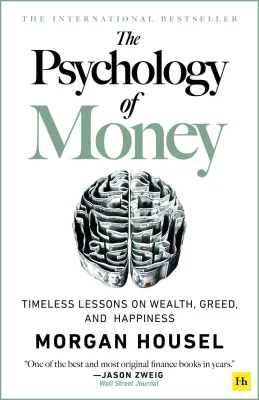
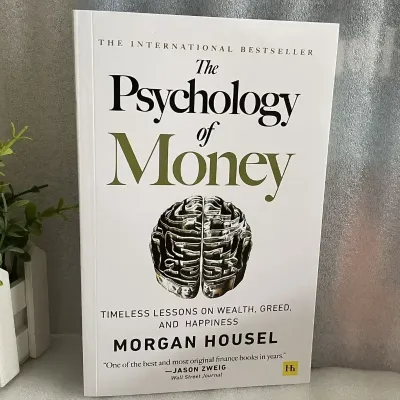
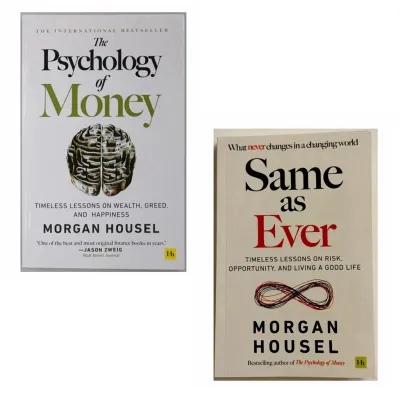
Prices are valid at publication and may change. Please refer to the product page for the latest price.
It is important to note that neither book is a step-by-step technical trading manual, a specific guide to local tax codes, or a get-rich-quick blueprint. Instead, they offer conceptual frameworks designed to reshape your financial mindset and help you make more informed decisions.
Core Philosophy: Mindset vs. Asset Building
The foundational themes of these two books present distinct financial paradigms, each addressing a different aspect of wealth creation. The Psychology of Money focuses heavily on behavioral finance, emphasizing that doing well with money has little to do with how smart you are and a lot to do with how you behave. Housel argues that financial decisions are rarely made on a spreadsheet; instead, they are made at the dinner table, heavily influenced by personal history, unique worldviews, ego, pride, and marketing. The book explores the massive roles that luck and risk play in financial outcomes, urging readers to recognize that personal financial success is often less about intelligence and more about managing behavior and emotions. Housel explains that people from different generations, raised by different parents, earning different incomes, and living in different parts of the world experience very different economic realities. A person who grew up during a period of high inflation views the stock market differently than someone who grew up during a prolonged bull market. Therefore, what seems crazy to one person makes perfect sense to another, and understanding this is key to managing your own financial expectations.
In contrast, Rich Dad Poor Dad focuses on financial literacy, the cash flow quadrant, and making money work for you rather than working for money. Kiyosaki presents his philosophy through the contrast between his biological father (Poor Dad), who was highly educated but struggled financially, and his friend’s father (Rich Dad), an entrepreneur who built a vast financial empire. The core message is that traditional education prepares people to be excellent employees, but fails to teach them how to acquire income-generating assets. Kiyosaki encourages readers to transition from active labor to passive asset ownership, focusing on building businesses and investing in real estate or paper assets.
While Housel takes an introspective, psychological approach that encourages self-reflection, humility, and risk mitigation, Kiyosaki offers an outward-looking, structural approach that encourages entrepreneurial risk-taking and aggressive asset acquisition. One teaches you how to be content and secure with what you have, while the other teaches you how to break free from traditional employment structures to build wealth.
Target Audience and Reading Experience
Understanding the tone, structure, and complexity of each book will help you assess which one better fits your current reading preferences and financial knowledge level. The Psychology of Money is structured as a collection of twenty short, standalone chapters. Each chapter uses engaging historical anecdotes and clear, elegant prose to illustrate a single behavioral concept. This narrative-driven structure makes the book exceptionally digestible and suitable for all knowledge levels, from complete novices to seasoned financial professionals. Readers interested in behavioral economics and modern storytelling will find the writing style highly polished and respectful of their time.

Rich Dad Poor Dad employs a highly conversational, anecdote-heavy, and conceptual style. Kiyosaki uses simple parables and repetitive lessons to drive home his core concepts, making the book incredibly accessible for absolute beginners who might otherwise be intimidated by financial literature. The narrative of a young boy learning lessons from a wealthy mentor is easy to follow and highly engaging. However, some readers may find the tone overly simplistic or repetitive, as the book focuses heavily on broad concepts rather than detailed, step-by-step execution. Kiyosaki’s narrative is structured around lessons he claims to have received as a child, which helps ground abstract financial concepts in relatable, real-world scenarios. The contrast between the two fathers serves as a powerful literary device that keeps the reader engaged, even if some of the anecdotes are simplified for dramatic effect. This makes the book highly motivational, though readers should approach the historical anecdotes as conceptual parables rather than literal historical facts.
Both books excel at maintaining reader engagement without relying on complex financial jargon. They do not require a background in accounting or economics to understand, making them excellent entry points into the world of personal finance literature.
Key Concepts and Actionable Takeaways
The primary lessons you can extract from each book will help you evaluate which concepts are more relevant to your current life stage. In The Psychology of Money, several key concepts stand out:
- Room for Error: Housel argues that the most important part of any financial plan is planning on your plan not going according to plan. Having a buffer or margin of safety is what keeps you in the game long enough for compounding to work.
- The Compounding of Patience: The book demonstrates that the most powerful financial force is time, not high investment returns. Consistent, long-term habits are far more valuable than short-term financial wins. Housel highlights that Warren Buffett's financial success is not just due to his investment acumen, but primarily due to the sheer number of years he has been investing. Compounding only works when you give it time, and to give it time, you must survive the short-term volatility.
- Defining "Enough": Housel emphasizes the importance of knowing when to stop moving the goalposts, as the pursuit of more can lead to risking what you need for what you do not even want. This is illustrated by the tragic stories of wealthy individuals who risked everything they had and needed for something they did not have and did not need.
In Rich Dad Poor Dad, the central takeaways focus on structural financial literacy:
- The Definition of an Asset vs. a Liability: Kiyosaki simplifies this by stating that an asset is anything that puts money in your pocket, while a liability is anything that takes money out of your pocket. This leads to the assertion that a primary residence is often a liability rather than an asset, as it requires ongoing mortgage payments, maintenance, and taxes without generating direct income.
- The "Rat Race": This concept describes the cycle of working harder to pay for lifestyle inflation and debts, keeping individuals trapped in employment they may not enjoy.
- Financial Statements: The book introduces basic cash flow diagrams to show how money moves through income, expenses, assets, and liabilities, emphasizing that understanding these relationships is the key to financial freedom.
These takeaways are conceptual frameworks rather than specific mathematical formulas or guaranteed investment strategies. They do not tell you which stocks to buy or how to structure a specific portfolio, but they provide the mental models necessary to evaluate your financial decisions.
Book Formats, Editions, and Purchasing Considerations
When preparing to purchase either book, selecting the right format can significantly impact your reading experience. Both titles are widely available in physical formats (paperback and hardcover), e-book formats, and audiobooks. Audiobooks have become exceptionally popular for these narrative-driven non-fiction works, as they allow you to absorb the concepts during a daily commute or workout.
Before finalizing your purchase, it is wise to check the publication year and edition. Rich Dad Poor Dad has been published in various anniversary editions, which often include updated forewords, modern commentary, or study guides at the end of chapters to help apply the concepts to today’s economic climate. The Psychology of Money remains relatively consistent across its printings, but verifying that you are purchasing an authorized, complete edition ensures you receive all twenty chapters without omissions.
Prices in S$ will vary significantly depending on the format and where you choose to buy. Physical paperbacks at local bookstores in Singapore typically range from S$15 to S$30, while digital e-books and audiobook downloads may offer different pricing structures or subscription-based access. When buying digital versions, always verify the language options and regional device compatibility, as some e-book formats may have digital rights management restrictions that limit which devices or e-reader applications can open the file.
Final Verdict: How to Choose Your First Personal Finance Book
To consolidate your decision, consider where your most immediate financial bottleneck lies. Use the comparison below to guide your choice:
| Feature / Criteria | The Psychology of Money | Rich Dad Poor Dad |
|---|---|---|
| Primary Focus | Behavioral finance and emotional relationship with wealth | Financial literacy, asset acquisition, and entrepreneurship |
| Core Message | Doing well with money is about behavior, patience, and managing risk | Make money work for you by acquiring income-generating assets |
| Chapter Structure | 20 short, independent, narrative-driven essays | Chronological narrative with conceptual lessons and parables |
| Best For | Readers wanting to curb spending, manage risk, and build long-term habits | Beginners seeking a mindset shift regarding employment and debt |
| Tone | Analytical, reflective, humble, and evidence-based | Conversational, motivational, direct, and provocative |
Rather than viewing these books as mutually exclusive options, they are best read as complementary resources. Rich Dad Poor Dad provides the initial spark and the vocabulary to understand what wealth looks like, while The Psychology of Money provides the psychological guardrails necessary to keep that wealth once you begin building it.
Frequently Asked Questions (FAQ)
Can I read both books, and in what order?
Yes, reading both is highly recommended as they cover different dimensions of personal finance. The optimal sequence is to start with Rich Dad Poor Dad to establish a foundational vocabulary and shift your mindset away from relying solely on active employment income. Once you have adopted the perspective of building assets, read The Psychology of Money to learn how to manage the psychological challenges of investing, avoid the traps of greed, and build sustainable, long-term wealth habits.
Are these books suitable for beginners with no financial background?
Absolutely. Both books are specifically written for a general audience and intentionally avoid complex mathematical models, academic jargon, or dry accounting spreadsheets. They focus on high-level principles, personal anecdotes, and psychological concepts, making them highly accessible to anyone looking to improve their financial literacy from scratch.
Do these books provide specific stock or investment recommendations?
No. Neither book provides specific stock picks, cryptocurrency recommendations, real estate listings, or exact portfolio allocations. They are designed to teach you how to think about money, manage risk, and evaluate financial opportunities. For specific investment strategies, asset allocations, or financial planning advice, you will need to consult specialized guides or a qualified financial professional.
Community discussion
Share your experience or ask a question. Comments are reviewed before publication.