
Reading Rick Riordan’s The Trials of Apollo requires a straightforward approach because the narrative follows a strict, linear timeline. Unlike other sprawling fantasy universes where prequels and spin-offs complicate the timeline, Apollo’s journey from a fallen god to a mortal teenager unfolds sequentially. To get the complete, uninterrupted story of Apollo’s quest to reclaim his divine status, you should read the five core novels in their exact publication order.
This guide outlines the correct sequence for the five core novels, explains how the series connects to the wider universe, and helps you choose the right editions for your collection.
The Official Publication and Chronological Order
Because the narrative of this series is strictly linear, the publication order and the internal chronological order are identical. The story begins immediately after the events of previous mythological conflicts and progresses day by day, week by week, through Apollo’s mortal trials.
Products mentioned in this guide
![[SG Stock] The Trials of Apollo (5 Books)](https://img.lazcdn.com/g/p/a8cdb4936af36edd0c5b5bb75315f7ac.jpg_400x400q80.jpg_.webp)
![[SG Stock]5 Books The Trials of Apollo Series Rick Riordan Percy Jackson Related Children Fiction Books](https://img.lazcdn.com/g/p/6cbf3bf7e8b31fa1e35d2e13937b87e2.jpg_400x400q80.jpg_.webp)
Prices are valid at publication and may change. Please refer to the product page for the latest price.
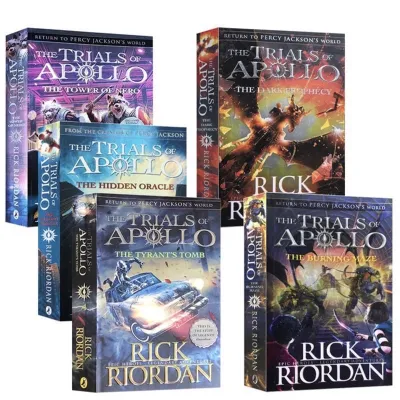
To follow his journey correctly, you must read the five main novels in this exact sequence:
- The Hidden Oracle – Apollo is stripped of his divine powers by Zeus and lands in a New York City dumpster as a mortal teenager named Lester Papadopoulos. He must make his way to Camp Half-Blood to find shelter and begin his first quest.
- The Dark Prophecy – Accompanied by his demigod companion Meg McCaffrey, Apollo travels to the American Midwest to secure the second ancient Oracle while facing threats from a triumvirate of ancient Roman emperors.
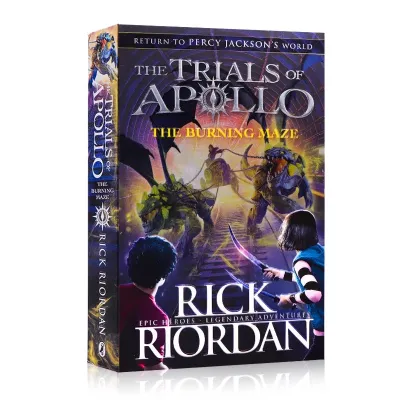
- The Burning Maze – The quest takes Apollo to Southern California, where he must navigate the dangers of the Labyrinth and confront a brutal emperor, leading to some of the most emotionally devastating moments in the entire franchise.
- The Tyrant's Tomb – Apollo arrives at Camp Jupiter in Northern California to help the Roman demigods defend their home against an impending siege led by the undead and the remaining emperors.
- The Tower of Nero – The final confrontation takes Apollo back to where his mortal journey began in New York, where he must defeat the emperor Nero and the ancient serpent Python to reclaim his place on Mount Olympus.
Reading these books out of order will severely spoil major character arcs, divine curses, and overarching plot resolutions. Apollo’s personal growth is a slow, painful redemption arc; he starts as an arrogant, self-centered deity and gradually learns empathy, sacrifice, and the value of mortality. Skipping ahead ruins this emotional progression.
Unlike other fantasy franchises, there are no prequel novels or out-of-order flashbacks that require a separate chronological reading track. The narrative moves forward continuously, making a simple sequential reading path the most effective way to experience the story.
Essential Prerequisites: Navigating the Wider Riordanverse
While you can technically read The Trials of Apollo as a standalone series, doing so is highly discouraged for the best reading experience. This series serves as the third major installment in the broader “Riordanverse” chronicle, and it relies heavily on the world-building established in earlier books.

To fully appreciate the story, the recommended reading path begins with the original five-book series, Percy Jackson and the Olympians, followed by the five-book sequel series, The Heroes of Olympus. Apollo’s first-person perspective assumes that the reader is already familiar with the layout of Camp Half-Blood, the Roman demigods of Camp Jupiter, and the outcomes of the previous mythological wars.
The main antagonists of Apollo’s series, the Triumvirate, have been pulling the strings behind the scenes since the events of the Giant War. Without the context of The Heroes of Olympus, their sudden appearance and immense influence might feel abrupt and unexplained to a new reader.
Furthermore, Apollo is accompanied and aided by established demigods throughout his journey. Characters like Percy Jackson, Leo Valdez, Piper McLean, Hazel Levesque, and Frank Zhang play pivotal roles in his quests. If you have not read the previous series, the emotional weight of their appearances, their personal struggles, and their relationships will be completely lost on you.
If you are short on time, you should at least read The Heroes of Olympus before starting Apollo’s journey, as the first book begins only a few months after the finale of that series. However, starting from the very beginning with The Lightning Thief remains the most rewarding path for any reader.
Choosing the Right Format and Edition for Your Collection
When preparing to purchase the series, readers have several format options to consider based on budget, storage space, and reading habits. Each format offers distinct advantages depending on how you plan to enjoy and preserve your books.
In tropical climates like Singapore, physical book preservation requires careful consideration. High humidity can cause paperback pages to yellow quickly and develop foxing, which are unsightly brown spots. If you plan to display the series on your bookshelf long-term, investing in hardcover editions is highly recommended, as they offer superior structural durability and resist warping better in humid environments.
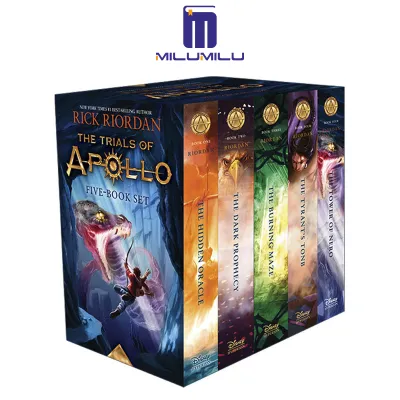
For budget-conscious readers, a complete paperback box set is often the most economical choice. A full five-book paperback set typically costs significantly less than buying individual hardcovers, often fitting within a reasonable budget of S$50 to S$80 depending on retail promotions at local bookstores or online marketplaces.
If physical space is limited—a common challenge in modern apartments—e-books are an excellent alternative. They allow you to carry the entire series on a single e-reader, making them perfect for reading during daily commutes on the MRT without adding weight to your bag.
For those who prefer audiobooks, the entire series is narrated by Robbie Daymond. His consistent portrayal of Apollo’s dramatic, theatrical, and eventually humbled voice adds immense depth to the first-person narrative. Before purchasing, verify that your preferred audiobook platform offers the complete five-book set with consistent narration to ensure a seamless listening experience.
When buying online, always verify the publisher and edition details. The US editions (published by Disney-Hyperion) and the UK editions (published by Puffin) feature completely different cover art. If you value visual consistency on your shelf, ensure you do not accidentally mix US and UK editions when purchasing individual volumes.
Frequently Asked Questions (FAQ)
Are there any short stories or companion books to read?
Yes, there are companion books, though they are not strictly mandatory to understand the main plot. Camp Half-Blood Confidential and Camp Jupiter Classified offer fun, in-universe insights into the daily lives, history, and secrets of the two demigod camps. Camp Jupiter Classified is particularly relevant as it is framed as a journal written by a character during the events of the main series. It is best to read these companion books after finishing the third or fourth novel to avoid minor spoilers regarding camp setups and character statuses. They serve as excellent supplementary material for dedicated fans who want to immerse themselves deeper into the lore.
Is the series finished, or will there be more books?
Yes, the main storyline of The Trials of Apollo is fully complete. The Tower of Nero serves as the definitive conclusion to Apollo’s mortal trials, resolving his quest to defeat Python and reclaim his place on Mount Olympus. While Rick Riordan has written subsequent novels set in the same universe—such as The Sun and the Star, which focuses on the demigods Nico di Angelo and Will Solace—these are separate spin-offs rather than direct continuations of Apollo’s personal narrative. You can purchase the five-book box set with the confidence that you are getting a complete, self-contained story arc.
Community discussion
Share your experience or ask a question. Comments are reviewed before publication.