
Choosing between ‘The Young Scientists’ and other popular Primary School Leaving Examination (PSLE) Science assessment books depends on your child’s current learning stage, academic proficiency, and specific revision goals. ‘The Young Scientists’ is primarily a themed, comic-style supplementary publication designed to foster conceptual understanding and a love for science through engaging narratives. In contrast, traditional PSLE Science assessment books focus heavily on exam-style questions, topical drills, and structured open-ended practice. To make an informed purchase, you must evaluate how each resource aligns with your child’s learning style, whether they need to build foundational interest or refine their exam-answering techniques, and how well the material matches the current examination format.
Core Evaluation Criteria for PSLE Science Books
When shopping for PSLE Science preparation materials, establishing a clear set of evaluation criteria helps you avoid purchasing redundant or ineffective resources. The first and most critical dimension is alignment with the latest Ministry of Education (MOE) Science syllabus. Because the syllabus undergoes periodic reviews to emphasize scientific inquiry and real-world applications, using outdated materials can lead to studying irrelevant concepts or missing newly introduced topics.
Another key criterion is the balance between multiple-choice questions (MCQ) and open-ended questions (OEQ). A well-structured assessment book should mirror the actual PSLE Science paper format, which allocates significant marks to both sections. Look for books that do not just test rote recall but instead challenge students to apply scientific concepts to unfamiliar scenarios, as this reflects the cognitive demand of the national examination.
Products mentioned in this guide
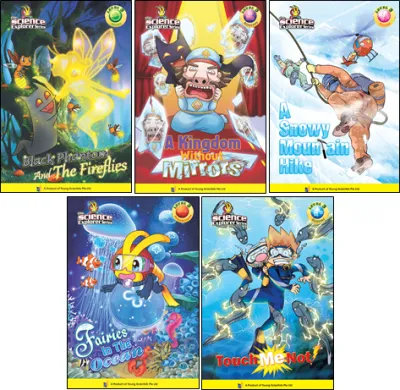
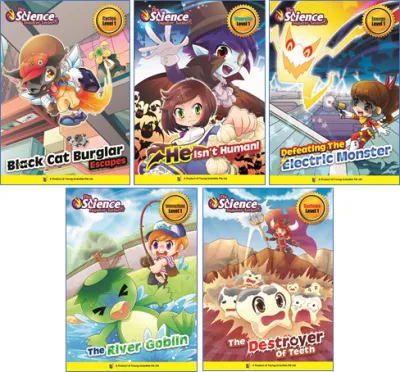
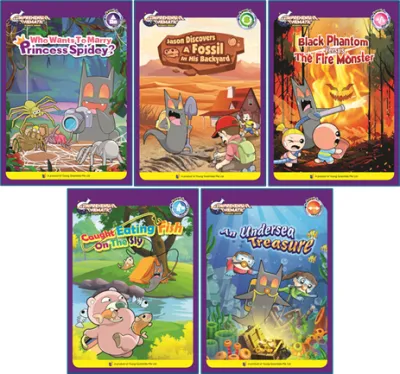
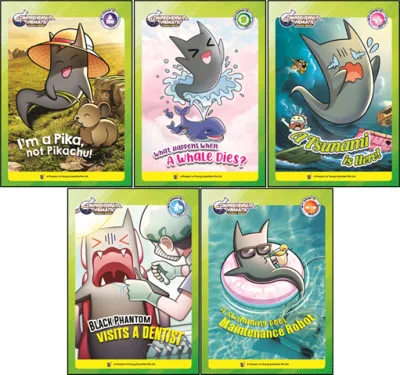
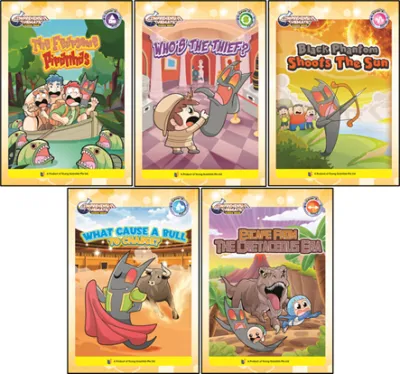
![[5 ASSORTED ISSUES] Young Scientists Level 2](https://img.lazcdn.com/g/p/202e1074cc1145bad7fc6f44b9ec2749.jpg_400x400q80.jpg_.webp)
Prices are valid at publication and may change. Please refer to the product page for the latest price.
Finally, the quality of the answer key is often the deciding factor between a helpful study aid and a frustrating one. For open-ended questions, a high-quality answer key must provide detailed marking rubrics, highlight essential keywords, and explain why certain answers are accepted or rejected. It should also address common student misconceptions, helping parents and students understand the specific scientific vocabulary required to secure full marks.
Profile of 'The Young Scientists' Series
‘The Young Scientists’ stands out in the landscape of primary school science resources due to its unique format. Unlike standard black-and-white assessment books filled with practice papers, this series is a colorfully illustrated, comic-based publication. It is organized into distinct levels that correspond to different primary school stages, allowing parents to select the appropriate level based on their child’s current primary grade.

The series uses a thematic approach rather than a strict week-by-week topical drill structure. Each issue groups scientific concepts under broad themes such as Diversity, Cycles, Systems, Interactions, and Energy, which aligns with the core themes of the primary school science curriculum. By presenting these concepts through narrative-driven comics, the series aims to make complex scientific phenomena accessible and engaging, particularly for visual learners or students who struggle with dry, text-heavy textbooks.
From a physical layout perspective, ‘The Young Scientists’ features clear, large fonts, vibrant diagrams, and highly engaging character-driven storylines. While it includes educational activities, quizzes, and diagnostic questions at the end of stories, the space provided for written answers is typically smaller than what is found in standard exam booklets. The primary focus remains on conceptual appreciation and contextual learning, making it an excellent supplementary reading tool rather than a primary tool for timed exam simulation.
Comparing Key Features Across Popular Alternatives
To determine whether ‘The Young Scientists’ or a traditional assessment book is better suited for your child’s immediate needs, it is helpful to conduct a side-by-side inspection of their physical or digital previews. This comparison allows you to evaluate how different publishers structure their content, present questions, and support self-directed learning.
Question Difficulty and Exam Alignment
When examining the difficulty level of questions in any assessment book, look closely at the proportion of higher-order thinking skills (HOTS) questions compared to standard recall questions. Traditional PSLE assessment books often categorize questions by difficulty or label them as challenging or application-based. These questions require students to analyze data, interpret graphs, and evaluate experimental setups, which are critical skills tested in the actual PSLE Science paper.
Verify whether the book includes realistic experimental design scenarios, such as identifying variables, explaining the purpose of a control setup, or predicting outcomes based on changes to an experiment. ‘The Young Scientists’ introduces these concepts through narrative explanations and illustrated experiments, which helps build intuitive understanding. However, dedicated assessment books are more likely to provide the exact question structures and lines for writing that students will encounter in the examination hall.
If your child is currently scoring in the middle bands and needs to build confidence, look for books that offer progressive leveling, starting with basic recall and gradually moving to complex application. If your child is already scoring well and needs stretching, prioritize books that consist primarily of non-routine, high-cognitive-demand questions.
Topic Coverage and Thematic Depth
A comprehensive comparison requires looking at how different series break down the syllabus. Traditional assessment books are usually organized topically, allowing students to target specific weak areas, such as the water cycle or electrical systems. This topical isolation is highly effective for immediate remedial work after a school topical test.
In contrast, ‘The Young Scientists’ often integrates multiple concepts within a single story, reflecting how real-world science operates. While this is excellent for developing a holistic understanding of science, it can make it more challenging to find a concentrated set of practice questions for a single, narrow topic. For comprehensive exam preparation, students eventually need to tackle cross-topic integration questions, which are a staple of PSLE Paper 2.
When evaluating alternative books, check the table of contents to see if they offer dedicated sections for cross-topical questions. These questions combine concepts from different themes—such as linking plant transport systems with photosynthesis—to prepare students for the integrated nature of the national exam.
Answer Explanations and Self-Study Support
The effectiveness of independent revision relies heavily on the depth of the answer explanations provided. When inspecting alternative assessment books, flip to the back and examine the answer key for open-ended questions. Highly effective assessment books do not just state the correct answer; they break down the marking scheme, showing where partial marks are awarded and highlighting the specific scientific keywords required.
Some modern assessment books include supplementary self-study features, such as QR codes linking to video explanations, concept maps summarizing each chapter, or common error analyses that warn students about typical pitfalls. These features are incredibly valuable for parent-led tutoring or independent study, as they bridge the gap between knowing a concept and knowing how to write an exam-compliant answer.
While ‘The Young Scientists’ provides answers and explanations for its internal quizzes, these are generally geared toward explaining the scientific phenomenon rather than teaching exam-specific answering techniques or marking rubrics. Therefore, if your child’s primary struggle is losing marks due to missing keywords or poor phrasing in open-ended questions, a dedicated assessment book with a highly detailed answer key is an essential companion.
Decision Framework: Matching the Book to the Student
To choose the right resource, you must match the book’s strengths to your child’s current academic profile and the time remaining before the PSLE. If your child is in Primary 3, 4, or 5 and finds science dry or intimidating, ‘The Young Scientists’ is an excellent choice to build interest, foster curiosity, and establish a strong intuitive grasp of scientific principles without the pressure of exam drilling.
If your child is in the final stretch of Primary 6 and needs to build stamina and time-management skills, prioritize competing series that offer full-year mock papers or past-year papers. These books simulate the actual exam experience, helping students learn how to allocate their time effectively between the MCQ and OEQ sections under timed conditions.
For students who have a decent grasp of concepts but consistently lose marks on specific topics, a topical assessment book with progressive difficulty is a highly efficient tool for targeted remediation. This allows them to drill their weak areas systematically until they achieve mastery.
Before making any purchase, always verify what materials your child’s school or tuition center is already using. Many schools adopt specific assessment books or use past-year papers as part of their standard homework curriculum. Avoiding redundant purchases ensures your child’s revision time is spent on fresh, varied questions rather than repeating the exact same exercises.
Verifying Edition Compatibility and Syllabus Updates
Before finalizing your purchase at a bookstore or on an online marketplace, always verify that the assessment book matches the current examination year and the latest syllabus updates. Publishers frequently update their covers, but you must look past the design to check the copyright page for the publication year and edition number. A book published several years ago may still contain outdated terms or test concepts that have since been removed from the syllabus.
Look for explicit badges or statements on the cover, such as alignment with the latest syllabus or updated exam formats. However, do not rely solely on these badges. It is always recommended to open the book and cross-reference the table of contents with the official Singapore Examinations and Assessment Board (SEAB) PSLE Science syllabus document, which is publicly accessible online.
Check specifically for the inclusion of current topics and the exclusion of deprecated ones. For example, ensure that the terminology used for classification, life cycles, and energy forms matches what is currently taught in schools. Taking a few minutes to verify these details ensures that your child’s study hours are spent on relevant, exam-aligned material.
Frequently Asked Questions (FAQ)
Do I need to buy the entire 'The Young Scientists' series for PSLE preparation?
No, you do not need to purchase the entire series to prepare effectively for the PSLE. Because ‘The Young Scientists’ is structured as a supplementary reading resource rather than a sequential textbook, you can selectively purchase specific levels or thematic compilations that target your child’s interest areas or conceptual gaps. If your child is already in Primary 6, focusing on Level 3 or Level 4 compilations that cover upper primary topics is more time-efficient than buying the entire back catalog. Consider your child’s remaining study hours and prioritize resources that address their immediate learning needs.
How can I check if an assessment book matches the latest MOE Science syllabus?
To verify syllabus alignment, check the copyright page for recent publication or reprint dates and look for publisher notes confirming alignment with the current MOE syllabus. You can also cross-reference the book’s table of contents with the official SEAB PSLE Science syllabus. Look closely at key topics to ensure the terminology and depth of coverage match what is currently taught. If you are shopping on an online marketplace, read the product description carefully and check user reviews or publisher previews to confirm the edition is up to date before making a purchase.
Community discussion
Share your experience or ask a question. Comments are reviewed before publication.