
Quick Verdict: Is Think Again Worth Your Time?
In an era dominated by rapid change and polarized opinions, the ability to change your mind is often framed as a weakness rather than a strength. Adam Grant’s Think Again challenges this notion directly, arguing that intellectual humility and the willingness to unlearn are essential skills for personal and professional growth. If you are navigating a major career transition, trying to reshape a rigid team culture, or seeking to break free from entrenched personal habits, this book offers highly valuable frameworks. However, if you already practice agile thinking or have a background in cognitive behavioral principles, some of the concepts may feel familiar.
The book successfully bridges the gap between academic research and daily decision-making. While the marketing surrounding the book presents it as a revolutionary cure-all, its true utility lies in its practical models for everyday communication and self-reflection. Rather than accepting the hype at face value, readers should evaluate the book based on their immediate need for structured tools to navigate disagreements and personal biases.
Core Concepts: What You Will Actually Learn
To determine if Think Again aligns with your learning goals, it helps to understand the core frameworks the author introduces. One of the central ideas is the concept of the four mental modes we adopt when communicating or processing information: the preacher, the prosecutor, the politician, and the scientist. When we act as preachers, we focus on protecting and promoting our sacred beliefs. As prosecutors, we search for flaws in other people’s arguments to win a case. In politician mode, we seek the approval of our audience, often compromising our core truths for popularity.
Products mentioned in this guide
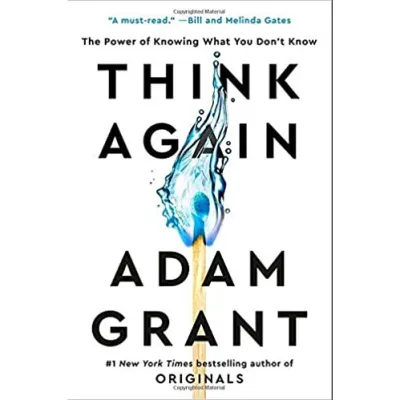
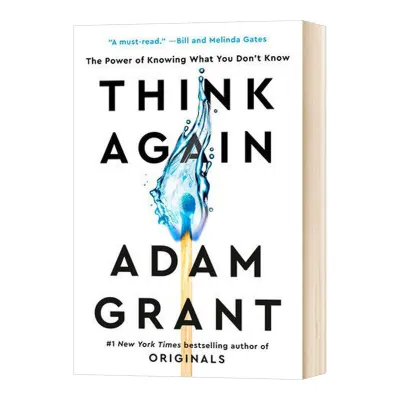
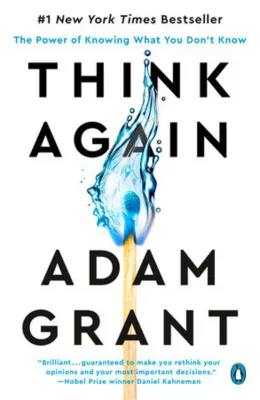
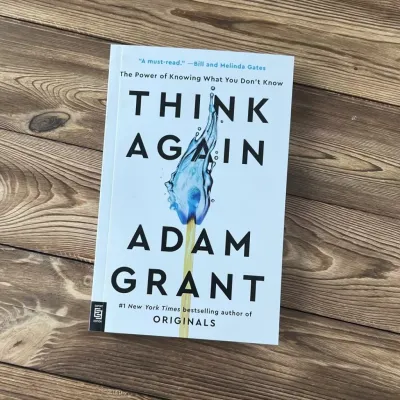
Prices are valid at publication and may change. Please refer to the product page for the latest price.

The author argues that the most effective approach is to think like a scientist. This does not mean conducting laboratory experiments, but rather treating your opinions as hypotheses and your decisions as experiments. By maintaining intellectual humility, you remain open to new evidence and actively look for reasons why you might be wrong, which ultimately leads to more accurate decisions.
Beyond individual thinking, the book explores how to open other people’s minds and navigate disagreements productively. It distinguishes between relationship conflict, which is personal and destructive, and task conflict, which is intellectual and constructive. Fostering healthy task conflict allows teams to debate ideas without damaging personal relationships.
Another key concept is the creation of a “challenge network.” While most people surround themselves with a support network of encouraging friends, the author suggests building a group of trusted critics who are willing to challenge your assumptions, point out your blind spots, and push you to rethink your strategies. Before purchasing, it is highly recommended to verify the specific chapter frameworks via the book’s official table of contents or publisher summary to ensure these topics match your expectations.
Who Will Get the Most Practical Value?
Think Again is particularly beneficial for leaders and managers who are responsible for guiding teams through organizational change or navigating the complexities of modern work environments. In fast-paced corporate landscapes, such as those found in Singapore, leaders often face the challenge of dismantling “we have always done it this way” mentalities. The book provides actionable strategies to foster psychological safety, allowing team members to voice doubts, admit mistakes, and propose innovative solutions without fear of retribution.
Professionals working in rapidly shifting industries, such as technology, digital finance, or creative media, will also find immense value in these pages. When industry standards evolve overnight, the skills that made you successful yesterday can quickly become obsolete. The book serves as a guide for unlearning outdated practices and adapting to new paradigms, helping you remain competitive and resilient in your career.
For individuals who struggle with imposter syndrome, perfectionism, or decision paralysis, the book offers a refreshing perspective on self-doubt. Instead of viewing doubt as a sign of weakness, the author explains how it can be used as a tool for learning. Embracing a state of “confident humility”—knowing what you don’t know while remaining confident in your ability to learn—can help you overcome the fear of failure and approach new challenges with curiosity.
Finally, this book is ideal for readers who prefer evidence-based communication strategies over abstract motivational advice. The insights are grounded in organizational psychology and backed by real-world case studies, making the concepts highly applicable for anyone looking to improve their negotiation, teaching, or mentoring skills.
When Should You Skip or Delay Reading It?
While the book offers substantial value, it may not be the right choice for everyone. If you are an avid consumer of behavioral science media and have already listened to the author’s extensive podcast episodes, read his regular articles, or completed his previous books like Originals or Give and Take, you might find a significant amount of overlapping content. The core ideas of cognitive flexibility and intellectual humility are frequently discussed across these platforms, meaning the book may feel repetitive to dedicated followers.
Additionally, readers who are looking for a highly tactical, step-by-step manual with daily checklists or rigid protocols might find the narrative-driven style less satisfying. The book relies heavily on storytelling, historical anecdotes, and conceptual frameworks. If your goal is to find immediate, highly specific technical solutions or hard-science methodologies, you may want to delay this purchase in favor of more specialized technical literature.
Similarly, if you are searching for strictly financial frameworks or quantitative decision-making models, Think Again will not fulfill that need. The focus remains firmly on psychological and organizational insights. If your current priority is mastering technical skills or quantitative analysis, this book is best saved for a time when you can focus on interpersonal and cognitive development.
How to Decide: Formats, Editions, and Alternatives
Choosing the right format can significantly impact how well you absorb and apply the book’s concepts. A physical copy is highly recommended for readers who prefer to actively engage with the text. The book contains several diagrams, charts, and visual models that are easier to study on paper. Having a physical book also makes it simple to highlight key passages, write notes in the margins, and quickly flip back to reference specific frameworks during team meetings or personal planning sessions.
For those with busy schedules or long daily commutes on the MRT, the audiobook version is an excellent alternative. Narrated by the author himself, the audio format brings the narrative flow and real-world anecdotes to life with engaging pacing. However, a notable drawback of the audiobook is the difficulty of pausing to study the visual charts or quickly searching for a specific concept when you want to apply it later.
The e-book format offers a balanced middle ground, providing the portability of digital reading along with the ability to search for keywords, highlight text, and sync notes across devices. When purchasing any digital version, always verify regional restrictions and device compatibility to ensure a seamless reading experience. Never infer the exact contents of a specific edition solely from its cover art; check the publisher’s description to confirm if it includes updated prefaces or study guides.
Before spending S$20 to S$30 on a retail copy, consider exploring cost-effective alternatives. You can check the availability of physical, digital, or audio copies through local public libraries, such as the National Library Board in Singapore. Additionally, reading authorized publisher summaries or listening to official podcast interviews featuring the author can help you preview the core arguments and decide if investing in the full book is truly necessary for your current personal development goals.
Frequently Asked Questions (FAQ)
How long does it take to read Think Again?
With a standard length of approximately 300 pages, Think Again is a moderately paced read. For the average reader, it typically takes between five and seven hours of focused reading time to complete. Rather than rushing through the pages in a single weekend, a more effective approach is to pace your reading by tackling one chapter or section per week. This slower rhythm allows you to actively test the unlearning and rethinking frameworks in your daily professional interactions and personal decision-making before moving on to the next concept.
Is the audiobook version worth it?
The audiobook version is highly regarded, largely because it is narrated by the author, which adds a personal and conversational tone to the research and stories. It is an excellent choice if you enjoy learning through storytelling while commuting, exercising, or managing household tasks. However, if your primary goal is to study the structural frameworks, reference the visual diagrams, or use the book as a practical desk reference, a physical copy or e-book remains the more practical investment.
Community discussion
Share your experience or ask a question. Comments are reviewed before publication.