
For anyone who has ever frozen when put on the spot during a meeting or struggled to answer an unexpected question, the promise of Think Faster, Talk Smarter by Matt Abrahams is highly appealing. As a popular entry in the self-improvement space, this book claims to provide a reliable blueprint for mastering impromptu speaking. However, before spending your time and money, it is essential to evaluate whether these techniques translate into real-world confidence or if they simply repackage familiar public speaking advice. Deciding whether to purchase this book depends on your current communication level, your willingness to practice, and the specific environments where you need to speak on your feet.
Core Concepts: What 'Think Faster, Talk Smarter' Actually Teaches
At the heart of Think Faster, Talk Smarter is the premise that spontaneous speaking is a skill that can be trained, rather than an innate talent. The book breaks down this training into a structured methodology, starting with a crucial mental shift: lowering the bar for perfection. Abrahams argues that the anxiety of impromptu speaking often stems from trying to deliver a flawless response, which overloads cognitive capacity. By aiming for adequacy rather than perfection, speakers can free up mental bandwidth to focus on the actual message.
The core framework relies on structured communication templates designed to organize thoughts rapidly. Instead of speaking aimlessly, readers are taught to apply specific structures, such as the “What? So What? Now What?” model. This sequence guides the speaker to first state the facts or the situation, explain its relevance, and finally propose the next steps or action items. Other structures focus on comparison, contrast, or chronological progression, providing a mental scaffolding that can be deployed in seconds.
Products mentioned in this guide
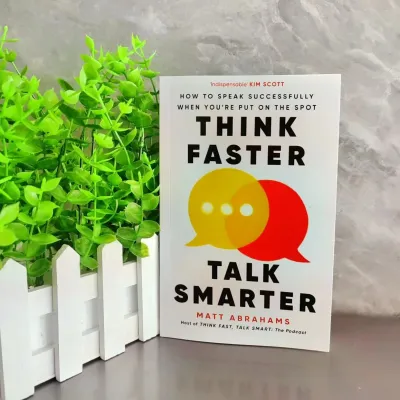
Prices are valid at publication and may change. Please refer to the product page for the latest price.
To build spontaneous fluency, the book outlines several practical exercises. These include word-association games, impromptu storytelling drills, and practice sessions where you must speak on a random topic for a set duration without pausing. However, applying these frameworks successfully requires a baseline level of comfort with basic English vocabulary and a willingness to embrace initial awkwardness. The book does not offer a magic shortcut; the prerequisite for success is a commitment to deliberate, repetitive practice to make these mental structures second nature.
Who Benefits Most (And Who Should Skip This Book)
This book is highly beneficial for professionals who frequently find themselves in dynamic, fast-paced environments where quick responses are valued. If you are a corporate professional navigating project updates, an entrepreneur pitching to potential investors, or a team lead facilitating brainstorming sessions, the structured templates offer immediate, practical utility. It is also well-suited for individuals who struggle with structuring their thoughts and tend to ramble when nervous, as the frameworks force a concise, logical flow.

Conversely, certain readers may find the book’s advice less impactful. Those who already possess strong natural communication skills or have extensive experience in debating, toastmasters, or corporate leadership might find the concepts somewhat basic. The book focuses heavily on foundational frameworks, which can feel repetitive if you are already familiar with standard communication theory. Additionally, readers looking for highly specialized, advanced rhetorical strategies or deep psychological analysis of persuasion may find the content too introductory.
Furthermore, there are specific communication pain points that Think Faster, Talk Smarter does not deeply address. If you suffer from severe, clinical public speaking anxiety or deep-seated social phobia, the mindset shifts suggested here—while helpful—are unlikely to replace professional therapy or specialized exposure training. Similarly, if your primary challenge is delivering highly technical, data-heavy scientific presentations or navigating complex academic defenses, the general-purpose structures in this book may feel too simplistic for the nuanced precision your field demands.
Real-World Utility: Separating Practical Value from Hype
While the marketing surrounding self-improvement books often promises rapid, effortless transformation, the real-world utility of these techniques depends entirely on consistent application. Reading the book cover-to-cover will not instantly make you a charismatic, fast-talking speaker. The actual time and effort required to see measurable improvement is substantial. You must transition from passive reading to active, daily drills. For most people, it takes weeks of conscious effort to stop rambling and naturally default to a structured format during high-pressure moments.
The frameworks also face clear limitations when applied in complex, real-world scenarios. In highly technical or high-stakes environments—such as a board meeting discussing a major financial crisis or a technical audit—relying solely on a simple “What? So What? Now What?” structure can make your response seem superficial or evasive if you lack deep subject-matter expertise. Furthermore, communication is highly dependent on cultural context. In some corporate cultures, a direct, highly structured response is appreciated, while in others, a more collaborative, indirect, or relationship-oriented approach is preferred. The book’s frameworks lean heavily toward Western, direct communication styles, which may require adjustment in diverse or hierarchical workplaces.
To help you evaluate the book’s core methodology before purchasing, you can test one of its primary concepts in a low-risk setting. Choose a daily stand-up meeting or a casual conversation with a colleague, and commit to using the “What? So What? Now What?” framework for any unexpected question you receive. When asked a question, pause for two seconds to mentally map your response: state the core point (What), explain why it matters to the listener (So What), and suggest the next step (Now What). Reflect on the outcome: did the structure help you stay concise and feel more in control? If this structured approach feels helpful and you want to learn more variations and supporting exercises, the book is likely worth your investment. If you find the structure too rigid or unnatural for your daily interactions, you may want to explore other communication resources.
Format and Edition Guide: Choosing the Right Version for Your Needs
Choosing the right format for Think Faster, Talk Smarter depends heavily on how you plan to study and apply the material. If you prefer to highlight key frameworks, scribble notes in the margins, and easily flip back to reference specific templates during your practice sessions, a physical paperback or a digital e-book is highly recommended. Having a visual reference of the structures makes it much easier to memorize and practice them at your desk.
On the other hand, if you have a busy commute or prefer learning on the go, the audiobook version—often narrated by the author—can be highly engaging. Hearing the vocal pacing, pauses, and tone used to deliver spontaneous responses can provide valuable context that is sometimes lost on the printed page. However, if you choose the audiobook, you may want to keep a digital notepad handy to jot down the core structures, as referencing them later by audio can be tedious.
Before purchasing, always verify the edition details to ensure you are getting the complete, unabridged version. Check the publication date and publisher details to avoid outdated prints or unauthorized summaries that omit the practical exercises. If you are purchasing a translated edition, check reader reviews to ensure the translation maintains the clarity of the communication frameworks.
If you are uncertain about committing to a purchase, consider utilizing local resources. Residents in Singapore can check the National Library Board (NLB) mobile app or physical branches to borrow the physical book or access the e-book and audiobook versions for free. This allows you to explore the content and test the exercises before deciding if you want a permanent copy for your personal reference library.
Frequently Asked Questions (FAQ)
How long does it take to see results from the techniques in this book?
The timeline for seeing measurable improvement depends entirely on your commitment to active practice rather than passive reading. If you practice the exercises for just ten minutes a day—such as structuring your thoughts during your commute or practicing word-association drills—you can expect to notice a difference in your confidence and structure within two to three weeks. However, turning these techniques into automatic habits that you deploy effortlessly during high-stress situations typically requires several months of consistent, deliberate application in real-world scenarios.
Are there better alternatives for highly technical or academic presentations?
Yes. While Think Faster, Talk Smarter is excellent for general spontaneous speaking and everyday business communication, it may feel too broad for highly technical, scientific, or academic environments. If your primary goal is to present complex data, defend a thesis, or explain intricate technical concepts to non-technical stakeholders, you should look for specialized communication guides. Look for books that focus specifically on technical storytelling, data visualization, or academic presenting, which offer frameworks tailored to maintaining scientific accuracy while keeping an audience engaged.
Community discussion
Share your experience or ask a question. Comments are reviewed before publication.