
Choosing the right pair of 5A drumsticks is a highly personal decision that directly impacts your speed, control, and overall sound. While the 5A designation is widely recognized as the industry standard for versatility, there is no single “best” brand for every drummer. The ideal choice depends entirely on your physical hand size, your playing style, the genres you play, and how you prefer a stick to balance and rebound.
Standardizing on a 5A profile gives you a reliable baseline, but subtle variations in wood species, taper length, tip shape, and manufacturing tolerances between major brands can dramatically alter how a stick feels in your hands. To find your perfect match, you must look beyond the 5A label and examine how different manufacturers approach stick physics. A professional who needs absolute consistency across multiple tours will prioritize different design elements than a heavy rock drummer seeking maximum durability, or a jazz player looking for delicate cymbal articulation.
Key Dimensions for Comparing 5A Drumsticks
To evaluate different 5A drumsticks objectively, you must understand the physical attributes that dictate their performance. While two sticks from different brands may both be labeled “5A,” differences in their construction will alter their weight, balance, durability, and acoustic properties.
Products mentioned in this guide
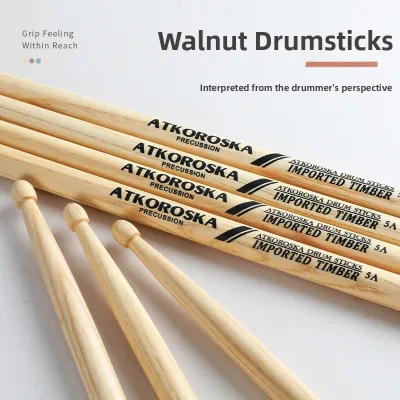

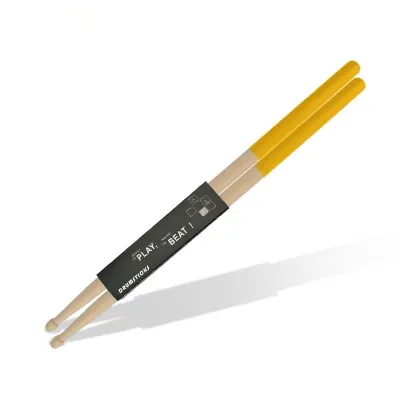
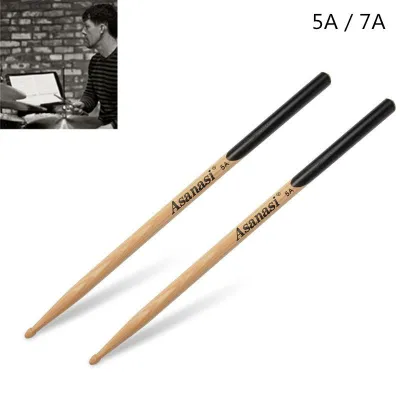
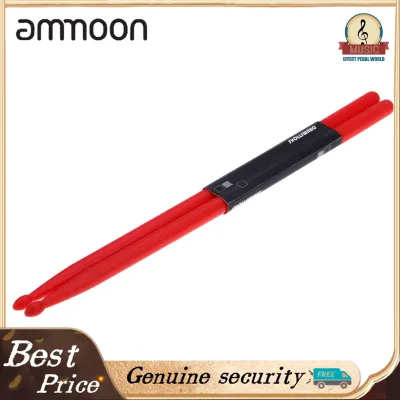
![[ammoon]One Pair of 5B/ 5A/ 7A Wooden Drumsticks Drum Sticks Hickory Wood Drum Set Accessories](https://img.lazcdn.com/g/p/fbbd312af4b3a8d242131818be7fee9a.jpg_400x400q80.jpg_.webp)
Prices are valid at publication and may change. Please refer to the product page for the latest price.
Wood Type and Density
The choice of wood is the primary factor determining a drumstick’s weight, durability, and shock absorption. Manufacturers typically use three main wood types for 5A sticks:
- Hickory: This is the industry standard for drumstick construction. Hickory offers an excellent balance of weight, flexibility, and shock absorption. Its fibrous structure helps absorb the impact of hard hits, reducing the vibration transmitted to your hands and wrists, while maintaining high durability.
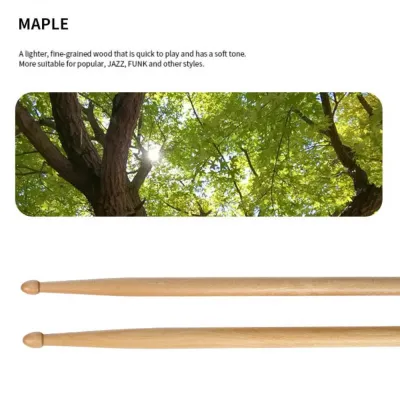
- Maple: Maple is approximately 10% to 15% lighter than hickory. A maple 5A stick allows you to play with a larger diameter stick without the added weight, resulting in a fast rebound and a lighter touch. However, maple is softer and less durable, making it prone to splintering under heavy rimshots.
- Oak: Oak is a dense, heavy wood that offers exceptional durability and a solid, powerful feel. Because oak is highly rigid, it transmits more vibration back to your hands than hickory or maple. It is highly resistant to wear but requires proper technique to avoid hand fatigue.
Taper and Balance Point
The taper is the sloping section of the stick that thins out from the shaft to the tip. The length and graduation of this taper determine the stick’s center of gravity and rebound characteristics:
- Short Taper: A short taper keeps more weight toward the front of the stick. This forward-weighted balance provides more leverage and power, making it easier to produce loud, punchy strokes with less physical effort. It is highly suited for rock and heavy playing styles.
- Long Taper: A long taper shifts the balance point back toward your hand. This rear-weighted design provides a highly responsive, fast rebound and greater control over subtle dynamics. It is ideal for intricate snare work and fast, technical playing.
- Medium Taper: A medium taper offers an even compromise, providing a balanced feel that does not favor power over speed, making it the most versatile option for multi-genre drummers.
Tip Shape and Material
The tip of the drumstick is the point of contact with your instruments, directly shaping the acoustic tone of your drums and cymbals. Tips are generally categorized by their shape and material:
- Teardrop Tips: These produce a warm, dark, and focused tone with rich low-mids on both drums and cymbals. They are highly versatile and responsive to changes in striking angles.
- Oval Tips: Offering a larger surface area, oval tips produce a broad, consistent sound with a balanced mix of high and low frequencies. They are highly forgiving and offer a stable acoustic response.
- Barrel Tips: These have a flat, wide contact area that produces a punchy, high-volume sound with excellent projection. They are popular in live settings where maximum definition is required.
- Wood vs. Nylon: Wood tips offer a natural, warm, and organic acoustic response, but they can chip and wear down over time, altering your sound. Nylon tips produce a bright, glassy, and highly articulate sound, particularly on cymbals, and they do not chip or lose their shape.
Consistency and Quality Control
Because wood is an organic material, two pieces of wood cut to the exact same dimensions can vary significantly in weight and resonant pitch. Leading manufacturers invest heavily in proprietary sorting technologies to weight-match and pitch-pair their sticks. A well-matched pair of sticks ensures that both hands produce a consistent volume and tone, which is critical for developing even technique and recording in the studio.
Leading 5A Drumstick Brands: Characteristics and Ideal Players
The global drumstick market is led by several major manufacturers, each with its own design philosophy, wood sourcing standards, and manufacturing innovations. Before purchasing, always verify the specific model specifications on the manufacturer’s label, as dimensions and finishes can vary within a brand’s 5A lineup.

Vic Firth 5A (The Industry Standard)
Vic Firth’s American Classic 5A is widely regarded as the benchmark for the modern 5A drumstick. Crafted from select hickory, it typically features a standard length of 16 inches, a diameter of 0.565 inches, a medium taper, and a teardrop wood tip. This configuration provides a highly balanced, predictable feel that serves as a neutral starting point for any player.
What sets Vic Firth apart is its strict adherence to quality control. The brand utilizes electronic matching systems to pair sticks by both weight and pitch, ensuring that each stick in a pair is within a minute tolerance of its mate. This high level of consistency makes them a reliable choice for touring professionals, educators, and students who require a dependable, uniform tool across multiple pairs.
Ideal Player: Versatile drummers, session musicians, and students who play a wide variety of musical genres and value absolute consistency and balance above all else.
Promark 5A (Durability and Forward Balance)
Promark, owned by D’Addario, is known for its technological innovations in wood treatment and stick balance. Their standard 5A hickory sticks feature a diameter of 0.565 inches and a length of 16 inches, but they offer distinct variations through their Select Balance line, which categorizes sticks into “Forward” or “Rebound” balance options.
Promark’s Forward Balance 5A features a shorter, 2.25-inch taper that moves the weight to the front of the stick for increased power. Additionally, Promark offers advanced options like FireGrain—a heat-tempering process that hardens the outer wood fibers to prevent splintering—and ActiveGrip, a heat-activated coating that becomes tackier as your hands warm up. These features make Promark sticks highly durable and secure in the hand.
Ideal Player: Heavy hitters, rock and pop drummers, and players with sweaty hands who prioritize physical durability, grip security, and forward-weighted power.
Vater 5A (Heft and Power)
Vater Percussion approaches drumstick manufacturing with a focus on raw material density and robust construction. Their standard 5A models, such as the Vater Los Angeles 5A, share the standard 16-inch length and 0.565-inch diameter, but they often feel slightly heavier and denser in the hand than their competitors.
Vater achieves this by maintaining a slightly higher moisture content in their wood during the manufacturing process. This preservation of natural moisture results in a stick that is highly resistant to breaking and splintering, offering a solid, high-mass feel that delivers excellent volume and rimshot durability. The physical heft of a Vater 5A provides a satisfying sense of power without requiring you to step up to a thicker 5B size.
Ideal Player: Drummers playing in loud live environments, hard rock, punk, or metal, who need maximum stick longevity, volume, and a solid, substantial feel.
Zildjian 5A (Ergonomics and Innovation)
While globally famous for their cymbals, Zildjian also manufactures a highly regarded line of drumsticks designed with a strong focus on player comfort and acoustic synergy. Their standard 5A hickory sticks are designed to complement their cymbal lines, offering precise tip shapes that bring out the natural wash and definition of high-quality bronze.
Zildjian is a leader in ergonomic design, offering specialized variations such as their DIP series, which features a comfortable, rubberized grip coating on the bottom half of the stick to reduce hand fatigue and prevent slips. They also produce anti-vibration models that incorporate internal dampening technologies to absorb shock, making them an excellent choice for players who experience joint pain or muscle strain during long playing sessions.
Ideal Player: Players seeking reduced hand fatigue, ergonomic grip solutions, or those who frequently play long sets, practice on electronic drum pads, or participate in extended studio sessions.
Matching the Right 5A Drumstick to Your Playing Style
To translate these technical specifications and brand characteristics into a practical buying decision, you can use a structured decision framework based on your specific musical context and physical needs.
Choose a standard, pitch-matched hickory 5A if:
- You play a diverse mix of genres, such as pop, light rock, funk, and jazz, and need a single pair of sticks that can transition seamlessly between them.
- You are a student or beginner developing your fundamental hand technique, as a balanced, medium-taper stick provides the most natural feedback for learning rebound control.
- You record frequently in the studio, where even slight differences in stick weight or pitch can be captured by sensitive overhead microphones.
Choose a forward-balanced or heavier hickory 5A if:
- Your primary genres are hard rock, heavy metal, punk, or modern pop, where consistent volume, powerful rimshots, and deep projection are required.
- You play unmiked acoustic gigs where you must compete with amplified guitars and bass, requiring more physical mass to drive the drumheads.
- You find yourself breaking sticks frequently around the shoulder or neck, indicating that you need the added durability of heat-treated wood or a shorter taper.
- You prefer the stick to do more of the physical work of driving downward, utilizing a forward-weighted balance to generate momentum.
Choose a maple 5A if:
- You primarily play traditional jazz, acoustic folk, or light pop, where subtle dynamics, low stage volume, and delicate cymbal articulation are paramount.
- You play in small, intimate venues or worship spaces where managing overall volume is a constant challenge.
- You prefer a thicker grip in your hand for comfort but dislike the heavy physical weight that normally accompanies a larger hickory stick.
- You focus on fast, intricate snare drum patterns that require an exceptionally light, fast-rebounding stick.
Verify your specific ergonomic and environmental needs:
- If you suffer from sweaty hands or frequently lose your grip during high-energy performances, look for sticks with specialized grip coatings or textured finishes.
- If you play in highly humid environments, such as tropical climates, keep in mind that raw wood can absorb moisture over time, which increases stick weight and can lead to warping. Sealed or treated sticks can offer better resistance to environmental moisture.
- Be prepared for a brief adjustment period when transitioning between brands. Even if two models share identical printed dimensions, differences in finish, taper profile, and wood density will alter how they feel in your hands for the first few hours of play.
Purchasing and Verifying 5A Drumsticks in Singapore
When buying drumsticks in Singapore, purchasing from authorized local music retailers or official online brand stores is highly recommended. This ensures you are purchasing authentic products that have been stored in climate-controlled environments, which is crucial for preserving the integrity of the wood.
Singapore’s high relative humidity, which regularly exceeds 80%, can cause unsealed wood to absorb moisture, leading to warping, increased weight, and a dulling of the stick’s natural acoustic pitch. Authorized local retailers typically store their inventory in air-conditioned showrooms, preventing these environmental issues before the sticks reach your hands.
Before finalizing your purchase, use this practical in-store inspection checklist to ensure your sticks are in perfect condition:
- The Roll Test: Place both sticks on a flat, level surface (such as a glass display counter or a smooth wooden table) and roll them back and forth with your palm. Watch the tips closely; if a tip wobbles or lifts off the surface, the stick is warped and should be avoided.
- Grain Inspection: Look at the wood grain running down the shaft of the stick. The grain lines should run straight from the butt end to the tip. Avoid sticks with diagonal grain lines that run off the side of the shaft (known as grain run-out), as these are weak points that will split easily under physical stress.
- Model Verification: Carefully check the printed label on the packaging and the stick shaft. Manufacturers often produce sub-variants like "5A Extreme" (which are typically longer) or "5A Stretch" alongside their standard 5A models. Ensure you are buying the exact variant you intended.
- The Pitch Test: Hold each stick lightly by the taper and tap them gently together near your ear, or tap them on a hard, consistent surface. Listen to the pitch of the tone produced. A well-matched pair will produce almost identical pitches; if one stick sounds noticeably lower or duller than the other, they are not properly matched in density.
If you play regularly, buying your drumsticks in bulk—such as a “brick” containing 12 pairs—can offer excellent value, with prices typically ranging from S$120 to S$200 depending on the brand and model. However, bulk purchases require proper care at home. Store your spare sticks in a cool, dry place, ideally inside a sealed stick bag or container with silica gel packs to protect the wood from Singapore’s humidity.
Frequently Asked Questions (FAQ)
Are 5A drumsticks good for beginners?
Yes, 5A drumsticks are widely considered the ideal choice for beginners. Because they offer a highly balanced weight, length, and diameter, they provide a neutral feel that helps new players develop proper hand grip, wrist movement, and rebound control. Starting with a 5A prevents the hand fatigue that can occur with heavier sticks, while avoiding the fragility of thinner models, making it easy to transition to other sizes later if your playing style changes.
How often should I replace my 5A drumsticks?
There is no fixed lifespan for drumsticks, as replacement frequency depends on how often you play, how hard you strike, and your physical technique. You should replace your sticks when you observe clear signs of structural wear, such as deep splintering along the shoulder from rimshots, a cracked or chipped wood tip, noticeable warping, or a dull, hollow sound when tapping the stick. Playing with damaged or badly worn sticks can damage your drumheads and ruin your cymbal sound.
What is the difference between 5A and 5B drumsticks?
The primary difference lies in their physical thickness and weight. While both sizes are typically 16 inches long, a 5B drumstick features a larger diameter (usually around 0.595 to 0.600 inches) compared to a 5A (typically 0.565 inches). This extra thickness makes the 5B heavier and more durable, allowing it to produce significantly more volume and power. The 5A remains the preferred choice for speed, agility, and dynamic control, while the 5B is favored by heavy rock, metal, and marching band players.
Community discussion
Share your experience or ask a question. Comments are reviewed before publication.