
Building long-term financial security requires more than just a desire to spend less; it demands a fundamental shift in how you perceive and interact with your income. While many people view budgeting as a mathematical chore, the most effective financial transformations begin by addressing behavioral habits. Finding a high-quality savings money book can provide the structural framework and psychological insights necessary to turn sporadic saving attempts into an automated, effortless routine. By studying established methodologies, you can identify your personal spending triggers, construct resilient financial systems, and align your daily cash flow with your long-term aspirations.
How to Choose the Right Savings Money Book for Your Goals
Selecting the ideal savings money book requires an honest assessment of your current financial pain points rather than simply purchasing the most popular title on a bestseller list. Personal finance literature generally falls into four distinct dimensions, each targeting a specific stage of the financial journey. Behavioral psychology books focus on mindset shift, helping you understand the emotional triggers behind impulse spending and lifestyle inflation. Practical budgeting books offer actionable systems to automate your cash flow, making saving a default setting rather than a test of willpower. Debt elimination guides provide aggressive recovery strategies for those struggling with high-interest liabilities, while wealth-building texts transition you from saving to long-term investing.
To make an effective choice, you must first identify your primary financial bottleneck. If you consistently earn a comfortable income but find your bank account empty at the end of the month due to emotional spending, a mindset-focused book is your best starting point. Conversely, if you want to save but find manual tracking too tedious, a book focusing on automated systems will yield better results. For those carrying credit card balances or personal loans, prioritizing a debt recovery methodology is essential before attempting complex investment strategies.
Products mentioned in this guide
Prices are valid at publication and may change. Please refer to the product page for the latest price.
Before committing to a specific methodology, always verify the publication date and edition of the book. Financial landscapes, tax regulations, and digital banking tools evolve rapidly, meaning older editions may recommend obsolete accounts or outdated strategies. Checking for a revised or international edition ensures that the core concepts remain applicable to modern financial environments.
Finally, align the book’s format with your personal learning style. Physical workbooks are highly beneficial for interactive budgeting guides that require you to calculate your net worth or map out your monthly expenses. On the other hand, audiobooks and digital formats are excellent for conceptual, mindset-driven books that you can consume during a daily commute or workout.
Top Picks for Building Foundational Saving Habits
Developing a resilient financial foundation involves selecting a methodology that resonates with your current lifestyle and psychological disposition. The following curated categories highlight highly regarded personal finance books, detailing their core premises, ideal audiences, and inherent limitations.

Best for Behavioral Change and Mindset
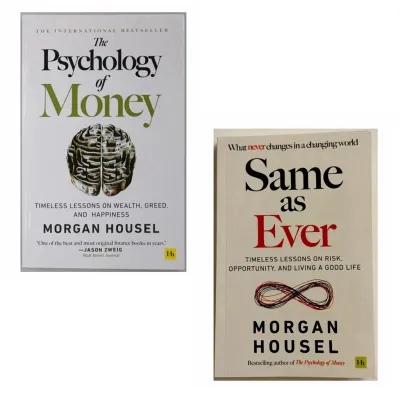
A highly regarded example of mindset-focused literature is The Psychology of Money by Morgan Housel. This book operates on the premise that doing well with money is not necessarily about what you know, but rather about how you behave. It explores how personal history, ego, pride, and unique individual experiences shape financial decisions far more than raw mathematical calculations or economic theories.
This perspective is particularly valuable for readers who understand basic financial mathematics but struggle with emotional spending, lifestyle creep, or market-driven anxiety. It helps you redefine wealth not as the visible items you buy, but as the unseen assets and options you accumulate.
However, a notable limitation of mindset-focused books is their lack of practical execution tools. You will not find step-by-step budgeting spreadsheets, specific account recommendations, or exact asset allocation percentages within these pages, making them a conceptual starting point rather than a complete technical manual.
Best for Practical Budgeting and Actionable Systems
For those seeking concrete, automated financial structures, I Will Teach You to Be Rich by Ramit Sethi serves as a representative guide. The core methodology centers on “conscious spending” and the complete automation of your financial infrastructure. By setting up automated transfers that route your income directly into savings, investments, and fixed expenses, you eliminate the need to rely on daily willpower to save money.
This system is ideal for young professionals, busy individuals, or anyone who wants a “set-and-forget” financial setup. It encourages spending guilt-free on things you love by ruthlessly cutting costs on items that do not bring you value.
The primary limitation for international readers is the heavily US-centric nature of the banking and investment accounts mentioned. Readers must take the initiative to translate concepts like 401(k) plans, Roth IRAs, and specific high-yield savings accounts into their local financial equivalents.
Best for Getting Out of Debt and Strict Saving
When aggressive debt payoff and strict discipline are required, The Total Money Makeover by Dave Ramsey is a widely discussed methodology. This approach champions the “debt snowball” method, where you pay off your smallest debts first to secure quick psychological wins, building momentum to tackle larger liabilities. It pairs this strategy with a strict, zero-based budgeting system where every single dollar is allocated a specific job before the month begins.
This book is designed specifically for individuals who feel overwhelmed by consumer debt, credit card balances, or a total lack of financial control. The intense, structured focus is engineered to break bad habits through sheer behavioral discipline and structured sacrifice.
Nevertheless, the highly restrictive nature of this cash-envelope, debt-averse approach may feel overly rigid for those who already practice moderate financial discipline. Additionally, the advice heavily relies on US-specific credit scoring systems, debt-settlement frameworks, and investment assumptions that do not align perfectly with global markets.
Best for Timeless Principles and Beginners
For absolute beginners, The Richest Man in Babylon by George S. Clason offers foundational financial wisdom through simple, engaging parables set in ancient Babylon. The core premise revolves around the fundamental rule of wealth accumulation: “pay yourself first” by saving at least ten percent of everything you earn before paying any other expenses or bills.
This classic text is exceptionally suited for teenagers, absolute beginners, or anyone who finds modern financial jargon and technical spreadsheets intimidating. The narrative format makes complex concepts of compound interest, risk management, and wealth preservation easy to digest and remember.
The obvious limitation is that the advice is entirely conceptual. Written over a century ago, the book offers no guidance on navigating modern digital banking, managing inflation, understanding tax laws, or utilizing contemporary investment vehicles.
Adapting Global Finance Advice to the Singapore Context
Because the most popular personal finance books originate from the United States, readers in Singapore must actively translate these foreign concepts to fit the local regulatory, tax, and economic landscape. Applying US-centric advice literally can lead to inefficient financial structures or missed opportunities within Singapore’s unique system.
Retirement Accounts When a book advises contributing to a 401(k) or a Roth IRA, you should map these concepts to Singapore’s Central Provident Fund (CPF) and the Supplementary Retirement Scheme (SRS). The CPF Ordinary Account (OA) and Special Account (SA) serve as your primary, government-backed retirement foundation, offering guaranteed interest rates that act as a low-risk debt-free investment instrument. To replicate the tax-deferred investment advantages of a traditional IRA, you can utilize the SRS, which allows you to reduce your taxable income while investing for retirement.
Credit Scores and Debt Many foreign finance books place a heavy emphasis on building credit scores through complex credit card utilization strategies. In Singapore, the credit system operates differently; financial institutions refer to Credit Bureau Singapore (CBS) reports and enforce strict Total Debt Servicing Ratio (TDSR) limits. Instead of trying to “game” your credit score by carrying balances or opening multiple accounts for rewards, your primary focus should be on maintaining a clean CBS record by paying bills in full and on time, which is crucial when applying for major loans like home mortgages.
Housing and Real Estate US-based real estate advice often assumes a highly accessible market of suburban single-family homes with 30-year fixed mortgages. In Singapore, housing decisions are deeply intertwined with Housing & Development Board (HDB) regulations, Build-To-Order (BTO) application cycles, and specific government grants. Understanding the eligibility criteria, loan options (HDB concessionary loan versus bank loans), and the long-term implications of public housing lease decays is far more critical than the standard real estate advice found in international books.
Taxes and Healthcare Singapore does not levy a capital gains tax on investment profits, which significantly alters the investment strategies recommended in US literature, where tax-loss harvesting and capital gains tax brackets dominate. Additionally, Singapore’s integrated healthcare safety net—comprising MediSave, MediShield Life, and CareShield Life—changes how you should structure your emergency funds. While US books often recommend massive emergency funds to cover potential medical bankruptcies, a Singapore resident can optimize their emergency cash reserves by understanding how their basic integrated shield plans cover hospitalization costs.
Where to Source Books and Build a Consistent Reading Habit
Acquiring financial knowledge is only valuable if you can consistently integrate it into your daily life. Developing a structured approach to sourcing literature and applying its lessons is key to building lasting saving habits.
Sourcing Channels To access these books cost-effectively, utilize the National Library Board (NLB) mobile application, which provides free, instant access to a vast library of e-books and audiobooks. If you prefer physical copies—especially for workbooks that require writing—local physical bookstores such as Kinokuniya or Popular offer excellent browsing experiences. When purchasing, always verify that you are buying from an authorized distributor to ensure you receive complete, high-quality editions without missing pages or printing defects.
Format Verification Before finalizing a purchase or loan, verify the edition of the book. Authors frequently update their work to reflect shifting economic conditions, interest rate environments, and technological platforms. Opting for the most recent revised edition ensures the practical steps and digital tools recommended are still active and relevant.
Active Reading Strategies To prevent passive consumption, pair your reading with practical tools. As you read about budgeting systems, immediately open a local expense-tracking application or a customizable spreadsheet to map out your actual cash flow. Translating the book’s concepts into real-time personal data bridges the gap between theory and execution.
Pacing Avoid the temptation to binge-read an entire finance book in one sitting. Instead, adopt a paced approach: read one chapter, pause, and execute the specific action step recommended—such as setting up an automated recurring transfer to your savings account—before moving on. This deliberate pacing prevents information overload and ensures that each habit is firmly established before you introduce new financial concepts.
Frequently Asked Questions (FAQ)
Do I need to read books specific to Singapore to manage my money well?
No, you do not need to limit your reading to local publications to build excellent financial habits. Foundational concepts such as behavioral psychology, the importance of paying yourself first, and the mechanics of compound interest are universal principles that apply regardless of geography. Global bestsellers excel at teaching these psychological and structural fundamentals. However, when it comes to technical execution—such as tax optimization, retirement planning, and property purchasing—you must supplement these global books with local resources. Rely on official government portals like the CPF Board or the Monetary Authority of Singapore (MAS) consumer guides to handle the technical, Singapore-specific details.
Is it better to buy physical copies or use digital formats for finance books?
The ideal format depends entirely on the type of financial book you are reading and your personal learning preferences. Physical books are highly superior for practical guides, workbooks, and texts containing complex financial charts, as they allow for easy highlighting, note-taking, and quick referencing. Audiobooks are highly effective for conceptual, narrative-driven books focusing on financial psychology and mindset shifts, allowing you to learn productively during commutes. If you are unsure which format fits your style, use the NLB digital library to borrow the e-book version first, allowing you to test the content before committing to a physical purchase.
Community discussion
Share your experience or ask a question. Comments are reviewed before publication.