
Deciding where to begin your journey into trading psychology can be a daunting task. While technical strategies, indicators, and chart patterns are essential tools, the mental framework you use to execute those tools ultimately determines your long-term consistency. Among the vast literature on market psychology, the trading in the zone book by Mark Douglas is frequently recommended as a foundational text. However, because it focuses heavily on abstract, philosophical concepts, it may not suit every trader’s current learning needs or practical style.
To build a resilient trading mindset, you must choose a starting point that directly addresses your specific psychological hurdles. Comparing Mark Douglas’s classic work with other highly regarded alternatives will help you identify which book aligns best with your current experience level, strategic preparation, and preferred learning format.
Quick Answer: Should You Start With the Trading in the Zone Book?
For most traders who already possess a basic technical strategy but struggle with execution, the trading in the zone book is the ideal starting point. It is highly recommended if you find yourself hesitating to take valid setups, moving stop-losses mid-trade out of fear, or experiencing intense emotional reactions to individual losses. The book’s primary strength is its ability to dismantle the illusion of control, helping you replace the desire to be right with a robust, probabilistic mindset.
Products mentioned in this guide
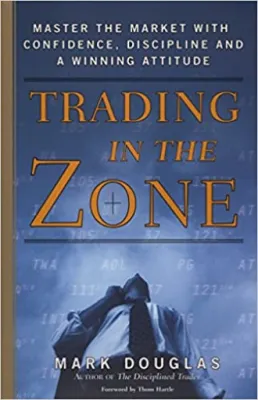

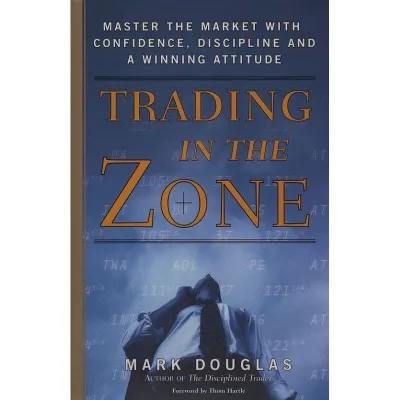
Prices are valid at publication and may change. Please refer to the product page for the latest price.
However, it is not the best first read for absolute beginners who have not yet learned basic technical analysis, risk management, or market mechanics. Without a defined trading edge to execute, the psychological concepts in the book remain purely theoretical. Additionally, if you prefer highly structured, daily behavioral exercises or step-by-step cognitive drills, you may find Douglas’s philosophical approach too abstract. In those scenarios, starting with a practical coaching manual or an interview-based compilation of trader experiences will yield more immediate benefits.
The Core Approach of the Trading in the Zone Book
To understand why this book holds such a prominent place in trading literature, it is necessary to examine its core thesis. Mark Douglas argues that the primary cause of trading failure is not a lack of technical knowledge, but rather the mental errors triggered by how our brains naturally process risk and uncertainty. In everyday life, we are conditioned to avoid pain and seek certainty. When applied to the financial markets, this natural conditioning leads to devastating trading behaviors, such as cutting winning trades short to lock in a profit or letting losing trades run in the hope that the market will turn.

At the heart of the book’s framework are the “five fundamental truths” of trading, which Douglas presents to help traders accept risk unconditionally:
- Anything can happen: The market is composed of countless independent actors, and any single participant can disrupt a technical pattern.
- You do not need to know what is going to happen next to make money: Profitability is a function of executing an edge consistently over a series of trades, not predicting individual outcomes.
- There is a random distribution between wins and losses for any given set of variables that define an edge: Even with a highly profitable strategy, you cannot know which specific trade will win or lose.
- An edge is nothing more than an indication of a higher probability of one thing happening over another: A trading setup is a statistical advantage, not a guarantee.
- Every moment in the market is unique: Past successes or failures have no bearing on the outcome of the current trade.
By internalizing these five truths, traders can systematically eliminate the four primary trading fears: the fear of being wrong, the fear of losing money, the fear of missing out (FOMO), and the fear of leaving money on the table.
In terms of format, the book is written as a continuous, conceptual narrative. It does not contain worksheets, daily schedules, or diagnostic questionnaires. Instead, it relies on repetition and deep philosophical arguments to gradually restructure how you perceive market data. When purchasing this book, it is highly recommended to verify that you are acquiring an authorized edition from a reputable publisher. Ensure the format—whether physical paperback, e-book, or audiobook—matches your study habits, as the dense, academic prose often requires highlighting, note-taking, and multiple readings to fully absorb.
Comparing Trading in the Zone to Other Popular Alternatives
While Douglas provides an exceptional philosophical foundation, other authors approach trading psychology from entirely different angles. Some focus on clinical, cognitive-behavioral techniques that treat the trader as an athlete requiring daily conditioning. Others use qualitative interviews to extract practical wisdom from real-world market legends.
Evaluating these books alongside Douglas’s work requires looking at how they balance conceptual depth with actionable exercises. By comparing these methodologies, you can determine whether you need a deep philosophical shift, a structured daily routine, or inspiration from diverse trading styles.
Trading in the Zone vs. The Daily Trading Coach
Written by Dr. Brett Steenbarger, a clinical psychologist and active trading coach, The Daily Trading Coach offers a stark contrast to Douglas’s work. While Douglas seeks to change your fundamental relationship with risk through philosophical persuasion, Steenbarger approaches trading psychology as a practical discipline that can be managed using cognitive-behavioral therapy (CBT) techniques.
The Daily Trading Coach is structured as a highly actionable manual containing 101 distinct lessons. Each lesson is designed to be read in a single day, complete with specific coaching exercises, self-assessment questions, and practical steps to modify your behavior. Steenbarger teaches you how to become your own psychologist, showing you how to identify emotional triggers, keep detailed trading journals, and use visualization techniques to manage stress.
For a reader, the experience of these two books is entirely different. Trading in the Zone requires quiet, deep reflection on abstract concepts like “the environment of the mind.” In contrast, The Daily Trading Coach demands active participation, requiring you to write down your thoughts, track your physiological responses to stress, and actively experiment with behavioral changes during the trading day. If you are a highly structured learner who thrives on daily routines and concrete homework, Steenbarger’s book is an excellent alternative or follow-up.
Trading in the Zone vs. Market Wizards
Jack Schwager’s Market Wizards series takes a completely different structural approach by presenting a collection of interviews with some of the most successful traders of the late 20th century. Rather than presenting a single, unified psychological theory, Schwager allows the readers to observe how diverse, highly successful individuals manage their minds, risk, and strategies.
While Douglas argues that there is a singular, correct mental state required for trading—the probabilistic mindset—Market Wizards demonstrates that there are many different paths to market success. You will read about aggressive trend followers, highly analytical macro traders, and intuitive floor traders. However, despite their vastly different strategies, almost every trader interviewed by Schwager emphasizes the same core principles: strict risk management, emotional detachment from losses, and absolute discipline in executing their chosen system.
Market Wizards serves as an excellent complement to Trading in the Zone. While Douglas explains the theoretical mechanics of a probabilistic mindset, Schwager’s interviews provide the real-world proof of those concepts in action. Reading Market Wizards can help you understand how psychology manifests across different trading styles, making it a highly engaging and inspiring read for those who find theoretical psychology books dry or difficult to digest.
Key Dimensions for Choosing Your First Psychology Book
To make an informed decision, you must evaluate these books across several practical dimensions that directly impact your ability to apply their teachings to your daily trading routine.
- Prerequisite Knowledge: Some books assume you already have a live trading account and a defined strategy, while others are accessible to those who are still in the exploratory phase of their trading journey.
- Actionability vs. Theory: This ratio determines whether you will spend your time reflecting on abstract concepts or executing specific behavioral drills.
- Format and Accessibility: The physical or digital medium you choose can significantly affect how well you retain the material. For instance, while audiobooks are convenient for commuting, the dense, repetitive arguments in Douglas's work or the highly structured lessons in Steenbarger's manual are often much easier to digest, highlight, and reference in a physical paperback or a well-formatted e-book.
The following comparison matrix summarizes these key dimensions across the three books to help you identify the best fit for your current needs:
| Dimension | Trading in the Zone | The Daily Trading Coach | Market Wizards |
|---|---|---|---|
| Core Focus | Probabilistic mindset and risk acceptance | Cognitive-behavioral self-coaching techniques | Real-world interviews and diverse trading philosophies |
| Prerequisite Knowledge | Moderate; requires a basic understanding of technical strategies and risk | High; requires an active trading routine to apply daily exercises | Low; accessible to beginners exploring different market styles |
| Actionability vs. Theory | Highly theoretical and conceptual | Highly actionable with daily drills and homework | Anecdotal and observational; highly engaging |
| Best For | Traders struggling with execution fear and hesitation | Structured learners who want a daily self-improvement routine | Beginners seeking inspiration and broad risk management rules |
| Format Considerations | Best read in print or e-book to allow for highlighting and re-reading | Best in print as a reference manual to write in and revisit | Highly suitable for audiobook, print, or e-book formats |
Decision Framework: Match the Book to Your Trading Struggles
To determine which book should be your priority, diagnose your current trading performance and identify your most persistent psychological obstacles.
Choose Trading in the Zone if:
- You have a backtested trading strategy with a proven historical edge, but you find yourself freezing or hesitating when it is time to execute a live trade.
- You routinely sabotage your trading plan by moving your stop-loss wider, taking profits prematurely out of fear of giving back gains, or revenge trading after a loss.
- You view losses as personal failures or indicators that your strategy is broken, rather than recognizing them as normal, statistical outcomes of a probabilistic system.
Choose The Daily Trading Coach if:
- You want a structured, step-by-step program to improve your mental discipline over several months.
- You struggle with general stress management, emotional volatility, or maintaining focus during the trading session, and you want concrete tools to track and modify these states.
- You enjoy keeping detailed trading journals and want to learn how to analyze your own psychological data to identify patterns of self-sabotage.
Choose Market Wizards if:
- You are still in the early stages of your trading journey and have not yet committed to a specific technical strategy or market (such as equities, forex, or futures).
- You learn best through storytelling, real-world examples, and qualitative insights rather than academic psychology or theoretical frameworks.
- You want to understand the broad, universal habits of successful market participants before diving into specialized psychological training.
Verify Your Technical Foundation First
Before purchasing any trading psychology book, you must verify that you have a basic trading plan or technical edge. It is a common misconception among retail traders that psychological discipline can compensate for a flawed strategy. In reality, psychology books are designed to optimize the execution of an existing edge; they cannot create a mathematically profitable system where none exists. If you do not yet have a defined plan that outlines exactly where you will enter, exit, and manage your risk, focus on learning technical analysis and risk management before attempting to master trading psychology.
Frequently Asked Questions (FAQ)
Do I need prior trading experience to understand Trading in the Zone?
Yes, having at least some basic trading experience is highly recommended. While the book does not teach technical analysis, chart patterns, or specific indicators, it assumes you understand fundamental market mechanics. You should be familiar with concepts such as stop-loss orders, position sizing, risk-to-reward ratios, and what constitutes a trading edge. Without this context, Douglas’s discussions on risk acceptance and market uncertainty will feel entirely abstract and difficult to apply to real-world scenarios. Complete beginners should spend time paper trading or learning basic mechanics before reading this book.
Are there newer editions or updated versions of Trading in the Zone?
The core text of Mark Douglas’s classic work has remained largely unchanged since its original publication, as the psychological principles of risk, probability, and human emotion are timeless. When purchasing the book from online marketplaces or digital bookstores, focus on verifying that you are buying an authorized, complete edition from the official publisher. Be cautious of low-cost, unofficial summaries, study guides, or poorly translated versions, which often omit crucial conceptual nuances and the detailed explanations necessary to fully grasp the probabilistic mindset.
Can I read Trading in the Zone alongside a technical analysis book?
Reading a psychology book alongside a technical analysis manual is an exceptionally effective approach to learning. This dual method allows you to build your technical edge while simultaneously developing the mental framework required to execute it without fear or hesitation. To maximize this approach, try applying the concepts of probabilistic thinking directly to your technical practice. For example, when backtesting a new technical pattern, focus on observing the random distribution of wins and losses over a large sample size, which will reinforce Douglas’s teachings in real-time.
Community discussion
Share your experience or ask a question. Comments are reviewed before publication.