
Choosing between a tripod and a clamp-on drum music stand depends on your physical playing environment, pedal configuration, and how often you transport your kit. If you have a crowded floor setup with double bass pedals, a hi-hat stand, and multiple auxiliary pedals, a clamp-on music stand that mounts directly to your existing hardware or drum rack is often the most practical choice because it keeps the floor completely clear.
Conversely, if you have ample floor space, frequently change your drum kit layout, or need a highly versatile stand that can be positioned independently of your drums, a traditional freestanding tripod music stand offers unmatched flexibility. Matching the right mounting style to your specific drumming environment ensures your sheet music or digital tablet remains stable, readable, and perfectly aligned with your natural sightlines.
Assessing Your Drum Kit Layout and Practice Space
Before purchasing any drum music stand, you must carefully evaluate the physical boundaries of your drum kit and the room in which you practice. In compact living spaces, such as a typical spare bedroom or a dedicated music nook, floor real estate is at a premium.
Products mentioned in this guide
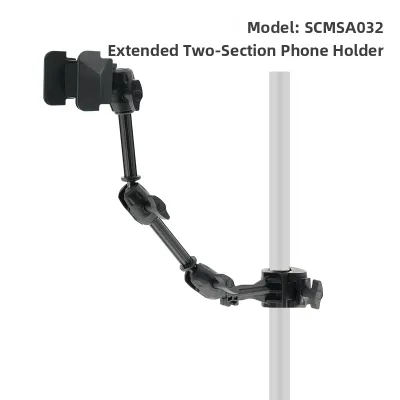
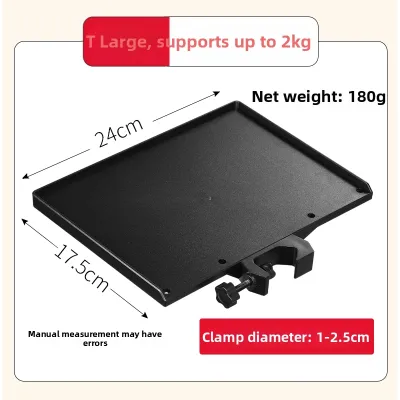
Prices are valid at publication and may change. Please refer to the product page for the latest price.
Begin by looking down at your feet. The area surrounding your hi-hat stand, snare drum stand, and bass drum pedal is already crowded with metal legs and pedal boards. Introducing a tripod music stand into this zone requires finding a clear patch of floor where the three legs can spread wide enough to remain stable without overlapping with your pedals or creating a tripping hazard.
Next, examine your existing drum hardware to identify potential mounting points if you are considering a clamp-on model. Look at your cymbal stands, tom mounts, hi-hat stand, or the tubes of a drum rack system. You will need to measure the outer diameter of these tubes using a caliper or a flexible tape measure.
Most drum hardware tubes range from 12mm to over 30mm in diameter. When shopping for a clamp-on stand, you must verify that the clamp’s jaw capacity matches these exact measurements. Additionally, ensure there is a clear, unobstructed vertical or horizontal section of tubing where the clamp can grip securely without interfering with memory locks, height adjustment collars, or cymbal boom arms.
Finally, consider the portability and permanence of your drum kit. If your drums remain permanently set up in a home studio or practice room, you can opt for a more permanent, heavy-duty mounting solution that takes time to assemble.
However, if you are a gigging drummer who frequently packs up your gear for rehearsals, club dates, or community events, your priority will be setup speed and simplicity. A stand that requires tedious screw adjustments or complex clamping configurations can add unnecessary stress to a quick stage transition, whereas a simple, self-contained stand can be unfolded and positioned in seconds.
Tripod Music Stands: Freestanding Flexibility
Freestanding tripod music stands are the traditional choice for musicians across all instruments, and they offer several distinct advantages for drummers. The primary benefit of a tripod stand is its complete independence from your drum kit’s physical structure.

Because it does not attach to your hardware, you can place it anywhere around your kit. This allows you to position your sheet music, lead sheets, or tablet at the exact angle and distance required for your vision, regardless of where your cymbal stands or drum rack tubes are located. If you prefer to read music positioned directly to the left of your hi-hat, or slightly behind your floor tom, a tripod stand can be placed there instantly.
However, this independent placement comes with a significant physical footprint. The stability of a tripod stand relies on its legs being spread wide. In tight practice spaces, these legs can easily clash with the legs of your hi-hat stand, snare stand, or cymbal stands.
If you try to narrow the leg spread of the tripod to save space, the stand becomes highly unstable and prone to tipping over if bumped by a drumstick or nudged by a moving knee. Furthermore, the legs can obstruct your foot access to auxiliary pedals, such as a secondary bass drum pedal, a cowbell pedal, or a hi-hat drop clutch controller.
For the active gigging drummer, the tripod stand remains a highly practical option due to its universal compatibility. When you perform at venues with provided house drum kits, you cannot guarantee that the house hardware will have compatible tubing or available space for a clamp-on attachment.
A tripod stand is entirely self-contained, requiring no modification or attachment to the venue’s drums. You simply unfold the legs, adjust the height, and place it next to the kit. This makes it an excellent choice for freelance percussionists, music teachers who work in multiple studios, or students who practice on different kits at school and at home.
Clamp-On Music Stands: Hardware-Mounted Convenience
Clamp-on music stands offer a modern, space-saving alternative by mounting directly onto your existing drum hardware. By utilizing the heavy, stable bases of your cymbal stands, hi-hat stands, or drum rack, these models completely eliminate the need for an independent floor base.
This design frees up valuable floor space around your feet, allowing you to position your pedals exactly where you want them without navigating a forest of metal legs. For drummers using complex double-pedal setups or multiple remote hi-hats, keeping the floor clear of extra tripod legs is essential for maintaining ergonomic pedal placement and clean cable routing.
Before purchasing a clamp-on stand, verifying the compatibility of the clamp mechanism is critical. You must check the manufacturer’s specifications for the clamp’s minimum and maximum jaw opening sizes. If your cymbal stand has very thick lower tubes or exceptionally thin upper rods, a generic clamp may not tighten securely, leading to slipping or rotation during play.
It is also important to check the weight capacity of both the clamp-on stand and the host hardware. Mounting a heavy music binder or a large digital tablet onto a lightweight, single-braced cymbal stand can make the entire assembly top-heavy, increasing the risk of the cymbal stand tipping over during an energetic performance.
Another important consideration is the transfer of physical energy. Drums are high-impact instruments, and the vibrations from striking your cymbals, snare, or bass drum travel directly through your hardware. When a music stand is clamped to a cymbal boom or a hi-hat stand, these vibrations are transmitted directly to your sheet music or tablet.
This constant shaking can make reading fine print or small musical notation difficult during loud passages. Over time, severe vibrations can also cause the clamp’s adjustment screws to loosen, causing the music tray to sag or rotate away from your line of sight.
Direct Comparison: Stability, Sightlines, and Vibration
When comparing tripod and clamp-on music stands, several performance dimensions dictate which option will perform best during actual play. Physical vibration is one of the most noticeable differences. A freestanding tripod stand is physically isolated from your drum kit, meaning it only experiences vibrations transmitted through the floor.
This isolation keeps your sheet music or tablet remarkably still, even during heavy, high-volume drumming. In contrast, a clamp-on stand is mechanically linked to your kit, making it highly susceptible to the direct impact energy of your drumsticks hitting the cymbals or drums to which it is attached.
Sightline ergonomics also differ significantly between the two designs. A tripod stand can be adjusted to almost any height and angle, allowing you to position your music at eye level so you can easily read your charts while keeping the conductor, bandmates, or audience in your peripheral vision.
Clamp-on stands, while highly adjustable via multi-position arms or ball joints, are ultimately limited by the physical location of the host hardware. If your cymbal stand is positioned far to your right, a clamp-on music holder mounted to it may force you to turn your head away from the center of the kit, which can disrupt your playing posture and neck comfort over long sessions.
| Feature | Tripod Music Stands | Clamp-On Music Stands |
|---|---|---|
| Floor Footprint | Large; requires dedicated floor space | None; mounts directly to existing hardware |
| Vibration Resistance | High; isolated from direct drum impacts | Moderate to Low; subject to hardware vibrations |
| Placement Flexibility | Unlimited; can be placed anywhere around the kit | Limited; dependent on host hardware locations |
| Setup & Teardown Time | Fast; simple unfolding mechanism | Moderate; requires clamping and tightening |
| Hardware Dependency | None; fully self-contained | High; requires compatible stand or rack tubing |
| Weight Capacity | High; stable base supports heavy books | Moderate; limited by host stand stability |
Decision Framework: Which Drum Music Stand Setup Works Best?
To make your final decision, analyze your primary playing environment and hardware configuration. Choose a tripod music stand if you practice in a spacious room, frequently play on different house drum kits, or need a versatile stand that can also be used when playing other instruments or teaching.
The independent nature of a tripod ensures that no matter what drum kit you are sitting behind, you will always be able to position your music exactly where you need it without worrying about tube diameters or hardware compatibility.
Choose a clamp-on music stand if you are practicing in a tight space, such as a small room in a Singapore HDB flat, where every square centimeter of floor space matters. This setup is also ideal if you use a drum rack system, which provides numerous stable mounting points, or if your pedal setup is highly complex and cannot accommodate any extra metal legs on the floor.
Before finalizing your purchase, always measure your hardware’s tube diameters and check them against the clamp’s specifications. If you plan to use a digital tablet, ensure the clamp-on arm is robust enough to hold the device’s weight securely without sagging under the impact of your playing.
Frequently Asked Questions (FAQ)
Can I use a standard orchestral music stand for my drum kit?
Yes, you can physically use a standard orchestral music stand, but it may not be the most practical choice for a drum kit environment. Orchestral stands typically feature a wide, heavy metal base designed for stability on flat stage floors, which can easily clash with the sprawling legs of your hi-hat and cymbal stands.
Additionally, standard music stands are often designed for seated or standing classical musicians and may not adjust low enough to sit comfortably below your cymbal line or match a drummer’s lower seated eye level. If you choose to use one, ensure it has a heavy-duty base that can withstand the low-frequency vibrations of a bass drum without rattling or slowly drifting downward.
How do I keep my tablet or sheet music from vibrating off the stand?
To prevent your reading materials from shifting or falling due to drum vibrations, look for music stands that feature built-in page retainers or spring-loaded clips. If you use a digital tablet, avoid relying on a simple flat tray; instead, invest in a dedicated tablet holder with a secure, mechanical locking grip that clamps onto the sides of your device.
For sheet music or books on a flat desk, you can apply a thin strip of non-slip silicone or rubber padding to the lip of the tray to increase friction. Additionally, ensuring all adjustment collars and wing nuts on your stand are tightened securely before you begin playing will minimize the transfer of acoustic energy through the stand’s frame.
Community discussion
Share your experience or ask a question. Comments are reviewed before publication.