
Choosing the right piano is a critical first step for any aspiring musician, and in Singapore, the decision is heavily influenced by space constraints, high tropical humidity, and neighborhood noise considerations. Music teachers and experienced pianists consistently recommend established brands like Yamaha, Kawai, Roland, and Casio for beginners. These brands are highly trusted because they offer reliable key action, stable tuning, and excellent local dealer support, ensuring that a student’s foundational years are supported by a quality instrument.
While acoustic pianos remain the gold standard for touch and tone, modern digital pianos have become highly sophisticated alternatives. Selecting the ideal instrument requires balancing the student’s learning goals with the practical realities of Singaporean households. Understanding the specific strengths of each brand and the maintenance demands of the local climate will help you make a secure, long-term investment in your musical journey.
How to Choose the Right Piano for Beginners in Singapore
When selecting a beginner piano, the most critical technical requirement is a full-size keyboard with 88 fully weighted keys and touch response. Weighted keys simulate the mechanical resistance of an acoustic piano’s hammers, which is essential for developing finger strength, dexterity, and proper hand posture. Instruments without weighted keys, such as basic electronic keyboards or unweighted MIDI controllers, can lead to poor habits that are difficult to correct when transitioning to a real piano.
Products mentioned in this guide
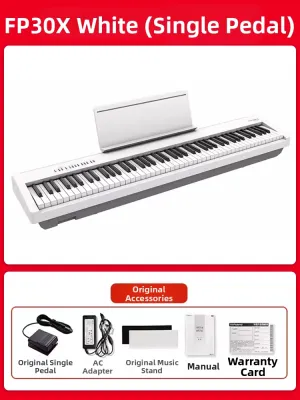

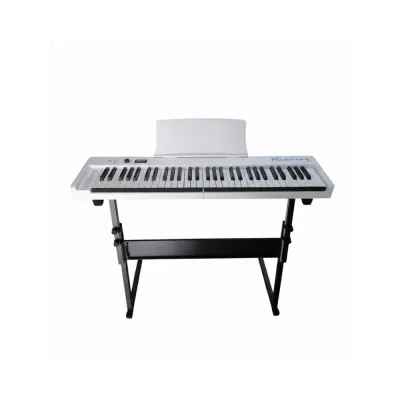
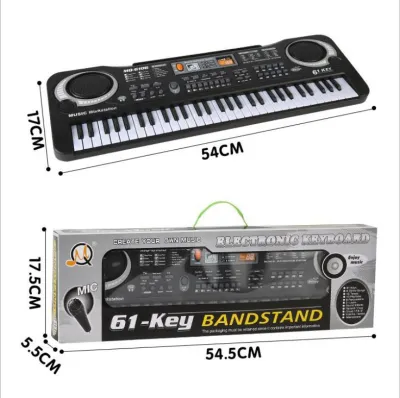
![[✅SG Ready Stock] 61 Key High Quality Music Keyboard Piano kids toys new player beginner Electric Piano](https://img.lazcdn.com/g/p/1f34b80fc1c4ffa462a06ed0ad2ca2fd.jpg_400x400q80.jpg_.webp)

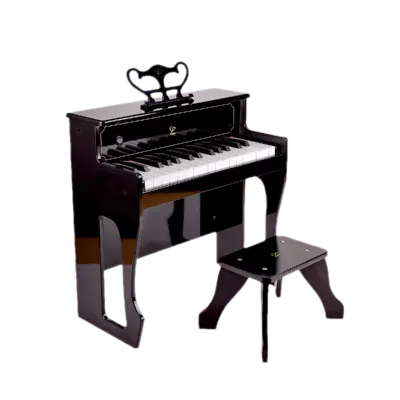

Prices are valid at publication and may change. Please refer to the product page for the latest price.
Living space is a primary constraint for most households in Singapore, where high-density housing like Housing & Development Board (HDB) flats and condominiums is the norm. An acoustic upright piano typically requires a dedicated wall space of about 150 centimeters in width and 60 centimeters in depth, and its heavy weight (often between 200 to 250 kilograms) requires careful placement. In contrast, digital pianos offer a much smaller physical footprint, lighter weight, and the ability to be easily disassembled or moved if your room layout changes.
Singapore’s tropical climate, characterized by consistently high relative humidity levels often exceeding 80%, presents a unique challenge for acoustic instruments. Wood and felt components inside an acoustic piano naturally absorb moisture from the air, causing the wood to swell, keys to stick, and strings to rust. Consequently, acoustic piano owners in Singapore must invest in climate control accessories, such as internal dehumidifier rods, and keep them running continuously to maintain structural integrity.
Your budgeting framework should look beyond the initial purchase price to account for long-term ownership expenses. For an acoustic piano, recurring costs include professional tuning services, which are recommended at least twice a year in Singapore’s climate, along with occasional mechanical regulation and the electricity cost of running a continuous dehumidifier. Digital pianos have virtually zero maintenance costs, requiring no tuning or climate control, making them a highly predictable and budget-friendly option for families testing a child’s long-term interest.
Reputable Acoustic Piano Brands for Beginners
Acoustic pianos offer an organic sound production and mechanical touch that digital alternatives can only emulate. For beginners committed to classical training, starting on a reputable acoustic upright piano provides the most authentic feedback loop between the fingers and the ears.

Yamaha
Yamaha is widely considered the benchmark brand for student and professional pianos in Singapore, maintaining a dominant presence in music schools, examination centers, and private studios. The brand is highly regarded for its manufacturing consistency, ensuring that even entry-level models like the Yamaha JU109 or U1 uprights deliver a predictable touch and reliable performance. This consistency gives music teachers confidence that a student practicing at home will experience the same key response as they do during weekly lessons.
In terms of tonal profile, Yamaha acoustic pianos are generally characterized by a bright, clear, and projecting sound. This bright timbre makes them highly versatile for various musical genres, from classical repertoire to contemporary pop and jazz, as the notes remain distinct even in complex passages. Additionally, Yamaha’s long-standing presence in Singapore means that replacement parts are readily available, and the brand retains an exceptionally high resale value in the local secondhand market should the student decide to upgrade or discontinue lessons.
Kawai
Kawai is Yamaha’s primary competitor and is equally respected by Singaporean music educators for its commitment to acoustic innovation and craftsmanship. Kawai upright pianos, such as the popular K-series (including the K-200 and K-300 models), are famous for their warm, deep, and mellow tonal characteristics. This rounder sound profile is often preferred by classical players who enjoy a rich, expressive bass register and a less piercing treble.
One of Kawai’s most significant advantages in a humid climate like Singapore is its pioneering use of ABS-Carbon composite materials in its Millennium III keyboard actions. Unlike traditional wooden action parts, which swell, shrink, and warp in response to moisture fluctuations, composite parts are virtually unaffected by humidity. This engineering choice provides superior action stability, reduces the frequency of sticky keys, and ensures a highly responsive, consistent touch over years of daily practice.
Other Established Brands
Beyond the two giants, local showrooms in Singapore feature other reputable acoustic brands that are excellent for beginners. Essex and Boston pianos are designed by the prestigious Steinway & Sons and manufactured in partnership with major Asian factories, offering high-quality design features at a more accessible price point than handcrafted European instruments. These brands provide a middle ground for buyers seeking a distinct tonal character and a prestigious heritage.
When testing these alternative brands in a showroom, beginners and parents should pay close attention to the uniformity of the key weight across the entire keyboard and the smoothness of the tonal transition from the bass to the treble registers. It is also essential to verify the origin and authorized distribution of lesser-known or imported brands. Always ask the retailer for official documentation proving that the instrument is backed by an authorized local distributor warranty rather than a parallel import, which may lack localized technical support.
Leading Digital Piano Brands for Modern Learners
For households where silent practice, space-saving designs, and modern connectivity are priorities, digital pianos are the ideal solution. The leading digital brands have spent decades refining their technology to replicate the experience of playing an acoustic grand piano.
Roland
Roland has built a stellar reputation among music teachers for its focus on sound modeling technology rather than traditional audio sampling. Instead of simply playing back recorded notes of an acoustic piano, Roland’s SuperNATURAL sound engine mathematically reconstructs the complex physical interactions of an acoustic piano in real-time. This results in a highly dynamic and organic sound that responds naturally to the subtle variations in a beginner’s touch.
Roland digital pianos, such as the portable FP series (FP-10, FP-30X) and the cabinet-style HP series, are known for their robust build quality and stable key actions, such as the PHA-4 Standard keyboard. These actions feature an escapement mechanism and ivory-feel keys that absorb sweat, preventing fingers from slipping during long practice sessions. Furthermore, Roland instruments feature excellent Bluetooth MIDI and audio connectivity, allowing students to seamlessly connect to educational apps, interactive sheet music, and online tutorials.
Yamaha (Digital Series)
Yamaha’s digital piano lineup, particularly the Arius (YDP) and Clavinova (CLP) series, utilizes high-resolution stereo sampling from their flagship acoustic grand pianos, such as the Yamaha CFX and the Bösendorfer Imperial. This provides beginners with an incredibly realistic and recognizable concert grand sound right out of the box. The internal sound systems are carefully calibrated to project sound in a way that mimics the natural resonance of an acoustic wooden soundboard.
Yamaha digital pianos are highly praised for their user-friendly interfaces, featuring clean control panels that do not distract students during practice. They integrate seamlessly with Yamaha’s proprietary Smart Pianist app, which allows users to select voices, split the keyboard, and even analyze songs in their personal music library to generate chord charts. This ease of use makes Yamaha digital pianos highly approachable for young children and adult self-learners alike.
Casio and Kawai (Digital Lines)
Casio has transitioned from making basic electronic keyboards to producing highly competitive, value-driven digital pianos under its Privia and Celviano lines. The Privia series is particularly popular in Singapore for its ultra-slim, space-saving designs, making them perfect for compact bedrooms or study corners. Despite their slim profiles, these instruments do not compromise on key action, offering scaled hammer-action keys that provide a realistic resistance for developing finger strength.
Kawai’s digital piano lines, such as the CN and CA series, focus heavily on authentic touch simulation, with higher-end models featuring real wooden keys and advanced mechanical hammer actions. This makes Kawai digital pianos a favorite among classical teachers who want their students to have a digital instrument that feels as close to an acoustic grand as possible. When evaluating these digital lines, always test the quality of the headphone audio output, as high-quality binaural sampling ensures that silent practice remains immersive and does not cause ear fatigue.
Acoustic vs. Digital Pianos: Making the Right Choice
Deciding between an acoustic and a digital piano involves evaluating your household’s daily routine, space availability, and long-term musical commitment. The following comparison table outlines the core differences between the two formats:
| Feature | Acoustic Upright Piano | Digital Piano |
|---|---|---|
| Key Action | Physical hammers striking strings; highly sensitive | Simulated weighted keys; electronic sensors |
| Sound Production | Natural acoustic resonance | Digital samples or physical modeling |
| Maintenance | Requires tuning 1-2 times/year; constant dehumidification | Maintenance-free; no tuning required |
| Volume Control | Natural acoustic volume; optional practice pedal | Adjustable volume; headphone output |
| Lifespan | 30 to 50+ years (with proper care) | 5 to 15 years (subject to electronic wear) |
| Average Weight | 200 to 250 kg | 11 to 80 kg |
| Floor Space | Fixed footprint; requires solid wall placement | Compact; portable options available |
An acoustic piano is the best choice if you have a dedicated, climate-controlled space, a strong commitment to classical piano examinations, and the budget for regular professional maintenance. The physical feedback of real strings and wooden keys helps advanced students master delicate tonal shading and pedaling techniques that are difficult to replicate fully on a digital instrument.
On the other hand, a digital piano is highly recommended for families living in HDB flats or condominiums where neighbors live in close proximity. The ability to plug in headphones allows for silent practice at any time of the day or night without causing noise disturbances. Digital pianos are also the logical choice for those with limited floor space, a highly mobile lifestyle, or a preference for modern learning tools like built-in metronomes, recording functions, and computer connectivity.
For buyers seeking the best of both worlds, hybrid pianos represent a premium bridge between the two categories. Hybrid instruments, such as the Yamaha AvantGrand or Kawai Novus series, feature a complete, physical acoustic piano keyboard action coupled with a high-end digital sound engine. This allows the player to experience the exact mechanical touch of an acoustic grand piano while enjoying the convenience of volume control, silent headphone practice, and freedom from regular tuning.
Essential Checks Before Buying a Piano in Singapore
Before finalizing your piano purchase, there are several practical steps and local environmental factors you must consider to avoid costly mistakes.
First, always verify whether you are buying from an authorized local dealer or a parallel importer. Authorized dealers provide official manufacturer warranties, access to genuine replacement parts, and service from factory-trained technicians. While parallel imports may offer a lower upfront price, they often lack local warranty coverage, and finding compatible electronic parts or specialized technicians in Singapore can be extremely difficult if the instrument requires repairs.
Second, carefully measure your home’s delivery logistics before scheduling the delivery of an acoustic or heavy cabinet digital piano. Measure the internal dimensions of your building’s passenger lift, the width of your apartment’s corridors, and the clearance of your front doorway. If the piano cannot fit into the lift, professional movers will have to carry it up the stairwell, which incurs significant additional labor charges per floor and increases the risk of cosmetic or structural damage to the instrument.
Third, if you choose an acoustic piano, you must plan for its environmental care from day one. In Singapore, it is highly recommended to install a low-wattage dehumidifier rod (often called a piano heater) inside the bottom cabinet of the piano. This heater should remain plugged in and turned on 24 hours a day to keep the internal humidity stable, preventing sticky keys, sluggish action, and mold growth. Avoid placing the acoustic piano directly underneath an air-conditioning vent or next to a window where direct sunlight and rapid temperature changes will destabilize the tuning.
Finally, when setting up a digital piano, ensure that the power supply matches local safety standards and is plugged into a stable outlet. If your home has smooth marble, polished tile, or vinyl flooring, place a non-slip rug or protective mat underneath the piano stand and the pedal unit. This prevents the pedal from sliding away from the student during practice and protects your flooring from scratches. Ensure the piano bench is adjusted to the correct height so the student’s elbows are level with the keys, promoting ergonomic posture from their very first lesson.
Frequently Asked Questions (FAQ)
Do beginners need an 88-key weighted piano?
Yes, music teachers strongly recommend that beginners start with an 88-key weighted piano. A full-size keyboard ensures that the student will not run out of keys as they progress to intermediate pieces, while the weighted action is essential for building finger strength and learning to control dynamics. Practicing on unweighted keys can lead to weak finger technique and makes transitioning to an acoustic piano during exams or lessons highly challenging.
How often should an acoustic piano be tuned in Singapore?
In Singapore’s highly humid and warm climate, an acoustic piano should be tuned at least twice a year. The constant humidity fluctuations cause the wooden soundboard to expand and contract, which alters the tension of the strings and pulls the instrument out of tune. Regular tuning not only keeps the piano sounding pleasant but also allows a technician to inspect the internal action for humidity-related issues like sticking keys or rusting strings before they become expensive repairs.
Can I place an acoustic piano near a window or air-conditioner?
No, you should avoid placing an acoustic piano near windows, external walls, or directly under air-conditioning vents. Direct sunlight will warp the exterior wood finish and dry out internal components, while the cold draft from an air-conditioner creates rapid temperature and humidity swings. These fluctuations cause the wood to expand and contract rapidly, leading to severe tuning instability, potential cracking of the soundboard, and premature wear of the delicate felt action parts.
Community discussion
Share your experience or ask a question. Comments are reviewed before publication.