
Quick Answer: Which Ukulele Strings Are Best for Beginners?
Choosing the right ukulele strings can immediately improve your instrument’s tone, playability, and tuning stability. While there is no single “best” string for every player, standard nylon and fluorocarbon strings are the top recommendations for beginners. These materials are gentle on uncalloused fingers and deliver the classic, cheerful voice of the instrument.
To help you identify the differences at a glance, here is how the three primary string types compare:
- Nylon: Warm, mellow, and traditional. These strings offer a soft, forgiving feel under the fingers, making them highly comfortable for new players.
- Fluorocarbon: Bright, clear, and highly projecting. They are thinner than nylon strings and offer excellent tuning stability, especially in changing weather conditions.
- Wound: Metallic-wrapped strings designed for lower pitches. They provide a deep, guitar-like bass response but are generally not recommended for standard beginner setups.
If you are playing a standard Soprano or Concert ukulele, starting with a high-quality set of standard nylon or fluorocarbon strings matched to your instrument’s size will yield the most satisfying learning experience.
Products mentioned in this guide
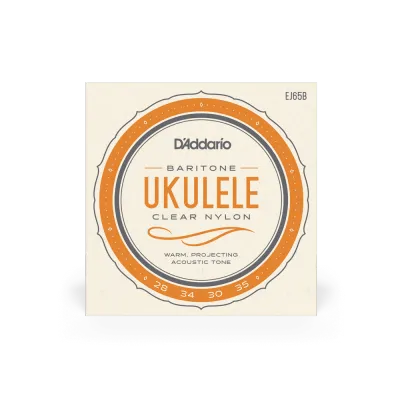

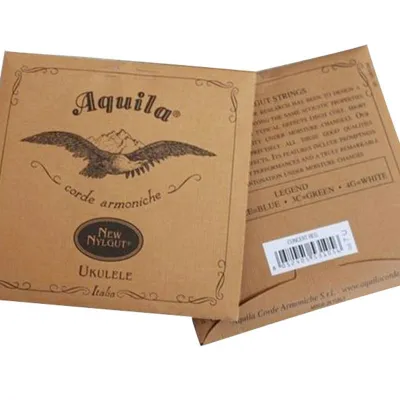
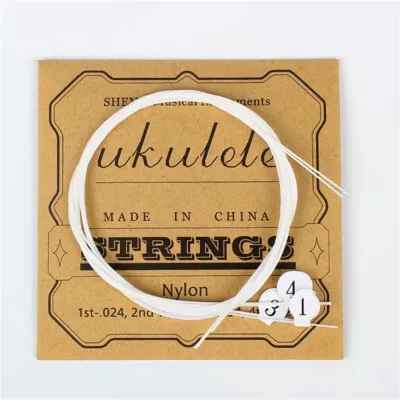
Prices are valid at publication and may change. Please refer to the product page for the latest price.
Nylon Strings: The Warm and Traditional Standard
Nylon strings represent the historical transition from traditional animal gut strings to modern synthetic polymers. Typically made from extruded plastic polymer, nylon strings are available in clear, black, or colored varieties. For a beginner, the primary physical benefit of nylon is its low tension and soft, smooth surface. When you are first learning to press down on frets, your fingertips will appreciate the forgiving, pillowy feel of nylon, which helps minimize soreness during long practice sessions.

Tonally, nylon strings deliver the classic “Hawaiian” sound that most people associate with the ukulele. They produce a warm, round, and mellow tone with a gentle attack and a relatively quick decay. This soft acoustic profile is highly forgiving of minor fretting mistakes or uneven strumming, as it tends to blend notes together smoothly rather than highlighting individual flat spots in your technique.
However, nylon is highly elastic and sensitive to environmental changes. In tropical climates or environments where you frequently transition between air-conditioned rooms and outdoor humidity, nylon strings expand and contract significantly. This physical behavior means a brand-new set of nylon strings will require frequent, repeated tuning during the first few days of use as the material slowly stretches and settles.
Additionally, nylon strings have lower natural volume and projection. If you are playing an entry-level ukulele made of laminate wood, nylon strings can sometimes sound slightly muddy or quiet. They lack the high-frequency clarity needed to make a lower-priced instrument cut through a room, which is a key trade-off to consider when choosing your first replacement set.
Fluorocarbon Strings: Brighter Tone and Humidity Resistance
Fluorocarbon strings are made from a high-density polymer originally developed for heavy-duty outdoor applications, such as fishing lines. Because fluorocarbon is denser than nylon, manufacturers can produce strings with a much thinner gauge (thickness) while maintaining the exact same tension and pitch. This structural difference gives fluorocarbon strings a distinct physical and acoustic profile that has made them incredibly popular among modern players.
From a tonal perspective, fluorocarbon strings are bright, crisp, and highly articulate. They provide excellent note definition, meaning that each individual note in a strummed chord can be heard clearly. They also offer significantly more volume and sustain than nylon. If you own an entry-level or laminate-wood ukulele, upgrading to fluorocarbon strings is one of the most effective ways to clarify the instrument’s voice, adding a brilliant sparkle that helps it sound more expensive than it is.
One of the greatest practical advantages of fluorocarbon is its environmental stability. The material is virtually impervious to water absorption and temperature fluctuations. Once the initial stretch period is complete, fluorocarbon strings hold their pitch remarkably well, making them an excellent choice for players who live in humid climates or travel frequently with their instruments.
There are, however, minor trade-offs for beginners to keep in mind. Because fluorocarbon strings are thinner and denser, they can feel slightly sharper or stiffer under your fingertips compared to the soft, thick profile of nylon. If your fingers are highly sensitive, this extra rigidity might require a brief adjustment period. Additionally, if you prefer a very dark, woody, or vintage-sounding ukulele, the bright and modern chime of fluorocarbon might feel a bit too clinical for your taste.
Wound Strings: Adding Depth to Low G and Larger Ukuleles
Unlike solid polymer strings, wound strings consist of a synthetic nylon or multifilament core wrapped with a very fine metal wire, typically made of aluminum, silver-plated copper, or brass. These strings are designed to solve a specific physics problem: to produce lower pitches with rich resonance, a string needs more mass. Wrapping a core with metal adds the necessary weight without making the string so thick that it becomes stiff, unplayable, or too wide for the slots in the ukulele’s nut.
Wound strings are primarily utilized for the lowest string on larger ukuleles. They are common in Tenor sets and are almost always found on Baritone ukuleles. For Soprano and Concert players, a single wound string is often purchased when converting the instrument from standard “re-entrant” tuning (where the fourth string is high) to “linear” Low-G tuning. This modification adds a deep, resonant bass register and a metallic, guitar-like warmth to the instrument’s overall sound.
Despite their sonic depth, wound strings come with several distinct drawbacks that make them less suitable for absolute beginners. The metal winding creates physical friction, which can produce noticeable squeaking sounds as your fingers slide along the fretboard. Over time, the hard metal wrapping will also wear down the nickel-silver frets of your ukulele much faster than soft nylon or fluorocarbon.
Furthermore, the tactile transition between smooth polymer strings and a textured metal-wound string can feel disjointed to a new player. The difference in tension and surface feel can disrupt your strumming hand’s rhythm. Unless you are specifically learning on a Baritone ukulele or are determined to play in a low-G tuning, it is highly recommended to stick with an all-polymer set of nylon or fluorocarbon strings for your first few months of learning.
How to Match Strings to Your Ukulele Size and Tuning
Before purchasing a set of strings, you must verify that they are compatible with both the physical size of your instrument and your intended tuning. Ukuleles come in four primary sizes: Soprano, Concert, Tenor, and Baritone. Each size has a different scale length (the distance from the nut to the bridge), which dictates the tension required to bring the strings up to pitch.
An absolute rule of ukulele maintenance is to never put steel acoustic or electric guitar strings on a ukulele. Ukuleles are lightweight instruments built without internal metal truss rods in the neck. The immense tension of steel strings will instantly warp the neck, lift the bridge off the soundboard, or structurally destroy the body of your instrument. Always buy strings explicitly labeled for ukulele use.
Using the wrong size of ukulele strings can also cause significant playability issues. For example, if you install Baritone strings on a tiny Soprano ukulele, the strings will be incredibly loose, floppy, and incapable of holding a pitch. Conversely, trying to stretch Soprano strings across a larger Tenor or Baritone scale will put immense stress on the instrument, likely snapping the strings or damaging the bridge. Always match the string packaging to your specific instrument scale.
Soprano and Concert Ukuleles (Standard Re-entrant Tuning)
Soprano and Concert ukuleles are the most common sizes for beginners. They are traditionally tuned to standard High-G re-entrant tuning (g-C-E-A), where the outer “g” string is tuned higher than the adjacent “C” string. For this setup, you should purchase standard, all-polymer sets of either nylon or fluorocarbon.
- Standard Set: Look for packages clearly labeled "Soprano" or "Concert" with "High-G" or "Standard" tuning. These sets contain four polymer strings of varying thicknesses designed to balance physical tension across the fretboard.
- Low-G Alternative: If you wish to experiment with a linear, descending scale (Low G-C-E-A), you must buy a dedicated "Low-G" string set. These sets will include either a thicker, specialized fluorocarbon low-G string or a metal-wound low-G string. Do not attempt to tune a standard high-g string down an octave; it will lack the required tension to vibrate properly, resulting in a dull, unplayable rattle.
Tenor and Baritone Ukuleles (Low G and Linear Tuning)
Tenor and Baritone ukuleles are larger instruments that offer a deeper acoustic chamber and a longer fretboard, which appeals to players looking for a fuller sound or more room for their fingers.
- Tenor Ukuleles: Tenor instruments can be tuned to either High-G or Low-G. Because of the longer scale length, Tenor string sets are wound to a higher tension than Concert sets. Ensure your package is specifically labeled for Tenor scale. Many Tenor players prefer fluorocarbon sets for their exceptional clarity and sustain on the larger body.
- Baritone Ukuleles: Baritone instruments are tuned differently from the smaller sizes. They use linear tuning (D-G-B-E), which matches the top four strings of a standard acoustic guitar. Because of this low tuning, Baritone string sets almost always feature metal-wound strings for the D and G positions, combined with thick nylon or fluorocarbon strings for the B and E positions. Baritone strings are completely incompatible with Soprano, Concert, or Tenor ukuleles due to their length and high tension profiles.
Safe String Installation and Break-In Basics
Changing your ukulele strings is a straightforward process, but it requires patience and care to avoid damaging your instrument. Before you begin, examine your ukulele’s bridge. Ukuleles typically feature either a tie-bar bridge (where you must tie a specific knot around the bridge block) or a slot/pin bridge (where a simple figure-eight knot at the end of the string anchors it inside a slot). Always consult your ukulele manufacturer’s user manual or official care guide if you are unsure of the correct knotting method for your specific model.
When installing the new strings, follow these steps to ensure a safe and successful setup:
- Thread and Anchor: Secure the string to the bridge first, ensuring the knot is tight and seated correctly. For slot bridges, make sure the knot at the end of the string is large enough that it cannot slip through the slot under tension.
- Align at the Nut: Run the string up the fretboard, ensuring it sits squarely in the corresponding slot on the plastic or bone nut at the top of the neck.
- Leave Slack Before Winding: Thread the string through the hole in the tuning peg. Before you begin turning the peg, pull the string slightly back to leave about 1.5 to 2 inches (approximately 4 to 5 centimeters) of slack. This slack ensures that the string wraps around the tuning post at least three to four times, which prevents slipping.
- Wind Safely: Turn the tuning peg so the string winds downward toward the headstock face. This angle keeps the string firmly seated in the nut slot. Do not cut the excess string tail off until the instrument is fully tuned to pitch and holding its tune.
Once installed, new polymer strings will stretch continuously. This is a natural physical property of nylon and fluorocarbon, not a defect in your instrument or the strings. To speed up the break-in period, you can gently stretch the strings manually. Hold the ukulele in your lap, pick up a string near the middle of the fretboard, and gently pull it upward away from the neck by about an inch. Repeat this gentle pulling motion along the length of each string, then retune the instrument. You will need to repeat this process several times over the first few days of playing until the polymer molecules stabilize.
Crucial Safety Boundary: Never tune your strings past their target pitches in an attempt to “speed up” the stretching process. For example, do not tune a standard C string up to a D or E. Over-tensioning can easily snap the string or, worse, place excessive structural stress on your ukulele. If you ever notice the wooden bridge lifting away from the soundboard or the neck bowing forward during installation, stop immediately, loosen the strings, and consult a professional luthier or instrument repair technician.
Frequently Asked Questions (FAQ)
How often should a beginner change ukulele strings?
Unlike steel guitar strings, which rust, corrode, and lose their flexibility quickly, polymer ukulele strings can last a very long time. However, they do wear out over months of regular play. As a beginner, you should look for physical and acoustic signs of wear, such as a dull or muddy tone, difficulty holding pitch, visible indentations or fraying on the underside of the strings where they hit the metal frets, or a rough texture. For a casual player practicing a few times a week, changing your strings once or twice a year is generally sufficient to keep your ukulele sounding fresh and playing smoothly.
Do new ukuleles need their factory strings replaced immediately?
While it is not strictly mandatory, replacing the factory strings on an entry-level ukulele is one of the most cost-effective upgrades you can make. Many budget-friendly ukuleles are shipped with cheap, unbranded black nylon strings that sound thin, plasticky, and take an exceptionally long time to stretch out and hold their tune. Upgrading immediately to a high-quality, branded set of nylon or fluorocarbon strings (typically costing between S$8 and S$20) can instantly transform the acoustic quality, resonance, and tuning reliability of your new instrument.
Why do my new ukulele strings keep going out of tune?
If your new strings keep slipping out of tune, do not worry; this is completely normal. Both nylon and fluorocarbon are highly elastic materials that require several days of regular playing and stretching before they reach physical equilibrium. To help them settle, tune your ukulele to pitch, play for a few minutes, gently stretch each string away from the fretboard, and retune. Repeat this cycle daily. If a string continues to drop drastically in pitch after a week of regular play, inspect the tuning peg to ensure the string is wrapped tightly around the post and that the knot at the bridge is not slowly slipping loose.
Community discussion
Share your experience or ask a question. Comments are reviewed before publication.