
The delay effect in DJ and karaoke equipment is an audio processing tool that records an incoming audio signal and plays it back after a designated period, creating a distinct echo or spatial enhancement. Whether you are blending tracks on a DJ mixer or singing in a home karaoke setup, understanding how to evaluate delay parameters is essential for achieving clear, professional sound without muddying your mix.
What the Delay Effect Actually Does to Your Audio
At its core, a delay effect operates by capturing an incoming audio signal, storing it temporarily in a digital memory buffer, and replaying it after a set interval. This process creates a distinct repetition of the original sound, which can range from a single, rapid echo to a series of cascading repetitions. By blending these repetitions back into the main audio stream, the effect introduces a sense of physical space, depth, and rhythmic complexity.
In a karaoke environment, delay is primarily used as a subtle spatial enhancer to thicken vocals. A very short delay can make a single voice sound fuller and more polished, helping the singer blend smoothly with the backing track. It masks minor pitch imperfections and adds a professional sheen that mimics the natural acoustics of a larger performance venue.
Products mentioned in this guide
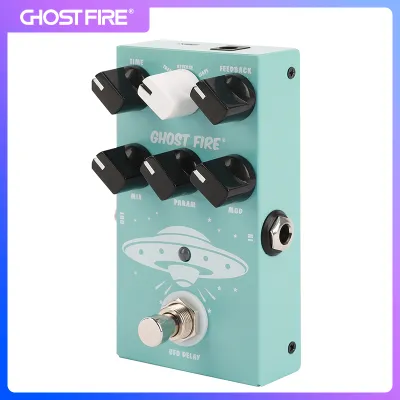
Prices are valid at publication and may change. Please refer to the product page for the latest price.
For DJs, the delay effect serves a more rhythmic and structural purpose. Instead of merely thickening a sound, DJs use pronounced, time-aligned echoes to build tension, create dramatic transitions between tracks, or add texture to acapellas and drum loops. This application requires precise timing to ensure the echoes align with the tempo of the music.
The actual audio quality of this effect depends heavily on the equipment’s digital signal processing (DSP) implementation. Poorly designed DSP can introduce unwanted digital artifacts, hiss, or a muffled tone to the echoes. To evaluate the fidelity of a built-in delay, you should check the manufacturer’s specifications for the signal-to-noise ratio (SNR) and frequency response of the effect processor.
Key Delay Parameters You Need to Check
When shopping for DJ mixers, karaoke amplifiers, or multi-effects processors, you will encounter several technical parameters on the spec sheet and physical control interface. Understanding these terms allows you to predict how the equipment will perform in real-world scenarios. The range and adjustability of these parameters dictate the creative flexibility of the unit, rather than serving as a direct measure of its overall audio fidelity.

Delay Time and Feedback
Delay time is measured in milliseconds (ms) and represents the exact duration of the gap between the original sound and its first repetition. For vocal pacing in karaoke, shorter delay times are generally preferred to keep the lyrics intelligible. For DJ beatmatching, you will need a wider range of delay times that can be adjusted to match the exact millisecond values of different tempos. Always check the minimum and maximum millisecond limits in the product specifications to ensure the hardware supports your intended style.
Feedback, sometimes labeled as “repeats” or “regeneration,” determines how much of the delayed signal is routed back into the processor’s input. This control dictates the total number of echo repetitions you hear before the sound fades away completely. Having an independent feedback control is crucial; without it, you cannot prevent audio clutter in a busy mix or stop runaway feedback loops that can damage your speakers during a live performance.
Mix Ratio and Modulation
The mix ratio, often labeled as the “wet/dry” control, balances the unaffected original signal (dry) with the processed delay effect (wet). In both DJing and karaoke, finding the right balance is essential to keep the primary audio front and center. A dedicated, easily accessible mix knob allows you to quickly dial back the effect if the vocals become drowned out, or crank it up during a dramatic transition.
Modulation adds subtle variations to the delay time or pitch of the repetitions, creating rich, swirling textures similar to chorus or flanger effects. This feature prevents the echoes from sounding too static or sterile. Because modulation implementations vary widely, you should consult the equipment manual to verify if this feature is offered as an adjustable parameter, a fixed preset, or if it is omitted entirely from the device.
How to Match Delay Specs to Your Setup
Selecting the right delay specifications depends entirely on whether your primary focus is vocal performance or live mixing. For karaoke setups, your main goal is vocal clarity and warmth. You should prioritize equipment that excels at shorter, easily adjustable delay times, such as slapback echoes (typically between 80 ms and 140 ms) or short room simulations. These ranges enhance vocal presence and mask pitch variations without overlapping and muddying the lyrics.
For DJ setups, the requirements are more demanding. You should look for hardware that offers tempo-synchronization capabilities, often referred to as BPM sync or tap tempo. This feature automatically aligns the delay times to the grid of your playing track, allowing for seamless rhythmic transitions, dramatic build-ups, and dub-style echo trails. A longer maximum delay time of at least 1,000 ms (one second) or more is highly desirable for creative performance tricks.
Regardless of your application, always cross-reference the equipment’s input and output specifications along with its internal routing options. Ensuring that the delay processor integrates cleanly into your signal chain prevents common issues like digital latency or unwanted ground loop noise. If you are connecting multiple pieces of gear, verify that the line levels match to maintain a clean, distortion-free signal.
Evaluating Built-In Delay vs. External Processors
Many modern DJ mixers and karaoke amplifiers come equipped with built-in digital signal processors that include delay effects. These built-in solutions offer excellent convenience and cost-effectiveness, as they require no extra cabling, external power supplies, or complex routing. However, built-in delays are generally optimized for general-purpose use and may offer limited parameter controls, restricting you to a few basic presets.
In contrast, external delay processors—such as dedicated vocal pedals, guitar delay pedals, or rack-mounted studio units—provide highly granular control over every aspect of the effect. They allow you to fine-tune the feedback, modulation, and tone of the echoes to achieve a highly specific sound character. If you think you might want to upgrade your sound later, check your mixer or amplifier for dedicated effects routing options, such as an FX send and return loop.
Before purchasing an external processor, keep in mind that integration requires careful planning. You will need to verify the power requirements, input/output impedance, and cable compatibility of the external unit to ensure it matches your main system. Built-in delay remains the most straightforward choice for beginners, while external processors are ideal for users seeking maximum creative control.
Frequently Asked Questions (FAQ)
Can I use a guitar delay pedal for karaoke vocals?
Yes, but you must address the differences in signal levels and impedance. Guitar pedals are designed for high-impedance, instrument-level signals, whereas karaoke microphones output low-impedance, mic-level signals, and mixers typically operate at line level. Connecting a microphone directly to a guitar pedal can result in severe volume drops, signal degradation, or excessive background hiss. To make this setup work safely and cleanly, check the pedal’s input specifications and use a matching transformer, a direct injection (DI) box, or a dedicated microphone preamplifier to convert the signal levels properly.
Does a higher maximum delay time mean better equipment?
No, a longer maximum delay time does not indicate superior equipment quality. It simply means the processor has more memory allocated to hold the audio signal, which provides a wider creative range for long, trailing echoes. To evaluate the true quality of the equipment, look past the maximum time limit. Instead, focus on the quality of the digital-to-analog converters (DACs), the noise floor when feedback settings are turned up, and the tracking accuracy of any tempo-sync features, as these factors directly impact the clarity of your sound.
Community discussion
Share your experience or ask a question. Comments are reviewed before publication.