
Selecting the right preparation materials for the Primary School Leaving Examination (PSLE) is a critical decision for parents and students in Singapore. Among the highly regarded resources available, the visible thinking 6 series stands out as an effective tool to help students transition from rote memorization to deep, conceptual understanding. Rather than overwhelming students with repetitive drills, these books focus on structured cognitive frameworks that make thinking processes explicit. To cover all PSLE subjects effectively, parents need to know how to select and apply the specific English, Mathematics, and Science titles from this series to address their child’s unique academic needs.
Every subject in the PSLE demands a slightly different cognitive approach, meaning a one-size-fits-all study guide rarely suffices. By choosing the right books from this series, you can help your child target specific areas of weakness, whether that involves organizing thoughts for a situational writing task, breaking down a complex fraction problem, or structuring a coherent open-ended science answer. Understanding the structure of these books and how they align with the current Ministry of Education (MOE) syllabus is the first step toward building a highly targeted and stress-free preparation strategy.
Why Choose the Visible Thinking 6 Series for PSLE Preparation?
The core philosophy of the Visible Thinking series lies in its departure from traditional rote-learning assessment books. Traditional assessment methods often focus on immediate output, expecting students to solve questions through sheer repetition without understanding the underlying logic. In contrast, this series utilizes a visual learning methodology that incorporates mind maps, concept maps, and graphic organizers to make abstract concepts tangible. By externalizing the steps of thought, students learn how to think rather than just what to think, which is crucial for handling the challenging application questions common in the national exams.
Products mentioned in this guide
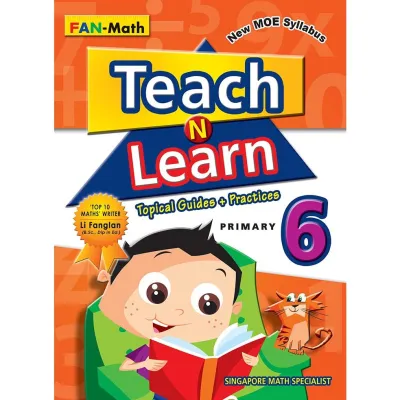
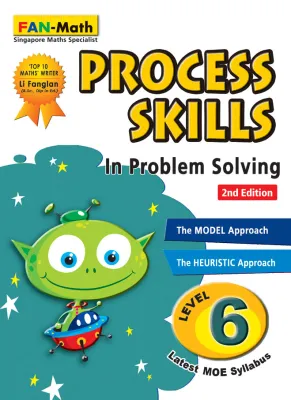
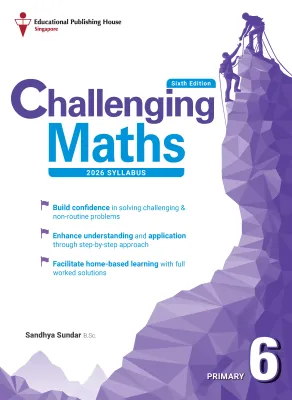
Prices are valid at publication and may change. Please refer to the product page for the latest price.
Visual tools help Primary 6 students consolidate six years of primary school knowledge, recognize recurring question patterns, and tackle higher-order thinking questions. When information is presented visually, the cognitive load on a student is significantly reduced, allowing them to focus on the relationships between different concepts. This methodology is particularly beneficial for the PSLE, where questions are designed to test a student’s ability to apply known concepts to novel, unfamiliar scenarios. Rather than trying to memorize every possible question type, students learn to identify structural patterns and apply systematic thinking processes.
Using visual frameworks also enhances long-term retention and revision efficiency. During the final lead-up to the exams, reviewing a single, well-structured concept map is far more effective than re-reading pages of dense text. This approach builds a student’s confidence, as they can clearly see how different topics connect and understand the exact steps required to reach a solution. Ultimately, this series serves as a methodology enhancement, helping students develop structured habits of mind that benefit them well beyond their primary school years.
Visible Thinking Primary 6 English: What to Look For
The PSLE English syllabus demands high proficiency across multiple components, including language use, comprehension, and creative writing. Applying visual thinking to language mastery helps students move beyond intuitive guessing to analytical execution. Selecting the right English assessment books from this series requires identifying whether your child needs help with technical grammar rules, vocabulary retention, or structured writing.

Grammar, Vocabulary, and Synthesis
To excel in the grammar and vocabulary components of the English paper, students must understand structural rules and contextual clues. Look for books in the series that utilize charts, tables, or mind maps to explain complex grammatical concepts such as tense usage, subject-verb agreement, and active-passive voice. Visual timelines, for example, are highly effective for helping students grasp the differences between the past perfect and simple past tenses, which are frequently tested in the grammar MCQ and cloze passage sections.
For Synthesis and Transformation (S&T) questions, visual frameworks are invaluable for helping students spot grammatical patterns and avoid common structural errors. S&T questions require students to combine sentences using specific connectors, which often necessitates changes in word order, tenses, or word forms. A good visual guide will break these transformations down into step-by-step visual formulas, showing exactly how clauses shift when using connectors like “despite,” “although,” or “unless.” This systematic approach helps students treat synthesis as a logical puzzle with clear rules, reducing the likelihood of careless mistakes.
Vocabulary retention is also enhanced when words are grouped visually rather than listed alphabetically. Look for resources that use word webs or semantic maps to connect synonyms, antonyms, and phrasal verbs. By seeing how words relate to a central theme or concept, students can expand their active vocabulary more naturally. This thematic grouping makes it easier for students to recall precise vocabulary words during the exam, particularly in the vocabulary MCQ and comprehension cloze sections.
Comprehension and Composition
Writing a compelling composition and answering complex comprehension questions require a high level of cognitive organization. For the Continuous Writing paper, students must plan their plots carefully to avoid logical gaps and rushed endings. Graphic organizers, such as plot mountains or character emotion arcs, help students plan their narratives systematically before they begin writing. These visual tools guide students in structuring a clear introduction, rising action, climax, falling action, and resolution, ensuring their stories remain coherent and engaging.
In the comprehension paper, particularly Paper 2 Section H, students often struggle with inference and evaluation questions. Visual mapping helps students break down complex passages by tracking pronoun references, identifying cause-and-effect relationships, and mapping out the perspectives of different characters. When a student can visually trace how an event leads to a character’s reaction, they are much better equipped to answer questions that ask “why” a character behaved in a certain way, rather than simply retrieving literal facts from the text.
When choosing these books, it is crucial to verify that the formats and question types align precisely with the current MOE English syllabus. The syllabus emphasizes contextual clues and deep inferential skills, so the chosen books must feature passages and questioning styles that mirror these expectations. Ensure that the graphic organizers provided are practical and can be easily replicated by the student on blank paper during the actual examination.
Visible Thinking Primary 6 Mathematics: Mastering Problem Sums
Primary 6 Mathematics is often perceived as a major hurdle due to the complexity of Paper 2 problem sums. Visual representation is critical for transitioning from basic arithmetic to the complex heuristics required to solve these high-weightage questions. Choosing the right math books involves finding resources that emphasize structured, visual problem-solving methodologies.
Model Drawing and Heuristics
Model drawing is a cornerstone of the Singapore primary mathematics curriculum, acting as a visual bridge between concrete numbers and abstract algebraic concepts. When selecting a math book from this series, prioritize titles that teach model drawing—such as bar models, unitary methods, and comparison models—with clear, step-by-step visual breakdowns. The book should not just present a completed model; it must guide the student through the process of reading the word problem, identifying key information, and drawing the model piece by piece.
Beyond basic model drawing, the book must provide explicit visual guides for advanced heuristics. These include strategies such as working backwards, guess and check, making a systematic list, and managing before-and-after concepts (such as constant total, constant difference, and constant part). Visual representations of these heuristics help students identify which strategy to apply when faced with a novel problem. For instance, a visual comparison of a “before” and “after” state can quickly reveal to a student that the difference between two quantities remains unchanged, pointing them directly to the correct solving method.
- Step-by-Step Model Construction: Look for books that show the progression of a model as new information is introduced in the question.
- Heuristic Identification Guides: Ensure the book teaches students how to recognize clues in the question text that indicate which heuristic to use.
- Detailed Visual Answer Keys: The solutions must feature fully drawn models and annotated steps, showing exactly how to interpret the visual representation to derive the final mathematical working.
Topic-Specific vs. Thematic Practice
Parents must decide between topical revision and mixed thematic practice based on their child’s current stage of preparation. Topical books are ideal for the first half of the academic year, as they allow students to identify and fix foundational gaps in specific areas like Geometry, Ratio, Percentage, or Speed. If a student consistently struggles with finding unknown angles in geometric figures, focused topical practice using visual angle-property maps will help solidify their understanding before they face mixed papers.
As the preliminary and PSLE exams approach, the focus should shift toward thematic or exam-preparation books. These books feature mixed-topic practices and mock papers, which are essential for training students to switch mindsets rapidly between different mathematical concepts. In the actual exam, questions do not come with labels indicating which topic or heuristic is required; students must determine this independently. Thematic practice builds this crucial exam-smart skill.
Before making a purchase, always verify that the book covers the latest MOE Math syllabus adjustments. This includes checking for any recently removed topics or changes in the format of the papers. A syllabus-aligned book ensures that your child does not waste valuable revision time on out-of-scope concepts or outdated question formats.
Visible Thinking Primary 6 Science: Connecting Concepts
PSLE Science has shifted significantly away from simple recall toward the application of scientific facts to experimental scenarios. Students are frequently required to link multiple topics from different themes within a single question. Selecting the right science books involves finding resources that help students organize their scientific knowledge and express it clearly in open-ended questions.
Concept Maps for Open-Ended Questions
One of the biggest challenges students face in PSLE Science is scoring full marks in Section B, the open-ended questions. Often, students understand the underlying concept but fail to secure marks because their answers lack key scientific terms or logical structure. Look for books in the series that use comprehensive concept maps to link different themes, such as connecting Forces and Energy, or showing how Systems interact with the Environment. These visual maps help students see the big picture and understand how different scientific principles operate together.
Visual frameworks are also highly effective for teaching students how to structure complete, logical answers. A common and successful structure is the Claim, Evidence, Reasoning (CER) format, or the Cause-and-Effect template. The right assessment book will provide visual templates that show students how to break down their answers: identifying the scientific concept (Claim), referencing the specific data or observations from the question (Evidence), and explaining the underlying science (Reasoning). This prevents students from leaving out crucial steps in their explanations.
- Keyword Integration: The book should visually highlight essential scientific keywords within model answers, teaching students which terms are non-negotiable for scoring marks.
- Cross-Thematic Mapping: Look for maps that bridge physical sciences (like electricity and forces) with life sciences (like plant transport systems and respiration).
- Common Misconception Alerts: Visual callouts that contrast common student misconceptions with scientifically accurate explanations are incredibly valuable for self-correction.
Process Skills and Experimental Design
PSLE Science questions heavily feature experimental setups, requiring students to demonstrate strong process skills. A suitable assessment book must visually break down these experimental designs, helping students clearly identify the independent variable (the variable changed), the dependent variable (the variable measured), and the controlled variables (variables kept constant to ensure a fair test). Understanding these components is essential for answering questions about the purpose of an experiment or the need for a control setup.
Additionally, look for books that provide visual guides on data interpretation, such as reading line graphs, analyzing tables, and interpreting bar charts. Students must learn how to translate visual data into written conclusions. For example, a visual guide can show a student how to describe a trend in a graph accurately (e.g., “as the temperature increases, the rate of photosynthesis increases up to a certain point, after which it decreases”) rather than simply stating that the line goes up and down. Mastering these process skills is key to tackling the data-based questions that make up a large portion of the paper.
How to Verify Editions and Syllabus Alignment Before Buying
To ensure your investment in the visible thinking 6 series is effective, you must perform several verification checks before making a purchase. Using outdated or incorrect editions can confuse your child and lead to them practicing irrelevant concepts. Follow this practical checklist to secure the right books:
Verify the Edition and Publication Year Do not rely solely on the cover design of the book, as publishers occasionally update cover illustrations without changing outdated internal content, or vice versa. Turn to the copyright page (usually found on the first few pages) to check the publication year and the edition number. Ensure that the edition explicitly states alignment with the current MOE syllabus active for the current examination year. If there have been recent syllabus updates, confirm that the book incorporates these changes.
Cross-Reference the Table of Contents Open the book and review the contents page carefully. Cross-reference the listed chapters and topics with your child’s official school textbooks or the syllabus guidelines provided on the MOE website. Check for the inclusion of all required Primary 6 topics, and ensure that any topics removed from the national syllabus in recent years are not presented as core examinable material, as this can waste valuable study time.
Purchase Only Through Authorized Channels To avoid counterfeit, poorly printed, or outdated editions, purchase your assessment books from established, reputable sources. In Singapore, major local brick-and-mortar bookstores, such as Popular Bookstore, or official school bookshops are reliable options. If buying online, utilize the publisher’s official storefronts or authorized educational distributors on local ecommerce platforms. Avoid unverified third-party sellers on online marketplaces, as they may sell illegal photocopies or older editions with incorrect layouts and missing pages.
Examine the Quality of the Answer Key Before finalizing your purchase, flip to the back of the book to evaluate the answer key. The effectiveness of the visual thinking methodology relies entirely on the quality of its solutions. The answer key must not simply list final numerical answers or one-sentence explanations. Instead, it should feature detailed, step-by-step visual solutions, fully annotated models, and clear explanations of the thought processes behind each answer. This allows you or your child to identify exactly where a mistake was made during self-grading.
Frequently Asked Questions (FAQ)
Are Visible Thinking books suitable for students already scoring AL1 to AL3?
Yes, these books are highly beneficial for high-achieving students aiming for consistent top-tier results. While students scoring in the AL1 to AL3 range generally understand the foundational concepts, they can still lose marks due to careless errors, unstructured explanations, or difficulty in adapting to novel application questions. The visual tools in this series help these students consolidate complex knowledge, organize their thoughts systematically, and structure their answers precisely. For English and Science open-ended questions, the visual frameworks ensure that answers are complete and contain all necessary keywords, helping students secure full marks rather than partial credit.
Do I need to buy the textbook and workbook, or just the assessment book?
It is important to understand the difference between core school learning materials and supplementary assessment books. Textbooks and workbooks are designed for initial concept acquisition and are typically prescribed by schools for classroom learning. If your child already has these school-issued materials, you do not need to purchase additional textbooks. Instead, focus on buying the assessment books from this series. These assessment books are designed specifically for supplementary practice, revision, and exam preparation, helping students apply the concepts they have already learned in school to exam-style questions.
Can these books be used effectively for self-study without a tutor?
These books are designed to support independent learning, thanks to their clear visual explanations, step-by-step guides, and highly detailed answer keys. A self-motivated student can use the graphic organizers and concept maps to guide their own revision and self-correct their work using the annotated solutions. However, parental guidance or tutor support may still be necessary for highly complex areas, such as advanced mathematical heuristics or correcting deeply ingrained misconceptions in Science open-ended questions. If a student struggles to understand why their written answer differs from the model solution, a parent or tutor can help bridge that conceptual gap.
Community discussion
Share your experience or ask a question. Comments are reviewed before publication.