
Quick Answer: Choosing Between Vision, Vision Solo, and Vision Titanium
Selecting the right violin strings shapes your instrument’s voice and playability. The Vision family by Thomastik-Infeld offers three distinct variants designed for different performance environments, acoustic profiles, and technical demands. Standard Vision strings are a versatile, reliable option for students and ensemble players, offering a balanced tone that blends easily. Vision Solo strings feature a modified synthetic core engineered for soloists, focusing on enhanced projection, warmth, and a highly focused tonal core. Vision Titanium strings utilize advanced titanium-alloy technology to deliver maximum brilliance, rapid bow response, and a powerful, clear sound. Your primary decision factors should be your instrument’s natural acoustics, preferred bow response speed, and playing environment. Always verify specific string gauges and tension labels on the packaging before purchasing.
Core Material and Winding Specifications Decoded
The physical construction of a violin string dictates its durability, tuning stability, and tonal color. All three Vision variants utilize a synthetic core, which offers excellent resistance to humidity changes and a fast settling time compared to traditional gut. However, the specific synthetic formulations and winding materials differ across the three lines to achieve distinct acoustic properties.

Standard Vision strings feature a composite synthetic core wound with aluminum on the A and D strings, and pure silver on the G string, providing a smooth surface and balanced warmth. Vision Solo strings employ an advanced synthetic core formulation designed to offer a wider dynamic range and a warmer, richer tonal profile that reduces the metallic edge often heard in new synthetic strings. Vision Titanium strings incorporate titanium-alloy components in the winding or plating process, significantly increasing durability and resistance to corrosion from hand perspiration. This titanium winding also alters the string’s mass-to-diameter ratio, resulting in a highly polished, smooth surface that minimizes finger noise during position shifts.
Products mentioned in this guide

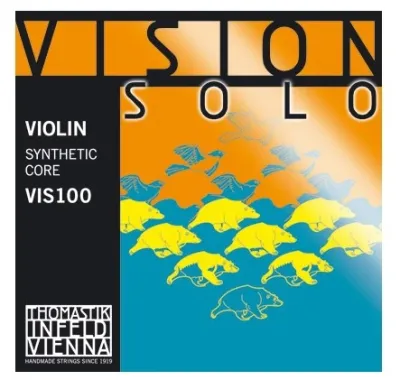
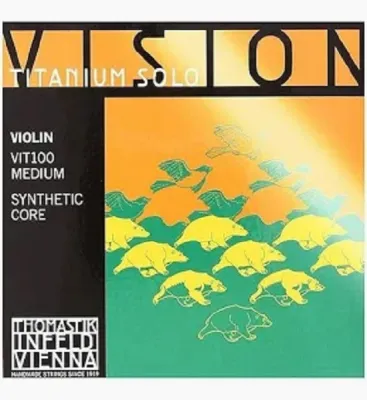
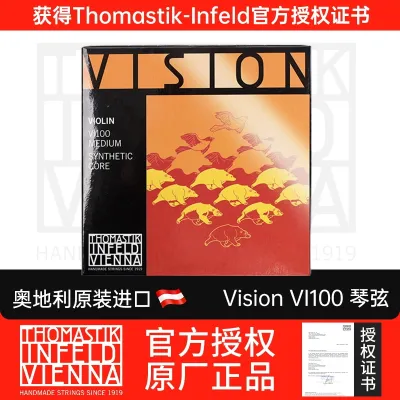
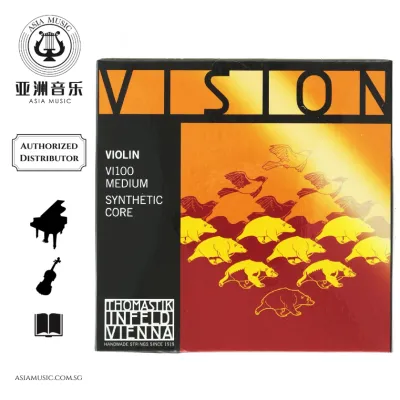
Prices are valid at publication and may change. Please refer to the product page for the latest price.
To avoid confusing these visually similar variants, check the packaging for specific material codes and inspect the color-coded silking at both the peg and tailpiece ends. Manufacturers use these distinct color patterns to help players identify the exact model and gauge installed on the instrument.
Tension Levels and Bow Response Characteristics
String tension plays a critical role in how a violin feels under your fingers and how it responds to the bow. Higher tension strings require more bow pressure to initiate sound but handle aggressive playing without choking. Lower tension strings offer a lighter, more forgiving feel but may limit maximum volume.
Standard Vision strings are engineered with a moderate tension profile, making them highly accessible for developing players. They offer a forgiving bow response, meaning the string speaks easily even with imperfect bow speed or pressure, making them excellent for daily practice and ensemble blending. Vision Solo strings feature a slightly modified tension balance designed to optimize bow response, reacting instantly to subtle changes in bow speed and contact point for precise control over dynamics. Vision Titanium strings are characterized by a focused, high-tension feel that maximizes projection and brilliance, providing an immediate, crisp bow response. While this responsiveness is highly desirable for soloists, it requires a disciplined bow technique to prevent the sound from becoming harsh.
Before upgrading to a higher-tension variant like Vision Titanium, evaluate your instrument’s structural capacity. Older or lightly built violins can experience top-plate sinkage or neck joint strain under excessive tension. If you notice changes in bridge tilt or action height, consult a professional luthier.
Matching String Variants to Your Instrument and Playing Style
Finding the perfect string set requires matching the physical specifications of the string to the unique acoustic properties of your violin and your specific repertoire. No single string variant is universally superior; instead, each serves as a tool to balance or enhance your instrument’s natural voice.
To determine which Vision variant is right for you, evaluate your instrument’s current tonal gaps:
- For naturally bright or harsh violins: Vision Solo is often the most suitable choice, as its warmer core and refined windings help tame piercing high frequencies.
- For dark, muddy, or quiet violins: Vision Titanium can provide the necessary brilliance, clarity, and projection to help the instrument cut through the mix.
- For balanced, neutral violins: Standard Vision strings offer a reliable, cost-effective baseline that preserves the natural character of the instrument.
Your typical playing scenario should also guide your choice. Orchestral and chamber musicians who need to blend seamlessly with other players often prefer the balanced profile of standard Vision strings. Conversely, soloists and concerto players who must project over a large ensemble will benefit from the enhanced projection and rapid articulation of the Solo or Titanium variants. Ultimately, actual tonal results depend heavily on your violin’s individual wood density, bridge setup, soundpost placement, and your personal bowing technique. Testing different variants over time is the most reliable way to discover how each string interacts with your specific setup.
Frequently Asked Questions (FAQ)
Can I mix Vision, Vision Solo, and Vision Titanium strings in a single set?
Yes, mixing different string variants is a common practice among violinists looking to customize their instrument’s tonal balance. For example, if your violin has a dull E string but warm, resonant lower strings, you might pair a Vision Titanium E string with Vision Solo G, D, and A strings. When mixing strings, ensure that the tension levels remain relatively balanced across the fingerboard. Drastic differences in tension can cause uneven pressure on the bridge, potentially affecting the instrument’s setup and playability. Always check the manufacturer’s tension charts on the packaging to ensure your mixed configuration remains within a safe, balanced range.
How long does the break-in period take for Vision synthetic core strings?
Synthetic core strings generally settle and hold their pitch much faster than traditional gut strings. For the Vision family, the initial stretching phase typically takes between two to four hours of active playing time, or one to two days of regular tuning. During this period, the synthetic core gradually stretches and stabilizes. To accelerate the break-in phase safely, tune the strings to pitch and gently stretch them by pulling them slightly away from the fingerboard along their entire length, then retune. Avoid over-tuning the strings above their designated pitch, as excessive tension can permanently damage the synthetic core.
Do Vision Titanium strings require different bridge or nut preparation?
Titanium-wound strings are highly durable, but their harder surface material can cause increased friction and wear at the bridge and nut contact points. Over time, this friction can cause the strings to bind in their slots, leading to uneven tension, tuning difficulties, or premature string breakage. To prevent binding, apply a generous layer of soft graphite (using a standard 2B or 4B pencil) to the bridge and nut grooves during every string change. The graphite acts as a dry lubricant, allowing the string to slide smoothly through the slots. If you notice the string grooves are too tight or deep, consult a professional luthier to have the slots adjusted safely.
Community discussion
Share your experience or ask a question. Comments are reviewed before publication.