
Quick Answer: Which Violin Hanger Should You Choose?
Selecting the right violin hanger depends on your living situation, available space, and daily practice habits. If you have a dedicated practice room with solid, permanent walls and want to keep your floor completely clear, a wall-mounted hanger is the ideal choice. This setup keeps your instrument at eye level and safely out of reach of pets and floor-level hazards.
Conversely, a floor stand is the better option if you rent your home, move your practice setup frequently, or play multiple instruments during a single session. Floor stands require zero installation and can be repositioned instantly. Your final decision should balance your wall construction material, the amount of foot traffic in your room, and your need for portability.
Space and Layout: Evaluating Your Practice Area
Before purchasing any storage accessory, take a close look at the physical footprint of your practice room. Freestanding floor stands require dedicated floor space, usually occupying a circular or triangular area of about 30 to 50 centimeters in diameter. In compact apartments or shared music rooms, this footprint can restrict movement and limit where you can place other furniture.
Products mentioned in this guide
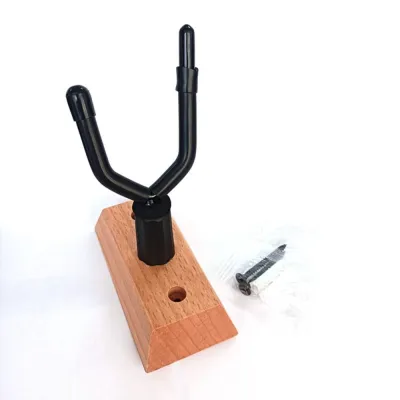
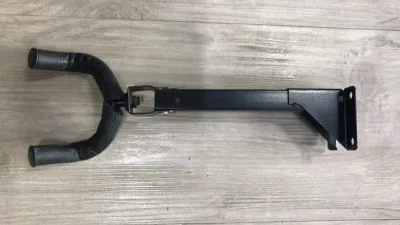
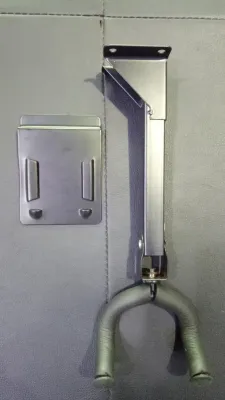
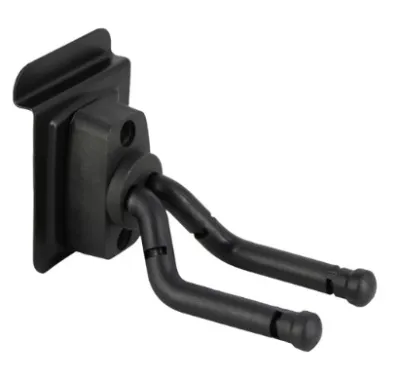
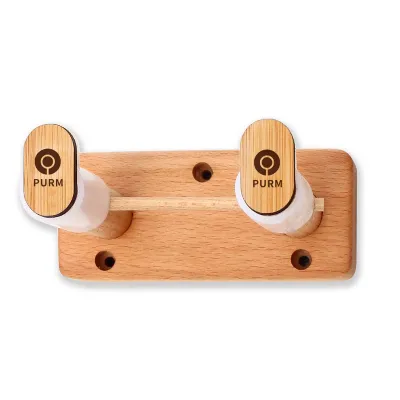
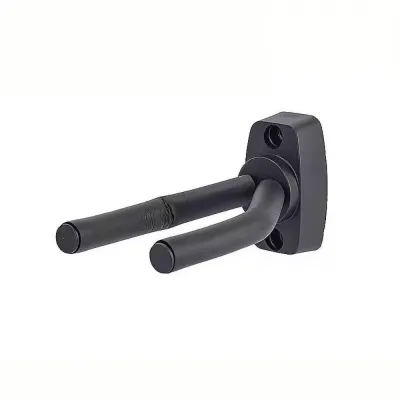
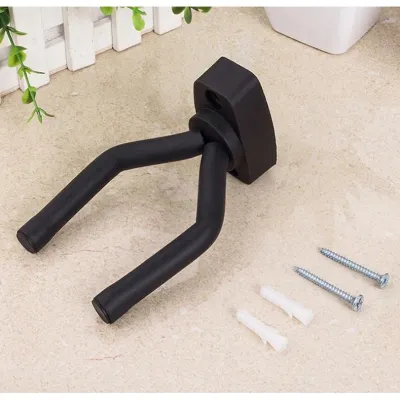
Prices are valid at publication and may change. Please refer to the product page for the latest price.

Wall-mounted hangers utilize vertical space, leaving your floor completely unobstructed. This is a significant advantage in smaller rooms where every square meter of floor space is valuable. By lifting the instrument off the ground, you create a cleaner visual environment and open up room for music stands, chairs, or recording equipment.
However, wall mounting requires a clear, unobstructed stretch of wall. You must account for the swing of nearby doors, the position of windows, and the placement of acoustic treatment panels or bookshelves. A wall hanger placed too close to a high-traffic doorway increases the risk of the instrument being brushed against or knocked as people walk past.
Room traffic is a critical variable when evaluating floor space. If your practice area doubles as a living room, playroom, or high-traffic hallway, a floor stand is highly vulnerable to accidental bumps. Pets and young children can easily trip over a low-profile base, making vertical wall storage a much safer alternative in active households.
Accessibility and Workflow: How You Practice
Your storage solution should complement your daily practice routine rather than hinder it. Wall-mounted hangers offer excellent ergonomic accessibility. Hanging your violin at chest or eye level allows you to pick up the instrument and begin playing with minimal physical effort, which can remove friction from your practice routine.
Floor stands, while highly accessible, require you to bend down to retrieve and put away your instrument. While this may seem like a minor inconvenience, repeating this motion multiple times during a long practice session can become tedious. However, floor stands excel when you need to keep your instrument nearby while seated, such as during orchestral rehearsals or chamber music practice.
For multi-instrumentalists, floor stands often provide superior utility. Many floor models are designed to hold multiple instruments simultaneously, such as a violin and a viola, or even a violin alongside a guitar. This consolidated setup keeps all your instruments within arm’s reach on a single base, whereas wall mounting would require drilling multiple separate hooks.
Mobility is another key workflow consideration. If you teach in different rooms, travel for gigs, or like to practice in different parts of your home depending on the time of day, a portable floor stand is indispensable. Wall-mounted hangers are permanent fixtures; once installed, they cannot be moved without leaving holes that require patching and painting.
Safety and Instrument Care: Protecting Your Violin
Protecting your violin from physical damage and environmental wear is paramount. Both storage methods carry distinct safety risks that you must manage. Floor stands are inherently susceptible to tipping over if they are bumped, placed on uneven rugs, or set up on high-pile carpeting. To mitigate this, look for stands with wide, weighted bases and secure neck cradles.
Wall-mounted hangers are incredibly stable once installed, but they rely entirely on the integrity of the wall and the mounting hardware. A wall hanger secured only into thin drywall without an anchor can easily pull loose under the weight of the instrument and bow. Always ensure the mounting screws are driven directly into a wall stud or secured with heavy-duty toggle bolts.
Regardless of the hanger type, the material contacting your violin’s finish must be safe. Cheap rubber or plastic padding can chemically react with delicate oil or spirit varnishes, leaving permanent marks or softening the finish. Prioritize hangers that specify the use of non-reactive, non-marring materials like natural cork, specially formulated foam, or dense felt.
Environmental placement is the final safety factor. Never position a wall hanger or floor stand directly in the path of air conditioning vents, heating units, or direct sunlight. In tropical climates like Singapore, rapid humidity fluctuations can cause the wood of your violin to warp, crack, or go out of tune. Keep your instrument away from exterior walls, which tend to transfer outdoor temperature changes more readily than interior partition walls.
Installation and Portability: Setup Requirements
Installing a wall-mounted hanger requires tools, physical effort, and a basic understanding of your home’s construction. In many modern apartments, walls are made of solid concrete or brick. Mounting a hanger on these surfaces requires a masonry drill bit, plastic wall plugs, and a power drill. If you are uncomfortable performing this work, you may need to hire a handyman, adding to the overall cost.
Floor stands offer a completely tool-free alternative. Most models arrive flat-packed and can be assembled by hand in a few minutes using simple tension knobs or pre-installed screws. Once assembled, the stand is ready for immediate use, allowing you to set up your practice space without making any permanent alterations to the building.
This ease of setup makes floor stands the default choice for renters, students living in dormitories, or residents of heritage homes. Most rental agreements strictly prohibit drilling holes into walls, especially concrete ones. Using a floor stand ensures you can store your instrument safely without risking your security deposit or violating lease terms.
Feature Comparison: Wall-Mounted vs. Floor Stand
This table summarizes the primary differences between the two storage options to help you evaluate which features align with your practice environment.
| Feature | Wall-Mounted Hanger | Floor Stand |
|---|---|---|
| Floor Space Required | Zero | 30 to 50 cm diameter footprint |
| Installation Effort | Moderate (requires drilling and anchoring) | Low (simple manual assembly) |
| Mobility | Permanent (cannot be easily relocated) | High (can be moved room-to-room) |
| Multi-Instrument Support | Typically single-instrument only | Options available for multiple instruments |
| Best For | Dedicated music rooms, homeowners | Renters, mobile musicians, multi-instrumentalists |
| Price Range | Generally S$15 to S$40 | Generally S$25 to S$80 |
Final Decision Framework: Matching the Hanger to Your Needs
To make your final purchase decision, match your current living and playing conditions to the guidelines below.
Choose a Wall-Mounted Hanger if:
- You own your home or have explicit permission to drill into the walls.
- Your practice room is small, and you need to maximize every square meter of floor space.
- You want to display your violin as a visual centerpiece when it is not in use.
- You have pets or young children who might knock over a floor-standing unit.
Choose a Floor Stand if:
- You rent your living space or live in a temporary dorm where drilling is prohibited.
- You need to move your practice setup between different rooms or take it to external rehearsals.
- You play multiple instruments and want a single stand to hold your violin, viola, or bow.
- Your walls are made of materials that are difficult to drill into safely.
Verify First Before Buying:
- Varnish Compatibility: Check the product specifications to ensure the padding material is safe for your violin's specific varnish.
- Wall Material: Confirm whether you have drywall, plaster, or concrete walls so you can purchase the correct mounting hardware.
- Bow Holder: Verify if the hanger or stand includes a dedicated hook or clip to hold your bow alongside the violin.
Frequently Asked Questions (FAQ)
Is it safe to hang a violin by its scroll on a wall hanger?
Yes, hanging a violin by its scroll is a widely accepted storage method, provided the hanger is designed specifically for violins. The scroll and pegbox are structurally strong enough to support the weight of the instrument, which is relatively light. However, you must ensure the hanger’s prongs are spaced correctly so they support the scroll under the pegbox without putting pressure on the tuning pegs. Always inspect your violin’s scroll for any pre-existing hairline cracks before hanging it, and ensure the hanger has adequate non-slip padding to prevent the instrument from sliding.
Can I leave my violin on the hanger instead of in its case?
Leaving your violin on a hanger is highly convenient for daily practice, but it exposes the instrument to environmental hazards. In an open room, your violin is vulnerable to dust accumulation, sudden temperature changes, and humidity fluctuations, which can affect the wood and tuning. If you live in a climate with high humidity or use air conditioning intermittently, it is safer to store your violin in its case with a dedicated humidifier or dehumidifier pack. Use the hanger primarily during active practice days, and return the instrument to its case for long-term storage or when you are away for extended periods.
Community discussion
Share your experience or ask a question. Comments are reviewed before publication.