
Finding the right bag for a guitalele can be surprisingly challenging because of the instrument’s unique hybrid design. A guitalele combines the compact body size of a ukulele with the six-string neck of a classical guitar, resulting in dimensions that do not align with standard instrument cases. To protect your instrument from scratches, neck strain, and structural damage, you generally need a dedicated guitalele bag or a carefully measured baritone ukulele bag. Standard soprano, concert, and tenor ukulele bags are too small, while full-sized guitar bags are far too large to provide secure support.
Understanding how to navigate these dimensional differences is the key to keeping your instrument safe during travel. By measuring your instrument accurately and comparing those figures to internal bag specifications, you can find a secure fit that prevents unnecessary wear and tear.
Why Standard Ukulele and Guitar Bags Usually Do Not Fit
A guitalele typically measures between 28 and 30 inches in total length, placing it in a dimensional middle ground between standard ukuleles and guitars. Standard soprano (21 inches), concert (23 inches), and tenor (26 inches) ukulele bags are physically too short to accommodate a guitalele. Attempting to force the longer neck and wider headstock of a guitalele into these smaller bags will put immense pressure on the zipper, seams, and the instrument’s tuning pegs.
Products mentioned in this guide
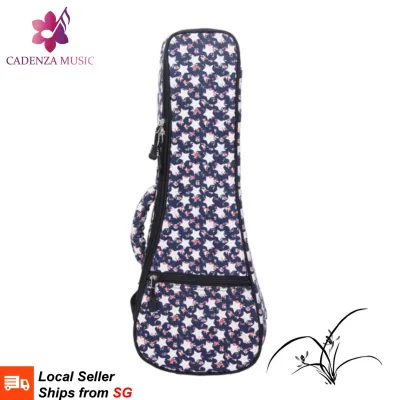
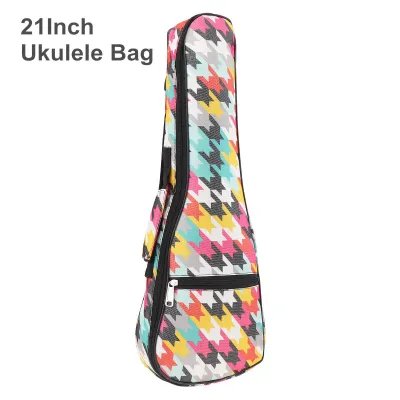
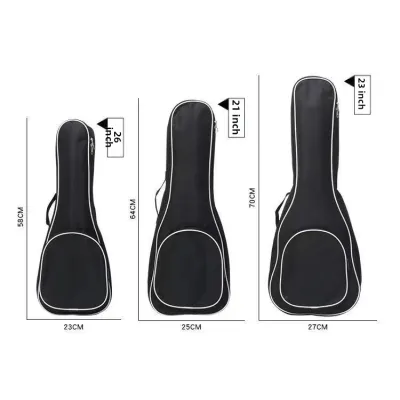
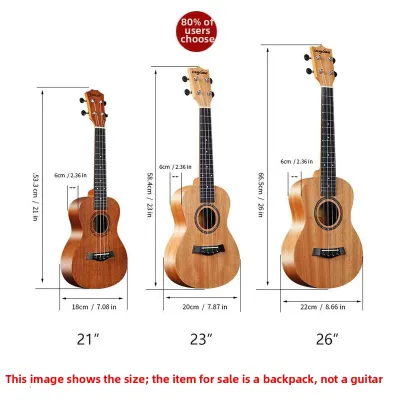
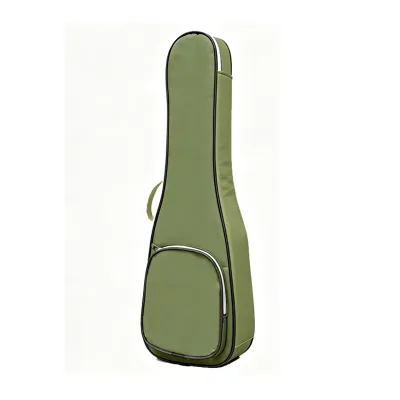
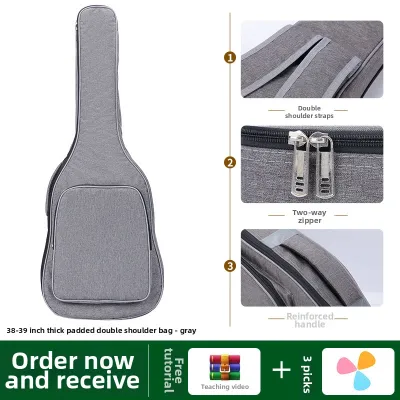
Prices are valid at publication and may change. Please refer to the product page for the latest price.
Conversely, standard classical or acoustic guitar bags are designed for instruments that are 38 to 41 inches long. Placing a guitalele inside a full-sized guitar bag leaves a massive amount of empty space. Without a snug fit, the instrument will slide freely inside the bag during transport. This movement renders any built-in neck support useless and increases the risk of headstock damage if the bag is bumped or dropped.
Furthermore, the body depth and lower bout width of a guitalele are often deeper and wider than those of a standard tenor ukulele. Even if a bag seems long enough on paper, the extra depth required for the guitalele’s body can prevent the zipper from closing. This makes it essential to look past generic category labels and focus entirely on the specified internal dimensions of the bag.
How to Measure Your Guitalele for the Right Bag Size
To ensure a proper fit, you must take three primary physical measurements of your guitalele rather than relying on the manufacturer’s nominal size. Use a flexible measuring tape to find the total length, the lower bout width, and the maximum body depth.

First, measure the total length from the very top of the headstock to the bottom edge of the lower bout. Next, measure the lower bout width, which is the widest part of the instrument’s body. Finally, measure the body depth by placing the instrument flat on a table and measuring from the table surface to the top of the bridge.
When recording these measurements, add a small margin of about 1 to 2 centimeters to each dimension. This extra space ensures that you can smoothly zip the bag closed without compressing the bridge or putting tension on the tuning keys. It also leaves room for small accessories you might leave attached, such as a strap or a clip-on tuner.
Pay close attention to the shape of your guitalele’s headstock. Many guitaleles feature slotted classical-style headstocks, which are wider and thicker than standard ukulele headstocks. Always compare your physical measurements against the internal dimensions listed by the bag manufacturer, as the external dimensions include padding thickness and do not represent the actual space available for the instrument.
Evaluating Existing Ukulele and Guitar Bags for Guitalele Use
If you already own instrument bags, you can evaluate them to see if they can safely house your guitalele. A baritone ukulele bag is often the closest alternative, as baritone ukuleles share a similar total length of around 29 to 30 inches. However, you must carefully verify the internal width of the neck area, as a guitalele neck is wider to accommodate six strings instead of four.
Another potential alternative is a fractional-size classical guitar bag, such as a 1/4-size or 1/8-size bag. While the length of these bags is often suitable, the lower bout area may be significantly wider than your guitalele’s body. If the instrument can slide side-to-side by more than an inch or two, the bag is too loose to provide reliable protection during transit.
There are clear stop conditions where an ill-fitting bag should not be used. If you have to stretch the fabric to close the zipper, or if the bag presses down visibly on the bridge or soundboard, do not use it. Continuous pressure on these areas can warp the wood or lift the bridge over time.
If you must use a slightly oversized bag as a temporary solution, you can fill the empty space to prevent the instrument from shifting. Wrap a clean, soft microfiber cloth or a small towel around the body and neck of the guitalele. This padding will help stabilize the instrument inside the bag and prevent it from sliding around during your commute.
Key Specifications to Look for in a Dedicated Guitalele Bag
When shopping for a dedicated guitalele bag, prioritize protective features that shield the instrument from physical impacts and environmental changes. Look for a bag with high-density foam padding that is at least 10mm to 15mm thick. An internal neck cradle with a hook-and-loop strap is also highly beneficial, as it immobilizes the neck and prevents the headstock from hitting the ground if the bag is dropped vertically.
Exterior material durability is crucial for daily commuting. Opt for bags made from high-denier polyester, such as 600D or higher, which offers excellent tear resistance and durability. Water-resistant outer fabrics and rubberized base pads help protect the wood from sudden rain showers and wet ground surfaces when you set the bag down.
Examine the design of the accessory pockets. Ensure that the pockets are spacious enough for your tuner, spare strings, and capos, but designed so that these items expand outward. If the pocket tightens inward when filled, hard accessories can press directly against the delicate wooden soundboard of the guitalele, risking cracks or finish scratches.
Finally, consider the carrying options. Adjustable, padded backpack-style shoulder straps are ideal for hands-free transport on public transit or while walking. A reinforced, comfortable side carry handle is also essential for quick transitions and easy handling in crowded spaces.
Frequently Asked Questions (FAQ)
Do hard cases offer better protection than padded gig bags for guitaleles?
Hard cases provide superior crush resistance and structural rigidity compared to padded gig bags. They are highly recommended if you travel frequently, stack your instrument in a car trunk with heavy gear, or need long-term storage protection against humidity changes. However, hard cases are heavier, bulkier, and generally more expensive. For daily commuting, walking, or public transit, a well-padded gig bag with backpack straps offers a more practical balance of lightweight portability and sufficient impact protection.
Will a soprano or concert ukulele bag stretch to fit a guitalele?
No, soprano and concert ukulele bags will not stretch to fit a guitalele. These bags are designed for much smaller instruments and lack the physical length and depth required. Attempting to force a guitalele into a smaller bag will split the zippers, tear the seams, and place dangerous downward pressure on the bridge, soundboard, and tuning machines, which can cause permanent structural damage to your instrument.
Community discussion
Share your experience or ask a question. Comments are reviewed before publication.