
A comprehensive Secondary 2 Science exam preparation bundle must serve as a complete learning ecosystem, bridging the gap between classroom instruction and independent mastery. To adequately prepare a student for school examinations under the Ministry of Education (MOE) syllabus, a high-quality bundle must go beyond simple question-and-answer sheets. It should integrate targeted topical revision, realistic mock examination papers, and highly detailed explanatory answer keys that address common student misconceptions. By combining these elements, a bundle helps students transition from rote memorisation to the application of scientific concepts in unfamiliar contexts.
Essential Components of a Complete Sec 2 Science Bundle
To ensure a student is fully equipped for their assessments, a prep bundle must contain several distinct components, each serving a specific pedagogical purpose. The first essential component is a series of topical practice workbooks. These workbooks focus on individual chapters, allowing students to drill foundational concepts immediately after they are taught in school. Topical drilling helps solidify basic factual knowledge, such as chemical symbols, cellular structures, and physical formulas, before students attempt more complex, integrated questions.
The second component consists of full-year mock examination papers. These papers should mimic the actual format, layout, and time constraints of school mid-year and final examinations. Working through full-length papers helps students develop essential exam strategies, such as time management and the ability to switch rapidly between biology, chemistry, and physics topics. Without this component, students may struggle to complete their actual school papers within the allocated time, even if they understand the subject matter well.
Products mentioned in this guide
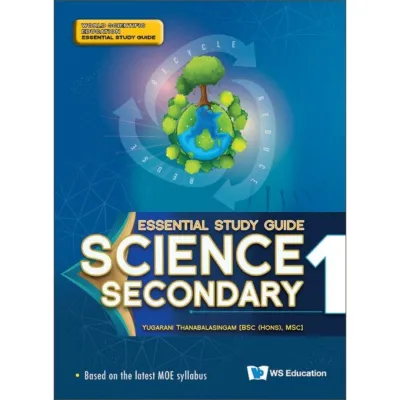
![[SG STOCK] WS E - Science Secondary 2 Essential Study Guide - Age 14+ Lower Sec Science Revision Textbook Assessment Book](https://img.lazcdn.com/g/p/b563f7042408a9a40525f0420da86916.png_400x400q80.png_.webp)
Prices are valid at publication and may change. Please refer to the product page for the latest price.
A third, and often overlooked, component is a comprehensive answer key that features step-by-step explanations. A simple list of final answers or letters for multiple-choice questions is insufficient for effective self-directed learning. The answer key should explain why a particular option is correct and how to structure open-ended answers to secure full marks. It is highly beneficial when the key highlights common student misconceptions, explaining why certain common answers are incorrect or incomplete. This feedback loop is critical for correcting errors before they become ingrained habits.
Finally, a complete bundle should include a syllabus alignment checklist or a detailed topic index. This tool allows students and parents to track study progress systematically. It helps identify which topics have been thoroughly revised, which require further practice, and how the bundle’s contents map directly to the school’s scheme of work. A clear index ensures that no topic is accidentally omitted during the revision process, providing peace of mind as the examination dates approach.
Checking Syllabus Coverage for Lower Secondary Science
The Lower Secondary Science syllabus is designed to provide a broad foundation across three main scientific disciplines: biology, chemistry, and physics. When evaluating an exam prep bundle, it is crucial to verify that all core themes relevant to the Secondary 2 level are fully represented. These themes typically include biological systems, such as the human digestive system, transport systems in plants and humans, and sexual reproduction in humans. In chemistry, the focus shifts to chemical changes, physical changes, and the interactions of matter, while physics topics often cover the interactions of forces, energy forms, and transfer processes.

To ensure the bundle is relevant, buyers must check the publication or revision year of the materials. The MOE syllabus undergoes periodic updates to reflect modern scientific understandings and pedagogical shifts. Using outdated materials can lead to several issues, such as studying topics that have been removed from the syllabus or missing out on newly introduced concepts. Look for clear indications on the cover or copyright page that the content is aligned with the latest syllabus requirements.
Another critical aspect of syllabus coverage is the balance of topic weightage. A poorly designed bundle might over-focus on chemistry topics while neglecting complex physics concepts, or vice versa. The distribution of questions and practice papers within the bundle should mirror the typical weightage found in actual school examinations. This balanced approach ensures that students allocate their study time proportionally, preventing them from being caught off guard by a heavily weighted topic on exam day.
Furthermore, the transition from Secondary 1 to Secondary 2 involves an increase in the complexity of scientific concepts. The bundle must reflect this progression, ensuring that the Secondary 2 topics are treated with the appropriate depth. For instance, while Secondary 1 science introduces basic physical properties, Secondary 2 science requires a deeper understanding of how forces interact and how energy is conserved. Verifying this depth of coverage prevents students from practicing with questions that are too simplistic for their current academic level.
Evaluating Question Types and Difficulty Progression
A high-quality exam preparation bundle must offer a diverse range of question types to prepare students for the varied formats they will encounter in school assessments. The materials should feature a balanced mix of multiple-choice questions (MCQs), structured questions, and open-ended questions (OEQs). MCQs are excellent for testing broad conceptual knowledge and identifying specific misunderstandings, while structured and open-ended questions assess a student’s ability to articulate scientific explanations clearly and use precise scientific terminology.
Beyond standard recall questions, the bundle must include items that test data analysis, graph interpretation, and experimental design. Modern science examinations place a heavy emphasis on these practical-based skills. Students are frequently required to interpret data from tables, identify trends in graphs, and draw logical conclusions from experimental setups. A bundle that lacks these types of questions will not adequately prepare students for the higher-weightage sections of their exams, where application and analysis are paramount.
The progression of difficulty within the practice materials is another key indicator of quality. A good bundle should guide students through a clear learning curve, starting with basic recall and comprehension tasks before moving on to intermediate application questions. Finally, it should challenge students with higher-order thinking tasks that require them to evaluate scenarios, synthesise information from different topics, and solve novel problems. This gradual increase in difficulty builds student confidence and prevents them from becoming discouraged by overly challenging questions too early in their revision.
When reviewing the open-ended questions, pay close attention to whether they encourage the use of structured answering frameworks. School examiners look for specific keywords and logical structures in student responses. Practice questions that help students identify the command words in a prompt—such as “explain,” “describe,” “compare,” or “suggest”—are invaluable for teaching them how to tailor their answers to meet the exact requirements of the marking scheme.
How to Verify Publisher Claims and Bundle Quality Before Buying
With numerous assessment books and digital resources available on the market, verifying the quality of a bundle before making a purchase is essential. When shopping in physical bookstores, take the time to inspect sample pages carefully. Look at the layout of the pages; a cluttered, poorly formatted book can be visually overwhelming and distracting for a student. The text should be clear, diagrams should be accurately labeled, and the scientific terminology used must be precise and up to date.
If you are purchasing a digital or hybrid bundle, the verification process requires a different approach. You must check the technical specifications and compatibility requirements of the digital platform. Ensure that the digital components are compatible with the student’s primary study device, whether it is a tablet, laptop, or desktop computer. It is also important to verify the access terms: does the purchase grant lifetime access, or is it a subscription that expires at the end of the academic year? Additionally, check if the platform allows for offline access, which can be highly beneficial for studying on the go without relying on an internet connection.
Cross-referencing the advertised contents of the bundle with the actual items received is another crucial step, especially when buying online. Some bundles may list supplementary digital resources, online quizzes, or downloadable worksheets that require separate registration or additional fees. Read the product description carefully to confirm exactly what is included in the physical package or digital download. This prevents disappointment and ensures you are receiving full value for your investment.
Lastly, seek out reputable publishers and authors who are known for their expertise in the local education landscape. While independent creators can produce excellent materials, established educational publishers often have rigorous editorial processes that minimise errors in both the questions and the answer keys. Reading reviews on educational forums or asking for recommendations from school teachers can provide valuable insights into which bundles have proven most effective for other students.
Frequently Asked Questions (FAQ)
Do I need separate bundles for Biology, Chemistry, and Physics in Sec 2?
In Singapore, the Lower Secondary Science syllabus is taught as an integrated subject rather than as separate disciplines. Therefore, a single, comprehensive bundle that covers all three branches of science is generally the most appropriate choice for most Secondary 2 students. An integrated bundle ensures that the student covers all the necessary topics in the correct sequence as outlined by the school’s curriculum. However, if a student is struggling significantly with a specific area—such as physics formulas or chemistry equations—it may be beneficial to supplement the main bundle with a targeted, subject-specific workbook. These targeted resources can provide the extra drilling and focused explanations needed to overcome specific learning hurdles without the need to purchase entirely separate bundles for every subject.
Are digital Sec 2 Science bundles as effective as physical books?
Both digital and physical exam prep bundles offer unique advantages, and their effectiveness largely depends on the student’s learning style and study habits. Physical books are highly effective for active revision, as they allow students to easily write down notes, highlight key terms, and draw diagrams directly on the page. They also eliminate screen fatigue and potential digital distractions. On the other hand, digital bundles often provide interactive features, such as instant feedback on quizzes, animated explanations of complex scientific processes, and search functions that make finding specific topics quick and easy. When choosing between the two, consider a hybrid approach if available, or select the format that best aligns with how the student prefers to study and complete their homework.
Community discussion
Share your experience or ask a question. Comments are reviewed before publication.