
If you loved the lyrical prose, the sharp social critique, and the tragic allure of The Great Gatsby, finding your next book is an exciting journey. F. Scott Fitzgerald’s masterpiece captures a unique blend of historical glamour and deep disillusionment. To choose your next read, you must decide whether you want to remain in the glittering world of the 1920s, explore the harsh realities of social mobility across different eras, or see how modern global societies handle the corrupting influence of extreme wealth.
Decoding Your Gatsby Preferences: Setting, Style, or Social Critique?
To find your next book, first isolate what drew you to Fitzgerald’s writing. Was it the glittering, tragic atmosphere of the 1920s? Or perhaps it was the haunting, lyrical prose delivered by Nick Carraway, an unreliable narrator who observes a world he cannot fully join?
Alternatively, you might have been captivated by the thematic core: the illusion of the self-made person, the pain of unrequited love, or the brutal divide between old money and new money.
Products mentioned in this guide

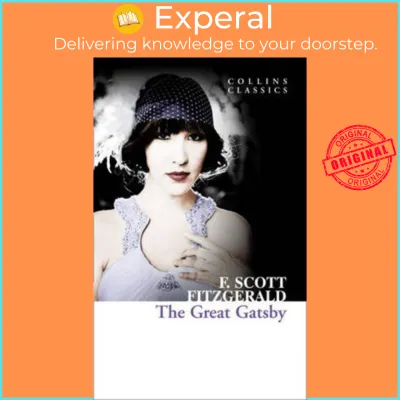
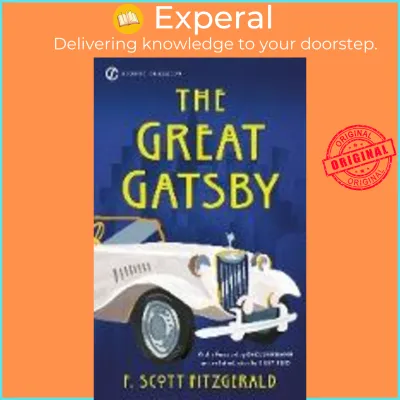
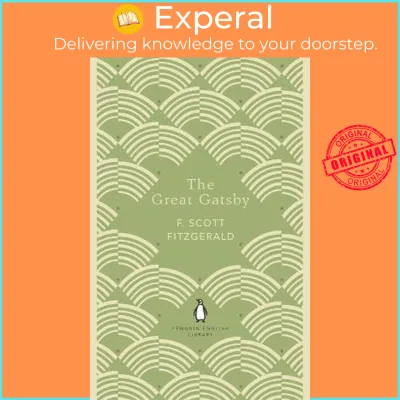
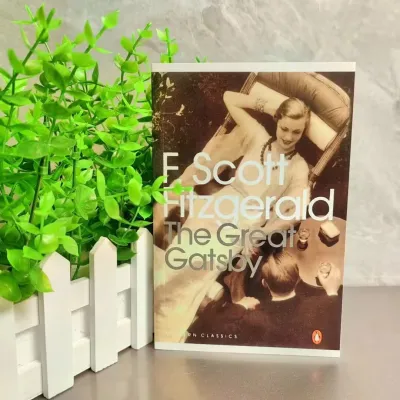
Prices are valid at publication and may change. Please refer to the product page for the latest price.
Use this quick self-assessment to guide your choice:
- The Historical Atmosphere: If you loved the post-war disillusionment and the specific aesthetic of the Jazz Age, focus on the Lost Generation and early 20th-century classics.
- The Critique of Class Barriers: If you want to explore the tragic consequences of social climbing and the hollow nature of high society, seek out realist novels dealing with social stratification.
- The Global and Modern Lens: If you want to see these themes updated for the modern, globalized world, look toward contemporary literary fiction set in rapidly developing financial hubs.
Echoes of the Jazz Age and the Lost Generation
The 1920s was a decade of unprecedented economic expansion, shifting moral boundaries, and deep-seated post-war disillusionment. Authors writing during or immediately after this period captured a unique sense of fleeting euphoria masked by underlying despair.

If you want to remain in this specific historical landscape, Fitzgerald’s other works are the most direct starting point. Tender Is the Night offers a similarly gorgeous, tragic exploration of wealth and mental instability among American expatriates in Europe. It captures the same lyrical melancholy but on a broader, more devastating canvas.
For a different stylistic approach to the same era, the works of Ernest Hemingway provide a stark contrast. The Sun Also Rises captures the aimless, disillusioned lives of the Lost Generation wandering through Europe. While Hemingway’s prose is famously minimalist compared to Fitzgerald’s lush sentences, both authors share a profound obsession with the loss of illusions and the search for meaning in a fractured world.
Going slightly backward in time, Edith Wharton’s novels, such as The Age of Innocence or The House of Mirth, offer an invaluable look at the rigid social structures that paved the way for the Jazz Age. Wharton’s sharp, satirical eye dissects the old-money elite of New York, showing how their polite customs ruthlessly crush outsiders and social climbers alike.
When selecting books from this era, pay close attention to the tone and character archetypes. Look for narratives featuring cynical observers, charismatic but doomed dreamers, and a setting that functions almost as a character itself, reflecting the moral decay beneath a glittering surface.
Social Mobility, Class Divides, and the Illusion of the Dream
At its heart, The Great Gatsby is a devastating critique of the American Dream—the belief that anyone, regardless of their origins, can achieve success and acceptance through sheer determination. If this structural critique of class barriers is what resonated with you, several classic and mid-century novels explore similar themes.
The conflict between old money and new money is a timeless literary engine. In 19th-century literature, Charles Dickens’s Great Expectations serves as a brilliant precursor to Gatsby’s journey. Pip, like Jay Gatsby, receives mysterious financial backing to elevate his social status, driven by his obsessive love for the cold, unattainable Estella. The novel masterfully deconstructs the idea of what makes a true gentleman and exposes the moral rot of high society.
Moving into mid-century American realism, Richard Yates’s Revolutionary Road shifts the critique of the American Dream to the post-war suburbs of the 1950s. It portrays the suffocating nature of societal expectations and the tragic consequences of trying to escape a mundane existence. While it lacks the champagne-soaked glamour of West Egg, it shares Gatsby’s profound sense of disillusionment and the tragic cost of unfulfilled ambition.
To evaluate an author’s perspective on these societal structures, observe how they resolve the protagonist’s climb. Does the narrative suggest that class barriers are utterly impenetrable, resulting in a tragic fall? Or does it offer a cynical resolution where characters must sacrifice their moral integrity to remain within the elite circle? Understanding this dynamic helps you choose a book that matches your preferred level of narrative bite.
Contemporary and Global Perspectives on Wealth and Ambition
The pursuit of status, the illusion of meritocracy, and the moral compromises of extreme wealth are not unique to 20th-century America. Modern and global authors have adapted these themes to reflect the realities of rapid economic growth, hyper-capitalism, and shifting class dynamics in other parts of the world.
In contemporary literary fiction, these themes frequently manifest in stories set within global financial capitals. For instance, novels set in Singapore often explore the stark contrasts between old-money dynasties and the newly wealthy class generated by the nation’s rapid post-independence development. These narratives examine how traditional family expectations clash with modern capitalistic desires, echoing the tension between Daisy Buchanan’s ancestral world and Gatsby’s speculative fortune.
Other modern works focus on the psychological toll of extreme wealth inequality. Authors from East Asia and South Asia have written compelling critiques of the social stratification that accompanies sudden economic booms. These novels often feature protagonists who, like Gatsby, reinvent themselves to navigate elite spaces, only to find that the entry price is their cultural identity or moral compass.
Shifting the cultural lens allows you to see how universal these themes truly are. While Fitzgerald wrote about the roaring stock market of New York, a modern novel set in a bustling Asian metropolis might focus on real estate speculation, tech fortunes, or the legacy of colonial-era class structures. The setting changes, but the core human tragedy—the desperate desire to belong to an exclusive world that will never truly accept you—remains deeply resonant.
Selecting the Right Edition, Format, and Sourcing Your Books
Once you have selected your next read, choosing the right format and verifying the edition details can significantly enhance your literary experience.
For readers in Singapore, physical books, digital e-books, and audiobooks each offer distinct advantages. If you enjoy annotating text, highlighting beautiful prose, or building a curated home library, high-quality physical paperbacks or hardcovers remain unmatched. However, if you frequently read during your daily commute on the MRT or bus, a lightweight e-reader is highly practical, especially in Singapore’s humid climate where physical pages can degrade over time if not stored in a dry, well-ventilated space. Audiobooks are excellent for multitasking, but ensure you select unabridged versions to experience the author’s original prose fully.
When purchasing classic literature, look for editions that include critical introductions, explanatory footnotes, or historical annotations. These additions are incredibly helpful for older texts, as they clarify historical references, slang, and social customs that might otherwise be lost on modern readers.
Before ordering from online marketplaces or international book retailers, always verify the language, translation quality (if reading a translated work), and regional compatibility of digital files. Keep an eye on potential shipping fees and import costs, which are calculated in S$. Comparing prices across local independent bookstores and major online platforms can help you find excellent value while supporting the local literary ecosystem.
Frequently Asked Questions (FAQ)
Are there any direct sequels or authorized continuations to The Great Gatsby?
Because F. Scott Fitzgerald’s original novel has entered the public domain in many jurisdictions, there has been a surge of modern adaptations, prequels, and creative retellings. These works range from stories told from Jordan Baker’s perspective to imaginative prequels exploring Gatsby’s early life.
When browsing these titles, it is essential to read publisher descriptions carefully. Unlike authorized sequels in other franchises, these books are independent creative interpretations. Checking reader reviews and critical reception will help you distinguish between high-quality literary homages and superficial pastiches that fail to capture the depth of the original work.
How can I find book clubs or reading groups in Singapore discussing these themes?
Singapore has a vibrant literary community with numerous avenues for discussing classic and contemporary fiction. The National Library Board (NLB) regularly hosts book clubs and literary discussions across its network of public libraries, which are free and open to the public.
Additionally, independent bookstores in areas like Tiong Bahru or the Civic District frequently organize intimate reading groups focused on specific genres or themes like social critique and global literature. Before attending, check their official websites or social media channels to verify the current reading list, meeting formats (in-person or virtual), and whether any registration or nominal participation fees apply.
Community discussion
Share your experience or ask a question. Comments are reviewed before publication.