
Finishing a monumental science fiction trilogy like Liu Cixin’s masterpiece often leaves readers with a profound sense of narrative emptiness. The transition to a new book requires finding stories that match the grand cosmic scale, rigorous scientific concepts, and deep philosophical inquiries of the Dark Forest theory. To fill this intellectual void, you must look toward novels that treat scientific laws not just as background decoration, but as the absolute boundaries of human and alien existence.
The key to finding your next great read lies in identifying which specific elements of the trilogy resonated with you most. Whether you were captivated by the mind-bending physics, the terrifying sociological implications of first contact, or the sweeping multi-generational struggle for survival, there are exceptional works of speculative fiction ready to challenge your perspective. By focusing on books that balance conceptual rigor with cosmic scope, you can embark on another unforgettable journey through the stars.
Key Criteria for Selecting Post-Trilogy Science Fiction
When searching for books to read after completing a massive trilogy, it helps to establish a clear framework for what made the original experience so impactful. The first major distinction to consider is the balance between hard science accuracy and space opera scale. Hard science fiction prioritizes real-world physics, orbital mechanics, evolutionary biology, and information theory. If you enjoyed the detailed explanations of orbital physics, multi-dimensional geometry, and nanotechnology, you will want to seek out authors who consult with scientists or possess technical backgrounds themselves.
Products mentioned in this guide
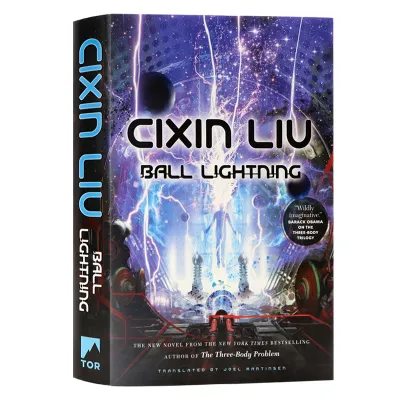
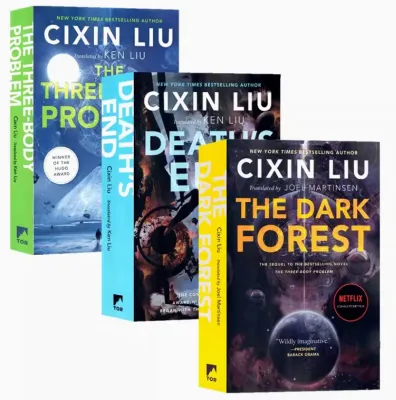
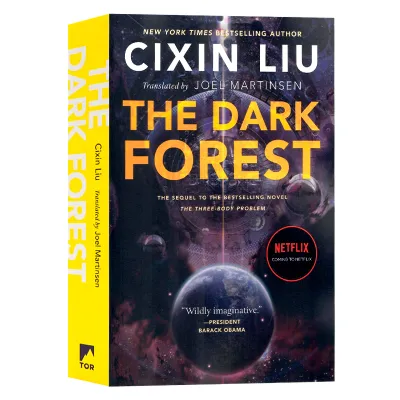
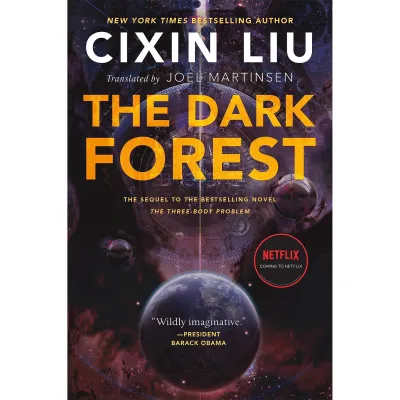
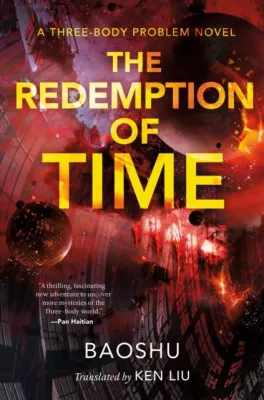
Prices are valid at publication and may change. Please refer to the product page for the latest price.
Conversely, if you were more drawn to the sheer scale of the narrative—spanning thousands of years, galactic empires, and the ultimate fate of the universe—you are looking for cosmic-scale space operas. These stories often utilize speculative technology, such as faster-than-light travel or wormholes, to explore the vastness of deep time and space. Understanding where your preferences lie along this spectrum will prevent you from choosing a book that feels either too dryly technical or too scientifically implausible.
Another critical dimension is philosophical and sociological depth. The most memorable science fiction does not just invent clever gadgets; it uses them as tools to conduct profound thought experiments about human nature, morality, and our place in an indifferent cosmos. Look for novels that explore how societies adapt to existential threats, how alien minds might perceive reality in fundamentally different ways, and how the laws of physics shape the evolution of civilizations.
Finally, consider the narrative structure and pacing. Some readers prefer the dense, concept-driven prose of classic hard sci-fi, where characters serve primarily as vessels for exploring grand ideas. Others may seek a more balanced approach, where realistic science and political intrigue are driven by deeply developed, relatable characters. Assessing whether you want a fast-paced, action-oriented plot or a slow-burning, philosophical epic will help you select a book that matches your current reading mood.
Highly Recommended Sci-Fi Novels with Cosmic and Intellectual Depth
Children of Time by Adrian Tchaikovsky
For readers who were fascinated by the evolutionary timelines and alien perspectives of the trilogy, this novel offers a masterclass in deep-time world-building. The story follows the remnants of humanity fleeing a dying Earth on an ark ship, only to discover a terraformed planet where an evolutionary experiment has gone in an unexpected direction. Instead of human colonists, a species of jumping spiders has been accelerated by a nanovirus, developing a complex, highly advanced civilization over thousands of years.

Tchaikovsky excels at depicting a truly alien psychology and communication system. The spiders do not think or interact like humans; their technology is biological, based on silk, pheromones, and captive breeding of other species. This creates a fascinating contrast with the desperate, decaying human society aboard the ark ship. If you appreciate detailed explorations of evolutionary biology, long-term sociological shifts, and the immense challenges of first contact, this book provides a brilliant and intellectually satisfying journey.
Blindsight by Peter Watts
If the bleak, terrifying implications of the Dark Forest theory kept you awake at night, this novel is the perfect, albeit unsettling, follow-up. Set in the late 21st century, the plot begins when thousands of alien probes surround Earth, take a collective snapshot, and burn up in the atmosphere. A crew of highly specialized, neurologically altered specialists is sent to the edge of the solar system to investigate a massive, hidden alien vessel.
Watts, a marine biologist, infuses the narrative with dense scientific concepts focusing on neurobiology, evolutionary biology, and the nature of consciousness. The core philosophical premise of the book is deeply provocative: it questions whether consciousness is actually an evolutionary disadvantage, suggesting that high intelligence does not require self-awareness. With its dark, cynical tone and demanding prose, this novel is best suited for readers who prioritize rigorous hard science and uncompromising philosophical pessimism over traditional character warmth.
The Expanse Series by James S.A. Corey
For those who loved the political maneuvering, realistic space travel, and solar system mechanics of the early parts of the trilogy, this multi-volume epic is an essential read. Beginning with Leviathan Wakes, the series presents a future where humanity has colonized the solar system, divided into three competing political factions: Earth, Mars, and the Belters of the asteroid belt. The discovery of an alien protomolecule acts as a catalyst, disrupting the fragile geopolitical balance and forcing humanity to confront the unknown.
The series is highly praised for its adherence to realistic physics, particularly regarding orbital mechanics, the physiological effects of gravity and high-g acceleration, and the harsh realities of living in vacuum. The political intrigue and resource struggles closely mirror contemporary global dynamics, making the world feel incredibly grounded. This is an ideal choice if you prefer character-driven narratives, sharp dialogue, and complex political factions operating alongside hard scientific principles.
Hyperion by Dan Simmons
If you are searching for a literary masterpiece that matches the sweeping historical scope and multi-generational cosmic scale of the trilogy’s later acts, this classic Hugo Award-winning novel is unmatched. Structurally inspired by Chaucer’s The Canterbury Tales, the book follows seven pilgrims journeying to the distant world of Hyperion on the eve of an interstellar war. Each pilgrim shares their personal story, revealing a complex, interconnected tapestry of a galaxy on the brink of destruction.
Simmons seamlessly blends diverse sci-fi subgenres—from cyberpunk and military sci-fi to planetary romance and horror—within a single, cohesive framework. The novel explores profound themes, including time manipulation via the mysterious Time Tombs, the evolution of religion in a spacefaring age, and the existential risks posed by independent artificial intelligences known as the TechnoCore. It is highly recommended for readers who appreciate intricate, non-linear storytelling and deep philosophical inquiries into the nature of pain, love, and time.
Quick Comparison: Matching Books to Your Reading Preferences
To help you quickly determine which of these exceptional novels aligns best with your current reading preferences, consult the comparison matrix below. This table categorizes each work by its primary subgenre, the level of scientific rigor you can expect, the general pacing of the narrative, and the core philosophical theme that drives the story.
| Title | Subgenre | Scientific Rigor | Narrative Pacing | Core Philosophical Theme |
|---|---|---|---|---|
| Children of Time | Evolutionary Sci-Fi | High (Biology/Sociology) | Moderate | Non-human intelligence and cooperation |
| Blindsight | Hard Sci-Fi / First Contact | Very High (Neurobiology) | Intense / Demanding | Consciousness as an evolutionary flaw |
| The Expanse Series | Hard Space Opera | High (Physics/Mechanics) | Fast-paced | Geopolitics, tribalism, and human survival |
| Hyperion | Literary Space Epic | Moderate (Speculative) | Measured / Multi-layered | Time, mortality, and technological dependency |
Use this matrix to filter your choices based on your immediate reading goals. If you are in the mood for dense, challenging scientific theory that pushes the boundaries of cognitive science, Blindsight is your ideal choice. If you prefer a fast-paced, action-packed narrative with realistic space combat and political intrigue, start The Expanse. For those seeking deep evolutionary world-building or a poetic, multi-layered literary epic, Children of Time or Hyperion will deliver the intellectual depth you crave.
Purchasing Guide: Formats, Editions, and Local Availability
When acquiring these complex science fiction works, taking the time to verify the specific edition and format can significantly enhance your reading experience. For translated works or books with intricate narrative structures, pay close attention to translator credits and ensure you are purchasing the unabridged version. While the recommended titles in this guide were originally written in English, keeping an eye on edition details is always a good habit for international speculative fiction.
Choosing the right format depends heavily on your personal comprehension preferences and reading habits. Physical books, such as high-quality paperbacks or hardcovers, are excellent for dense hard sci-fi, as they allow you to easily flip back to reference scientific appendices, character lists, or structural diagrams. E-books offer the convenience of instant dictionary lookups for complex scientific terminology, which is particularly useful when navigating the neurobiological jargon of Blindsight. Audiobooks can also be highly immersive, but ensure you sample the narrator’s performance first; a skilled narrator can make complex political factions in The Expanse easy to follow, while a poor one can make dense prose difficult to digest.
For readers in Singapore, these titles are widely available across various platforms. You can find physical copies at major local brick-and-mortar bookstores, such as Books Kinokuniya at Ngee Ann City, which boasts an extensive speculative fiction section. When purchasing locally, prices typically range from S$15 to S$30 for standard paperbacks. If a specific edition is out of stock, local indie bookstores or authorized online retailers can often import them, though you should verify potential shipping fees and delivery times. For digital readers, local library apps like NLB’s Libby offer a cost-effective way to borrow e-books and audiobooks directly to your device.
Frequently Asked Questions (FAQ)
Should I read the prequel or spin-offs before starting a new series?
When diving into expansive science fiction universes, it is generally recommended to read the books in publication order rather than chronological order. Authors often write prequels assuming the reader is already familiar with the core concepts, world-building, and terminology established in the main series. Reading a prequel first can sometimes spoil major plot revelations or feel dry without the context of the primary narrative.
To identify essential short stories or novellas that bridge the gaps between main novels, consult official author websites or dedicated fan wikis. For instance, The Expanse series features several crucial novellas, such as The Churn, which provide deep backstory for key characters and are best read in their specific publication slots between the main novels to enrich your understanding of the overarching plot.
Are there any Singaporean or Southeast Asian authors writing similar cosmic sci-fi?
The Southeast Asian speculative fiction scene is growing rapidly, offering unique cultural perspectives on technology, future societies, and humanity’s place in the cosmos. While hard, physics-heavy cosmic sci-fi remains a niche subgenre within the region, local authors are increasingly exploring speculative themes that blend advanced technology with regional socio-political realities.
To discover these works, look for regional anthologies and publications from local indie publishers like Epigram Books or Ethos Books. Keeping track of the Singapore Literature Prize nominees in the English Fiction category is also an excellent way to find high-quality local speculative fiction. While you may need to perform specific catalog searches at local libraries or bookstores to find cosmic-scale narratives, supporting regional authors offers a fresh, culturally rich alternative to Western-centric science fiction.
Community discussion
Share your experience or ask a question. Comments are reviewed before publication.