
If the profound life lessons, emotional depth, and mentorship themes in Tuesdays with Morrie left a lasting impact on you, finding your next meaningful read can feel like a daunting task. Mitch Albom’s beloved memoir captured a rare magic: the ability to look directly at mortality and grief, yet emerge feeling deeply comforted and inspired to live more intentionally. While that book is a real-life account of a young man visiting his dying professor, you do not have to limit your search to non-fiction to find that same emotional resonance.
Transitioning into philosophical fiction offers a unique way to explore these same transformative themes. Through carefully crafted narratives, fictional stories can mirror the deep truths of human connection, the weight of regret, and the beauty of everyday mentorship. By stepping into the lives of fictional characters who are navigating their own existential crossroads, you can find the same comfort, wisdom, and perspective that Morrie Schwartz shared from his study.
What to Look for in Life-Affirming Philosophical Fiction
When searching for novels that capture the spirit of Tuesdays with Morrie, it helps to understand the specific narrative elements that make these stories so impactful. First and foremost, look for books that center on themes of mortality, legacy, and the search for meaning in everyday life. These stories do not shy away from the difficult realities of aging, illness, or loss; instead, they use these universal human experiences as a canvas to highlight what truly matters. The focus is rarely on grand, heroic deeds, but rather on the quiet, often overlooked moments of connection that define a lifetime.
Products mentioned in this guide
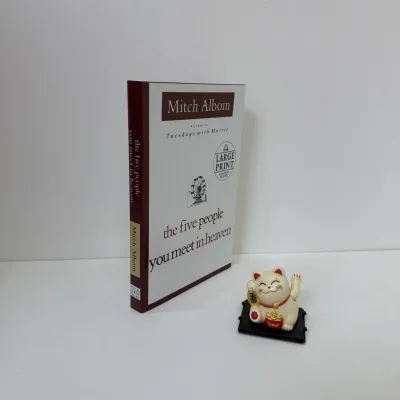
Prices are valid at publication and may change. Please refer to the product page for the latest price.
Another key element is the presence of a guiding figure or an unlikely friendship. Just as Mitch and Morrie’s relationship was built on intergenerational wisdom and mutual vulnerability, great philosophical fiction often features characters from different walks of life who are thrown together by circumstance. These relationships serve as a mirror, forcing the characters—and the reader—to confront their own biases, regrets, and hopes. Whether it is a wise mentor guiding a lost soul or two lonely neighbors finding solace in each other, these connections form the emotional core of the narrative.
Finally, look for stories that strike a delicate balance between emotional depth and hopeful resolution. The goal of life-affirming fiction is not to leave you feeling despondent, but rather to offer a sense of catharsis. The most resonant books in this genre acknowledge the pain of regret and the inevitability of change, yet they ultimately leave you with an uplifting, hopeful takeaway. They remind us that it is never too late to change our perspective, forgive ourselves, or make a meaningful impact on the people around us.
Fiction Books to Read If You Loved Tuesdays with Morrie
Fictional narratives have a unique power to convey profound philosophical truths. While memoirs document specific lived experiences, fiction allows authors to distill complex emotional realities into universal allegories. By exploring themes of regret, intergenerational bonding, and the unseen connections between strangers, these novels offer a comforting space to contemplate life’s biggest questions.

The following curated selection of novels explores these themes from distinct emotional angles. Each book offers a different perspective on how we measure the value of a life, how we cope with the passage of time, and how we find the strength to keep moving forward.
The Five People You Meet in Heaven by Mitch Albom
If you want to experience the same gentle, compassionate voice that made Tuesdays with Morrie so unforgettable, turning to Mitch Albom’s fictional work is a natural next step. The Five People You Meet in Heaven opens with the death of Eddie, an elderly maintenance mechanic who has spent his entire life working at a seaside amusement park. Believing his life was ordinary, lonely, and largely insignificant, Eddie awakens in the afterlife, where he is met by five individuals whose lives intersected with his in ways he never realized.
This novel resonates deeply because it shares Albom’s signature ability to find profound meaning in the mundane. Each of the five people Eddie meets explains a specific lesson, helping him reframe his past, understand his regrets, and find forgiveness for himself and others. The story directly addresses the idea that no life is a waste, and that every action we take ripples through the lives of others in ways we may never fully comprehend while we are alive.
This book is highly recommended for readers who are grappling with questions of legacy and self-worth. If you have ever wondered whether your daily efforts matter, or if you find yourself dwelling on missed opportunities, Eddie’s journey offers a comforting reminder of our shared interconnectedness. It is a quick but emotionally powerful read that beautifully complements the philosophical foundations of Albom’s non-fiction work.
The Midnight Library by Matt Haig
For a contemporary take on the choices we make and the regrets we carry, Matt Haig’s The Midnight Library offers a thought-provoking and highly imaginative narrative. The story follows Nora Seed, a young woman overwhelmed by a sense of failure, alienation, and deep regret. After deciding she no longer wants to live, she finds herself in a vast, magical library situated between life and death. Here, every book on the shelves represents a life she could have lived had she made different choices, from pursuing a career in glaciology to staying with an ex-fiancé.
The novel resonates with fans of Tuesdays with Morrie because it tackles the heavy weight of existential dread with gentleness and empathy. As Nora tries on these alternate lives, she is forced to confront the reality of her regrets and question whether a “perfect” life actually exists. The library serves as a metaphorical classroom, much like Morrie’s study, where Nora slowly uncovers the inherent value of simply being alive, regardless of achievements or external success.
This book is best suited for readers seeking a modern, accessible exploration of mental health, self-acceptance, and the power of perspective. It provides a comforting, life-affirming message for anyone who has ever looked back at their life and wondered “what if.” Haig’s writing is both engaging and deeply philosophical, offering a hopeful reminder that the most meaningful life is the one we are actively living.
A Man Called Ove by Fredrik Backman
If the intergenerational mentorship and emotional warmth of Mitch and Morrie’s relationship were what drew you in, Fredrik Backman’s A Man Called Ove is an exceptional choice. The novel introduces us to Ove, a grumpy, fiercely disciplined widower who has lost his job and his beloved wife. Feeling that his life no longer has purpose, Ove decides to end his life. However, his plans are repeatedly and comically disrupted by the arrival of a boisterous, young family moving in next door, led by a warm and persistent pregnant woman named Parvaneh.
What follows is a beautifully written exploration of grief, community, and the unexpected ways we can save one another. The novel mirrors the intergenerational bonding of Tuesdays with Morrie, showing how a guarded, grieving older man can find a renewed sense of purpose through the persistent love and demands of a younger generation. Backman masterfully balances sharp, dry humor with moments of profound emotional depth, illustrating how community can heal even the deepest wounds of isolation.
This story is ideal for those who appreciate character-driven narratives about finding family in unexpected places. It serves as a powerful reminder that our lives are not just our own, and that opening our hearts to others—even when it feels terrifying—is the ultimate key to finding meaning. Ove’s transformation from an isolated curmudgeon to a beloved community pillar is a deeply moving journey that will stay with you long after you close the book.
How to Choose the Right Format and Edition
When preparing to dive into these emotionally rich stories, selecting the right format and edition can significantly enhance your reading experience. Because philosophical fiction often invites deep reflection, your choice of medium should align with how you best process and absorb complex emotional narratives.
For many readers, audiobooks are an excellent way to experience these stories, especially during daily commutes on public transport or quiet evenings at home. The spoken word can add a layer of intimacy and emotional resonance that mirrors the feeling of a personal conversation. When choosing an audiobook, it is highly recommended to listen to a sample first and check narrator reviews. A narrator’s tone, pacing, and emotional delivery are crucial; a well-read performance can elevate the philosophical weight of the text, while a poor match can distract from the story’s depth.
If you prefer reading text, consider the trade-offs between e-books and physical copies. E-books offer incredible convenience, allowing you to carry an entire library in your bag, and they feature digital annotation tools that make it easy to highlight and save philosophical quotes for future reflection. On the other hand, a physical book offers a tactile, screen-free experience that many find more conducive to slow, reflective reading. Holding a physical copy, turning the pages, and physically writing notes in the margins can create a more grounded, meditative connection to the material.
Before making a purchase, always verify the specific publication details of the edition you are considering. For international fiction, such as works translated from Swedish or other languages, pay close attention to the translator’s name and reader feedback regarding the translation quality. A thoughtful translation preserves the author’s original tone and emotional nuances, which are vital for philosophical works. Additionally, check for regional restrictions on digital editions and ensure compatibility with your preferred reading device or application to avoid any technical frustrations.
Frequently Asked Questions (FAQ)
Are there other non-fiction books similar to Tuesdays with Morrie?
Yes, if you are open to exploring real-life memoirs that share the same philosophical reflections on mortality and legacy, there are several outstanding options. The Last Lecture by Randy Pausch, a computer science professor diagnosed with terminal cancer, offers practical, uplifting wisdom on achieving your childhood dreams and living life to the fullest. Another deeply moving memoir is When Breath Becomes Air by Paul Kalanithi, a young neurosurgeon who documents his transition from treating patients to facing his own terminal illness, exploring what makes life worth living in the face of death.
When choosing these real-life accounts, it is wise to check content warnings and reader reviews beforehand. Because these books deal with real-world illness, medical journeys, and grief, the emotional intensity can be high. Ensuring the specific tone and focus of the memoir align with your current emotional capacity will help you have a meaningful and comforting reading experience.
How can I find philosophical fiction by local authors?
Discovering philosophical fiction by local and regional authors is a wonderful way to explore themes of aging, family dynamics, and existential questions through a familiar cultural lens. To find these works, start by exploring the digital catalogs or physical shelves of local public libraries, such as those managed by the National Library Board. Many libraries feature dedicated sections for Singaporean and Southeast Asian literature, making it easy to browse titles that focus on intergenerational relationships and local heritage.
Additionally, visiting independent local bookstores can provide curated recommendations. These shops often highlight regional writers who delve into philosophical themes within local contexts. You can also look up shortlists and winners of regional literary awards, such as the Singapore Literature Prize. These curated lists are excellent resources for identifying critically acclaimed novels that offer deep, culturally rich reflections on life, legacy, and human connection.
Community discussion
Share your experience or ask a question. Comments are reviewed before publication.