
To find reliable audio recordings of the classical pieces in the Piano Adventures 3B method book, you can access the publisher’s official digital resources, utilize their dedicated mobile companion applications, or search major music streaming platforms using specific composer and piece titles. Having a high-quality audio reference is an invaluable tool for intermediate piano students, helping to clarify complex rhythms, stylistic articulation, and expressive dynamics during home practice sessions.
Using audio references effectively requires a balance between active listening and independent score reading. By understanding where to find these recordings and how to verify that they match your specific sheet music edition, you can accelerate your learning process, avoid practicing mistakes, and develop a deeper appreciation for classical repertoire.
Recommended Official Audio Sources for Piano Adventures 3B
The most reliable starting point for any student or teacher is the official audio produced directly by the publisher, Faber Piano Adventures. These recordings are specifically designed to align with the pedagogical goals of the Level 3B curriculum. Because they are recorded using the exact arrangements printed in the books, they provide an accurate representation of the notes, tempos, and dynamics you are expected to master.
Products mentioned in this guide
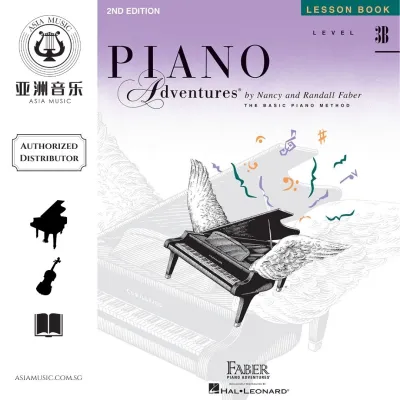

Prices are valid at publication and may change. Please refer to the product page for the latest price.
To access these official recordings digitally, you can visit the publisher’s official website. The site features a dedicated audio library where users can stream tracks for various levels, including the Level 3B Lesson Book and Performance Book. This online library is highly accessible and allows you to play, pause, and loop specific tracks directly from your computer or mobile browser during your practice sessions.
For a more integrated mobile experience, the publisher offers a dedicated mobile application available on major app stores. This app serves as an interactive practice partner, allowing you to control the playback speed, mute individual hands to practice one part at a time, and follow along with a visual metronome. Before downloading, verify your device’s operating system compatibility and check the app store listing for any specific regional availability or access conditions.
If you prefer physical media or offline access, check your copy of the Piano Adventures 3B Lesson Book. Depending on the print edition and where you purchased the book, it may have come with a physical CD or a unique digital download code printed on the inside cover. Local music retailers and specialized bookshops in Singapore often stock both the CD-bundled editions and the newer printings that feature digital access codes. If your book contains a code, you can redeem it on the publisher’s portal to download high-quality MP3 files directly to your local storage for offline playback.
Finding Supplementary Recordings on Streaming Platforms
While the official publisher tracks are excellent for note-matching and basic practice, exploring supplementary recordings on major audio streaming platforms can greatly enrich your musical understanding. Listening to different professional pianists perform these classical pieces exposes you to diverse interpretations, varied tonal colors, and different acoustic environments.

When searching for these pieces on streaming services, avoid using search terms like the method book name or level. Instead, search using the exact title of the piece and the original composer’s name. For example, if you are practicing a classical piece adapted for Level 3B, such as a sonatina by Muzio Clementi or a selection by Ludwig van Beethoven, search for the composer’s name alongside the specific catalog number, such as “Clementi Sonatina Op. 36 No. 1” or “Beethoven Bagatelle.”
To streamline your daily practice, consider creating a custom playlist on your preferred streaming service. You can compile multiple professional recordings of each piece you are currently studying. Having these tracks organized in one place makes it easy to transition from listening to playing without getting distracted by searching for tracks mid-practice.
As you listen to these professional recordings, pay close attention to how the artists handle tempo, articulation, and phrasing. You will quickly notice that professional concert pianists often play these pieces at a much faster tempo than what is recommended for an intermediate student. Use these professional recordings for stylistic inspiration and structural understanding, but always defer to the tempo markings and pedagogical guidelines in your method book for your actual playing goals.
Verifying the Correct Arrangement and Edition
One of the most common challenges when using third-party recordings for practice is the difference between the original classical composition and the educational arrangement. Method books like Piano Adventures 3B frequently adapt classical masterpieces to make them accessible to intermediate hands. These adaptations are carefully crafted to preserve the essence of the music while managing the technical difficulty.
To ensure you are practicing correctly, always cross-reference the arranger’s name listed in your Lesson Book with the credits on the recording you are listening to. The arrangements in this curriculum are typically created by Nancy and Randall Faber. If you are listening to a recording of the original, unsimplified classical piece, you may find significant discrepancies that can lead to confusion during practice.
These educational arrangements often feature specific structural modifications. For instance, the arranger might simplify complex left-hand accompaniment patterns, such as converting rapid Alberti bass figurations into simpler block chords. Additionally, long development sections or repetitive expositions may be shortened to fit the page layout, or the piece might be transposed into a friendlier key signature with fewer sharps or flats.
If you encounter a recording that sounds drastically different from the sheet music in front of you, stop and evaluate the track. Check if the notes, key, and overall structure align with your printed page. If the differences are significant and cause confusion, it is best to pause using that specific recording and consult your piano teacher. They can help you identify whether the recording is a different edition or guide you on how to interpret the differences without compromising your learning.
Integrating Audio References into Your Practice Routine
Simply playing a recording in the background is rarely enough to improve your piano skills. To get the most out of your audio references, you must integrate them actively and systematically into your daily practice routine. This approach ensures that listening becomes an active learning tool rather than a passive distraction.
Before you attempt to play a new piece on the piano, spend time listening to the recording while following along with the sheet music. Use your eyes to track the notes on the page as your ears listen to the sounds. This practice helps you internalize the steady tempo, rhythmic pulse, and overall character of the piece before your fingers ever touch the keys, making the initial sight-reading process much smoother.
Once you begin learning the notes, use the recording to analyze specific musical details. Listen closely to the phrasing—where does the performer lift their hands to let the music breathe? Observe the articulation, noting the contrast between crisp staccato passages and smooth legato lines. Pay attention to how dynamic changes, such as a gradual crescendo or a sudden pianissimo, are executed to create emotional depth.
While recordings are incredibly helpful, guard against the temptation to rely solely on imitation. If you only play by ear based on what you hear in the recording, you may neglect your independent score-reading and sight-reading skills. Always treat the printed sheet music as your primary authority. Use the audio reference as a diagnostic tool to check your accuracy, verify tricky rhythms, and inspire your musical expression, ensuring you develop into a well-rounded, independent musician.
Frequently Asked Questions (FAQ)
What should I do if my physical book did not include an audio CD?
If your copy of the Piano Adventures 3B book did not come with a physical CD, you can easily access the audio through digital alternatives. Visit the publisher’s official website to stream the tracks directly from their online audio library, or download their official mobile companion app on your smartphone or tablet. Many modern printings of the book also include a digital download code on the inside cover, which you can redeem online to save the MP3 files directly to your device. Alternatively, you can search major digital music platforms for the specific classical titles to find high-quality reference recordings.
Can I use user-generated video platforms as a practice reference?
Yes, user-generated video platforms can be helpful, but they require careful evaluation. While many piano teachers and advanced students upload excellent tutorials and performances of the Piano Adventures 3B repertoire, there is also a risk of encountering inaccurate tempos, incorrect notes, or poor audio quality. To ensure a video is a reliable reference, verify that the performer is playing the exact Faber arrangement from the 3B book rather than the original classical version. Look for videos that clearly show the keyboard and the sheet music, and prioritize channels run by certified music educators.
Is it better to listen to the original classical recording or the method book arrangement?
Both types of recordings offer unique pedagogical value, and using them in combination is often the most effective approach. You should use the specific method book arrangement recordings for technical accuracy, note-learning, and verifying that your rhythm and tempo match the simplified score. Once you are comfortable with the notes, listen to professional recordings of the original, unsimplified classical pieces. This exposes you to the historical context, full orchestral or acoustic textures, and advanced stylistic interpretations, which can inspire your overall musicality and performance style.
Community discussion
Share your experience or ask a question. Comments are reviewed before publication.