
Entering the expansive literary world of Keigo Higashino can feel overwhelming due to the sheer volume and variety of his translated works. To find your ideal starting point, you must first decide whether you prefer a highly analytical puzzle, a deeply emotional human drama, or a sprawling social critique. For most readers, the most effective gateway is The Devotion of Suspect X if you love brilliant deductive reasoning, or Miracles of the Namiya General Store if you prefer a heartwarming, speculative tale without a central crime.
How to Choose Your First Keigo Higashino Novel
Selecting your first book requires understanding the two primary branches of Japanese mystery fiction that Higashino masterfully navigates. The first branch consists of orthodox puzzle-box mysteries, where the narrative functions as a fair-play game between the author and the reader. In these stories, every clue is laid bare, and the pleasure lies in watching a brilliant protagonist untangle an seemingly impossible setup. If you enjoy intellectual challenges, mathematical precision, and locked-room scenarios, this analytical style will suit your reading preferences.
The second branch focuses on socially conscious thrillers and psychological dramas. These narratives prioritize the human element, exploring the societal pressures, economic hardships, and personal relationships that drive ordinary individuals to commit desperate acts. Instead of focusing solely on the identity of the culprit, these books examine the systemic failures and emotional scars left in the wake of a crime. Readers who appreciate deep character development and realistic social commentary often find these novels more compelling than pure logic puzzles.
Products mentioned in this guide





Prices are valid at publication and may change. Please refer to the product page for the latest price.
Your tolerance for dark themes is another critical factor to consider before making a selection. Higashino’s bibliography spans a wide emotional spectrum, ranging from bleak, tragic explorations of human depravity to uplifting, life-affirming stories of redemption. Some novels depict the grim realities of the criminal justice system and the long-lasting trauma of victims, while others use elements of magical realism to heal broken relationships. Matching the book’s emotional tone to your current reading mood will prevent a mismatch in expectations.
Finally, consider the time commitment you are willing to make. Some of Higashino’s works are tight, fast-paced procedurals that can be read in a few sittings, making them excellent choices for busy schedules. Others are sprawling, multi-generational epics that require a more patient approach to appreciate the gradual accumulation of detail and character growth. Deciding whether you want a quick, high-tension thrill or a slow-burning, immersive saga will help narrow down your options.
Recommended Keigo Higashino Books to Start With
To help you navigate these diverse narrative styles, we have categorized his most accessible and representative translated novels based on distinct reader expectations. Each selection highlights a unique aspect of Higashino’s storytelling, allowing you to choose a book that aligns ideally with your literary tastes.

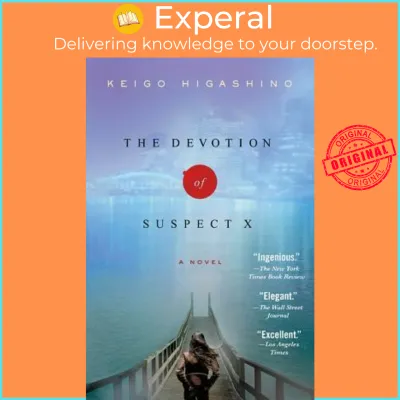
For Pure Logic and Puzzle Mysteries: The Devotion of Suspect X
For readers who prioritize brilliant deductive reasoning and intense intellectual duels, The Devotion of Suspect X stands as a premier starting point. The story begins with a domestic tragedy: a mother and daughter accidentally kill their abusive ex-husband in self-defense. Their neighbor, a brilliant but reclusive high school mathematics teacher named Tetsuya Ishigami, steps in to shield them by constructing an seemingly impenetrable alibi. When the police struggle to break the alibi, they enlist the help of Manabu Yukawa, a genius physicist known as Detective Galileo, setting off a battle of wits between two extraordinary minds.
What makes this novel exceptional is its subversion of the traditional mystery structure. The reader knows the identity of the killers and the basic facts of the crime from the very beginning, shifting the focus from a standard whodunit to a complex howdunit and whydunit. The narrative challenges you to figure out how Ishigami altered the crime scene and why his logic remains flawless under intense police scrutiny. It is a masterclass in misdirection, where the solution is hidden in plain sight.
Beneath the cold, mathematical calculations lies a profound and devastating emotional core. The book explores the extreme lengths to which a person will go out of devotion, challenging the boundaries of love and self-sacrifice. This blend of rigorous logic and tragic romance ensures that the story resonates long after the final puzzle piece falls into place. It serves as an ideal introduction to the Detective Galileo series, showcasing Higashino’s ability to humanize abstract intellectual concepts.
For Heartwarming and Emotional Narratives: Miracles of the Namiya General Store
If you prefer to avoid murder investigations and police procedurals entirely, Miracles of the Namiya General Store offers a completely different side of Higashino’s bibliography. The premise begins in the present day with three young delinquents who seek shelter in an abandoned neighborhood shop. Decades earlier, the store’s owner used to give advice to troubled souls who dropped letters through the mail slot. As the thieves wait out the night, a letter from the past suddenly drops into the shop, prompting them to write back and inadvertently alter the course of multiple lives.
This novel relies heavily on magical realism and a non-linear structure to weave together several seemingly unrelated stories. Each chapter functions as a self-contained vignette focusing on a different seeker of advice, such as an aspiring musician struggling to choose between his dreams and his family business, or an athlete torn between training and caring for a dying partner. As the book progresses, these individual threads gradually converge into a beautifully orchestrated tapestry of human connection.
The absence of violence and suspense makes this book an incredibly comforting and uplifting read. It highlights Higashino’s extraordinary skill in plotting, demonstrating that a narrative can be just as intricate and surprising without a crime at its center. For readers who enjoy character-driven stories, emotional resonance, and themes of kindness and destiny, this standalone novel is an excellent entry point.
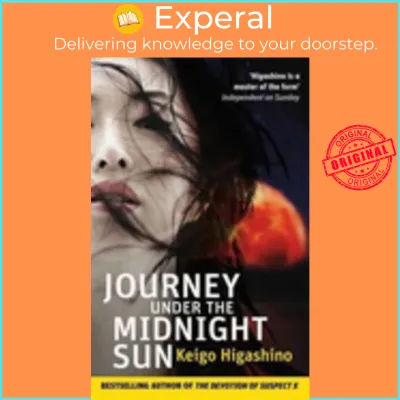
For Dark, Epic Social Thrillers: Journey Under the Midnight Sun
For those who crave a sprawling, deeply psychological narrative that examines the dark underbelly of society, Journey Under the Midnight Sun is a monumental achievement. The story spans nearly twenty years, beginning with the unsolved murder of a pawnbroker in an abandoned building. The investigation quickly goes cold, but the lives of the victim’s son, Ryoji, and the suspect’s daughter, Yukiho, remain irrevocably altered. The novel follows their parallel paths as they grow into adulthood, leaving a trail of ruined lives, unexplained accidents, and financial ruin in their wake.
The book employs a unique narrative structure where the two main characters are never shown interacting directly, nor do readers ever get a direct look inside their minds. Instead, their relationship and motives are viewed entirely through the observations of secondary characters and a persistent detective who refuses to let the case go. This objective perspective creates an eerie, suspenseful atmosphere, forcing the reader to piece together the unspoken bond and shared secrets driving the protagonists’ actions.
This is a heavy, mature novel that tackles sensitive themes, including childhood trauma, exploitation, and the cold-blooded manipulation of others. It serves as a powerful critique of societal neglect and the lasting psychological damage caused by early hardships. While the length and dark tone require a significant commitment, the payoff is an unforgettable portrait of survival and ambition that showcases Higashino’s mastery of the social thriller genre.
For Motive-Driven Police Procedurals: Malice
If you enjoy police procedurals that delve deep into the psychology of envy and the mechanics of deception, Malice is a compelling and fast-paced choice. The novel opens with the murder of Kunihiko Hidaka, a bestselling author, in his locked home just before he is set to move abroad. Detective Kyoichiro Kaga, a perceptive investigator with a background in teaching, is assigned to the case. Kaga quickly identifies the killer through physical evidence and a written confession, but he soon realizes that the apparent resolution is merely the surface of a much deeper conspiracy.
The true battle in Malice is not finding the culprit, but uncovering the genuine motive behind the crime. The narrative is presented through alternating perspectives, including the detective’s case notes and the written record of the killer, who acts as an unreliable narrator. This structure creates a shifting maze of truth and lies, where every explanation offered by the characters must be carefully scrutinized for hidden biases and malicious intent.
This book is highly recommended for readers who appreciate the psychological nuances of human relationships and the destructive power of quiet resentment. It is a relatively short, tightly plotted novel that maintains a high level of tension without relying on action sequences or graphic violence. As an entry point to the Detective Kaga series, it demonstrates how a simple investigation can transform into a profound exploration of human nature.
Standalone Novels vs. Series Openers
A common concern for new readers is whether they need to commit to a strict reading order when approaching Higashino’s famous series. His two most prominent recurring characters are Manabu Yukawa (the Detective Galileo series) and Kyoichiro Kaga (the Detective Kaga series). In Japan, these series span numerous novels and short story collections, published over several decades. However, the English translations have been released out of chronological order, which can cause confusion for readers looking at publication dates.
Fortunately, Higashino designs his series entries to function seamlessly as standalone mysteries. Each book features a self-contained plot with a unique set of suspects, a distinct crime, and a complete resolution. You do not need to have read the previous installments to understand the central puzzle or appreciate the detective’s deductive methods. For example, The Devotion of Suspect X is technically the third book in the Galileo series, but it was the first to be translated into English and remains the most popular starting point worldwide.
While the mysteries themselves are self-contained, there is a gradual evolution in the personal lives and philosophies of the recurring detectives. Reading the books in chronological order can provide a deeper appreciation for Kaga’s family background or Yukawa’s changing attitude toward human emotions. However, these character arcs are subtle and rarely impact the main plot of individual novels. If you happen to pick up a mid-series entry first, you will not spoil the central twists of earlier books, making the bibliography highly accessible to casual readers.
What to Check Before Buying or Borrowing
Before you purchase or borrow your first Higashino novel, taking a few moments to verify the specific edition and format will ensure a smooth reading experience. First, pay close attention to the translator credited on the title page. Translators like Alexander O. Smith have received widespread praise for preserving the precise cultural nuances, honorifics, and dry humor of Higashino’s original Japanese prose. Checking reader feedback on the translation quality of a specific edition can help you avoid awkward phrasing that might disrupt your immersion.
Second, consider your preferred reading medium and check for compatibility issues. If you prefer digital formats, ensure the e-book file is compatible with your specific e-reader and does not contain restrictive digital rights management (DRM) that prevents formatting adjustments. For audiobook enthusiasts, listening to a sample is essential to evaluate the narrator’s pacing, pronunciation of Japanese names, and ability to distinguish between different character voices. If you prefer physical books, verify the paperback dimensions and font size, as some international editions use very small print to accommodate the high page count of his epic novels.
Finally, ensure you are sourcing your books from authorized sellers and platforms. In Singapore, the National Library Board (NLB) offers an extensive collection of Higashino’s translated works in both physical and digital formats through their mobile application, making it easy to borrow titles for free. If you prefer to own a copy, purchasing from established physical bookstores or reputable online marketplaces guarantees that you receive a complete, authorized edition. Avoiding unauthorized digital downloads protects you from incomplete translations, formatting errors, and security risks on your devices.
Frequently Asked Questions (FAQ)
Do I need to read Keigo Higashino's series in chronological order?
No, you do not need to read his series in chronological order. Each novel in both the Detective Galileo and Detective Kaga series is designed as a self-contained mystery with its own complete resolution. While there is minor character development for the recurring detectives across the books, these background details are secondary to the main plot and are easily understood without prior knowledge. You can safely start with highly acclaimed mid-series entries like The Devotion of Suspect X or Malice without ruining your enjoyment of other books in the series.
Are Keigo Higashino's books suitable for young adult readers?
Suitability varies significantly depending on the specific title you choose. Heartwarming standalone novels like Miracles of the Namiya General Store are highly suitable for young adults, offering an engaging, life-affirming story with minimal mature content. However, his social thrillers, such as Journey Under the Midnight Sun, contain dark themes, including childhood trauma, violence, and exploitation, which are intended for mature audiences. It is advisable to check the content descriptions and age recommendations for individual titles before purchasing or borrowing them for younger readers.
Community discussion
Share your experience or ask a question. Comments are reviewed before publication.