
Selecting the right A-Level past paper series requires matching your specific subject syllabus with a publisher compilation that offers comprehensive, step-by-step solutions. Because different examination boards structure their assessments and marking rubrics differently, a generic past paper book can lead to wasted study hours on topics you do not need to know. The ideal purchase depends on your current revision phase, whether you require topical categorization or full yearly exam simulations, and the quality of the worked solutions provided. By focusing on syllabus alignment and answer key depth, you can acquire the exact study resources needed to maximize your revision efficiency.
Identify Your Exam Board and Syllabus Code First
Before purchasing any past paper compilation, you must confirm the exact examination board and syllabus code assigned to your course. In many regions, schools follow the local national curriculum, such as the Singapore-Cambridge GCE A-Level, which features unique papers co-designed with Cambridge Assessment International Education. Other institutions or private candidates may sit for international boards, including Cambridge International Education (CIE), Pearson Edexcel, or OxfordAQA. Because these boards design entirely different exam structures, buying a book intended for a different board will leave you unprepared for your specific papers.
To locate your correct syllabus code, consult your school’s subject handbook, registration portal, or the official website of your local examination authority. For instance, a chemistry syllabus under one board might use a completely different code and cover different practical assessment formats compared to another. These codes change periodically when exam boards update their curricula, meaning a syllabus code from a few years ago might not match the current requirements.
Products mentioned in this guide
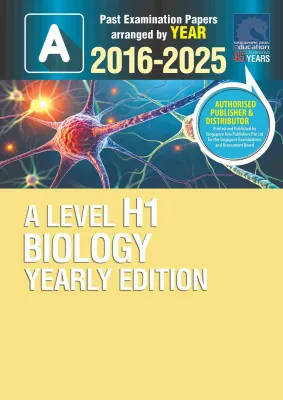
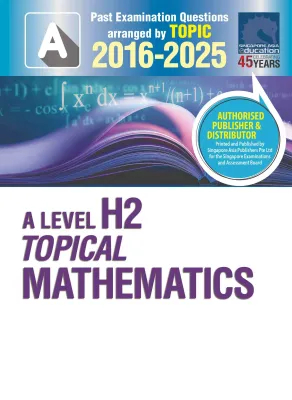
Prices are valid at publication and may change. Please refer to the product page for the latest price.
Purchasing outdated past paper series carries significant academic risks. Exam boards regularly amend syllabuses to remove obsolete topics, introduce new case studies, or alter the weighting of specific papers. If you practice using an outdated compilation, you might spend valuable time memorizing concepts that are no longer tested, or worse, miss out on newly introduced topics entirely. Always cross-reference the publication year and the syllabus coverage listed on the book’s cover with the official, active syllabus document for your graduation year.
Key Features to Evaluate in Past Paper Compilations
Not all past paper compilations are created equal, and the value of a book lies far more in its editorial additions than in the raw questions themselves. The first and most critical feature to evaluate is the quality of the answer key. A high-quality compilation does not merely list the final numerical answer or a brief one-sentence summary. Instead, it should provide comprehensive, step-by-step workings, clear algebraic transitions, and alternative solving methods where applicable. This level of detail allows you to identify exactly where a calculation went wrong and teaches you how to structure your responses to secure partial marks.

Another invaluable feature is the inclusion of examiner reports or commentary. These sections highlight common student misconceptions, explain why certain answers lose marks, and clarify what examiners look for during grading. Understanding these common pitfalls helps you avoid making the same errors under exam conditions. Some publishers also include grade boundaries for each paper, giving you a realistic benchmark to assess your current performance level during self-timed practice sessions.
The physical layout and print quality of the book also directly impact your study efficiency. Look for compilations printed on high-quality paper that can withstand heavy pencil annotations, highlighting, and erasing. The font size must be legible, and there should be generous margin space for your own notes and corrections. Pay close attention to diagram-heavy pages; low-quality prints often suffer from blurred scientific diagrams, illegible graph grids, or cropped source materials, which can make data-interpretation questions impossible to solve. A lay-flat binding is also highly desirable, as it allows the book to remain open on your desk while you work on a separate sheet of paper.
Finally, check if the publisher has a reliable system for errata and updates. Even the most reputable educational publishers occasionally print books with typographical errors in the questions or mistakes in the answer keys. Look for series that provide accessible online errata sheets, digital supplements, or QR codes linking to updated inserts. This ensures you do not waste hours trying to solve a broken question or doubting your correct working due to a printing error.
Subject-Specific Strategies for Selecting Past Papers
Different academic disciplines demand distinct revision techniques, meaning the past paper features you prioritize should change depending on the subject. A compilation that works perfectly for a mathematics student might be entirely inadequate for someone preparing for a history or literature exam.
STEM Subjects (Mathematics, Physics, Chemistry, Biology)
For STEM subjects, your primary focus must be on the precision and depth of the marking schemes. Mathematics and physics require compilations that show every intermediate step of a derivation or calculation, including the specific formulas used. In chemistry and biology, marking rubrics are often highly specific, requiring exact keywords or phrases to award points. Choose a past paper series that clearly highlights these essential keywords in the answer key, helping you learn the precise scientific terminology required by examiners.
Visual clarity is another non-negotiable factor for STEM resources. Ensure the compilation prints complex scientific diagrams, molecular structures, electrical circuits, and mathematical graphs with absolute clarity. If you are studying subjects that permit reference materials, verify that the book includes clean, legible reproductions of the official data booklets or periodic tables.
Additionally, look for compilations that offer a clear structural separation between different paper types. For instance, having multiple-choice questions (MCQs) grouped separately from structured and free-response questions allows for highly targeted practice. If you struggle with speed, practicing dedicated blocks of MCQs can help build rapid recall, while structured question sections help you refine your long-form problem-solving endurance. For science subjects with practical components, check if the compilation includes past planning questions or practical exam guides, as these require a different style of structured writing compared to theoretical papers.
Humanities, Arts, and Languages (Literature, History, Economics)
In essay-based and analytical subjects, there are rarely simple right-or-wrong answers, making standard marking keys less useful. Instead, prioritize past paper series that include high-scoring model essays, detailed essay plans, and structured outlines. These models demonstrate how to construct a coherent thesis, integrate historical or literary evidence, and maintain a balanced argument throughout your response. Look for compilations that provide essays written at different grade levels with examiner commentary explaining why one essay scored higher than another, which helps you understand the practical application of the grading rubric.
For subjects like history and geography, the accurate reproduction of source materials is vital. The compilation must print historical extracts, maps, cartoons, and data tables clearly, without cropping out crucial contextual information or source attributions. Without these details, practicing source-evaluation questions becomes highly ineffective, as you cannot properly analyze the perspective or reliability of the provided documents.
Economics and contemporary social studies also require resources that reflect recent real-world developments. While the core theories remain stable, the application of these theories in case studies often relies on modern economic events or policy shifts. Ensure your selected compilation includes up-to-date case studies and examiner commentary that reflects how contemporary examples should be integrated into your essays to meet the highest grading criteria.
Topical vs. Yearly Compilations: Choosing the Right Format
When browsing past paper books, you will generally encounter two distinct formats: topical compilations and yearly compilations. Each format serves a specific purpose in your revision timeline, and understanding when to use each can significantly accelerate your learning progress.
Topical compilations organize past exam questions by chapter or concept rather than by the year they were set. This format is highly beneficial during the earlier stages of your course or immediately after learning a new topic in class. By tackling a concentrated block of questions on a single concept, you can identify specific weaknesses, reinforce your understanding of that topic, and master the various ways examiners might frame questions around it. This targeted approach prevents you from feeling overwhelmed by full exam papers that test topics you have not yet covered in school.
Yearly compilations, on the other hand, present complete exam papers exactly as they were administered in previous years. This format is essential during the final months leading up to your actual examinations. Working through full, chronological papers allows you to practice critical exam-room skills, such as managing your time across different sections, handling the mental transition between unrelated topics, and experiencing the authentic sequencing of questions. It provides a realistic simulation of the stamina and focus required on exam day.
For the most effective preparation, adopt a hybrid approach that utilizes both formats sequentially. Begin your revision journey with topical compilations to build a solid conceptual foundation and eliminate individual weak spots. Once you have covered the entire syllabus and feel confident in each topic, transition fully to yearly compilations. Use these yearly papers to conduct timed mock exams at home, helping you refine your pacing and build the confidence needed to handle the pressure of the actual exam hall.
Where to Buy and How to Verify Edition Authenticity
Acquiring your past paper compilations from reliable sources is crucial to ensure you receive accurate, authorized, and complete materials. Established local brick-and-mortar bookstores and official school bookshops are generally the safest options. These retailers work directly with approved educational publishers and distributors, ensuring that the stock on their shelves matches the active syllabus requirements for your local cohort.
If you prefer to shop on online marketplaces or ecommerce platforms, you must exercise extra caution. Always verify the seller’s credentials and read product descriptions carefully. Check the listed publication year, edition number, and the 13-digit International Standard Book Number (ISBN) against the publisher’s official catalog. This step prevents you from accidentally purchasing old stock or international editions that do not align with your specific local syllabus.
Be highly vigilant against unauthorized photocopies, pirated prints, or unofficial digital downloads. While these options may appear cost-effective, they frequently suffer from missing pages, low-resolution diagrams, and severely outdated content. More importantly, they often omit the comprehensive marking schemes and examiner reports that make past paper compilations valuable in the first place. Saving a few dollars on a cheap print is not worth the risk of missing pages, especially when official compilations are reasonably priced around S$10 to S$30. Investing in legitimate, publisher-verified physical books ensures you have access to complete, error-free resources while respecting intellectual property standards.
Frequently Asked Questions (FAQ)
How many years of past papers should I practice for A-Levels?
The ideal volume of past papers to practice depends on your subject’s syllabus stability and your current level of understanding. As a general guideline, focusing on the most recent 5 to 10 years of past papers provides the most accurate reflection of current exam trends, question styles, and marking standards. Going back further than 10 years is often counterproductive, as older papers may contain topics that have since been removed from the syllabus, or use outdated question formats that no longer align with modern assessment objectives. Always prioritize quality of analysis over sheer quantity; thoroughly reviewing and correcting your mistakes on 5 years of papers is far more beneficial than rushing through 10 years without analyzing your errors.
Are free online past papers as good as printed compilations?
While official exam board websites often provide recent past papers and basic marking schemes for free, they may lack the comprehensive educational value of a high-quality printed compilation. Free online PDFs are useful for quick reference, but they rarely include detailed step-by-step solutions, alternative working methods, or compiled examiner reports. Additionally, studying from printed books eliminates screen fatigue and digital distractions, allowing you to annotate diagrams directly and simulate authentic exam conditions. If you choose to use online resources, ensure you obtain them directly from official exam board portals to avoid the risk of downloading incomplete, incorrectly keyed, or outdated papers from unofficial third-party websites.

Community discussion
Share your experience or ask a question. Comments are reviewed before publication.