
Aldous Huxley remains one of the most versatile and intellectually demanding voices of the twentieth century. While many readers recognize his name solely from high school English syllabi, his literary output spans far beyond a single dystopian vision. Deciding where to begin your journey through his bibliography depends heavily on what you seek from a book: are you looking for a fast-paced speculative warning, a deeply meditative philosophical treatise, or a sharp, witty satire of the intellectual elite?
Navigating his transition from a cynical young satirist in post-World War I London to a spiritually minded mystic in mid-century California can be daunting. A reader who picks up his final novel expecting the narrative drive of his most famous work might find themselves bogged down in pages of philosophical dialogue. Conversely, someone looking for deep spiritual exploration might be put off by the biting, cynical irony of his early social comedies.
To find your ideal entry point, it helps to understand how Huxley used fiction not merely to tell stories, but to test ideas. His novels serve as intellectual playgrounds where characters often represent distinct philosophical positions rather than traditional literary protagonists. By matching your current reading preferences with the specific phase of Huxley’s career, you can ensure a rewarding and thought-provoking introduction to his work.
Products mentioned in this guide
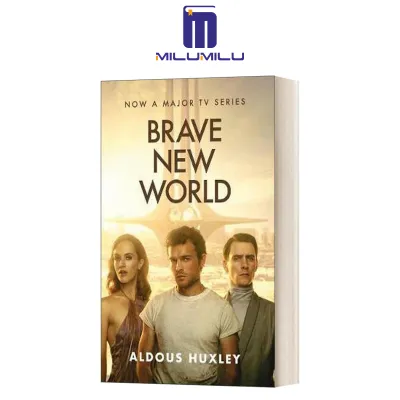
Prices are valid at publication and may change. Please refer to the product page for the latest price.
How to Choose the Right Huxley Novel for Your Taste
Selecting your first Aldous Huxley book requires an honest assessment of your patience for ideological debate within fiction. Unlike contemporary novelists who prioritize rapid plot progression, Huxley frequently pauses his narratives to allow characters to engage in extended intellectual discourse. If you enjoy books where characters debate theology, science, and sociology over dinner, you will find his entire catalog accessible; if you prefer action-driven plots, you must choose your starting point with care.
Another major decision point is whether you prefer dystopian warnings or utopian explorations. Dystopian fiction examines the worst-case scenarios of human progress, focusing on control, surveillance, and the erosion of the human spirit. Utopian fiction, which occupied Huxley’s later years, attempts to construct a blueprint for a sane, balanced society. Your preference between these two modes will immediately point you toward either his mid-career masterpiece or his final literary testament.
Finally, consider your interest in historical periods and literary styles. Huxley’s career is cleanly divided by his move to the United States and his growing interest in mysticism. His early British period is characterized by sharp social satire, drawing-room comedies, and a cynical look at the post-war intellectual elite. His later American period shifts toward speculative science fiction, Eastern philosophy, and psychological experimentation. Deciding whether you want to laugh at the absurdities of 1920s high society or ponder the future of human consciousness will narrow your choices significantly.
The Dystopian Classic: Starting with Brave New World
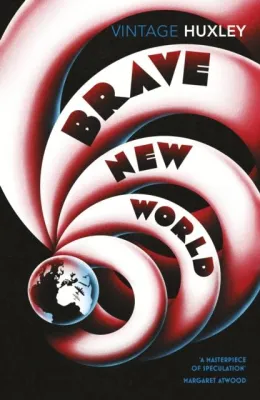
For the vast majority of readers, the journey begins with Brave New World. Published in 1932, this seminal work presents a highly engineered future where pain is eradicated through technological control, psychological conditioning, and a government-sanctioned pharmaceutical called soma. It remains one of the most influential science fiction novels ever written, offering a chillingly plausible alternative to the brutal totalitarianism depicted in other classic dystopias.

This novel is exceptionally well-suited for readers who appreciate intricate world-building and sociological speculation. Huxley meticulously details the assembly-line reproduction of human beings, the sleep-teaching methods used to instill social classes, and the consumerist economy that keeps the World State functioning. The brilliance of the book lies in its depiction of a tyranny built on pleasure and distraction rather than fear and physical force, making it highly relevant to our modern digital landscape.
However, new readers should be prepared for a distinct shift in pacing as the story progresses. While the opening chapters vividly establish the mechanics of the World State, the latter half of the novel transitions into a series of dense philosophical debates. The confrontation between the Savage, who represents traditional human suffering and art, and the World Controller, who defends stability and comfort, is intellectually stimulating but can feel static to those expecting a conventional, action-packed climax. If you choose this as your starting point, approach it as a philosophical inquiry wrapped in a speculative shell.
The Utopian Counterpart: Exploring Island
If you find the relentless pessimism of dystopian fiction exhausting, Island offers a compelling alternative. Published in 1962 as Huxley’s final novel, it serves as a direct, intentional counterweight to Brave New World. The story follows a cynical journalist shipwrecked on the fictional Pacific island of Pala, where a flourishing society has successfully integrated Western science with Eastern spiritual practices to create a genuine utopia.
This book is ideal for readers who are deeply interested in mindfulness, ecology, decentralized politics, and human potential. In Pala, Huxley outlines his vision for a society that avoids the traps of industrial greed and psychological conditioning. Instead, the citizens practice active awareness, use mutual-aid family structures, and apply science to enhance human happiness rather than corporate profit. It is a deeply hopeful book that reflects the author’s lifelong search for spiritual and psychological harmony.
The primary challenge for a first-time reader is that Island prioritizes ideological exposition over narrative tension. The plot is minimal, serving largely as a frame for the protagonist to tour the island and listen to various citizens explain how their society functions. If you require strong narrative momentum, suspense, or complex character conflict to stay engaged, this novel may feel more like a series of essays than a cohesive story. It is best enjoyed when you are in a reflective, patient frame of mind, perhaps reading during a quiet weekend or a relaxed commute.
Early Social Satires: Crome Yellow and Antic Hay
Before he turned his attention to speculative futures and utopian societies, Huxley made his mark as a brilliant satirist of the British intellectual elite. His debut novel, Crome Yellow, and its follow-up, Antic Hay, offer a completely different reading experience from his science fiction. These early works are characterized by sharp wit, sparkling dialogue, and a cynical look at the disillusionment that swept through Europe following the First World War.
Crome Yellow takes place at a country house estate, where a group of eccentric writers, artists, and philosophers gather to talk, flirt, and expose their own intellectual vanity. Antic Hay moves the setting to the chaotic streets of 1920s London, following a cast of characters searching for meaning in a world that has lost its traditional moral compass. Both novels appeal greatly to fans of literary irony, ensemble casts, and comedies of manners that expose the gap between high-minded ideals and messy human realities.
The potential barrier for modern readers is the specific cultural and historical context of these books. To fully appreciate the humor and irony, it helps to have some familiarity with the social dynamics, artistic movements, and intellectual debates of post-WWI Britain. Without this context, the endless conversations about art, history, and philosophy can feel self-indulgent or obscure. If you enjoy the dry wit of writers like Evelyn Waugh or Oscar Wilde, these early satires will serve as a delightful and surprising entry point to Huxley’s career.
Comparing Huxley's Major Novels at a Glance
To help you quickly identify which book aligns with your current reading mood, the table below summarizes the key characteristics of his most prominent works. This matrix highlights his evolution from a witty social commentator to a speculative philosopher.
| Novel Title | Primary Genre | Core Theme | Pacing | Best Suited For |
|---|---|---|---|---|
| Crome Yellow | Social Satire | Intellectual vanity and post-war disillusionment | Leisurely, conversational | Fans of witty dialogue and classic British drawing-room comedies |
| Antic Hay | Satirical Comedy | The search for meaning in a chaotic, modern world | Episodic, erratic | Readers who enjoy bohemian characters and cynical humor |
| Brave New World | Dystopian Sci-Fi | Technological control and the loss of individuality | Moderate, shifting to debate | Anyone interested in sociology, technology, and classic speculative fiction |
| Island | Utopian Fiction | Mindfulness, ecological balance, and human potential | Slow, expository | Readers interested in Eastern philosophy, psychology, and spiritual growth |
As this comparison shows, Huxley’s literary career was not a static endeavor but a continuous evolution. Moving from the cynical observation of human folly in his twenties to the constructive search for human flourishing in his sixties, his novels reflect a mind constantly grappling with the challenges of the modern era.
What to Verify Before Buying a Huxley Book
When you are ready to purchase your first Huxley novel, taking a few moments to verify the specific edition and format will ensure the best possible reading experience. Because many of his works are in the public domain in various jurisdictions or have gone through numerous printings, editions can vary significantly. Always check that you are purchasing an unabridged version rather than an abridged adaptation, which may strip out the essential philosophical dialogues that define his style.
If you prefer listening to books while walking through Singapore’s parks or commuting on the MRT, the choice of audiobook narrator is critical for Huxley’s text. Because his writing relies heavily on tone, irony, and complex sentence structures, a narrator’s delivery can make or break the experience. Listen to a sample before buying to ensure the narrator’s pacing and tone match your preferences, and verify the total runtime to confirm the recording is complete and unabridged.
For digital readers using e-readers or tablets, pay close attention to formatting quality and regional availability. Some low-cost digital editions on online marketplaces suffer from poor scanning, missing punctuation, or broken paragraph breaks, which can ruin the flow of Huxley’s precise prose. Opting for editions from established publishers ensures proper formatting, active tables of contents, and compatibility with your device. If you are buying physical copies in Singapore, check local bookstore inventories or reputable online platforms to compare prices in S$ and verify shipping times to avoid long delays.
Frequently Asked Questions (FAQ)
Is The Doors of Perception a novel?
No, The Doors of Perception is not a novel, but rather a short non-fiction philosophical essay published in 1954. In this work, Huxley details his personal experiences during a clinical experiment with mescaline and reflects on how the drug altered his sensory perception and spiritual outlook. While it is not a work of fiction, it is highly relevant for anyone planning to read his final novel, Island. The philosophical insights regarding consciousness, art, and mysticism developed in this essay directly informed the utopian society he constructed in his later fiction, making it an excellent companion piece for dedicated readers.
Should I read Brave New World before Island?
While you do not need to read them in any specific order to understand the plots, reading Brave New World before Island is highly recommended for thematic context. Brave New World represents Huxley’s early-to-mid-career anxiety about the dangers of scientific progress and psychological manipulation. Island, written three decades later, serves as his mature, constructive response to those exact anxieties, showing how those same scientific and psychological tools could be used to liberate humanity rather than enslave it. Reading them in chronological order allows you to appreciate the full evolution of his philosophical thought.
Community discussion
Share your experience or ask a question. Comments are reviewed before publication.