
Selecting the perfect aroma drum set requires a clear understanding of your current technical abilities, your long-term musical aspirations, and the unique physical constraints of your living environment. Electronic drum kits offer a highly adaptable alternative to traditional acoustic drums, letting you practice quietly while accessing a vast library of digital percussion sounds. However, navigating the diverse product lines of a brand like Aroma requires analyzing key technical specifications rather than relying on broad marketing categories. By matching your specific playing goals with the appropriate pad materials, trigger configurations, and module capabilities, you can select an instrument that supports your development without unnecessary expense.
Quick Decision Matrix: Match Your Profile to an Aroma Kit
To simplify your search, it helps to categorize electronic drum setups into three general configurations based on player profiles. This baseline matrix allows you to quickly identify which class of instrument aligns with your current development and the practical realities of high-density housing in Singapore.
- Beginner Profile: This tier focuses on compact mesh kits designed for entry-level players. These setups prioritize space-saving frames, straightforward sound modules with basic metronome features, and single-zone pads. They are ideal for those testing their interest in percussion or practicing basic rudiments in tight spaces.
- Intermediate Profile: This category matches players transitioning to full-size, dual-zone kits. These instruments feature multi-zone snare and cymbal pads that support advanced techniques like rimshots and cymbal chokes. The sound modules offer expanded customization, making them suitable for dedicated students and local gigging musicians.
- Advanced Profile: This tier represents acoustic-style electronic kits featuring premium wood-shell designs and full-size hardware. These configurations utilize advanced digital modules with multi-channel outputs, high-resolution sampling, and highly responsive positional sensing. They are tailored for studio recording, professional performances, and seasoned players demanding authentic physical feedback.
Choosing the right kit requires balancing these performance tiers with the acoustic and physical characteristics of your home, ensuring your investment remains both functional and neighbor-friendly over years of practice.
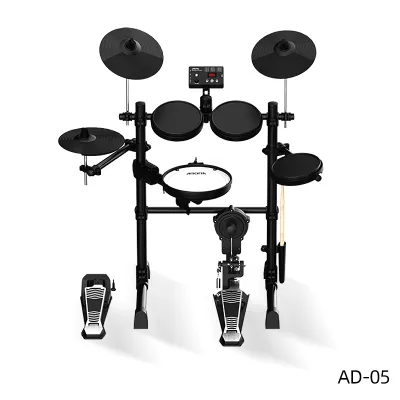
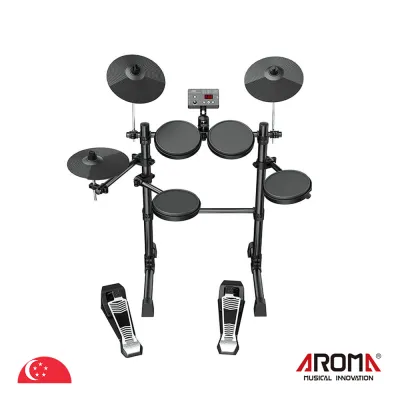
Products mentioned in this guide
![AROMA TDX-22II Electronic Drum Kit [AROMA TDX22II DIGITAL DRUM SET]](https://img.lazcdn.com/g/p/7d7389c167838b148b4bc49229e02574.jpg_400x400q80.jpg_.webp)
![AROMA TDX-18SC Electronic Drum Kit [AROMA TDX18SC Digital Drum]](https://img.lazcdn.com/g/p/f3eb7bc4d0fcaf4316f92647395675b8.jpg_400x400q80.jpg_.webp)
Prices are valid at publication and may change. Please refer to the product page for the latest price.
Defining Your Skill Level and Musical Objectives
Accurately assessing your current playing level and defining your long-term musical objectives prevents the common pitfalls of either outgrowing a basic kit too quickly or overinvesting in professional features you do not yet need. Each stage of drumming development places distinct demands on an electronic kit’s hardware and software.

Beginners and Casual Players
For those starting their musical journey, the primary focus is on developing muscle memory, hand-eye coordination, and basic physical endurance. At this stage, the drum set serves as a foundational learning tool where pad responsiveness and basic timing aids are paramount. Built-in practice tools, such as digital metronomes, coaching modes, and simple play-along backing tracks, are highly valuable for building steady rhythm and independent limb control.
A beginner’s practice space is often shared or temporary, making compact setups that are easy to assemble, adjust, and fold away highly desirable. These entry-level configurations prioritize lightweight frames and simplified wiring harnesses, allowing you to set up the kit in a bedroom or living area and pack it away when not in use. The focus remains on functional simplicity, helping you build core skills without the distraction of complex menu diving or advanced signal routing.
Intermediate and Gigging Musicians
As your playing progresses, you will naturally begin to incorporate more expressive techniques that require a higher level of hardware sensitivity. Intermediate players need dual-zone or multi-zone triggers, which allow the drum module to produce different sounds depending on where the pad is struck, such as playing a standard snare hit versus a rimshot. Realistic cymbal chokes—where grabbing the edge of the cymbal pad instantly silences the sound—become essential for practicing dynamic rock, jazz, or fusion patterns.
For those playing in local bands, church groups, or community events, connectivity and sound customization become critical requirements. The drum module must feature reliable external audio outputs for connecting to keyboard amplifiers or PA systems, as well as MIDI connectivity for interfacing with external hardware. Customizable sound modules allow you to tune individual drum pads, adjust virtual dampening, and mix custom kits that match the specific acoustic needs of different rehearsal spaces and live venues.
Advanced Players and Studio Producers
Advanced drummers and home studio producers require an electronic drum kit that closely mimics the physical response, layout, and visual presence of an acoustic drum set. High-resolution sampling within the sound module is crucial for capturing the subtle nuances of ghost notes, buzz rolls, and rapid double-bass patterns. Positional sensing on the snare and ride cymbal pads ensures that the tone shifts naturally as you play from the center to the edge of the pad, providing a level of realism necessary for professional jazz or session work.
In a studio environment, extensive Input/Output (I/O) options are non-negotiable for seamless integration with Digital Audio Workstations (DAWs). Advanced modules feature multi-channel USB audio, allowing you to send individual drum tracks (kick, snare, toms, hi-hat, overheads) directly to your recording software simultaneously rather than as a single stereo mix. Furthermore, these premium configurations often feature full-size wooden shells and heavy-duty double-braced hardware, providing the physical stability and aesthetic appeal required for professional stage performances and high-end studio spaces.
Managing Space and Noise Constraints in Singapore Homes
Playing the drums in high-density residential environments, such as HDB flats and condominiums in Singapore, presents unique spatial and acoustic challenges. Unlike other instruments, electronic drums generate both airborne noise from sticks hitting rubber or mesh pads and structural vibration from the kick and hi-hat pedals. Managing these factors is essential for maintaining a peaceful home and preserving good relations with your neighbors.
Before purchasing any kit, it is vital to measure your designated practice area and compare it against the physical footprint of the drum rack. While a compact entry-level kit may require a footprint of only about 100 cm by 80 cm, a full-size intermediate or advanced kit with acoustic-style shells can easily demand a space of 150 cm by 120 cm or more. Ensure there is sufficient clearance around the rack for your drum throne, music stand, and any external monitoring speakers, keeping in mind that a cramped setup can negatively affect your playing posture and technique.
Structural vibration is the most common source of noise complaints in concrete-framed high-rise buildings. Every stroke on the kick drum pedal sends low-frequency kinetic energy directly through the pedal assembly and into the floor, where it travels through the concrete slab as structure-borne noise, sounding like a dull hammer to neighbors living below. To mitigate this, look for kits equipped with multi-layered mesh drum heads, which are significantly quieter than traditional hard rubber pads. Additionally, utilizing specialized noise-isolation accessories is highly recommended.
- Specialized Drum Rugs: Thick, slip-resistant carpets help absorb high-frequency impact noise and prevent the drum rack from sliding during intense play.
- Acoustic Isolation Platforms: Placing the kick pedal and drum throne on a dedicated isolation platform, such as a DIY tennis ball riser or commercial sound-absorbing mats, decouples the kit from the floor and dramatically reduces downward vibration transmission.
- Low-Volume Beaters: Utilizing soft foam or felt beaters on the kick tower can further dampen the physical impact without sacrificing pedal response.
Finally, consider the weight capacity of your flooring and the overall stability of the drum rack. While HDB floor loads easily accommodate standard electronic kits, ensure the rack is placed on a flat, stable surface where the clamps can be tightened securely. A shaky rack not only compromises your playing experience but also increases physical wear on the joints and cables, potentially leading to premature hardware failure.
Key Technical Features to Verify Before Buying
When evaluating different models, relying on brand names or broad categories is insufficient. You must verify specific technical features on the manufacturer’s official specifications or through authorized local retail channels to ensure the kit meets your performance expectations.
Pad Materials and Trigger Responsiveness
The material of the drum pads directly dictates both the physical feel of the instrument and the amount of ambient noise generated during practice. Hard rubber pads are durable and cost-effective, but they offer a stiff rebound that can cause wrist fatigue during long practice sessions, and they produce a distinct “clack” sound when struck. In contrast, dual-ply mesh heads provide a realistic rebound that closely mimics the tension of an acoustic drumhead. Mesh heads can also be adjusted using a standard drum key, allowing you to customize the tension to your personal preference while remaining exceptionally quiet.
Trigger responsiveness and zone capabilities are equally important for expressive playing. A single-zone pad triggers only one sound regardless of where or how hard it is hit. For a more authentic experience, verify that the snare pad is at least dual-zone, allowing for independent head and rim sounds. Cymbals should ideally feature dual-zone triggering with choke capability, enabling you to mute the cymbal sound by grabbing the edge, which is a fundamental technique in modern drumming styles.
Sound Module Capabilities and Connectivity
The drum module, often referred to as the “brain,” is responsible for translating your physical strikes into digital sound. When comparing modules, pay close attention to maximum polyphony, which is the number of individual sounds the module can play simultaneously without cutting off sustaining notes, such as a ringing crash cymbal over a fast roll. Look for modules that offer high-quality, multi-velocity samples, ensuring that the tone changes dynamically from a soft tap to a heavy accent rather than simply increasing in volume.
Modern connectivity options greatly expand the utility of an electronic drum kit.
- Bluetooth Connectivity: Allows you to wirelessly stream backing tracks or instructional videos from your smartphone or tablet directly through the drum module, blending the audio with your drum sound for seamless practice.
- USB-MIDI Interface: Enables you to connect the module to a computer or mobile device to trigger virtual instrument libraries (VSTs) or use interactive learning software.
- USB-Audio Output: Allows for direct digital recording of your performance into a DAW without the need for an external audio interface, preserving signal clarity.
Hardware Stability and Pedal Compatibility
The physical construction of the drum rack and hardware components is critical for long-term durability. Inspect the quality of the rack tubing, joint clamps, and pad mounts; plastic clamps should be heavy-duty and reinforced, while metal clamps offer superior longevity and slip resistance under heavy playing. A unstable rack will wobble during play, causing pads to shift out of position and potentially triggering accidental notes through physical vibration transfer.
Pedal compatibility is another vital area of verification, particularly regarding the kick trigger pad or tower. Some entry-level kits use simple, beaterless trigger pedals that are quiet but lack the realistic feel of a physical pedal mechanism. Higher-tier kits feature a dedicated kick tower designed to be struck by a standard acoustic kick pedal. When using a kick tower, check the manufacturer’s guidelines regarding beater compatibility; felt beaters should generally be avoided on mesh kick pads, as the friction can quickly wear down and tear the mesh material. Instead, use a smooth plastic or wood beater, or install a protective patch on the mesh head to prevent damage.
Navigating Aroma's Product Tiers and Local Availability
Aroma offers a structured range of electronic drum kits designed to accommodate different budgets and performance requirements. Navigating these tiers successfully requires matching your verified technical needs with the appropriate product line while ensuring full local support and compatibility.
When browsing the brand’s lineup, categorize your search into three primary tiers:
- Entry-Level Mesh Kits: These models feature compact, lightweight racks, single-zone mesh pads, and simplified modules with essential practice features. They are designed for budget-conscious beginners and space-constrained homes.
- Mid-Tier Performance Kits: These kits transition to larger, more stable racks, dual-zone snare and tom pads, and multi-zone cymbals with choke features. The modules offer enhanced sound libraries, Bluetooth connectivity, and expanded USB capabilities.
- Flagship Acoustic-Style Kits: These premium setups feature full-size wooden drum shells, heavy-duty hardware stands, and advanced modules with multi-channel outputs and high-resolution sound engines, catering to advanced players and studio environments.
Because electronic drum specifications and model designations can update frequently, always cross-reference product details on the manufacturer’s official website or with authorized distributors before finalizing your purchase. Pay close attention to the specific module version and pre-loaded sample libraries included in the package, as some retailers may bundle older module versions with newer pad configurations.
Purchasing through an authorized local distributor in Singapore offers several critical advantages. First, verify the warranty terms; local warranties ensure that any potential electronic component failures, trigger issues, or module malfunctions can be serviced or replaced quickly without the high cost and delay of shipping the kit overseas. Second, confirm that the included power adapter is fully compliant with local electrical standards, specifically requiring a UK 3-pin plug rated for 230V at 50Hz. Finally, check the local availability of replacement parts, such as spare mesh heads, trigger cables, and mounting clamps, ensuring that your kit can be easily maintained and upgraded over its lifespan.
Frequently Asked Questions (FAQ)
Do Aroma electronic drums require a separate amplifier?
Electronic drum kits do not produce external sound on their own; they require an output device to be heard. For private practice, a high-quality pair of studio monitor headphones with a flat frequency response is ideal, allowing you to play silently without disturbing others. If you wish to play aloud for rehearsals, performances, or lessons, you will need a dedicated electronic drum amplifier or a portable PA system. Standard guitar amplifiers are not suitable, as they are not designed to handle the extreme low frequencies of a kick drum or the crisp high frequencies of cymbals, which can result in distorted sound or damage to the amplifier speaker.
Can I use standard acoustic hardware with these kits?
The compatibility of standard acoustic hardware depends heavily on the specific model tier of your electronic kit. Mid-to-high-tier kits often feature pads designed to mount on standard L-rod clamps or cymbal pads that fit on standard acoustic cymbal stands. However, entry-level kits frequently utilize proprietary rack tubing and integrated plastic mounting clamps that may not accommodate heavy acoustic hardware. Additionally, using excessively heavy acoustic hardware on lightweight electronic drum racks can cause instability or structural damage. Always verify clamp diameters and weight limitations before attempting to integrate acoustic stands or pedals into your electronic setup.
How do I connect the drum module to a computer for recording?
Connecting your drum module to a computer is a straightforward process that depends on whether you want to record MIDI data or direct audio. To record MIDI—which captures the timing and velocity of your hits to trigger virtual instruments in your DAW—connect a standard USB cable from the module’s USB-to-Host port directly to an available USB port on your computer. Your DAW should recognize the module as a MIDI input device. To record the actual internal sounds of the drum module, you can connect the module’s main audio outputs to an external audio interface connected to your computer, or utilize the module’s built-in USB-Audio feature if supported by your specific model, allowing you to record digital audio directly through a single USB connection.
Community discussion
Share your experience or ask a question. Comments are reviewed before publication.