
Selecting the right Besta Chinese electronic dictionary requires a clear understanding of your current language proficiency, learning objectives, and study environment. While digital tools are abundant, a dedicated electronic dictionary remains a cornerstone for structured language acquisition, particularly for students preparing for national examinations and professionals requiring precise translation tools. By matching your specific learning stage with the appropriate hardware capabilities and licensed databases, you can secure an invaluable study companion that streamlines your vocabulary acquisition and character writing practice.
To make an informed decision, you must look beyond aesthetic designs and focus on the core utility of the device. Different models cater to distinct user profiles, ranging from primary school students mastering basic stroke orders to advanced learners translating complex technical documents. Evaluating these devices involves analyzing their built-in lexicons, input methods, audio quality, and overall hardware durability to ensure the tool you choose aligns perfectly with your educational journey.
Assessing Your Chinese Proficiency and Learning Goals
Before exploring specific device specifications, you must evaluate your current language level and define your primary use cases. Language learners generally fall into three broad proficiency tiers: beginner, intermediate, and advanced. Beginners, including young students, require intuitive interfaces that emphasize character recognition, basic pronunciation, and stroke order animations. At this stage, the primary goal is to build a strong foundation in character writing and phonetics, making visual and auditory clarity the most critical factors.
Products mentioned in this guide
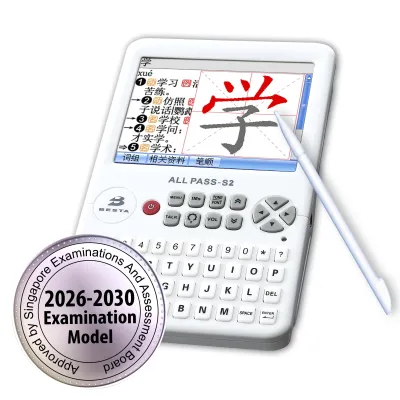
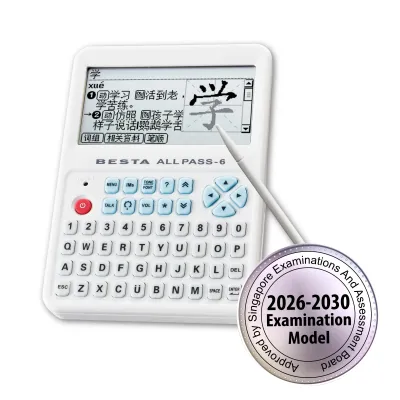
Prices are valid at publication and may change. Please refer to the product page for the latest price.
Intermediate learners, such as secondary school and junior college students, transition toward sentence construction, grammar rules, and idiom usage. If you are preparing for standardized examinations, your requirements will shift toward comprehensive dictionaries that offer extensive sentence examples and official exam vocabulary lists. For these users, lookup speed and the depth of grammatical explanations are paramount, as the dictionary must serve as a reliable reference during intense study sessions.
Advanced learners and working professionals demand specialized tools that support technical translation, classical Chinese literature, and industry-specific terminology. If your work involves business, legal, or medical translation, you will need a device that features authoritative, specialized glossaries and multi-language translation capabilities. At this level, the ability to customize the dictionary database and access advanced search functions becomes a necessity rather than a luxury.
Your study habits also dictate whether a dedicated hardware device is superior to a mobile application. If you study in environments where internet access is restricted, such as school classrooms or examination halls, a standalone electronic dictionary is often the only permissible digital resource. Conversely, if you primarily study at home and prefer a multi-functional device, you must weigh the focused, distraction-free nature of dedicated hardware against the convenience of general-purpose tablets or smartphones.
Key Features to Evaluate in a Besta E-Dictionary
When evaluating a Besta electronic dictionary, the built-in lexicons and licensed databases are the most critical components to verify. Unlike generic translation tools, high-quality electronic dictionaries feature licensed content from authoritative publishers, such as standard Chinese-English dictionaries compiled by academic institutions. You should carefully check the product packaging or official specification sheet to confirm which dictionaries are pre-loaded, ensuring they align with your curriculum or professional needs.

Input methods directly impact your lookup efficiency and overall user experience. A robust handwriting recognition system is essential for Chinese language learners, as it allows you to write unfamiliar characters directly on the screen to find their pronunciation and meaning. You should also verify the availability of Pinyin input, radical search, and stroke-count lookup methods. Advanced models may also feature voice input capabilities, which can significantly speed up the search process for spoken words, provided the device’s microphone and speech recognition engine are highly accurate.
Audio pronunciation features are another vital consideration for mastering spoken Chinese. You should verify whether the device utilizes high-quality native speaker recordings or synthesized text-to-speech technology. Native speaker recordings provide natural intonation and accurate tones, which are crucial for developing proper pronunciation and listening comprehension. Synthesized speech, while useful for reading long passages, often lacks the natural cadence required for foundational language learning.
Finally, hardware ergonomics and build quality determine the device’s usability during extended study sessions. Consider the screen size and display technology; a larger, high-resolution color screen reduces eye strain and makes reading complex Chinese characters much easier. Stylus responsiveness is equally important for handwriting input, as a laggy or insensitive screen can lead to frustration. Additionally, check the battery specifications, noting whether the device uses a rechargeable lithium-ion battery or standard AAA batteries, and evaluate the estimated battery life to ensure it can withstand long study sessions without frequent recharging.
Matching Besta Dictionary Categories to Your Learning Stage
To simplify your selection process, you can categorize Besta electronic dictionaries into three general product tiers, each designed to meet the needs of specific learner profiles. Entry-level and student models are tailored for beginners and primary school students who are just starting their language learning journey. These devices prioritize simplicity and foundational skills, featuring prominent handwriting input areas, clear stroke order animations, and basic vocabulary building games. The built-in dictionaries in this tier focus on standard primary school vocabulary, helping young learners master the correct sequence of writing characters while providing clear, simple definitions.
Intermediate and exam-preparation models are engineered for secondary school students, junior college students, and those preparing for standardized language proficiency tests. These devices place a strong emphasis on comprehensive sentence examples, detailed grammar notes, and extensive idiom databases. The lexicons included in these models are more advanced, often featuring bilingual dictionaries that explain subtle differences between similar words. Additionally, these models may include dedicated exam-prep modules, such as practice quizzes and vocabulary lists aligned with official curricula, helping students build the confidence and speed required for academic success.
Advanced and professional models represent the pinnacle of electronic dictionary technology, designed for university students, translators, and business professionals. These high-end devices offer multi-language support, allowing users to translate between Chinese, English, and other regional languages. They feature specialized industry dictionaries covering fields such as law, medicine, engineering, and finance, ensuring accurate translation of technical terminology. Furthermore, professional models often include expandable memory slots, such as microSD card support, which allow you to upload custom glossaries, user-defined dictionaries, and additional learning materials to customize the device to your specific professional workflow.
By identifying where you stand on this learning continuum, you can avoid overpaying for advanced features you do not need, or conversely, purchasing an entry-level model that you will quickly outgrow. If you are a parent buying a device for a child in primary school, an entry-level model with robust stroke order guides is highly effective. If you are an adult learner pursuing business Chinese, investing in an advanced model with specialized business glossaries will provide the long-term utility required for professional communication.
Practical Pre-Purchase Checks in Singapore
Before finalizing your purchase of a Besta electronic dictionary in Singapore, there are several practical checks you must perform to ensure a smooth user experience. First, verify the default system language and user interface. If you are a beginner or intermediate learner, you must ensure that the device supports English menus and navigation instructions, as a fully Chinese interface can be incredibly challenging to navigate when you are still learning the basics.
Second, pay close attention to regional power compatibility and warranty terms. Ensure that the device comes with a compatible charging cable or power adapter suitable for local electrical outlets, or that it can be easily charged via standard USB ports. It is equally important to confirm the local warranty terms provided by the seller. Purchasing from an authorized local distributor typically ensures access to reliable after-sales support and repair services, whereas parallel imports may leave you without recourse if the hardware malfunctions.
Third, compare the availability and pricing of different models across official brand stores and reputable online marketplaces. Prices are typically listed in S$, and you should look for authorized sellers to avoid counterfeit products or devices pre-loaded with unauthorized, low-quality dictionary databases. Take the time to read the product specifications carefully, as physical appearances can be similar across different model generations, but the internal dictionary copyrights and hardware capabilities may differ significantly.
Lastly, review the seller’s return and exchange policy before completing your transaction. Because electronic dictionaries are a significant investment, you want to ensure that you can return or exchange the device if you discover that it lacks a specific required dictionary copyright, or if the handwriting recognition does not meet your expectations. A flexible return policy provides peace of mind and protects your investment in your language learning journey.
Dedicated E-Dictionary vs. Mobile Apps: Which Is Right for You?
In an era dominated by smartphones and tablets, you might wonder why you should invest in a dedicated electronic dictionary rather than relying on mobile applications. The primary advantage of a dedicated device is the creation of a distraction-free learning environment. Smartphones are filled with social media notifications, games, and instant messaging apps that can easily derail your focus during study sessions. A dedicated electronic dictionary has no such distractions, allowing you to maintain deep concentration and maximize your study efficiency.
From a financial perspective, a dedicated electronic dictionary can also be a highly cost-effective choice over the long term. While many high-quality dictionary apps require recurring monthly or annual subscription fees to access premium lexicons and offline features, a dedicated device is a one-time hardware purchase. Over several years of academic study or professional use, the cumulative cost of app subscriptions can easily exceed the initial price of a standalone device, which remains fully functional without any ongoing fees.
Ergonomics and eye health are additional factors that favor dedicated hardware. Many electronic dictionaries feature screens optimized for reading text, which can reduce eye strain during long, focused study sessions compared to the high-glare screens of modern smartphones. Furthermore, the inclusion of a physical stylus and a dedicated handwriting area provides a tactile writing experience that closely mimics pen and paper, reinforcing muscle memory and helping you learn to write Chinese characters more effectively than typing on a virtual keyboard.
Frequently Asked Questions (FAQ)
Can I update the dictionaries on a Besta e-dictionary?
To determine if you can update the dictionary databases or firmware on your Besta electronic dictionary, you must consult the official user manual or visit the manufacturer’s official website. Some modern models allow you to download updates or additional glossaries via a computer connection or a built-in wireless connection. However, older or discontinued models may no longer receive database updates from the manufacturer. It is highly recommended to verify the support status of your specific model on the official brand portal before attempting any software modifications.
How do I clean the screen and stylus of my e-dictionary?
To maintain the physical components of your electronic dictionary, you should clean the screen regularly using a dry, soft microfiber cloth to remove fingerprints and dust without scratching the surface. Avoid using chemical solvents, abrasive cleaning materials, or excessive moisture, as these can damage the screen’s sensitive touch layer or seep into the internal hardware. For the stylus, gently wipe it with a dry cloth and ensure it is stored securely in its designated slot when not in use to prevent loss or damage to the tip. Always refer to the manufacturer’s user manual for specific care instructions tailored to your device’s materials.

Community discussion
Share your experience or ask a question. Comments are reviewed before publication.