
To ensure you are preparing with the correct materials, the edition of the Cambridge IGCSE French course book you buy must explicitly display the official Cambridge endorsement logo and state that it is “for examination from” your specific exam year. Because Cambridge Assessment International Education updates its syllabi periodically, purchasing an outdated textbook can leave you unprepared for recent changes in vocabulary lists, grammar requirements, or exam paper formats. Aligning your study materials with the exact syllabus cycle you will be tested on is the single most important step in your exam preparation.
Using an incorrect edition can lead to wasted study hours. For example, if a syllabus update introduces a new speaking task or removes a specific writing format, an older textbook will not reflect these adjustments. By verifying the publication details before making a purchase, you protect your study time and ensure that every practice exercise directly supports your upcoming assessment.
This guide provides a systematic approach to identifying your syllabus requirements, verifying book covers, comparing endorsed publishers, and choosing the right format for your learning style. Whether you are studying independently or following a school curriculum, these steps will help you select the correct resources with confidence.
Products mentioned in this guide
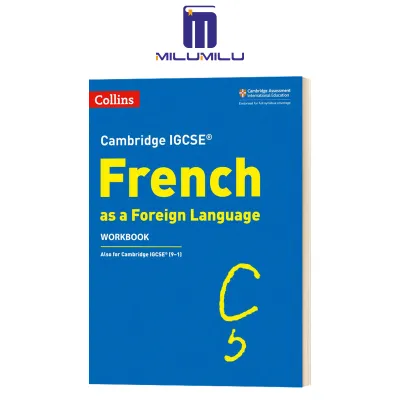
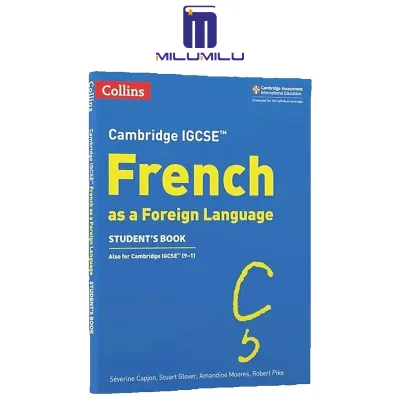
Prices are valid at publication and may change. Please refer to the product page for the latest price.
How to Identify Your Exact Syllabus Requirements
Before you begin browsing online marketplaces or visiting local bookstores, you must establish your baseline exam details. The first step is to visit the official Cambridge Assessment International Education website to access the syllabus document for your subject. For Cambridge IGCSE French, the standard syllabus code is typically 0520, but there is also a 9-1 grading syllabus coded as 7156. Confirming which of these codes your exam center or school uses is essential, as the grading scales and administrative details differ.
Once you have located the correct syllabus page, identify the exact year of your scheduled examinations. Cambridge syllabi are usually valid for a specific range of years, such as 2025–2027. A textbook designed for a syllabus that expired in 2024 may lack the thematic vocabulary or the specific assessment structures required for your test. The syllabus document itself contains a section detailing any major changes from previous years, which you should read carefully.
Take note of any shifts in assessment objectives or exam components. For instance, updates to the listening or reading papers might alter the length of the texts, the types of questions asked, or the total marks allocated to each section. Knowing these details allows you to cross-reference them with the table of contents and introductory pages of any course book you consider purchasing.
If you are registered through a school or an independent exam center, consult your coordinator or teacher before buying any materials. They can provide you with a candidate guide or a specific book list that outlines the exact syllabus version you will sit. This is particularly important in regions like Singapore, where schools may follow specific academic calendars and registration timelines that dictate which exam series you will enter.
What to Look for on the Book Cover and Copyright Page
When you have a physical book in hand or are viewing a detailed listing on an online bookstore, you must look for specific visual and textual markers. The most reliable indicator of suitability is the official “Endorsed by Cambridge Assessment International Education” logo. This logo, usually positioned on the front cover, indicates that the content has undergone a rigorous review process by the exam board to ensure it covers the syllabus comprehensively.

Beyond the endorsement logo, examine the precise wording regarding the syllabus timeline. Look for phrases such as “for examination from 2025” or “first teaching from 2023.” This phrasing tells you exactly which syllabus cycle the book was written to support. If a book cover simply says “New Edition” without specifying an exam year, do not rely on that label alone, as “new” is a relative term in publishing.
To perform a foolproof check, turn to the copyright page or the back cover to locate the International Standard Book Number (ISBN) and any printed syllabus codes. Publishers of endorsed books almost always list the specific Cambridge syllabus code (such as 0520) that the text is designed to cover. You can copy this ISBN and search for it on the publisher’s official website to verify its publication date and target syllabus cycle.
Be cautious when purchasing secondhand books from older students or local classifieds. While the cover may look identical to the current edition, minor revisions or reprintings can occur within a syllabus cycle. Always verify the edition number and the printing year on the copyright page to ensure you are not buying an early draft or an outdated version that has since been revised for clarity or accuracy.
Navigating Different Endorsed Publishers
A common point of confusion for students and parents is the existence of multiple “official” textbooks for the same syllabus. Cambridge Assessment International Education does not produce just one authorized course book; instead, they work with several independent publishers to endorse multiple titles. Major publishers such as Cambridge University Press, Hodder Education, and Collins all offer endorsed course books for the IGCSE French syllabus.
Because these books are all officially endorsed, they all cover the required vocabulary, grammar, and exam skills necessary to pass the test. However, their pedagogical approaches, visual layouts, and supplementary materials can vary significantly. For example, one publisher might focus heavily on structured grammar drills and translation exercises, while another might emphasize communicative language teaching with colorful layouts and cultural case studies.
When choosing between these publishers, consider your personal learning style. If you prefer a highly structured, traditional approach to language learning, look for a textbook that organizes chapters strictly by grammatical concepts. If you learn better through context and visual cues, a book with a more modular, theme-based layout might be more effective. Many publishers offer sample chapters online, which you can review to see which style resonates with you.
Additionally, check if your school or private tutor has a preference. If you are attending classes, it is highly beneficial to use the same publisher as your teacher to ensure your homework assignments, vocabulary lists, and classroom activities align perfectly. If you are studying independently, you have more freedom to choose the layout and digital ecosystem that best fits your study habits.
Print, Digital, and Bundle Options for Exam Prep
Modern exam preparation resources are available in a variety of formats, and choosing the right medium can impact your study efficiency. Traditional print textbooks remain highly popular for language learning. They allow you to easily flip between vocabulary glossaries, grammar reference sections, and practice exercises. Physical books are also excellent for active annotation, allowing you to write translations, highlight key verbs, and make notes directly on the page.
Digital editions and e-books offer distinct advantages, particularly for a language syllabus that includes a significant listening component. Many digital course books feature embedded audio tracks, allowing you to listen to dialogues and pronunciation guides with a single click. They also offer search functions, which make finding specific grammar rules or vocabulary words much faster than flipping through a physical index. Furthermore, digital formats are highly portable, allowing you to study on a tablet or laptop without carrying heavy books.
When shopping, you will often encounter exam prep bundles. These packages typically combine the core course book with a workbook, a grammar workbook, or a revision guide. Bundles can offer excellent value, especially if they include access to online learning platforms with interactive quizzes and progress tracking. If you require comprehensive practice to build confidence in your writing and listening skills, investing in a complete bundle is often more cost-effective than buying each component separately.
Before purchasing a digital-only option or a bundle that relies heavily on online resources, verify the access terms. Some digital codes are valid only for a limited period, such as one or two years from activation. Ensure that the access window covers your entire study period up to your final exam date. Additionally, check the system requirements to confirm that the publisher’s digital platform is compatible with your personal devices.
Final Decision Framework: Which Edition Should You Buy?
To make your final purchase decision, follow a simple conditional framework based on your current academic situation. If you are sitting the Cambridge IGCSE French exam in the current or upcoming exam cycle, your primary choice must be the latest endorsed edition that matches your exam year. This ensures complete alignment with the active syllabus and protects you from unexpected changes in the exam format.
You should only consider purchasing an older or non-endorsed edition under very specific conditions. For example, if your teacher or tutor explicitly confirms that the core grammar and vocabulary requirements have not changed, and you plan to use the older book strictly as a supplementary reader or for extra grammar drills, it can be a useful, budget-friendly tool. However, it should never serve as your primary study guide for exam-specific preparation.
If you are ever in doubt about which publisher, format, or bundle to choose, always consult your French teacher or your exam center’s administrative coordinator first. They can provide the exact ISBNs required for your course, ensuring you do not spend money on incompatible materials. Taking a few moments to verify these details before completing your purchase will save you time, money, and stress during your exam preparation journey.
Frequently Asked Questions (FAQ)
Can I use a Cambridge IGCSE French book from a previous syllabus cycle?
Using a course book from a previous syllabus cycle carries significant risks and is generally not recommended as your primary study resource. While French grammar rules do not change, the specific vocabulary topics, exam question formats, and assessment criteria are updated periodically by Cambridge. If you use an outdated book, you might spend time studying topics that are no longer tested, or worse, you might miss new exam components entirely. An older book should only be used as a secondary resource for general reading practice or basic grammar review, provided you also have access to the current syllabus materials.
Do I need to buy the workbook along with the main course book?
While the main course book provides the essential explanations, vocabulary lists, and core readings, the accompanying workbook is highly recommended for comprehensive preparation. The workbook offers additional practical exercises that allow you to apply the grammar rules and vocabulary you have learned. If you are studying independently or feel you need extra practice with writing and reading comprehension, the workbook is an invaluable tool. However, if your teacher provides ample worksheets and practice materials in class, you may be able to rely solely on the main course book.
How can I access the audio files for the listening exercises?
Access methods for listening audio tracks vary depending on the publisher of your course book. Most modern endorsed textbooks provide access to these files through a companion website, a dedicated mobile app, or via download codes printed inside the book’s cover. If you purchase a digital edition or e-book, the audio tracks are often embedded directly into the pages. Before purchasing a secondhand book, be aware that any single-use digital access codes for audio files may have already been redeemed, which could require you to purchase audio access separately from the publisher.
Community discussion
Share your experience or ask a question. Comments are reviewed before publication.