
Selecting the ideal capo for your acoustic guitar depends on balancing your need for quick key changes with your demand for precise tuning. While a spring-loaded capo offers excellent speed for live performances, a screw-adjustable model provides the precise tension control required to keep your strings perfectly in tune. Understanding how these different mechanisms interact with your guitar’s neck profile is the key to finding the right accessory for your playing style.
Understanding Capo Mechanisms: Spring, Screw, and Strap Types
Spring-loaded capos, often called trigger capos, are a highly popular choice for everyday players. They utilize a strong internal spring to clamp down on the strings, allowing you to squeeze and reposition the device with a single hand in a matter of seconds. While this speed is highly convenient, the fixed tension of the spring cannot be adjusted, which sometimes applies too much pressure and pulls the strings slightly sharp.
Screw-style capos, or adjustable clamp capos, prioritize precision over speed. These devices feature a thumbscrew that allows you to fine-tune the exact amount of pressure applied to the fretboard. By tightening the screw only until the strings ring clearly, you avoid the tuning distortion common with spring-loaded models, though adjusting them requires both hands and a bit more time.
Products mentioned in this guide

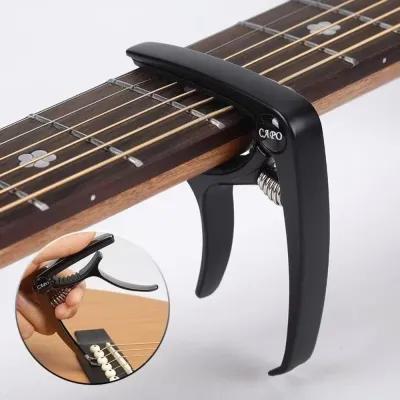

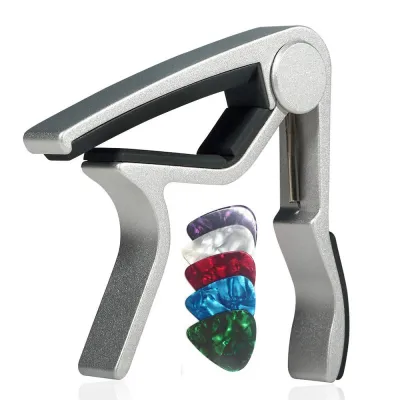
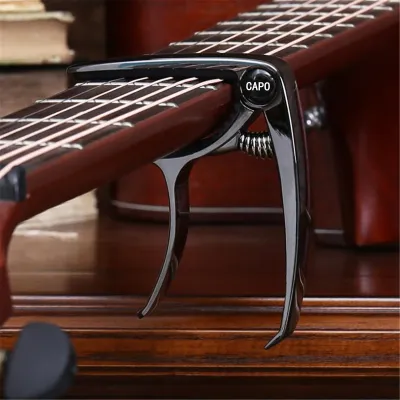
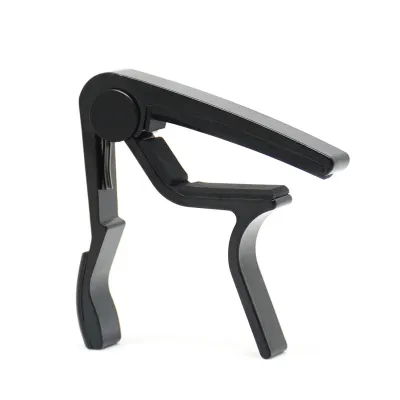


Prices are valid at publication and may change. Please refer to the product page for the latest price.
Strap and toggle capos offer a lightweight, traditional alternative. These designs use an elastic band or a fabric strap combined with a locking toggle to secure the capo to the neck. They distribute pressure evenly and are highly portable, but adjusting the tension can be finicky, and they generally take longer to move between frets during a performance.
Matching the Capo Mechanism to Your Playing Style
Your choice of capo should align directly with where and how you play. If you perform live or frequently transition between keys during a set, a spring-loaded trigger capo is highly practical. It lets you transition seamlessly between songs without pausing the momentum of your performance to fiddle with adjustment screws.

For studio recording or critical practice sessions where perfect intonation is essential, an adjustable screw capo is the preferred tool. Even a minor tuning discrepancy becomes noticeable under a microphone, making the ability to dial in the minimum required tension invaluable for preserving the natural pitch of your acoustic guitar.
If you travel frequently, practice casually, or prefer to keep your gig bag as light as possible, a compact strap capo or an ultra-lightweight screw model is an excellent fit. These low-profile designs take up minimal space in your accessory pocket and won’t add noticeable weight to the neck of your instrument during long practice sessions.
Key Fit and Material Specifications to Verify
Before purchasing any capo, you must verify its physical compatibility with your specific acoustic guitar. The most critical factor is the fretboard radius. Most steel-string acoustic guitars feature a curved fingerboard, which requires a capo with a matching curved pad to ensure even pressure across all six strings. Using a flat classical guitar capo on a curved acoustic fretboard will cause the outer strings to buzz while the middle strings are squeezed too tightly.
You also need to check the neck width and depth limits of the capo. Acoustic guitar necks are generally wider and thicker than those of electric guitars, especially near the body. Ensure the capo’s clamp opens wide enough to accommodate your guitar’s neck profile at the highest fret you plan to use.
Finally, inspect the contact materials on the capo. High-quality models feature soft silicone or thick rubber padding where the device meets the strings and the back of the neck. This padding protects your guitar’s finish from scratches and prevents the strings from slipping, all without dampening the natural resonance and sustain of your instrument.
Troubleshooting Common Tuning and Buzzing Issues
Even a high-quality capo can cause performance issues if applied incorrectly. Over-tightening is the most common culprit behind tuning problems, as excessive force stretches the strings downward toward the wood, pulling the notes sharp. To prevent this, always apply only the minimum amount of pressure needed to make the strings ring clearly.
Placement errors also lead to unwanted string buzz or muted notes. Position the capo directly behind the fret wire, roughly one-quarter of the way back into the fret space, rather than placing it directly on top of the metal wire or too far back toward the headstock. Placing it too far back requires more pressure to clear up the buzz, while placing it on top of the fret wire dampens the vibration.
If you experience uneven pressure where some strings buzz while others are clear, try releasing the clamp and reseating the capo. Ensure it is aligned parallel to the fret wire and centered across the width of the neck. If the issue persists, check the rubber padding for wear or verify that the capo’s curvature matches your fretboard’s radius.
Frequently Asked Questions (FAQ)
Can I use an electric guitar capo on an acoustic guitar?
While you can physically clamp some electric guitar capos onto an acoustic guitar, it is not always ideal. Electric guitars typically have narrower necks and more pronounced fretboard curvatures compared to acoustic guitars. An electric capo may not span the full width of an acoustic neck, or it may apply uneven pressure, leading to string buzz on the outer strings. Always check the manufacturer’s specifications to ensure the capo is rated for acoustic use.
Does a heavier capo affect the acoustic guitar's tone?
The physical weight of a capo has a negligible impact on your guitar’s overall tone, but the mechanical tension it applies is highly significant. While a heavier metal capo might slightly alter the neck’s resonance, any change is usually imperceptible to the listener. What truly affects your tone is proper placement and correct tension; a capo that is too tight dampens sustain, while one that is too loose causes tone-killing string buzz.
Community discussion
Share your experience or ask a question. Comments are reviewed before publication.