
Selecting the right Daily Dose assessment books for the Primary School Leaving Examination (PSLE) is a strategic decision that can significantly influence a student’s preparation journey. The PSLE demands not only a deep understanding of subject matter but also the stamina and mental agility to apply concepts under exam conditions. The Daily Dose series is designed to cultivate these traits through structured, bite-sized daily exercises. To choose the most effective books for your child’s needs, you must evaluate their current academic standing, identify specific areas requiring reinforcement, and ensure that the selected materials align precisely with the latest educational standards.
Rather than overwhelming students with massive volumes of practice papers as the exam approaches, a targeted daily practice strategy builds confidence and competence incrementally. By focusing on specific components of English, Mathematics, and Science each day, students can maintain a steady learning momentum. This systematic approach helps transition knowledge from short-term memory to long-term retention, making revision more manageable and less stressful in the final lead-up to the examinations.
Understanding the Daily Practice Approach for PSLE
Daily practice assessment books operate on the principle of spaced repetition and incremental learning. Instead of attempting to master complex topics in single, exhausting study sessions, students engage with the material in short, focused intervals. This method reduces cognitive fatigue and allows the brain to process and consolidate information more effectively. Over several months, these brief daily sessions accumulate into a substantial body of practice, reinforcing core concepts and improving problem-solving speed without the anxiety associated with last-minute cramming.
Products mentioned in this guide
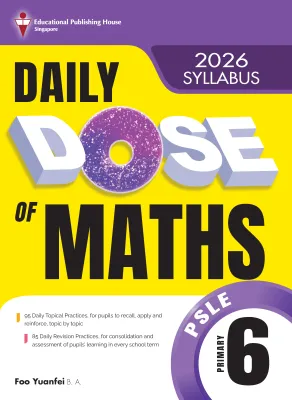
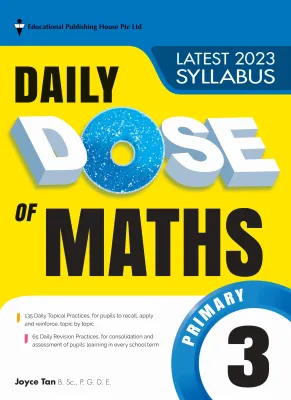
Prices are valid at publication and may change. Please refer to the product page for the latest price.
To ensure that a daily practice series is a valuable addition to your child’s study routine, it is essential to verify its alignment with the current Ministry of Education (MOE) syllabus in Singapore. Educational standards and exam formats undergo periodic updates to place greater emphasis on critical thinking and real-world application. Before purchasing any book, examine the preface, copyright page, and table of contents to confirm that the content reflects the latest curriculum changes and assessment guidelines. Using outdated materials can lead to confusion and wasted effort on topics or question formats that are no longer tested.
Integrating daily assessment books into an already busy schedule requires careful planning to prevent student burnout. These books should complement, rather than duplicate, school homework and tuition assignments. If a student is already managing a heavy workload, a daily practice session should be kept brief—perhaps ten to fifteen minutes—focusing on a single weak area rather than multiple topics. It is equally important to schedule regular rest periods and recreational activities, as a well-rested mind is far more receptive to learning and retaining complex information.
Selecting the Right Daily Dose Book for PSLE English
PSLE English comprises several distinct components, including grammar, vocabulary, comprehension, and writing, each requiring a different preparation strategy. When selecting a Daily Dose book for English, look for titles that target these components individually rather than attempting to cover everything in a single, generalized volume. For instance, if your child consistently loses marks in the grammar cloze or synthesis and transformation sections, a book dedicated specifically to these high-weightage areas will yield better results than a general practice paper book.

For foundational skills like grammar and vocabulary, the ideal daily practice book should offer concise, targeted exercises that can be completed quickly. These exercises should introduce a variety of sentence structures and vocabulary words in context, helping students recognize patterns and collocations. Daily exposure to diverse vocabulary and precise grammar rules builds the linguistic intuition necessary to tackle the more challenging sections of the English paper, such as comprehension cloze and sentence synthesis.
When it comes to comprehension and cloze passages, select books that match your child’s current reading ability while gradually introducing the complexity of the actual PSLE format. The passages should cover a range of genres, including narrative, expository, and information literacy texts. A well-structured book will guide the student through different question types, such as literal, inferential, and vocabulary-in-context questions, helping them develop systematic strategies for locating and formulating answers.
An often overlooked but critical feature of an effective English assessment book is the quality of its answer key. Avoid books that merely list the correct options without further explanation. Instead, prioritize publications that provide detailed explanations for grammar rules, vocabulary definitions, and the rationale behind specific comprehension answers. This allows students to learn from their mistakes independently, understanding why a particular word choice or sentence structure is correct while others are not.
Selecting the Right Daily Dose Book for PSLE Math
Mathematics preparation for the PSLE requires a balance between conceptual understanding and procedural fluency. When choosing a Daily Dose Math book, you must distinguish between topical drill books and mixed-problem heuristic practices. Topical books are highly beneficial during the earlier phases of revision or when a student needs to master a specific mathematical concept, such as ratio, percentage, or speed. Mixed-problem books, on the other hand, are essential for the later stages of preparation, as they train students to identify and apply the correct heuristic when questions from different topics are presented together.
Ensure that the selected Math book fully covers the latest syllabus requirements, with a strong emphasis on model drawing and non-routine problem sums. The PSLE Math paper frequently features complex, multi-step word problems that test a student’s ability to visualize and manipulate quantitative relationships. The practice problems in the book should encourage logical thinking and the application of various heuristics, such as working backwards, making a systematic list, or using algebraic methods where appropriate.
To prevent frustration and maintain motivation, it is crucial to gauge the difficulty level of the assessment book before purchasing. You can do this by reviewing the table of contents and examining sample pages. Look for a clear progression in difficulty, starting with basic recall and computational questions before moving on to intermediate application and advanced problem-solving tasks. If the transition between difficulty levels is too abrupt, the student may become discouraged and lose interest in daily practice.
Additionally, examine the workspace provided in the book. Mathematics requires ample room for students to draw models, write out equations, and perform calculations. Books with cramped layouts can lead to careless transfer errors and make it difficult for parents or teachers to review the student’s working. A clean, spacious layout not only makes the practice more inviting but also helps students develop organized working habits that are vital during the actual examination.
Selecting the Right Daily Dose Book for PSLE Science
PSLE Science assesses a student’s ability to apply scientific facts, concepts, and principles to unfamiliar situations. Therefore, the right Daily Dose Science book must go beyond simple factual recall and focus on building conceptual understanding and application skills, particularly for open-ended questions. Look for books that explicitly teach answering techniques, helping students structure their responses using clear scientific reasoning and appropriate terminology.
An effective Science practice book should emphasize the use of scientific keywords and conceptual linking. In the PSLE, marks are often awarded based on the presence of specific key terms and the logical flow of the explanation. The exercises should guide students to identify the core scientific concept behind a question—such as heat transfer, forces, or life cycles—and connect that concept to the observed phenomena in a structured manner.
Ensure that the book provides comprehensive coverage of all major thematic blocks required by the current upper primary science syllabus, including Diversity, Cycles, Systems, Interactions, and Energy. Because the PSLE tests content accumulated from lower primary levels as well, a good revision book should integrate these foundational topics alongside more advanced upper primary concepts. This ensures that students do not lose touch with earlier topics that remain highly examinable.
Finally, scrutinize the answer scheme of the Science book. It should provide detailed, step-by-step explanations for both multiple-choice and open-ended questions. For open-ended questions, the answer key should ideally highlight the essential keywords and phrases required to secure full marks, while also showing common misconceptions or incomplete answers that students should avoid. This level of detail transforms the answer key from a simple grading tool into an invaluable learning resource.
Essential Checks Before Buying PSLE Assessment Books
Before finalizing your purchase of any PSLE assessment books, there are several critical verification steps to perform. First, verify the publication year and edition of the book. The educational landscape is dynamic, and even minor changes to the exam format or syllabus can render older editions less effective. Check the publisher’s notes or the copyright page to ensure the book is aligned with the most recent syllabus updates. This simple check prevents the accidental purchase of outdated stock that may still be circulating on store shelves.
To guarantee the authenticity and quality of the materials, purchase assessment books only from reputable sources. These include the publisher’s official website, authorized physical bookstores, or verified online marketplaces. Buying from unverified third-party sellers increases the risk of acquiring counterfeit copies, which often suffer from poor print quality, missing pages, or outdated content. Authentic books ensure that you receive the correct, complete text along with any digital resources or online answer keys provided by the publisher.
Lastly, evaluate the physical layout and usability of the book. Consider factors such as font size, paper quality, and the clarity of diagrams and illustrations. A book with clear, legible print and high-quality paper is much easier for a student to work with daily, especially during evening study sessions. Ensure that diagrams, graphs, and tables are sharply printed and easy to interpret, as ambiguous visuals can lead to unnecessary errors and frustration during independent practice.
Frequently Asked Questions (FAQ)
How many pages of a daily practice book should a student complete each day?
For a daily practice routine to remain sustainable and effective, consistency is far more important than volume. Generally, completing one to two pages, or approximately ten to fifteen minutes of focused work per subject, is sufficient. This bite-sized approach ensures that the student remains engaged and does not view the practice as an exhausting chore. The goal is to establish a daily habit of active recall and application, which is much more beneficial for long-term retention than attempting to complete entire chapters in a single sitting.
Should I buy assessment books for all three subjects at the same time?
It is usually more practical to stagger your purchases rather than buying books for all subjects simultaneously. Begin by identifying the subject or specific component where your child requires the most immediate support, and introduce a daily practice book for that area first. Once the student has successfully integrated this practice into their daily routine and demonstrated consistent study habits, you can gradually introduce books for other subjects. Staggering the purchases helps prevent the student from feeling overwhelmed by a sudden influx of study materials and allows you to monitor their progress more closely.
What should I do if the practice book feels too difficult for my child?
If a daily practice book is causing significant frustration, it is important to pause and assess the situation rather than forcing the student to continue. A book that is too difficult can damage a child’s confidence and create a negative association with the subject. Consider stepping back to a foundational topical book that focuses on basic concepts and simpler exercises to rebuild their confidence. You can also review the relevant topics using school textbooks or notes, or consult your child’s school teacher to identify the specific conceptual gaps that need to be addressed before returning to more challenging practice materials.
Community discussion
Share your experience or ask a question. Comments are reviewed before publication.