
Finding the right drum stool—often referred to as a drum throne—is one of the most critical yet frequently overlooked decisions a drummer can make. While a high-quality snare or a responsive pedal directly shapes your sound, your stool directly shapes your physical longevity, playing endurance, and overall technique. Sitting on an unstable or poorly suited seat can lead to subtle posture compensations, which eventually manifest as fatigue or chronic discomfort. Choosing the ideal support is not about finding a universally perfect model, but rather about aligning a stool’s design with your unique biomechanics, playing habits, and physical needs. By systematically evaluating your movement patterns, practice durations, and ergonomic requirements, you can identify the exact configuration that will support your drumming journey for years to come.
Assess Your Playing Style and Session Length
Your physical movement behind the kit dictates the type of support your body requires. High-mobility playing styles, such as those involving rapid double-bass drumming or expansive multi-cymbal setups, require a high degree of leg freedom. Drummers in these genres need to pivot quickly and move their thighs without friction or restriction. Conversely, grounded playing styles, common in traditional jazz or steady pocket-groove genres, often rely on a highly stable, centered gravity where the feet remain planted for extended periods.
Session length is another critical factor that influences your hardware needs. A quick twenty-minute daily practice session places very different demands on your body compared to a four-hour teaching block, a long recording session, or a multi-set live performance. Over extended periods, minor pressure points or slight instabilities in a cheap seat become major sources of physical fatigue. If you regularly play for hours at a time, prioritizing advanced ergonomic support and high-density cushioning becomes essential for preventing muscle strain.
Products mentioned in this guide
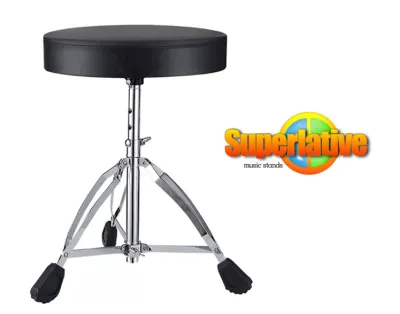
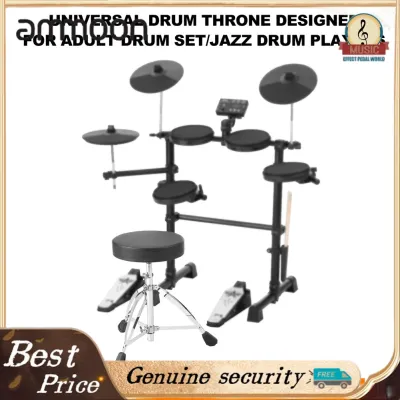
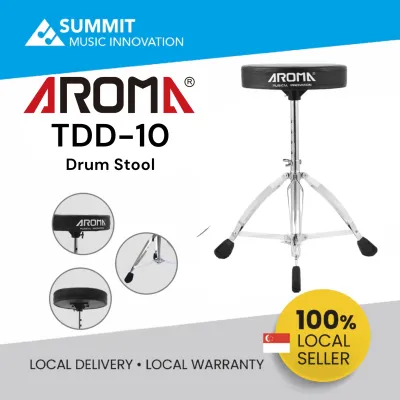
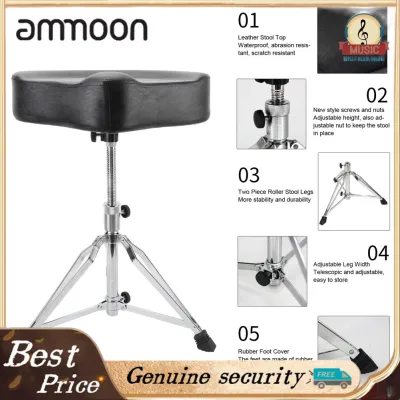
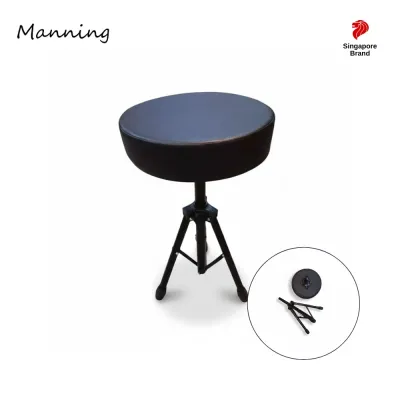
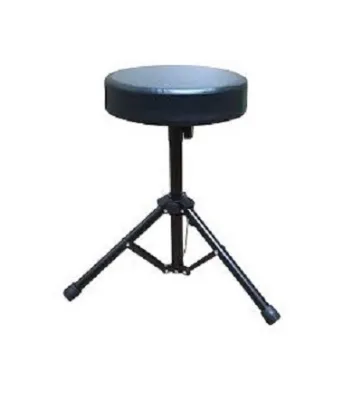
Prices are valid at publication and may change. Please refer to the product page for the latest price.
When selecting a seat shape, you must weigh the trade-offs between maximum leg clearance and a wider, more supportive seating surface. A wider seat offers excellent support for your glutes and lower back, but the extra material can pinch the undersides of your thighs during rapid pedal work. On the other hand, a highly tapered seat maximizes leg clearance and allows your legs to swing freely, but it distributes your body weight over a smaller surface area. Balancing these factors depends entirely on how much you move your legs while playing.
Evaluate Your Physical Comfort and Posture Requirements
Your body constantly sends signals during and after a drumming session, and learning to interpret these signs is key to choosing the right stool. If you regularly experience lower back tightness, hip flexor pinching, or tailbone soreness, your current seating setup is likely failing to support your spine’s natural curvature. Ignoring these early warning signs can lead to chronic posture issues that affect both your playing technique and your daily life outside of music.

A backrest can be highly beneficial for drummers who suffer from lumbar fatigue or those who spend long hours teaching behind the kit. However, a backrest is not a universal fix and must be used correctly to provide any real benefit. It is designed to support your lower spine when you lean back during rests or when playing in a highly upright, relaxed posture. If your playing style involves leaning forward aggressively, a backrest may remain completely untouched while adding unnecessary weight and bulk to your hardware setup.
Proper height adjustment is crucial for maintaining healthy joint angles and preventing repetitive strain injuries. Ideally, your hips should sit slightly higher than your knees, creating an angle of roughly 90 to 110 degrees to prevent your hip flexors from overworking. This positioning also allows your ankles to flex naturally, giving you better control over your bass drum and hi-hat pedals. Before purchasing a new stool, always check the manufacturer’s specified height adjustment range to ensure it can accommodate your ideal setup.
Compare Drum Stool Shapes: Round vs. Saddle vs. Backrest
To narrow down your candidate list, it is helpful to compare the three primary drum stool shapes based on general ergonomic principles. Each design offers distinct advantages depending on your physical needs and playing habits.
Round seats are the traditional choice and remain highly popular due to their general versatility and familiar feel. Because a round seat has no specific front or back, you can sit on it from any angle without needing to align the cushion. This design allows completely unrestricted leg movement in all directions, making it an excellent option for multi-instrumentalists or players who frequently shift their position.
Saddle seats, which are shaped similarly to a motorcycle or bicycle saddle, feature contoured cutouts for your thighs. This ergonomic design naturally guides your legs into a wider, more stable stance, improving weight distribution across your pelvis. By reducing pressure on the undersides of your thighs, saddle seats enhance your center-of-gravity control, making them a favorite among double-pedal players who need to keep their upper body perfectly balanced.
Backrest models consist of a saddle or round seat equipped with an adjustable lumbar support pad. These models provide excellent lower-back support during extended sessions, helping you maintain an upright posture and reducing spinal compression. The primary trade-offs are a larger physical footprint, increased overall weight, and a slight reduction in upper-body mobility if the backrest is positioned too far forward.
| Shape | Best Suited For | Mobility Level | Primary Support Focus |
|---|---|---|---|
| Round | Traditional players, multi-instrumentalists | High (unrestricted leg movement) | General pelvic support |
| Saddle | Double-pedal players, active performers | Moderate (guided leg positioning) | Thigh clearance and pelvic stability |
| Backrest | Long sessions, players with back fatigue | Low to Moderate (supports upright posture) | Lumbar spine alignment |
Key Hardware Features to Verify Before Purchasing
Before making a final purchase, you must verify several structural specifications to ensure the stool is stable, durable, and safe. The base of the stool is your foundation; look for double-braced or triple-braced tripod legs, or even four-legged bases for maximum stability. Always check the manufacturer’s stated weight capacity label on their official product documentation to ensure the base can safely support your weight during active playing.
The height adjustment mechanism is another critical component that affects both usability and long-term durability. Spindle systems use a threaded metal rod that allows you to micro-adjust the height by spinning the seat, which is then locked securely in place with a collar. This manual system is incredibly durable and virtually immune to slipping over time. Alternatively, hydraulic or pneumatic systems offer instant height adjustments via a convenient lever, providing a slight shock-absorbing bounce that some players prefer, though you must verify the seal quality to prevent gradual sinking.
Finally, pay close attention to the seat padding materials and thickness. High-density foam is essential because it resists bottoming out, whereas cheap, soft foam quickly compresses to the hard base plate underneath, causing discomfort within minutes. You should also evaluate the cover material; vinyl is highly durable and easy to wipe clean, while breathable mesh or cloth covers help manage heat and moisture during long practice sessions in warm climates.
Frequently Asked Questions (FAQ)
Can I add a backrest to my existing round or saddle drum stool?
Compatibility depends entirely on the specific stool model and manufacturer specifications. Some high-end drum thrones are designed with pre-drilled mounting brackets underneath the seat plate to accept an official add-on backrest kit from the same brand. If your current stool does not feature these integrated mounting points, do not attempt unauthorized structural modifications, such as drilling or welding. Making custom alterations can compromise the structural integrity of the base, leading to sudden failure, instability, or potential injury during use.
How do I know if my drum stool is at the correct height?
A practical way to verify your stool height is to sit on the seat with your feet flat on your pedals and observe your body angles. Your thighs should slope slightly downward, placing your hips just above your knees at an angle between 90 and 110 degrees. Your ankles should sit directly under or slightly ahead of your knees, allowing your feet to move freely without straining your shins. Adjust the height incrementally, playing for a few minutes at each setting, until you find a position where you can balance effortlessly without leaning forward or backward.
Community discussion
Share your experience or ask a question. Comments are reviewed before publication.